Kirjojen hintavertailu. Mukana 12 595 353 kirjaa ja 12 kauppaa.

Kirjailija

Eric Pawson

Kirjat ja teokset yhdessä paikassa: 4 kirjaa, julkaisuja vuosilta 2010-2024, suosituimpien joukossa The New Biological Economy. Vertaile teosten hintoja ja tarkista saatavuus suomalaisista kirjakaupoista.

4 kirjaa

Kirjojen julkaisuhaarukka 2010-2024.

The Post-Earthquake City

The Post-Earthquake City

Paul Cloke; David Conradson; Eric Pawson; Harvey C. Perkins

TAYLOR FRANCIS LTD
2024
nidottu
This book critically assesses Christchurch, New Zealand as an evolving post-earthquake city. It examines the impact of the 2010–13 Canterbury earthquake sequence, employing a chronological structure to consider ‘damage and displacement’, ‘recovery and renewal’ and ‘the city in transition’.It offers a framework for understanding the multiple experiences and realities of post-earthquake recovery. It details how the rebuilding of the city has occurred and examines what has arisen in the context of an unprecedented opportunity to refashion land uses and social experience from the ground up. A recurring tension is observed between the desire and tendency of some to reproduce previous urban orthodoxies and the experimental efforts of others to fashion new cultures of progressive place-making and attention to the more-than-human city. The book offers several lessons for understanding disaster recovery in cities. It illuminates the opportunities disasters create for both the reassertion of the familiar and the emergence of the new; highlights the divergence of lived experience during recovery; and considers the extent to which a post-disaster city is prepared for likely climate futures.The book will be valuable reading for critical disaster researchers as well as geographers, sociologists, urban planners and policy makers interested in disaster recovery.
The Post-Earthquake City

The Post-Earthquake City

Paul Cloke; David Conradson; Eric Pawson; Harvey C. Perkins

TAYLOR FRANCIS LTD
2023
sidottu
This book critically assesses Christchurch, New Zealand as an evolving post-earthquake city. It examines the impact of the 2010–13 Canterbury earthquake sequence, employing a chronological structure to consider ‘damage and displacement’, ‘recovery and renewal’ and ‘the city in transition’.It offers a framework for understanding the multiple experiences and realities of post-earthquake recovery. It details how the rebuilding of the city has occurred and examines what has arisen in the context of an unprecedented opportunity to refashion land uses and social experience from the ground up. A recurring tension is observed between the desire and tendency of some to reproduce previous urban orthodoxies and the experimental efforts of others to fashion new cultures of progressive place-making and attention to the more-than-human city. The book offers several lessons for understanding disaster recovery in cities. It illuminates the opportunities disasters create for both the reassertion of the familiar and the emergence of the new; highlights the divergence of lived experience during recovery; and considers the extent to which a post-disaster city is prepared for likely climate futures.The book will be valuable reading for critical disaster researchers as well as geographers, sociologists, urban planners and policy makers interested in disaster recovery.
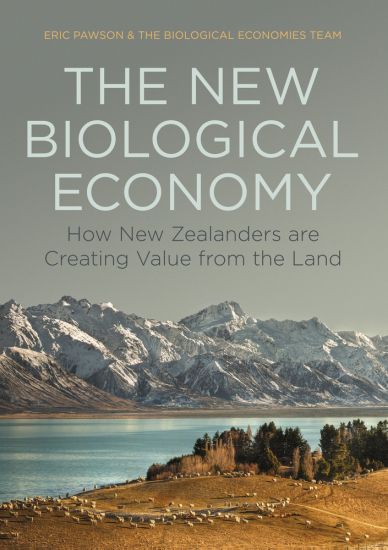
The New Biological Economy

The New Biological Economy

Eric Pawson

Auckland University Press
2018
nidottu
For over a century, New Zealand has built its economy through a series of commodity-based booms - from wood and wool to beef and butter. Now the country faces new challenges. By doubling down on dairy farms, aren't New Zealanders destroying the clean rivers and natural reputation upon which the country's primary exports (and tourism) are based? And in a world where value is increasingly rooted in capital- and technology-intensive industries, can New Zealand really sustain its high living standards by growing grass? This book takes readers out on to farms, orchards and vineyards, and inside the offices and factories of processors and exporters, to show how New Zealanders are answering these challenges by building The New Biological Economy. From Icebreaker to Mr Apple, from milk and merino to wine and tourism, from high-end Berlin restaurants to the shelves of Sainsbury's, innovative companies are creating high-value, unique products, rooted in particular places, and making pathways to the niche markets where they can realise that value. The New Biological Economy poses key questions. Do dairy and tourism have a sustainable future? Can the primary industries keep growing without destroying the natural world? Does the future of New Zealand lie in high tech or in the innovations of a land-based economy?
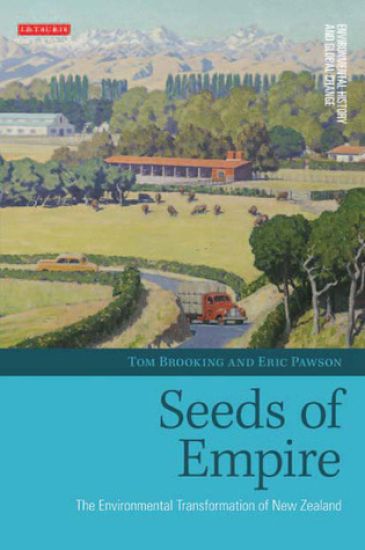
Seeds of Empire

Seeds of Empire

Tom Brooking; Eric Pawson

I.B. Tauris
2010
sidottu
The traditional image of New Zealand is one of verdant landscapes with sheep grazing on lush green pastures. Yet this landscape is almost entirely an artificial creation. As Britain became increasingly reliant on its overseas territories for supplies of food and raw material, so all over the Empire indigenous plants were replaced with English grasses to provide the worked up products of pasture - meat, butter, cheese, wool, and hides. In New Zealand this process was carried to an extreme, with forest cleared and swamps drained. How, why and with what consequences did the transformation of New Zealand into these empires of grass occur? 'Seeds of Empire' provides both an exciting appraisal of New Zealand's environmental history and a long overdue exploration of the significance of grass in the processes of sowing empire.