Kirjojen hintavertailu. Mukana 12 595 353 kirjaa ja 12 kauppaa.
Kirjailija
Eric Schickler
Kirjat ja teokset yhdessä paikassa: 10 kirjaa, julkaisuja vuosilta 2001-2026, suosituimpien joukossa Congress and Its Members. Vertaile teosten hintoja ja tarkista saatavuus suomalaisista kirjakaupoista.
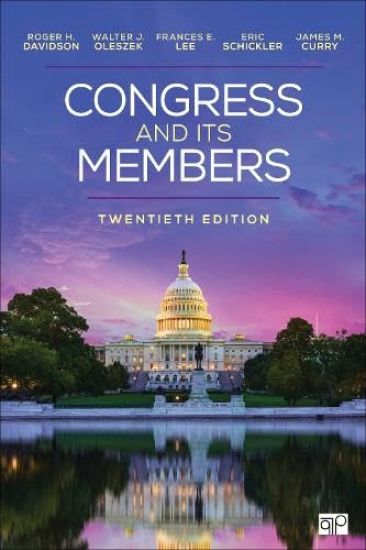
Now in its 20th Edition, Congress and Its Members offers comprehensive and current coverage of the U.S. Congress and the legislative process by examining the tension between Congress as a lawmaking institution and as a collection of politicians constantly seeking?re-election.
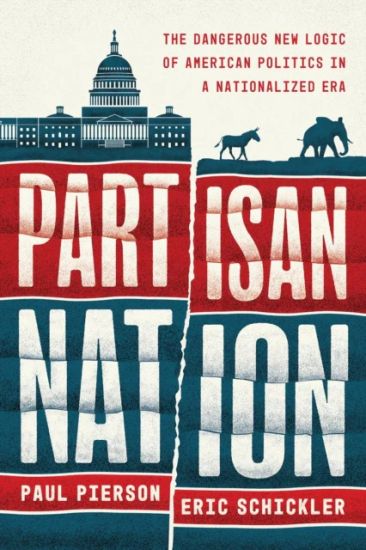
A provocative exploration of how America’s democratic crisis is rooted in a dangerous mismatch between our Constitution and today’s nationalized, partisan politics. The ground beneath American political institutions has moved, with national politics subsuming and transforming the local. As a result, American democracy is in trouble. In this paradigm-shifting book, political scientists Paul Pierson and Eric Schickler bring a sharp new perspective to today’s challenges. Attentive to the different coalitions, interests, and incentives that define the Democratic and Republican parties, they show how contemporary polarization emerged in a rapidly nationalizing country and how it differs from polarization in past eras. In earlier periods, three key features of the political landscape—state parties, interest groups, and media—varied locally and reinforced the nation’s stark regional diversity. But this began to change in the 1960s as the two parties assumed clearer ideological identities and the power of the national government expanded, raising the stakes of conflict. Together with technological and economic change, these developments have reconfigured state parties, interest groups, and media in self-reinforcing ways. The result is that today’s polarization is self-perpetuating—and intensifying. Partisan Nation offers a powerful caution. As a result of this polarization, America’s political system is distinctly and acutely vulnerable to an authoritarian movement emerging in the contemporary Republican Party, which has both the motive and the means to exploit America’s unusual Constitutional design. Combining the precision and acuity characteristic of their earlier work, Pierson and Schickler explain what these developments mean for American governance and democracy.
A provocative exploration of how America’s democratic crisis is rooted in a dangerous mismatch between our Constitution and today’s nationalized, partisan politics. The ground beneath American political institutions has moved, with national politics subsuming and transforming the local. As a result, American democracy is in trouble. In this paradigm-shifting book, political scientists Paul Pierson and Eric Schickler bring a sharp new perspective to today’s challenges. Attentive to the different coalitions, interests, and incentives that define the Democratic and Republican parties, they show how contemporary polarization emerged in a rapidly nationalizing country and how it differs from polarization in past eras. In earlier periods, three key features of the political landscape—state parties, interest groups, and media—varied locally and reinforced the nation’s stark regional diversity. But this began to change in the 1960s as the two parties assumed clearer ideological identities and the power of the national government expanded, raising the stakes of conflict. Together with technological and economic change, these developments have reconfigured state parties, interest groups, and media in self-reinforcing ways. The result is that today’s polarization is self-perpetuating—and intensifying. Partisan Nation offers a powerful caution. As a result of this polarization, America’s political system is distinctly and acutely vulnerable to an authoritarian movement emerging in the contemporary Republican Party, which has both the motive and the means to exploit America’s unusual Constitutional design. Combining the precision and acuity characteristic of their earlier work, Pierson and Schickler explain what these developments mean for American governance and democracy.
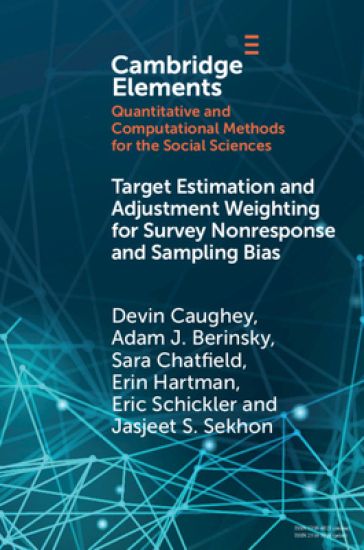
We elaborate a general workflow of weighting-based survey inference, decomposing it into two main tasks. The first is the estimation of population targets from one or more sources of auxiliary information. The second is the construction of weights that calibrate the survey sample to the population targets. We emphasize that these tasks are predicated on models of the measurement, sampling, and nonresponse process whose assumptions cannot be fully tested. After describing this workflow in abstract terms, we then describe in detail how it can be applied to the analysis of historical and contemporary opinion polls. We also discuss extensions of the basic workflow, particularly inference for causal quantities and multilevel regression and poststratification.
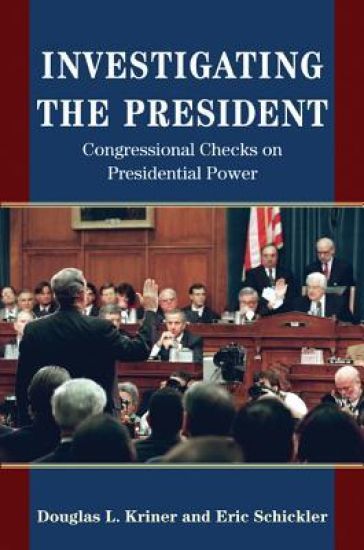
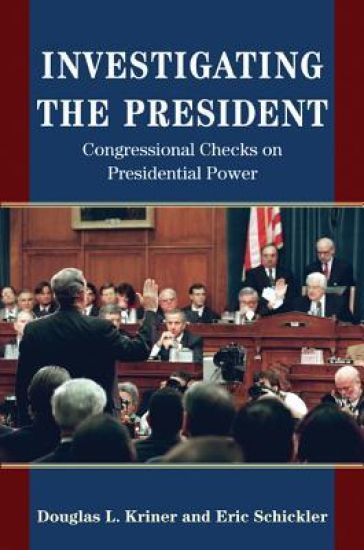
Although congressional investigations have provided some of the most dramatic moments in American political history, they have often been dismissed as mere political theater. But these investigations are far more than grandstanding. Investigating the President shows that congressional investigations are a powerful tool for members of Congress to counter presidential aggrandizement. By shining a light on alleged executive wrongdoing, investigations can exert significant pressure on the president and materially affect policy outcomes. Douglas Kriner and Eric Schickler construct the most comprehensive overview of congressional investigative oversight to date, analyzing nearly thirteen thousand days of hearings, spanning more than a century, from 1898 through 2014. The authors examine the forces driving investigative power over time and across chambers, identify how hearings might influence the president's strategic calculations through the erosion of the president's public approval rating, and uncover the pathways through which investigations have shaped public policy. Put simply, by bringing significant political pressure to bear on the president, investigations often afford Congress a blunt, but effective check on presidential power--without the need to worry about veto threats or other hurdles such as Senate filibusters. In an era of intense partisan polarization and institutional dysfunction, Investigating the President delves into the dynamics of congressional investigations and how Congress leverages this tool to counterbalance presidential power.
Although congressional investigations have provided some of the most dramatic moments in American political history, they have often been dismissed as mere political theater. But these investigations are far more than grandstanding. Investigating the President shows that congressional investigations are a powerful tool for members of Congress to counter presidential aggrandizement. By shining a light on alleged executive wrongdoing, investigations can exert significant pressure on the president and materially affect policy outcomes. Douglas Kriner and Eric Schickler construct the most comprehensive overview of congressional investigative oversight to date, analyzing nearly thirteen thousand days of hearings, spanning more than a century, from 1898 through 2014. The authors examine the forces driving investigative power over time and across chambers, identify how hearings might influence the president's strategic calculations through the erosion of the president's public approval rating, and uncover the pathways through which investigations have shaped public policy. Put simply, by bringing significant political pressure to bear on the president, investigations often afford Congress a blunt, but effective check on presidential power--without the need to worry about veto threats or other hurdles such as Senate filibusters. In an era of intense partisan polarization and institutional dysfunction, Investigating the President delves into the dynamics of congressional investigations and how Congress leverages this tool to counterbalance presidential power.
Few transformations in American politics have been as important as the integration of African Americans into the Democratic Party and the Republican embrace of racial policy conservatism. The story of this partisan realignment on race is often told as one in which political elites--such as Lyndon Johnson and Barry Goldwater--set in motion a dramatic and sudden reshuffling of party positioning on racial issues during the 1960s. Racial Realignment instead argues that top party leaders were actually among the last to move, and that their choices were dictated by changes that had already occurred beneath them. Drawing upon rich data sources and original historical research, Eric Schickler shows that the two parties' transformation on civil rights took place gradually over decades. Schickler reveals that Democratic partisanship, economic liberalism, and support for civil rights had crystallized in public opinion, state parties, and Congress by the mid-1940s. This trend was propelled forward by the incorporation of African Americans and the pro-civil-rights Congress of Industrial Organizations into the Democratic coalition. Meanwhile, Republican partisanship became aligned with economic and racial conservatism. Scrambling to maintain existing power bases, national party elites refused to acknowledge these changes for as long as they could, but the civil rights movement finally forced them to choose where their respective parties would stand. Presenting original ideas about political change, Racial Realignment sheds new light on twentieth and twenty-first century racial politics.
Few transformations in American politics have been as important as the integration of African Americans into the Democratic Party and the Republican embrace of racial policy conservatism. The story of this partisan realignment on race is often told as one in which political elites--such as Lyndon Johnson and Barry Goldwater--set in motion a dramatic and sudden reshuffling of party positioning on racial issues during the 1960s. Racial Realignment instead argues that top party leaders were actually among the last to move, and that their choices were dictated by changes that had already occurred beneath them. Drawing upon rich data sources and original historical research, Eric Schickler shows that the two parties' transformation on civil rights took place gradually over decades. Schickler reveals that Democratic partisanship, economic liberalism, and support for civil rights had crystallized in public opinion, state parties, and Congress by the mid-1940s. This trend was propelled forward by the incorporation of African Americans and the pro-civil-rights Congress of Industrial Organizations into the Democratic coalition. Meanwhile, Republican partisanship became aligned with economic and racial conservatism. Scrambling to maintain existing power bases, national party elites refused to acknowledge these changes for as long as they could, but the civil rights movement finally forced them to choose where their respective parties would stand. Presenting original ideas about political change, Racial Realignment sheds new light on twentieth and twenty-first century racial politics.
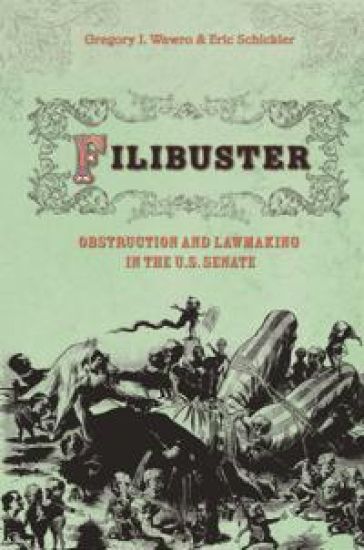
Parliamentary obstruction, popularly known as the "filibuster," has been a defining feature of the U.S. Senate throughout its history. In this book, Gregory J. Wawro and Eric Schickler explain how the Senate managed to satisfy its lawmaking role during the nineteenth and early twentieth century, when it lacked seemingly essential formal rules for governing debate. What prevented the Senate from self-destructing during this time? The authors argue that in a system where filibusters played out as wars of attrition, the threat of rule changes prevented the institution from devolving into parliamentary chaos. They show that institutional patterns of behavior induced by inherited rules did not render Senate rules immune from fundamental changes. The authors' theoretical arguments are supported through a combination of extensive quantitative and case-study analysis, which spans a broad swath of history. They consider how changes in the larger institutional and political context--such as the expansion of the country and the move to direct election of senators--led to changes in the Senate regarding debate rules. They further investigate the impact these changes had on the functioning of the Senate. The book concludes with a discussion relating battles over obstruction in the Senate's past to recent conflicts over judicial nominations.
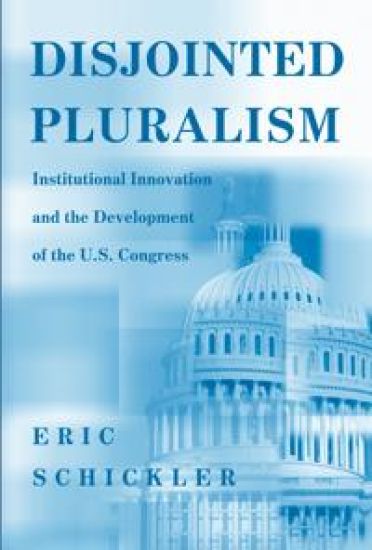
From the 1910 overthrow of "Czar" Joseph Cannon to the reforms enacted when Republicans took over the House in 1995, institutional change within the U.S. Congress has been both a product and a shaper of congressional politics. For several decades, scholars have explained this process in terms of a particular collective interest shared by members, be it partisanship, reelection worries, or policy motivations. Eric Schickler makes the case that it is actually interplay among multiple interests that determines institutional change. In the process, he explains how congressional institutions have proved remarkably adaptable and yet consistently frustrating for members and outside observers alike. Analyzing leadership, committee, and procedural restructuring in four periods (1890-1910, 1919-1932, 1937-1952, and 1970-1989), Schickler argues that coalitions promoting a wide range of member interests drive change in both the House and Senate. He shows that multiple interests determine institutional innovation within a period; that different interests are important in different periods; and, more broadly, that changes in the salient collective interests across time do not follow a simple logical or developmental sequence. Institutional development appears disjointed, as new arrangements are layered on preexisting structures intended to serve competing interests. An epilogue assesses the rise and fall of Newt Gingrich in light of these findings. Schickler's model of "disjointed pluralism" integrates rational choice theory with historical institutionalist approaches. It both complicates and advances efforts at theoretical synthesis by proposing a fuller, more nuanced understanding of institutional innovation--and thus of American political development and history.