
Kirjailija
Eric W. Gritsch
Kirjat ja teokset yhdessä paikassa: 16 kirjaa, julkaisuja vuosilta 1966-2014, suosituimpien joukossa "Professor Heussi? I Thought You Were a Book". Vertaile teosten hintoja ja tarkista saatavuus suomalaisista kirjakaupoista.
Mukana myös kirjoitusasut: Eric W Gritsch
16 kirjaa
Kirjojen julkaisuhaarukka 1966-2014.



In this book Eric W. Gritsch, a Lutheran and a distinguished Luther scholar, faces the glaring ugliness of Martin Luther's anti- Semitism head-on, describing Luther's journey from initial attempts to proselytize Jews to an appallingly racist position, which he apparently held until his death. Comprehensively laying out the textual evidence for Luther's virulent anti-Semitism, Gritsch traces the development of Luther's thinking in relation to his experiences, external influences, and theological convictions. Revealing greater impending danger with each step, Martin Luther's Anti-Semitism marches steadily onward until the full extent of Luther's racism becomes apparent. Gritsch's unflinching analysis also describes the impact of Luther's egregious words on subsequent generations and places Luther within Europe's long history of anti-Semitism. Throughout, however, Gritsch resists the temptation either to demonize or to exonerate Luther. Rather, readers will recognize Luther's mistakes as links in a chain that pulled him further and further away from an attitude of respect for Jews as the biblical people of God. Gritsch depicts Luther as a famous example of the intensive struggle with the enduring question of Christian-Jewish relations. It is a great historical tragedy that Luther, of all people, fell victim to anti-Semitism -- albeit against his better judgment.

Eric Gritsch's unique and ambitious work, the first-ever attempt at a history of global Lutheranism, is now in a new edition.In a clear, nontechnical way, this noted Reformation historian tells the story of how the nascent reforming and confessional movement sparked and led by Martin Luther survived its first battles with religious and political authorities to become institutionalized in its religious practices and teachings. Gritsch then traces the emergence of genuine consensus at the end of the sixteenth century, followed by the age of Lutheran Orthodoxy, the great Pietist reaction, Lutheranism's growing diversification during the Industrial Revolution, its North American expansion, and its increasingly global and ecumenical ventures in the last century.From Wittenberg to Tanzania, from Spalatin to Spener to Schmucker, Gritsch tells the story with clarity and verve. This new edition updates all the chapters with fresh research, adds a chapter on new global developments and issues, and adds a rich array of graphics and other teaching tools.
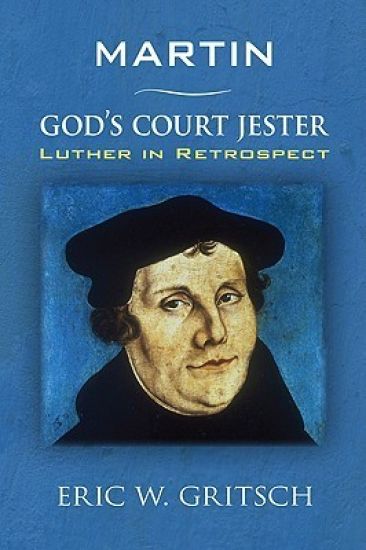
Professor Heussi? I Thought You are a Book is an entertaining account of six decades of graduate education with the subtitle A Memoir of Memorable Theological Educators, 1950-2010. In personal encounters as well as in books, academic icons appear on the horizon of memory: Viktor Frankl in Vienna, Karl Barth in Basel, Carl Jung in Zurich, Reinhold Niebuhr in New York, Paul Tillich at Harvard, and the doctor father Roland Bainton at Yale. They are mixed with has-beens, upstarts, and other special professorial characters. In this memoir of Lutheran scholar, Eric Gritsch, these accounts are also fed with collegial encounters during his thirty-three years of teaching and research in church history at the Gettysburg Lutheran Seminary, with international excursions for Luther research and ecumenical dialogue with Roman Catholics. Ambition, stamina, and humor are ingredients that spike this cocktail of theological education of a native of Austria in the 1950s and 60s. Connoisseurs of anecdotal learning will find some satisfaction in this personal history of graduate studies in Europe and in the United States. The Rev. Eric W. Gritsch (PhD Yale) is Emeritus Professor of Church History at the Gettysburg Lutheran Seminary. He is the author of several books, including Martin--God's Court Jester: Luther in Retrospect (1983, 2009); The Boy from the Burgenland: From Hitler Youth to Seminary Professor (2006); The Wit of Martin Luther (2006); Toxic Spirituality: Four Enduring Temptations of Christian Faith (2009).
G.K. Chesterton long ago observed that real Christianity had in some ways never really been tried. Eric Gritsch, a renowned historian, a pastor, and a theologian for half a century, offers Christianity a reality check, exposing four historical movements that have weakened and abused the core of the Christian tradition. These movements represent wayward views on the relationships between Christians and Jews; between the authority of Scripture and tradition; between the church and worldy power; and between faith and morals. Readers encounter these wayward traditions in their historical trajectories, in the ways these traditions have diminished the gospel, and in the ways they have been impediments of an effective contemporary Christian witness. They represent the enduring temptation to be "like God" (Gen. 3:5), a temptation marked by a zeal for secure, unchanging, and ultimate Christian life on Earth. The author confronts these wayward traditions with the enduring challenge of faithful, cruciform, penultimate discipleship in the time between the first and second advent of Christ.

Rejected in the sixteenth century by both Protestants and Catholics, yet hailed by Marxist historians as a forerunner of the Marxist revolution, this volume tells M?ntzer's story and offers a critical assessment of him in light of his extant works, with particular attention to the religious foundations of his revolutionary program.

A helpful and accessible guide to Lutheranism's history and central tenets, with numerous photos and illustrations.
This volume includes two writings dealing with the plight of the common person who Luther felt had become a victim of the ecclesiastical establishment. These are followed by treatises taken from Luther's literary feud with three staunch supporters of Rome: Augustine Alveld, Jerome Emser [the "Leipzig goat"], and Albrecht of Mainz. The final treatise contains Luther's argument for congregational authority.
Conflict between the church of Rome and the reformers reached its most violent peak in the five years before the Council of Trent in 1545, a council the pope had been delaying for years. Luther had not only given up hope for a "free, Christian council," but had also come to the conclusion that the authority of such a council was limited to reaffirming the ancient faith of the apostles. This radical departure from Rome's interpretation of its own authority forms the basis of Luther's new doctrine of the church -- and also of his advice to Protestant princes on the problems of ecclesiastical property. It is this doctrine of the church which is the theme of the three treatises written during this period and included in this volume.