Kirjojen hintavertailu. Mukana 12 657 676 kirjaa ja 12 kauppaa.

Kirjailija

Erich Goode

Kirjat ja teokset yhdessä paikassa: 12 kirjaa, julkaisuja vuosilta 2007-2023, suosituimpien joukossa Deviant Behavior. Vertaile teosten hintoja ja tarkista saatavuus suomalaisista kirjakaupoista.

12 kirjaa

Kirjojen julkaisuhaarukka 2007-2023.

Celluloid Mischief

Celluloid Mischief

Erich Goode

TAYLOR FRANCIS LTD
2023
sidottu
Celluloid Mischief examines the portrayal of wrongdoing and “deviant” behavior in film. The premise is that films are material products of both individual and collective imagination that reflect the values and norms of the society that produce them. On this basis, it is possible to perceive how society understands and classifies particular kinds of behavior and assigns or designates classes of people and actions as “good” or “bad.” So-called “wrongdoing” in movies, then, tells us about real-life norms, the violation of those norms, and the efforts to punish and control the perpetrators of those violators.Motion pictures embody information about the social world; they constitute a universe of raw particulars that await excavation and analysis. By applying the appropriate approach, what happens on the screen can guide us to an understanding of society and culture. Films are commercial products; the people who make them are members of a society, influenced by that society, who attempt to appeal to lots of other members of that society by producing something that they want to see. A society's films tell us a great deal about the taste and proclivities of the society that produce and consume them. Using postwar and contemporary Hollywood cinema as case studies, this book demonstrates the complex and evolving nature of modern America's social, economic, and political values.

Celluloid Mischief

Celluloid Mischief

Erich Goode

TAYLOR FRANCIS LTD
2023
nidottu
Celluloid Mischief examines the portrayal of wrongdoing and “deviant” behavior in film. The premise is that films are material products of both individual and collective imagination that reflect the values and norms of the society that produce them. On this basis, it is possible to perceive how society understands and classifies particular kinds of behavior and assigns or designates classes of people and actions as “good” or “bad.” So-called “wrongdoing” in movies, then, tells us about real-life norms, the violation of those norms, and the efforts to punish and control the perpetrators of those violators.Motion pictures embody information about the social world; they constitute a universe of raw particulars that await excavation and analysis. By applying the appropriate approach, what happens on the screen can guide us to an understanding of society and culture. Films are commercial products; the people who make them are members of a society, influenced by that society, who attempt to appeal to lots of other members of that society by producing something that they want to see. A society's films tell us a great deal about the taste and proclivities of the society that produce and consume them. Using postwar and contemporary Hollywood cinema as case studies, this book demonstrates the complex and evolving nature of modern America's social, economic, and political values.

Deviant Behavior

Deviant Behavior

Erich Goode

TAYLOR FRANCIS LTD
2022
sidottu
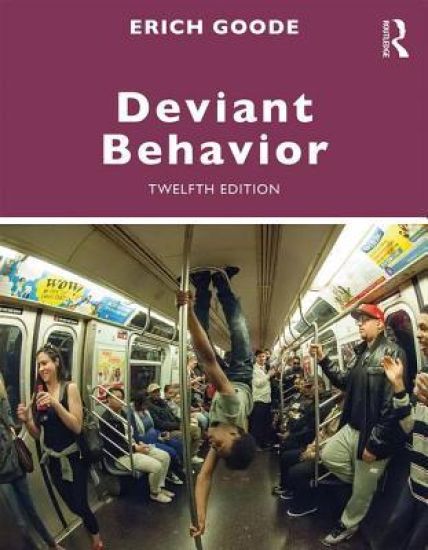
The new 2022 edition of the most widely taught deviance text brings us into a changing political era. A new chapter on political deviance includes a section that defines political deviance, emphasizing a sociological and not an ideological definition. It also covers which sectors of the society define what constitutes political deviance; and political deviance and its relation to social change. In addition, the chapter on substance abuse provides more discussion of marijuana legalization and decriminalization. Although disease as potential deviance has been covered, the COVID-19 pandemic greatly expands discussions on this topic. Updated throughout, this new edition includes expanded coverage of Black Lives Matter, sexual harassment, the social construction of immigration, and other topics. A new section on logic, reasoning, and verification of facts is an important new feature for student critical thinking while it addresses the recent politics of truth and lying, including QAnon.
Deviant Behavior

Deviant Behavior

Erich Goode

TAYLOR FRANCIS LTD
2022
nidottu
The new 2022 edition of the most widely taught deviance text brings us into a changing political era. A new chapter on political deviance includes a section that defines political deviance, emphasizing a sociological and not an ideological definition. It also covers which sectors of the society define what constitutes political deviance; and political deviance and its relation to social change. In addition, the chapter on substance abuse provides more discussion of marijuana legalization and decriminalization. Although disease as potential deviance has been covered, the COVID-19 pandemic greatly expands discussions on this topic. Updated throughout, this new edition includes expanded coverage of Black Lives Matter, sexual harassment, the social construction of immigration, and other topics. A new section on logic, reasoning, and verification of facts is an important new feature for student critical thinking while it addresses the recent politics of truth and lying, including QAnon.
Deviant Behavior

Deviant Behavior

Erich Goode

Routledge
2019
nidottu
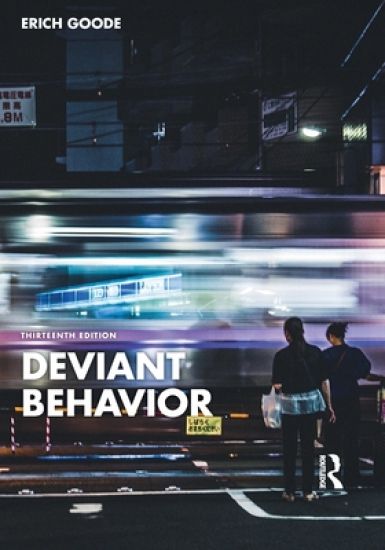
Deviant Behavior offers an engaging and wide-ranging discussion of deviant behavior, beliefs, and conditions. It examines how the society defines, labels, and reacts to whatever, and whoever, falls under this stigmatizing process—thereby providing a distinctly sociological approach to the phenomenon. The central focus in defining what and who is deviant is the audience—members of the influential social collectivities that determine the outcome of this process. The discussion in this volume encompasses both the explanatory (or positivist) approach and the constructionist (or labeling) perspectives, thereby lending a broad and inclusive vista on deviance. The central chapters in the book explore specific instances or forms of deviance, including crime, substance abuse, and mental disorder, all of which share the quality that they and their actors, believers, or bearers may be judged by these influential parties in a negative or derogatory fashion. And throughout Deviant Behavior, the author emphasizes that, to the sociologist, the term "deviant" is completely non-pejorative; no implication of inferiority or inherent stigma is implied; what the author emphasizes is that specific members of the society—social circles or collectivities—define and treat certain parties in a derogatory fashion; the sociologist does not share in this stigmatizing process but observes and describes it.
The Taming of New York's Washington Square

The Taming of New York's Washington Square

Erich Goode

New York University Press
2018
pokkari
The surprising and unofficial system of social control and regulation that keeps crime rates low in New York City's Washington Square Park Located in New York City's Greenwich Village, Washington Square Park is a 9.75-acre public park that is perhaps best known for its historic Washington Square Arch, a landmark at the foot of 5th Avenue. Hundreds, if not thousands, pass through the park every day, some sit on benches enjoying the sunshine, play a game of chess, watch their children play in the playground, take their dog to the dog runs, or sit by the fountain or, sometimes, buy or sell drugs. The park has an extremely low crime rate. Sociologist, and local resident, Erich Goode wants to know why. He notes that many visitors do violate park rules and ordinances, even engaging in misdemeanors like cigarette and marijuana smoking, alcohol consumption, public urination, skateboarding and bike riding. And yet, he argues, contrary to the well-known "broken windows" theory, which suggests that small crimes left unchecked lead to major crimes, serious crimes hardly ever take place there. Why with such an immense volume of infractions—and people—are there so little felonious or serious, and virtually no violent, crime? With rich and detailed observations as well as in-depth interviews, Goode demonstrates how onlookers, bystanders, and witnesses—both denizens and your average casual park visitor—provide an effective system of social control, keeping more serious wrongdoing in check. Goode also profiles the parks visitors, showing us that the park is a major draw to residents and tourists alike. Visitors come from all over; only a quarter of the park's visitors live in the neighborhood (the Village and SoHo), one out of ten are tourists, and one out of six are from upper Manhattan or the Bronx. Goode looks at the patterns of who visits the park, when they come, and, once in the park, where they go. Regardless of where they live, Goode argues, all of the Park's visitors help keep the park safe and lively. The Taming of New York's Washington Square is an engaging and entertaining look at a surprisingly safe space in the heart of Manhattan.
The Taming of New York's Washington Square

The Taming of New York's Washington Square

Erich Goode

New York University Press
2018
sidottu
The surprising and unofficial system of social control and regulation that keeps crime rates low in New York City's Washington Square Park Located in New York City's Greenwich Village, Washington Square Park is a 9.75-acre public park that is perhaps best known for its historic Washington Square Arch, a landmark at the foot of 5th Avenue. Hundreds, if not thousands, pass through the park every day, some sit on benches enjoying the sunshine, play a game of chess, watch their children play in the playground, take their dog to the dog runs, or sit by the fountain or, sometimes, buy or sell drugs. The park has an extremely low crime rate. Sociologist, and local resident, Erich Goode wants to know why. He notes that many visitors do violate park rules and ordinances, even engaging in misdemeanors like cigarette and marijuana smoking, alcohol consumption, public urination, skateboarding and bike riding. And yet, he argues, contrary to the well-known "broken windows" theory, which suggests that small crimes left unchecked lead to major crimes, serious crimes hardly ever take place there. Why with such an immense volume of infractions—and people—are there so little felonious or serious, and virtually no violent, crime? With rich and detailed observations as well as in-depth interviews, Goode demonstrates how onlookers, bystanders, and witnesses—both denizens and your average casual park visitor—provide an effective system of social control, keeping more serious wrongdoing in check. Goode also profiles the parks visitors, showing us that the park is a major draw to residents and tourists alike. Visitors come from all over; only a quarter of the park's visitors live in the neighborhood (the Village and SoHo), one out of ten are tourists, and one out of six are from upper Manhattan or the Bronx. Goode looks at the patterns of who visits the park, when they come, and, once in the park, where they go. Regardless of where they live, Goode argues, all of the Park's visitors help keep the park safe and lively. The Taming of New York's Washington Square is an engaging and entertaining look at a surprisingly safe space in the heart of Manhattan.
Moral Panics

Moral Panics

Erich Goode; Nachman Ben-Yehuda

Wiley-Blackwell (an imprint of John Wiley Sons Ltd)
2009
nidottu
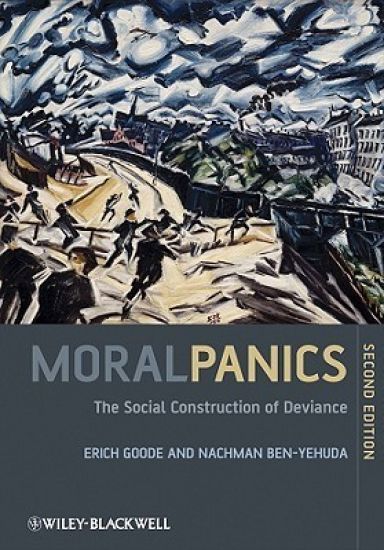
Packed with new examples and material, this second edition provides a fully up-to-date exploration of the genesis, dynamics, and demise of moral panics and their impacts on the societies in which they take place. Packed with updated and recent examples including terrorism, the 9/11 attack on the World Trade Towers, school shootings, flag burning, and the early-2000s resurgence of the “sex slave” scareIncludes a new chapter on the media, currently regarded as a major component of the moral panicDevotes a chapter to addressing criticisms of the first edition as well as the moral panics concept itselfWritten by long-established experts in the fieldDesigned to fit both self-contained courses on moral panics and wider courses on deviance
Moral Panics

Moral Panics

Erich Goode; Nachman Ben-Yehuda

Wiley-Blackwell (an imprint of John Wiley Sons Ltd)
2009
sidottu
Packed with new examples and material, this second edition provides a fully up-to-date exploration of the genesis, dynamics, and demise of moral panics and their impacts on the societies in which they take place. Packed with updated and recent examples including terrorism, the 9/11 attack on the World Trade Towers, school shootings, flag burning, and the early-2000s resurgence of the “sex slave” scareIncludes a new chapter on the media, currently regarded as a major component of the moral panicDevotes a chapter to addressing criticisms of the first edition as well as the moral panics concept itselfWritten by long-established experts in the fieldDesigned to fit both self-contained courses on moral panics and wider courses on deviance
Extreme Deviance

Extreme Deviance

Erich Goode; D. Angus Vail

SAGE Publications Inc
2007
nidottu
Most primary deviation is of transitory significance and involves a fairly insignificant punishment. Extreme Deviance focuses on behavior, beliefs, and traits that are so serious as to generate, in the words of Edwin Lemert, secondary deviation. Editors Erich Goode and D. Angus Vail tunnel to the core of the subject by emphasizing a set of central lessons, offering edgy, pedagogically dramatic illustrations of principles that are contained in no other collection of readings. The book is complete with vocabularies of motive, deviance neutralization, the acquisition of a deviant identity, and the formation of a deviance subculture. Key Features Exemplifies the concept of deviance to the fullest extent, from primary to secondary deviation: By focusing on extreme deviance, this book explores the full range of the consequence of normative violations. Presents vivid examples: Examples are dramatic, difficult to forget, and manifest from the normative violation through condemnation to the creation of deviance stereotyping, social isolation, and stigmatization. Offers an engaging text-reader format: Each chapter begins with a detailed introduction written by the editors followed by two selections written by sociological experts in the field and one personal account. Intended Audience This book is designed for undergraduate courses such as Sociology of Deviant Behavior, Deviant Behavior, and Social Deviance in the department of sociology. Contributor to the SAGE Teaching Innovations and Professional Development Award