Kirjojen hintavertailu. Mukana 12 595 353 kirjaa ja 12 kauppaa.
Kirjailija
Erich Neumann
Kirjat ja teokset yhdessä paikassa: 49 kirjaa, julkaisuja vuosilta 1971-2026, suosituimpien joukossa Art and the Creative Unconscious: The Collected Essays of Erich Neumann, Volume 1. Vertaile teosten hintoja ja tarkista saatavuus suomalaisista kirjakaupoista.
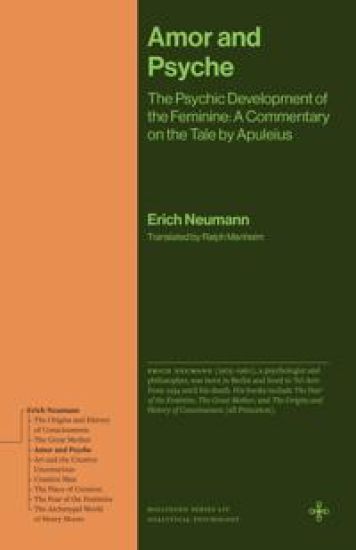
A mythic journey of psychological transformation and the development of the selfThe renowned tale of Amor and Psyche, from Apuleius’s second-century Latin novel The Golden Ass, is one of the most charming fragments of classical literature. In this landmark book, Erich Neumann reveals how this timeless story is an exemplar of feminine psychology. Unfolding the spiritual and mythical background of the pagan narrative, he shows how the contest between the mortal maid Psyche and the great goddess Aphrodite over the god Amor—Aphrodite’s son, Psyche’s husband—yields surprising and valuable insights into the psychic life of women. A classic work by one of the most brilliant figures of the twentieth century, Amor and Psyche offers a profound meditation on the tensions between the conscious and unconscious, the feminine and the masculine, and the known and unknown.
A groundbreaking exploration of the feminine archetype in Henry Moore’s sculptural worldHenry Moore (1898–1986) was an artist and sculptor renowned for his monumental semiabstract bronzes, many of them suggestive of the female form. The Archetypal World of Henry Moore is Erich Neumann’s thought-provoking analysis of Moore’s extraordinary work from the perspective of analytical psychology. In this landmark book, Neumann, one of the twentieth century’s most brilliant psychologists and a student of C. G. Jung, clarifies and enriches our understanding of the sculptor’s themes of mother and child and the reclining figure, demonstrating how both are supreme expressions of the archetypal feminine.
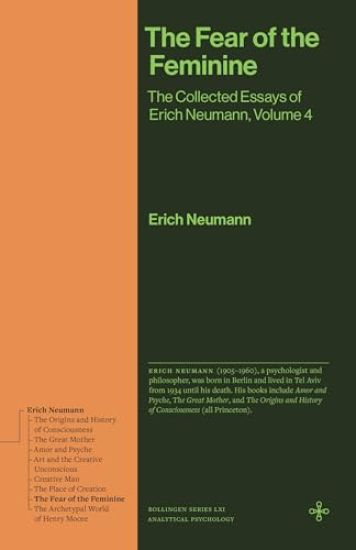
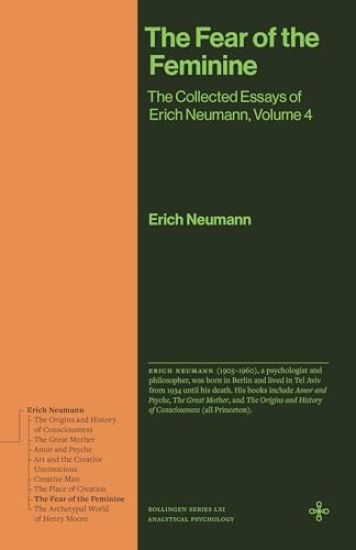
An insightful exploration of the unconscious fear of the feminine by a pioneering Jungian psychologistErich Neumann was one of C. G. Jung’s most brilliant students and a renowned practitioner of analytical psychology in his own right. This landmark book brings together five of his most illuminating essays on feminine psychology. Neumann discusses the psychological stages of woman’s development, the moon and matriarchal consciousness, Mozart’s Magic Flute, the meaning of the earth archetype for modern times, and the fear of the feminine. He sees in Mozart’s fantastical realm a clash and true coming to terms of the matriarchal and patriarchal worlds. Reflecting a timely concern about the one-sidedness of patriarchal Western civilization, The Fear of the Feminine explains why a synthesis of the feminine and the masculine in the psychic reality of both the individual and the collective is one of the fundamental tasks of contemporary society.
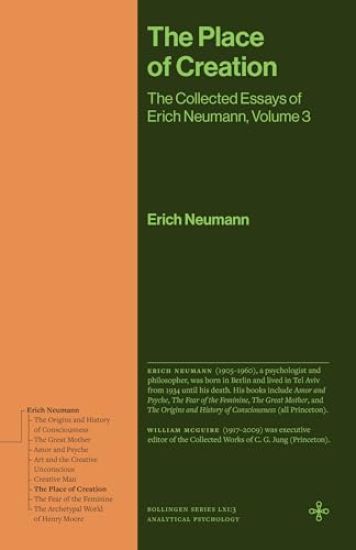
Six essays on creativity from one of the twentieth century’s foremost Jungian psychologistsErich Neumann, whom C. G. Jung regarded as one of his most gifted students, devoted much of his later writing to the theme of creativity. This landmark book brings together six of Neumann's groundbreaking essays on the subject. He finds his examples not only in the work of writers and artists—William Blake, Johann Wolfgang von Goethe, Rainer Maria Rilke, Franz Kafka, Paul Klee, Marc Chagall, Pablo Picasso, Georg Trakl—but also in that of physicists, biologists, psychiatrists, and philosophers. Confronting the problem of portraying men and women as creative beings, Neumann expands the concepts of Jungian psychology with a more comprehensive definition of the archetype as well as a new concept—unitary reality. The Place of Creation shows how our future as a species depends on whether we can experience ourselves as truly creative, in touch with our own being and that of the world.
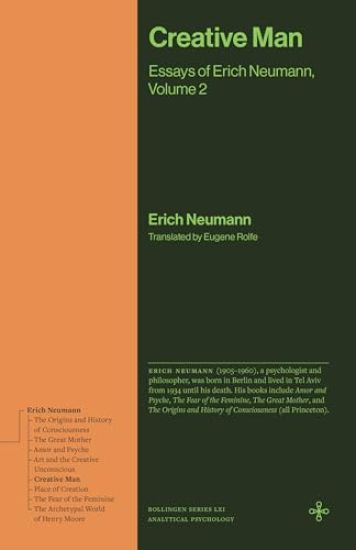
An essential exploration of creativity by one of the twentieth century’s foremost Jungian psychologistsThough said to be C. G. Jung’s favorite and most innovative student, Erich Neumann provoked controversy within the Jungian community. While his work presents a wealth of material illustrating Jung’s ideas, his interpretations go far beyond those ideas to open important avenues between analytical psychology and the study of literature and art. This landmark book brings together five of his most illuminating essays on creativity. Written over a span of years about diverse personalities—Franz Kafka, Marc Chagall, Georg Trakl, Sigmund Freud, and Jung—these essays share a common theme: the relationship between the personal and the transpersonal, the ego and the archetype. An engaging analysis of the psyche as the source of religious and artistic creation, Creative Man asks how creativity can best be fostered, how the feminine stimulates creativity in men as well as women, and how artistic creation, but also the history of human consciousness more broadly, reflect this ongoing creative movement.
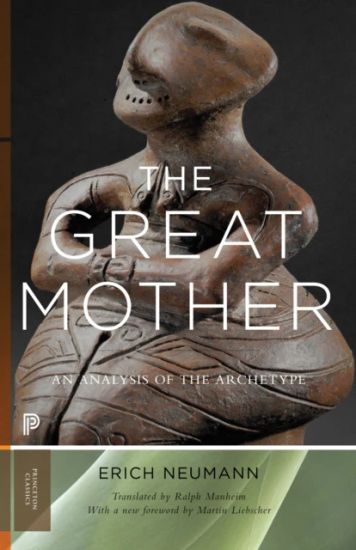
A landmark account of the Great Mother as a primordial image of the human psycheIn this book, renowned analytical psychologist Erich Neumann draws on ritual, mythology, art, and records of dreams and fantasies to examine how the archetype of the Great Mother has been outwardly expressed in many cultures and periods since prehistory. He shows how the feminine has been represented as goddess, monster, gate, pillar, tree, moon, sun, vessel, and every animal from snakes to birds. Neumann discerns a universal experience of the maternal as both nurturing and fearsome, an experience rooted in the dialectical relation of growing consciousness, symbolized by the child, to the unconscious and the unknown, symbolized by the Great Mother. With a foreword by Martin Liebscher, The Great Mother is a profound and enduring work by one of the most brilliant thinkers of the twentieth century.
A landmark account of the Great Mother as a primordial image of the human psycheIn this book, renowned analytical psychologist Erich Neumann draws on ritual, mythology, art, and records of dreams and fantasies to examine how the archetype of the Great Mother has been outwardly expressed in many cultures and periods since prehistory. He shows how the feminine has been represented as goddess, monster, gate, pillar, tree, moon, sun, vessel, and every animal from snakes to birds. Neumann discerns a universal experience of the maternal as both nurturing and fearsome, an experience rooted in the dialectical relation of growing consciousness, symbolized by the child, to the unconscious and the unknown, symbolized by the Great Mother. With a foreword by Martin Liebscher, The Great Mother is a profound and enduring work by one of the most brilliant thinkers of the twentieth century.
A landmark account of the evolution of consciousness by one of the twentieth century’s leading Jungian psychologistsThis book draws on a full range of world mythology to show how individual consciousness undergoes the same archetypal stages of development as human consciousness as a whole. Erich Neumann, one of C. G. Jung’s most creative students and a renowned practitioner of analytical psychology in his own right, shows how the stages begin and end with the symbol of the Uroboros, the tail-eating serpent. The intermediate stages are projected in the universal myths of the World Creation, the Great Mother, the Separation of the World Parents, the Birth of the Hero, the Slaying of the Dragon, the Rescue of the Captive, and the Transformation and Deification of the Hero. Neumann traces how, throughout this sequence, the Hero is the evolving ego consciousness. With a foreword by Jung, The Origins and History of Consciousness is an eloquent and enduring meditation on myth and the human psyche.
A landmark account of the evolution of consciousness by one of the twentieth century’s leading Jungian psychologistsThis book draws on a full range of world mythology to show how individual consciousness undergoes the same archetypal stages of development as human consciousness as a whole. Erich Neumann, one of C. G. Jung’s most creative students and a renowned practitioner of analytical psychology in his own right, shows how the stages begin and end with the symbol of the Uroboros, the tail-eating serpent. The intermediate stages are projected in the universal myths of the World Creation, the Great Mother, the Separation of the World Parents, the Birth of the Hero, the Slaying of the Dragon, the Rescue of the Captive, and the Transformation and Deification of the Hero. Neumann traces how, throughout this sequence, the Hero is the evolving ego consciousness. With a foreword by Jung, The Origins and History of Consciousness is an eloquent and enduring meditation on myth and the human psyche.
An essential exploration of creativity by one of the twentieth century’s foremost Jungian psychologistsThough said to be C. G. Jung’s favorite and most innovative student, Erich Neumann provoked controversy within the Jungian community. While his work presents a wealth of material illustrating Jung’s ideas, his interpretations go far beyond those ideas to open important avenues between analytical psychology and the study of literature and art. This landmark book brings together five of his most illuminating essays on creativity. Written over a span of years about diverse personalities—Franz Kafka, Marc Chagall, Georg Trakl, Sigmund Freud, and Jung—these essays share a common theme: the relationship between the personal and the transpersonal, the ego and the archetype. An engaging analysis of the psyche as the source of religious and artistic creation, Creative Man asks how creativity can best be fostered, how the feminine stimulates creativity in men as well as women, and how artistic creation, but also the history of human consciousness more broadly, reflect this ongoing creative movement.
Six essays on creativity from one of the twentieth century’s foremost Jungian psychologistsErich Neumann, whom C. G. Jung regarded as one of his most gifted students, devoted much of his later writing to the theme of creativity. This landmark book brings together six of Neumann's groundbreaking essays on the subject. He finds his examples not only in the work of writers and artists—William Blake, Johann Wolfgang von Goethe, Rainer Maria Rilke, Franz Kafka, Paul Klee, Marc Chagall, Pablo Picasso, Georg Trakl—but also in that of physicists, biologists, psychiatrists, and philosophers. Confronting the problem of portraying men and women as creative beings, Neumann expands the concepts of Jungian psychology with a more comprehensive definition of the archetype as well as a new concept—unitary reality. The Place of Creation shows how our future as a species depends on whether we can experience ourselves as truly creative, in touch with our own being and that of the world.
An insightful exploration of the unconscious fear of the feminine by a pioneering Jungian psychologistErich Neumann was one of C. G. Jung’s most brilliant students and a renowned practitioner of analytical psychology in his own right. This landmark book brings together five of his most illuminating essays on feminine psychology. Neumann discusses the psychological stages of woman’s development, the moon and matriarchal consciousness, Mozart’s Magic Flute, the meaning of the earth archetype for modern times, and the fear of the feminine. He sees in Mozart’s fantastical realm a clash and true coming to terms of the matriarchal and patriarchal worlds. Reflecting a timely concern about the one-sidedness of patriarchal Western civilization, The Fear of the Feminine explains why a synthesis of the feminine and the masculine in the psychic reality of both the individual and the collective is one of the fundamental tasks of contemporary society.
A groundbreaking exploration of the feminine archetype in Henry Moore’s sculptural worldHenry Moore (1898–1986) was an artist and sculptor renowned for his monumental semiabstract bronzes, many of them suggestive of the female form. The Archetypal World of Henry Moore is Erich Neumann’s thought-provoking analysis of Moore’s extraordinary work from the perspective of analytical psychology. In this landmark book, Neumann, one of the twentieth century’s most brilliant psychologists and a student of C. G. Jung, clarifies and enriches our understanding of the sculptor’s themes of mother and child and the reclining figure, demonstrating how both are supreme expressions of the archetypal feminine.
A mythic journey of psychological transformation and the development of the selfThe renowned tale of Amor and Psyche, from Apuleius’s second-century Latin novel The Golden Ass, is one of the most charming fragments of classical literature. In this landmark book, Erich Neumann reveals how this timeless story is an exemplar of feminine psychology. Unfolding the spiritual and mythical background of the pagan narrative, he shows how the contest between the mortal maid Psyche and the great goddess Aphrodite over the god Amor—Aphrodite’s son, Psyche’s husband—yields surprising and valuable insights into the psychic life of women. A classic work by one of the most brilliant figures of the twentieth century, Amor and Psyche offers a profound meditation on the tensions between the conscious and unconscious, the feminine and the masculine, and the known and unknown.
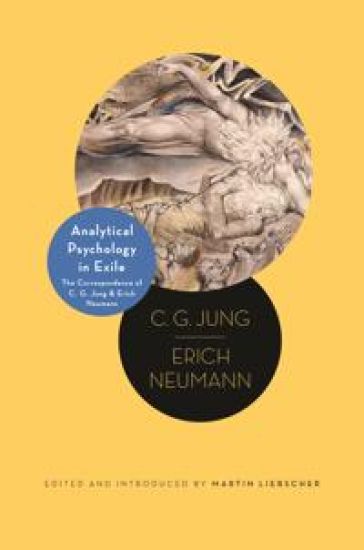
Two giants of twentieth-century psychology in dialogueC. G. Jung and Erich Neumann first met in 1933, at a seminar Jung was conducting in Berlin. Jung was fifty-seven years old and internationally acclaimed for his own brand of psychotherapy. Neumann, twenty-eight, had just finished his studies in medicine. The two men struck up a correspondence that would continue until Neumann's death in 1960. A lifelong Zionist, Neumann fled Nazi Germany with his family and settled in Palestine in 1934, where he would become the founding father of analytical psychology in the future state of Israel.Presented here in English for the first time are letters that provide a rare look at the development of Jung’s psychological theories from the 1930s onward as well as the emerging self-confidence of another towering twentieth-century intellectual who was often described as Jung’s most talented student. Neumann was one of the few correspondence partners of Jung’s who was able to challenge him intellectually and personally. These letters shed light on not only Jung’s political attitude toward Nazi Germany, his alleged anti-Semitism, and his psychological theory of fascism, but also his understanding of Jewish psychology and mysticism. They affirm Neumann’s importance as a leading psychologist of his time and paint a fascinating picture of the psychological impact of immigration on the German Jewish intellectuals who settled in Palestine and helped to create the state of Israel.Featuring Martin Liebscher’s authoritative introduction and annotations, this volume documents one of the most important intellectual relationships in the history of analytical psychology.
Vor dem Hintergrund existenzieller Herausforderungen schrieb Erich Neumann dieses fruhe Werk, das hier erstmals auf Deutsch ediert vorliegt. Das judische Uberleben beleuchtet er sowohl aus physischer als auch aus spiritueller und psychologischer Perspektive. Neumann glaubt, dass moderne Juden wieder lernen mussen, was ihre Vorfahren wahrend des babylonischen Exils verloren haben: die Fahigkeit, dem Heiligen direkt zu begegnen, Offenbarungen zu empfangen und zu prophezeien. Er stutzt sich auf C. G. Jungs Lehren und Martin Bubers chassidische Schriften und befurwortet Alternativen zum Legalismus und zur frauenfeindlichen Voreingenommenheit. Diese Ideen nehmen Neumanns spatere Werke vorweg, darunter Tiefenpsychologie und neue Ethik, Ursprungsgeschichte des Bewusstseins und Die grosse Mutter. Das Konzept der Ego-Selbst-Achse, Neumanns charakteristischer Beitrag zur analytischen Psychologie, wird schon hier vorgestellt und umfassend entwickelt.