Kirjojen hintavertailu. Mukana 12 595 353 kirjaa ja 12 kauppaa.

Kirjailija

Erik M. Conway

Kirjat ja teokset yhdessä paikassa: 10 kirjaa, julkaisuja vuosilta 2006-2025, suosituimpien joukossa Merchants of Doubt. Vertaile teosten hintoja ja tarkista saatavuus suomalaisista kirjakaupoista.

10 kirjaa

Kirjojen julkaisuhaarukka 2006-2025.

The Big Myth

The Big Myth

Naomi Oreskes; Erik M. Conway

BLOOMSBURY PUBLISHING USA
2025
nidottu
"An immense scholarly feat."-New Yorker * " A] scorching indictment of free market fundamentalism . . . and how we can change, before it's too late."-Esquire With a New Afterword by the Authors. The bestselling authors of Merchants of Doubt offer a profound, startling history of one of America's most tenacious-and destructive-false ideas: the myth of the "free market." In their landmark book Merchants of Doubt, Naomi Oreskes and Erik M. Conway revealed the origins of climate change denial. Now, they unfold the truth about another disastrous dogma: the "magic of the marketplace." In the early 20th century, business elites, trade associations, wealthy powerbrokers, and media allies set out to build a new American orthodoxy: down with "big government" and up with unfettered markets. With trenchant archival evidence, Oreskes and Conway document campaigns to rewrite textbooks, combat unions, and defend child labor. They detail the ploys that turned hardline economists Friedrich von Hayek and Milton Friedman into household names; recount the libertarian roots of the Little House on the Prairie books; and tune into the General Electric-sponsored TV show that beamed free-market doctrine to millions and launched Ronald Reagan's political career. By the 1970s, this propaganda was succeeding. Free market ideology would define the next half-century across Republican and Democratic administrations, giving us a housing crisis, the opioid scourge, climate destruction, and a baleful response to the Covid-19 pandemic. Only by understanding this history can we imagine a future where markets will serve, not stifle, democracy.

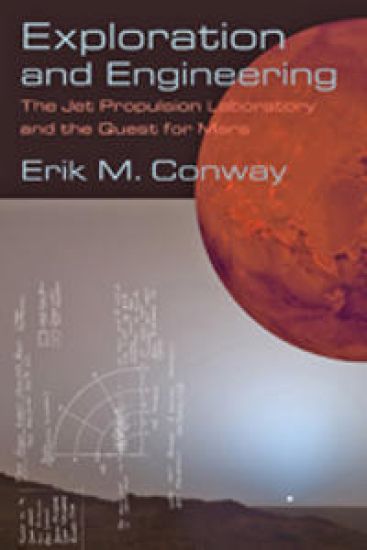
Exploration and Engineering

Exploration and Engineering

Erik M. Conway

Johns Hopkins University Press
2016
pokkari
Although the Jet Propulsion Laboratory in Pasadena, California, has become synonymous with the United States' planetary exploration during the past half century, its most recent focus has been on Mars. Beginning in the 1990s and continuing through the Mars Phoenix mission of 2007, JPL led the way in engineering an impressive, rapidly evolving succession of Mars orbiters and landers, including roving robotic vehicles whose successful deployment onto the Martian surface posed some of the most complicated technical problems in space flight history. In Exploration and Engineering, Erik M. Conway reveals how JPL engineers' creative technological feats led to major breakthroughs in Mars exploration. He takes readers into the heart of the lab's problem-solving approach and management structure, where talented scientists grappled with technical challenges while also coping, not always successfully, with funding shortfalls, unrealistic schedules, and managerial turmoil. Conway, JPL's historian, offers an insider's perspective into the changing goals of Mars exploration, the ways in which sophisticated computer simulations drove the design process, and the remarkable evolution of landing technologies over a thirty-year period.
Exploration and Engineering

Exploration and Engineering

Erik M. Conway

Johns Hopkins University Press
2015
sidottu
Although the Jet Propulsion Laboratory in Pasadena, California, has become synonymous with the United States' planetary exploration during the past half century, its most recent focus has been on Mars. Beginning in the 1990s and continuing through the Mars Phoenix mission of 2007, JPL led the way in engineering an impressive, rapidly evolving succession of Mars orbiters and landers, including roving robotic vehicles whose successful deployment onto the Martian surface posed some of the most complicated technical problems in space flight history. In Exploration and Engineering, Erik M. Conway reveals how JPL engineers' creative technological feats led to major breakthroughs in Mars exploration. He takes readers into the heart of the lab's problem-solving approach and management structure, where talented scientists grappled with technical challenges while also coping, not always successfully, with funding shortfalls, unrealistic schedules, and managerial turmoil. Conway, JPL's historian, offers an insider's perspective into the changing goals of Mars exploration, the ways in which sophisticated computer simulations drove the design process, and the remarkable evolution of landing technologies over a thirty-year period.
Merchants of Doubt

Merchants of Doubt

Erik M. Conway; Naomi Oreskes

Bloomsbury Publishing PLC
2012
nidottu
The U.S. scientific community has long led the world in research on such areas as public health, environmental science, and issues affecting quality of life. Our scientists have produced landmark studies on the dangers of DDT, tobacco smoke, acid rain, and global warming. But at the same time, a small yet potent subset of this community leads the world in vehement denial of these dangers.Merchants of Doubt tells the story of how a loose-knit group of high-level scientists and scientific advisers, with deep connections in politics and industry, ran effective campaigns to mislead the public and deny well-established scientific knowledge over four decades. Remarkably, the same individuals surface repeatedly - some of the same figures who have claimed that the science of global warming is "not settled" denied the truth of studies linking smoking to lung cancer, coal smoke to acid rain, and CFCs to the ozone hole. "Doubt is our product," wrote one tobacco executive. These 'experts' supplied it. Naomi Oreskes and Erik M. Conway, historians of science, roll back the rug on this dark corner of the American scientific community, showing how ideology and corporate interests, aided by a too-compliant media, have skewed public understanding of some of the most pressing issues of our era.
Merchants of Doubt

Merchants of Doubt

Naomi Oreskes; Erik M. Conway

Bloomsbury Press
2011
pokkari
"Merchants of Doubt should finally put to rest the question of whether the science of climate change is settled. It is, and we ignore this message at our peril."-Elizabeth Kolbert "Brilliantly reported andwritten with brutal clarity."-Huffington Post Now a powerful documentary from the acclaimed director of Food Inc., Merchants of Doubt was one of the most talked-about climate change books of recent years, for reasons easy to understand: It tells the controversial story of how a loose-knit group of high-level scientists and scientific advisers, with deep connections in politics and industry, ran effective campaigns to mislead the public and deny well-established scientific knowledge over four decades. The same individuals who claim the science of global warming is "not settled" have also denied the truth about studies linking smoking to lung cancer, coal smoke to acid rain, and CFCs to the ozone hole. "Doubt is our product," wrote one tobacco executive. These "experts" supplied it.
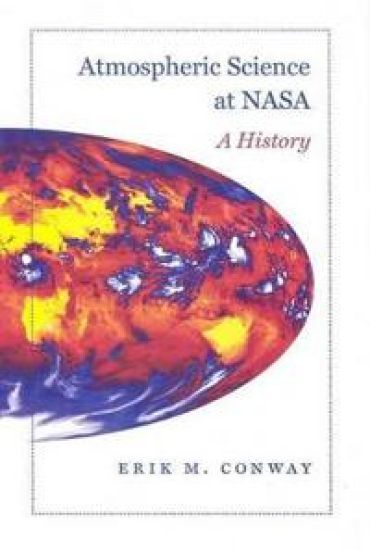
Atmospheric Science at NASA

Atmospheric Science at NASA

Erik M. Conway

Johns Hopkins University Press
2009
sidottu
This book offers an informed and revealing account of NASA's involvement in the scientific understanding of the Earth's atmosphere. Since the nineteenth century, scientists have attempted to understand the complex processes of the Earth's atmosphere and the weather created within it. This effort has evolved with the development of new technologies-from the first instrument-equipped weather balloons to multibillion-dollar meteorological satellite and planetary science programs. Erik M. Conway chronicles the history of atmospheric science at NASA, tracing the story from its beginnings in 1958, the International Geophysical Year, through to the present, focusing on NASA's programs and research in meteorology, stratospheric ozone depletion, and planetary climates and global warming. But the story is not only a scientific one. NASA's researchers operated within an often politically contentious environment. Although environmental issues garnered strong public and political support in the 1970s, the following decades saw increased opposition to environmentalism as a threat to free market capitalism. Atmospheric Science at NASA critically examines this politically controversial science, dissecting the often convoluted roles, motives, and relationships of the various institutional actors involved-among them NASA, congressional appropriation committees, government weather and climate bureaus, and the military.
High-Speed Dreams

High-Speed Dreams

Erik M. Conway

Johns Hopkins University Press
2008
pokkari
In High-Speed Dreams, Erik M. Conway constructs an insightful history that focuses primarily on the political and commercial factors responsible for the rise and fall of American supersonic transport research programs. Conway charts commercial supersonic research efforts through the changing relationships between international and domestic politicians, military/NASA contractors, private investors, and environmentalists. He documents post-World War II efforts at the National Advisory Committee on Aeronautics and the Defense Department to generate supersonic flight technologies, the attempts to commercialize these technologies by Britain and the United States during the 1950s and 1960s, environmental campaigns against SST technology in the 1970s, and subsequent attempts to revitalize supersonic technology at the end of the century. High-Speed Dreams is a sophisticated study of politics, economics, nationalism, and the global pursuit of progress. Historians, along with participants in current aerospace research programs, will gain valuable perspective on the interaction of politics and technology.
Blind Landings

Blind Landings

Erik M. Conway

Johns Hopkins University Press
2006
sidottu
When darkness falls, storms rage, fog settles, or lights fail, pilots are forced to make "instrument landings," relying on technology and training to guide them through typically the most dangerous part of any flight. In this original study, Erik M. Conway recounts one of the most important stories in aviation history: the evolution of aircraft landing aids that make landing safe and routine in almost all weather conditions. Discussing technologies such as the Loth leader-cable system, the American National Bureau of Standards system, and, its descendants, the Instrument Landing System, the MIT-Army-Sperry Gyroscope microwave blind landing system, and the MIT Radiation Lab's radar-based Ground Controlled Approach system, Conway interweaves technological change, training innovation, and pilots' experiences to examine the evolution of blind landing technologies. He shows how systems originally intended to produce routine, all-weather blind landings gradually developed into routine instrument-guided approaches. Even so, after two decades of development and experience, pilots still did not want to place the most critical phase of flight, the landing, entirely in technology's invisible hand. By the end of World War II, the very concept of landing blind therefore had disappeared from the trade literature, a victim of human limitations.
Exploration and Science

Exploration and Science

Michael Sean Reidy; Gary Kroll; Erik M. Conway

ABC-CLIO
2006
sidottu
This comprehensive volume explores the intricate, mutually dependent relationship between science and exploration—how each has repeatedly built on the discoveries of the other and, in the process, opened new frontiers. A simple question: Which came first, advances in navigation or successful voyages of discovery? A complicated answer: Both and neither. For more than four centuries, scientists and explorers have worked together—sometimes intentionally and sometimes not—in an ongoing, symbiotic partnership. When early explorers brought back exotic flora and fauna from newly discovered lands, scientists were able to challenge ancient authorities for the first time. As a result, scientists not only invented new navigational tools to encourage exploration, but also created a new approach to studying nature, in which observations were more important than reason and authority. The story of the relationship between science and exploration, analyzed here for the first time, is nothing less than the history of modern science and the expanding human universe.