Kirjojen hintavertailu. Mukana 12 390 323 kirjaa ja 12 kauppaa.

Kirjailija

Erika Doss

Kirjat ja teokset yhdessä paikassa: 12 kirjaa, julkaisuja vuosilta 1991-2023, suosituimpien joukossa Edward Hopper. Vertaile teosten hintoja ja tarkista saatavuus suomalaisista kirjakaupoista.

12 kirjaa

Kirjojen julkaisuhaarukka 1991-2023.

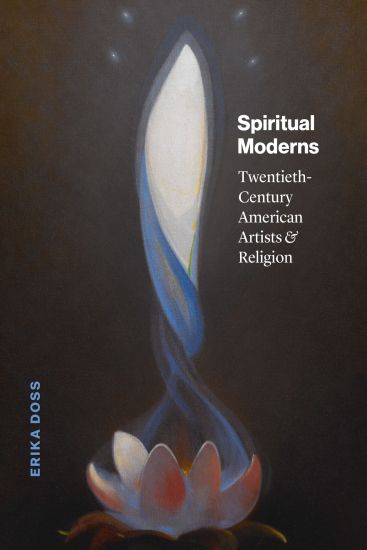
Spiritual Moderns

Spiritual Moderns

Erika Doss

THE UNIVERSITY OF CHICAGO PRESS
2023
sidottu
Examines how and why religion matters in the history of modern American art. Andy Warhol is one of the best-known American artists of the twentieth century. He was also an observant Catholic who carried a rosary, went to mass regularly, kept a Bible by his bedside, and depicted religious subjects throughout his career. Warhol was a spiritual modern: a modern artist who appropriated religious images, beliefs, and practices to create a distinctive style of American art. Spiritual Moderns centers on four American artists who were both modern and religious. Joseph Cornell, who showed with the Surrealists, was a member of the Church of Christ, Scientist. Mark Tobey created pioneering works of Abstract Expressionism and was a follower of the Bahá’í Faith. Agnes Pelton was a Symbolist painter who embraced metaphysical movements including New Thought, Theosophy, and Agni Yoga. And Warhol, a leading figure in Pop art, was a lifelong Catholic. Working with biographical materials, social history, affect theory, and the tools of art history, Doss traces the linked subjects of art and religion and proposes a revised interpretation of American modernism.
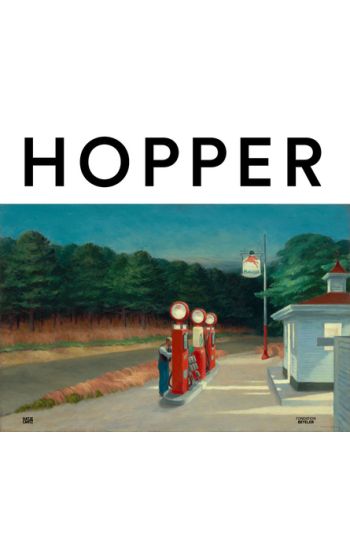
Edward Hopper

Edward Hopper

Fondation Beyeler Basel; Erika Doss; David Lubin; Katharina Rüppell

Hatje Cantz
2020
sidottu
Edward Hopper’s world-famous paintings articulate an idiosyncratic view of modern life. With his impressive subjects, independent pictorial vocabulary, and virtuoso play of colors, Hopper continues to influence to this day the image of the United States in the first half of the twentieth century. He began his career as an illustrator and became famous around the globe for his oil paintings. They testify to his great interest in the effects of color and his mastery in depicting light and shadow. The Fondation Beyeler is devoting its large exhibition in the spring of 2020 to Hopper’s iconic images of the vast American landscape. The catalogue gathers together all of the paintings, watercolors, and drawings from the 1910s to the 1960s on display in the exhibition, and supplements them with essays focused on the subject of depicting landscape.
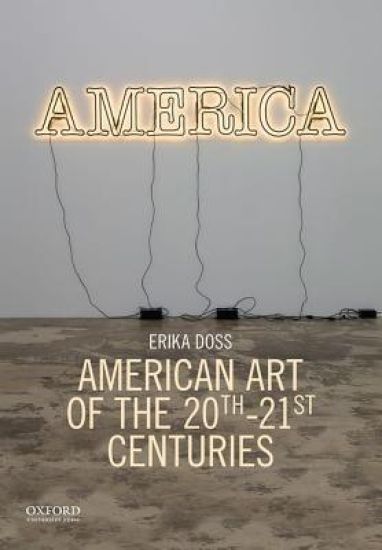
American Art of the 20th-21st Centuries

American Art of the 20th-21st Centuries

Erika Doss

Oxford University Press
2017
nidottu
American Art of the 20th-21st Centuries charts the evolution of American art from the 1890s through today. Guided by three main themes--modernism, migration, and mobility--the text highlights the production, dissemination, and consumption of modern and contemporary American art in various settings. Erika Doss explores a wide range of media within cultural, economic, political, social, and theoretical contexts and considers the varied styles, cultures, identities, and geographies that constitute American art in order to add definition to the broader concept of "America."
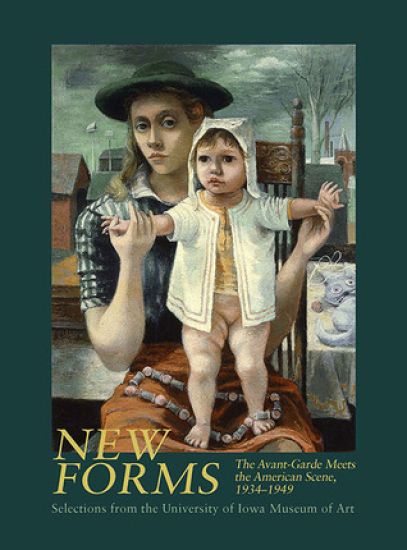
New Forms

New Forms

Erika Doss; Joni L. Kinsey

University of Iowa Press
2014
nidottu
In this fascinating exhibition catalogue, the authors discuss how 1930s and 1940s American modernism was a diverse blend of styles, artists and points of views. Addressing a core of the University of Iowa Museum of Art collection, from Jackson Pollock’s 1943 Mural and other gifts from collector Peggy Guggenheim, to works by Grant Wood, the essays provide a broad cultural overview of the terms and motivations of American Modernism, with specific focus on Iowa as a hotbed of controversy and innovation, a place where the American Scene clashed with the avant-garde in ways that were central to the ongoing national debate over the future of American art.Hardly a provincial regional outpost, the University of Iowa was uniquely positioned as a nexus of the modern art world, with prominent individuals and events that helped define the era and set aesthetic and ideological standards for the decades that followed. During this remarkable period, the University was simultaneously the centre of the Regionalist art movement, with Grant Wood as its most prominent and exemplary spokesman, and an emerging hub of the most progressive forms of modern art. In the early- to mid-1940s, new professors and students (Lester Longman, Horst W. Janson, Philip Guston, and Mauricio Lasansky), set different standards, positioning Iowa’s art collection as the repository of some of the most significant images of the twentieth century.Seminal paintings by Pollock, Guston and Mark Rothko are discussed in detail, as are the influences of New Deal art projects, surrealism and the print workshop Atelier 17. An exhibition list of more than ninety objects is included.
Memorial Mania – Public Feeling in America

Memorial Mania – Public Feeling in America

Erika Doss

University of Chicago Press
2012
nidottu
In the past few decades, thousands of new memorials - to executed witches, victims of terrorism, and dead astronauts, along with those that pay tribute to civil rights, organ donors, and the end of Communism - have dotted the American landscape. Equally ubiquitous, though until now less the subject of serious inquiry, are temporary memorials: spontaneous offerings of flowers and candles that materialize at sites of tragic and traumatic death. In "Memorial Mania", Erika Doss argues that these memorials underscore our obsession with issues of memory and history, and the urgent desire to express - and claim - those issues in visibly public contexts. Doss shows how this desire to memorialize the past disposes itself to individual anniversaries and personal grievances, to stories of tragedy and trauma, and to the social and political agendas of diverse numbers of Americans. By offering a framework for understanding these sites, Doss engages the larger issues behind our culture of commemoration. Driven by heated struggles over identity and the politics of representation, Memorial Mania is a testament to the fevered pitch of public feelings in America today.
Memorial Mania

Memorial Mania

Erika Doss

University of Chicago Press
2010
sidottu
In the past few decades, thousands of new memorials to executed witches, victims of terrorism, and dead astronauts, along with those that pay tribute to civil rights, organ donors, and the end of communism, have dotted the American landscape. Equally ubiquitous, though until now, less the subject of serious inquiry, are temporary memorials: spontaneous offerings of flowers and candles that materialize at sites of tragic and traumatic death. In "Memorial Mania", Erika Doss argues that these memorials underscore our obsession with issues of memory and history, and the urgent desire to express - and claim - those issues in visibly public contexts. Doss shows how this desire to memorialize the past disposes itself to individual anniversaries and personal grievances, to stories of tragedy and trauma, and to the social and political agendas of diverse numbers of Americans. By offering a framework for understanding these sites, Doss engages the larger issues behind our culture of commemoration. Driven by heated struggles over identity and the politics of representation, "Memorial Mania" is a testament to the fevered pitch of public feelings in America today.
The Emotional Life of Contemporary Public Memorials

The Emotional Life of Contemporary Public Memorials

Erika Doss

Amsterdam University Press
2008
nidottu
From the commemoration of September 11 to the Holocaust memorial in Berlin, recent decades have witnessed a substantial increase in the number of new public memorials built in both Europe and the United States. This volume considers the contemporary explosion of public commemoration in terms of changed cultural and social practices of mourning, memory, and public feeling. Positing memorials as the physical and visual embodiment of our affective responses to loss, Erika Doss focuses especially on the memorial ephemera of flowers, candles, balloons, and cards placed at sites of tragic death in order to better comprehend how grief is mediated in contemporary commemorative cultures.
Twentieth-Century American Art

Twentieth-Century American Art

Erika Doss

Oxford University Press
2002
nidottu
Jackson Pollock, Georgia O'Keeffe, Andy Warhol, Julian Schnabel, and Laurie Anderson are just some of the major American artists of the twentieth century. From the 1893 Chicago World's Fair to the 2000 Whitney Biennial, a rapid succession of art movements and different styles reflected the extreme changes in American culture and society, as well as America's position within the international art world. This exciting new look at twentieth century American art explores the relationships between American art, museums, and audiences in the century that came to be called the 'American century'. Extending beyond New York, it covers the emergence of Feminist art in Los Angeles in the 1970s; the Black art movement; the expansion of galleries and art schools; and the highly political public controversies surrounding arts funding. All the key movements are fully discussed, including early American Modernism, the New Negro movement, Regionalism, Abstract Expressionism, Pop Art, and Neo-Expressionism.
Elvis Culture

Elvis Culture

Erika Doss

University Press of Kansas
1999
sidottu
It doesn't matter how you remember him - rockabilly rebel, all-American boy, B-movie idol, patriotic GI or Las Vegas superstar. Elvis Presley is the most enduring image in American popular culture. This book aims to explain why. Other authors have explored Elvis's life and music, but this book examines his multifaceted image as the key to understanding the adulation that has survived his death. The author has talked with fans and joined their clubs, studied their creations and made pilgrimages to Graceland, all to explore what these images mean to those who gaze upon them, make them and collect them. In researching ""Elvis Culture"", she discovered that the visual image of Elvis endures because it was so carefully constructed from the start. She looks at how fans collect, arrange and display Elvis paraphernalia, make Elvis artwork, and participate in the annual August rituals of Elvis Week. By engaging in these acts, she explains, they continually reinvent Elvis to mesh with their own personal and social preferences and to keep his memory alive. The study examines Elvis in specific contexts: as a religious icon honoured in household shrines, as a focus of sexual fantasy, for women and men (both straight and gay), as an inspiration for countless impersonators, and as an emblem of whiteness held in disdain by many blacks - despite his having crossed racial lines with his music. It also looks at how Elvis has become a sanitized, legally protected image controlled by Elvis Presley Enterpises, Inc, which bans the sale of black velvet paintings and licences his likeness around the world.
Elvis Culture

Elvis Culture

Erika Doss

University Press of Kansas
1999
nidottu
This text explains why Elvis Presley is an enduring image in American popular culture. It demonstrates the power of pictures in visual culture and reveals much about American attitudes toward religion, sex, race and celebrity, and the construction of American identity in the late 20th century.
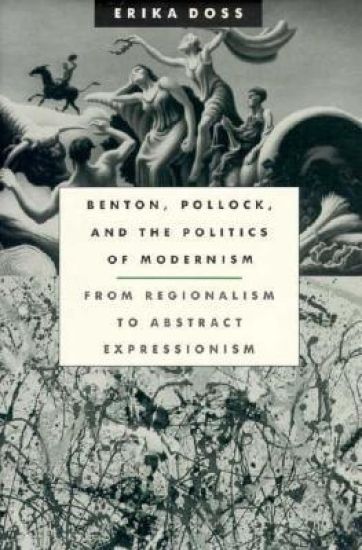
Benton, Pollock, and the Politics of Modernism

Benton, Pollock, and the Politics of Modernism

Erika Doss

University of Chicago Press
1995
nidottu
In this acclaimed revisionist study, Erika Doss chronicles an historic cultural change in American art from the dominance of regionalism in the 1930s to abstract expressionism in the 1940s. She centers her study on Thomas Hart Benton and Jackson Pollock, Benton's foremost student in the early thirties, charting Pollock's early imitation of Benton's style before his radical move to abstraction. By situating painting within the evolving sociopolitical and cultural context of the Depression and the Cold War, Doss explains the reasons for this change and casts light on its significance for contemporary culture."A welcome addition to the growing body of literature that deals with the art and culture of the depression and cold war eras. It is a pioneering work that makes a valuable contribution to our understanding of a puzzling conundrum of American art—the shift from regionalism to abstract expressionism."—M. Sue Kendall, Winterthur Portfolio"An important scholarly contribution. . . . This book will stand as a step along the way to a better understanding of the most amazing transition in the art of our tumultuous century."—James G. Rogers, Jr., Art Journal"A valuable and interesting book that restores continuity and political context to the decades of depression and war."—Marlene Park, American Historical Review
Benton, Pollock, and the Politics of Modernism

Benton, Pollock, and the Politics of Modernism

Erika Doss

University of Chicago Press
1991
sidottu
In this acclaimed revisionist study, Erika Doss chronicles an historic cultural change in American art from the dominance of regionalism in the 1930s to abstract expressionism in the 1940s. She centers her study on Thomas Hart Benton and Jackson Pollock, Benton's foremost student in the early thirties, charting Pollock's early imitation of Benton's style before his radical move to abstraction. By situating painting within the evolving sociopolitical and cultural context of the Depression and the Cold War, Doss explains the reasons for this change and casts light on its significance for contemporary culture."A welcome addition to the growing body of literature that deals with the art and culture of the depression and cold war eras. It is a pioneering work that makes a valuable contribution to our understanding of a puzzling conundrum of American art—the shift from regionalism to abstract expressionism."—M. Sue Kendall, Winterthur Portfolio"An important scholarly contribution. . . . This book will stand as a step along the way to a better understanding of the most amazing transition in the art of our tumultuous century."—James G. Rogers, Jr., Art Journal"A valuable and interesting book that restores continuity and political context to the decades of depression and war."—Marlene Park, American Historical Review