
Kirjailija
Erika Erdmann
Kirjat ja teokset yhdessä paikassa: 3 kirjaa, julkaisuja vuosilta 2000-2012, suosituimpien joukossa A Mind for Tomorrow. Vertaile teosten hintoja ja tarkista saatavuus suomalaisista kirjakaupoista.
3 kirjaa
Kirjojen julkaisuhaarukka 2000-2012.

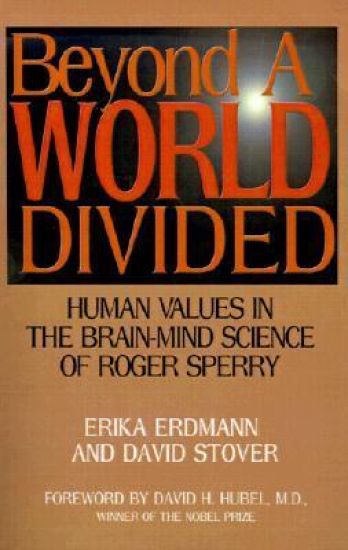
Stover and Erdmann deal with the crises confronting today's world and argue that solutions will come not from new technology nor in retreating to an idealized agrarian past, but by overhauling the beliefs that structure society. They link the dilemmas facing civilization to a fundamental rift running through society—one between religion and the humanities, rooted in subjective experience, and science, which emphasizes objective knowledge. They suggest a promising way of closing this rift found in the work of Nobel Laureate and neuroscientist Roger W. Sperry.They examine Sperry's lifework, including his famous split- brain research and show how it led him to propose a theory of consciousness that challenged science's dismissal of subjective experience as irrelevant. By seeing consciousness as an emergent, causal property of brain function, Sperry reinstated subjective experience into the scientific worldview, laid the foundation for the cognitive revolution that has since swept through psychology, and created a means by which science can help create ethical systems better able to deal with today's challenges. Stover and Erdmann conclude by looking at ways in which others have built upon Sperry's ideas, and they hold out the hope that, with the creation of belief systems more compatible with science, a way out of humanity's current troubles may indeed be found. The result is an excursion through a world of exciting ideas, and a book sure to absorb anyone interested in the fate of our species—and how that fate might be influenced for the better. Students, researchers, scholars, and concerned citizens particularly interested in cognitive psychology, science and society, and futures studies will find the book intriguing.

The blind forces of evolution brought us this far, but the future is our own to forge. So concludes writer, researcher, and humanist Erika Erdmann in Forging a Human Future. In this remarkable collection of essays, Erdmann draws on the work of renowned split-brain theorist Roger Sperry and many other thinkers, including Ervin Laszlo, Jonas Salk, Ralph Burhoe, E.O. Wilson, James Watson, and Eric Chaisson, as she considers how we can work together to create a future both human and humane.The book's early chapters examine the key concepts of emergence and downward causation. Once science takes these ideas into account, a far richer and more meaningful description of the world becomes possible: a description that goes beyond reductionism to leave room for the arts and humanities as well as ensuring a causal role for human consciousness. Later essays consider the evolution of human nature, the key problems facing society today, and promising new ways of looking at the world that may lead to a rapprochement between reason and emotion. Only with such a reconciliation, Erdmann argues, can we forge a future both human and humane. For in a world threatened by environmental degradation, resource depletion, overpopulation, and nuclear proliferation, neither love nor reason alone are enough. Only a successful fusion of the two can ensure humanity's survival.During her long life, Erika Erdmann worked and corresponded with many of the world's top thinkers and researchers in the areas of futurism, neuroscience, and evolutionary theory. For more than a decade she served as Nobel laureate Roger Sperry's library researcher. She also carried out an extensive survey of attitudes toward the future among leading North American figures in the media, academe, and religion. Equally importantly, Erdmann's own life experiences informed her perspective on human nature. Coming of age in Hitler's Germany, caught up with her young family in the chaos of Europe following the Second World War, and finally retiring with her husband to a windswept point overlooking the Atlantic, Erdmann saw firsthand human nature at both its best and worst. Forging a Human Future, her final book, draws on a lifetime of experiences to create an exciting, sometimes troubling, but in the end hopeful view of the human prospect.