
Kirjailija
Erika Fischer-Lichte
Kirjat ja teokset yhdessä paikassa: 17 kirjaa, julkaisuja vuosilta 1992-2021, suosituimpien joukossa Semiotik des Theaters 1. Vertaile teosten hintoja ja tarkista saatavuus suomalaisista kirjakaupoista.
17 kirjaa
Kirjojen julkaisuhaarukka 1992-2021.

Aesthetic theory in the West has, until now, been dominated by ideas of effect, autonomy, and reception. Transformative Aesthetics uncovers these theories’ mutual concern with the transformation of those involved. From artists to spectators, readers, listeners, or audiences, the idea of transformation is one familiar to cultures across the globe. Transformation of the individual is only one part of this aesthetic phenomenon, as contemporary artists are increasingly called upon to have a transformative, sustainable impact on society at large. To this end, Erika Fischer Lichte and Benjamin Wihstutz present a series of fresh perspectives on the discussion of aesthetics, uniting Western theory with that of India, China, Australia, and beyond. Each chapter of Transformative Aesthetics focuses on a different approach to transformation, from the foundations of aesthetics to contemporary theories, breaking new ground to establish a network of thought that spans theatre, performance, art history, cultural studies, and philosophy.
Aesthetic theory in the West has, until now, been dominated by ideas of effect, autonomy, and reception. Transformative Aesthetics uncovers these theories’ mutual concern with the transformation of those involved. From artists to spectators, readers, listeners, or audiences, the idea of transformation is one familiar to cultures across the globe. Transformation of the individual is only one part of this aesthetic phenomenon, as contemporary artists are increasingly called upon to have a transformative, sustainable impact on society at large. To this end, Erika Fischer Lichte and Benjamin Wihstutz present a series of fresh perspectives on the discussion of aesthetics, uniting Western theory with that of India, China, Australia, and beyond. Each chapter of Transformative Aesthetics focuses on a different approach to transformation, from the foundations of aesthetics to contemporary theories, breaking new ground to establish a network of thought that spans theatre, performance, art history, cultural studies, and philosophy.
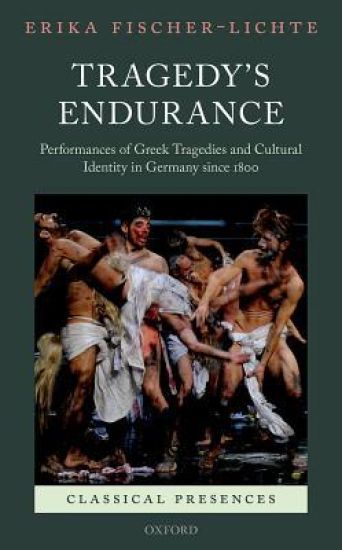
This volume sets out a novel approach to theatre historiography, presenting the history of performances of Greek tragedies in Germany since 1800 as the history of the evolving cultural identity of the educated middle class throughout that period. Philhellenism and theatromania took hold in this milieu amidst attempts to banish the heavily French-influenced German court culture of the mid-eighteenth century, and by 1800 their fusion in performances of Greek tragedies served as the German answer to the French Revolution. Tragedy's subsequent endurance on the German stage is mapped here through the responses of performances to particular political, social, and cultural milestones, from the Napoleonic Wars and the Revolution of 1848 to the Third Reich, the new political movements of the 1960s and 1970s, and the fall of the Berlin Wall and reunification. Images of ancient Greece which were prevalent in the productions of these different eras are examined closely: the Nazi's proclamation of a racial kinship between the Greeks and the Germans; the politicization of performances of Greek tragedies since the 1960s and 1970s, emblematized by Marcuse's notion of a cultural revolution; the protest choruses of the GDR and the new genre of choric theatre in the 1980s and 1990s. By examining these images and performances in relation to their respective socio-cultural contexts, the volume sheds light on how, in a constantly changing political and cultural climate, performances of Greek tragedies helped affirm, destabilize, re-stabilize, and transform the cultural identity of the educated middle class over a volatile two hundred year period.

The Routledge Introduction to Theatre and Performance Studies
Erika Fischer-Lichte
Routledge
2014
sidottu
Erika Fischer-Lichte's introduction to the discipline of Theatre and Performance Studies is a strikingly authoritative and wide ranging guide to the study of theatre in all of its forms. Its three-part structure moves from the first steps in starting to think about performance, through to the diverse and interrelated concerns required of higher-level study:Part 1 – Central Concepts for Theatre and Performance Research – introduces the language and key ideas that are used to discuss and think about theatre: concepts of performance; the emergence of meaning; and the theatrical event as an experience shared by actors and spectators. Part 1 contextualizes these concepts by tracing the history of Theatre and Performance Studies as a discipline.Part 2 – Fields, Theories and Methods – looks at how to analyse a performance and how to conduct theatre-historiographical research. This section is concerned with the 'doing' of Theatre and Performance Studies: establishing and understanding different methodological approaches; using sources effectively; and building theoretical frameworks.Part 3 – Pushing Boundaries – expands on the lessons of Parts 1 and 2 in order to engage with theatre and performance in a global context. Part 3 introduces the concept of 'interweaving performance cultures'; explores the interrelation of theatre with the other arts; and develops a transformative aesthetics of performance. Case studies throughout the book root its theoretical discussion in theatrical practice. Focused accounts of plays, practitioners and performances map the development of Theatre and Performance Studies as an academic discipline, and of the theatre itself as an art form. This is the most comprehensive and sophisticated introduction to the field available, written by one of its foremost scholars.

The Routledge Introduction to Theatre and Performance Studies
Erika Fischer-Lichte
Routledge
2014
nidottu
Erika Fischer-Lichte's introduction to the discipline of Theatre and Performance Studies is a strikingly authoritative and wide ranging guide to the study of theatre in all of its forms. Its three-part structure moves from the first steps in starting to think about performance, through to the diverse and interrelated concerns required of higher-level study:Part 1 – Central Concepts for Theatre and Performance Research – introduces the language and key ideas that are used to discuss and think about theatre: concepts of performance; the emergence of meaning; and the theatrical event as an experience shared by actors and spectators. Part 1 contextualizes these concepts by tracing the history of Theatre and Performance Studies as a discipline.Part 2 – Fields, Theories and Methods – looks at how to analyse a performance and how to conduct theatre-historiographical research. This section is concerned with the 'doing' of Theatre and Performance Studies: establishing and understanding different methodological approaches; using sources effectively; and building theoretical frameworks.Part 3 – Pushing Boundaries – expands on the lessons of Parts 1 and 2 in order to engage with theatre and performance in a global context. Part 3 introduces the concept of 'interweaving performance cultures'; explores the interrelation of theatre with the other arts; and develops a transformative aesthetics of performance. Case studies throughout the book root its theoretical discussion in theatrical practice. Focused accounts of plays, practitioners and performances map the development of Theatre and Performance Studies as an academic discipline, and of the theatre itself as an art form. This is the most comprehensive and sophisticated introduction to the field available, written by one of its foremost scholars.
Dionysus Resurrected
Erika Fischer-Lichte
Wiley-Blackwell (an imprint of John Wiley Sons Ltd)
2013
sidottu
Dionysus Resurrected analyzes the global resurgence since the late 1960s of Euripides’ The Bacchae. By analyzing and contextualizing these modern day performances, the author reveals striking parallels between transformational events taking place during the era of the play’s revival and events within the play itself. Puts forward a lively discussion of the parallels between transformational eventsduring the era of the play’s revival and events within the play itselfThe first comparative study to analyse and contextualize performances of The Bacchae that took place between 1968 and 2009 from the United States, Africa, Latin America, Europe and AsiaArgues that presentations of the play not only represent liminal states but also transfer the spectators into such statesContends that the play’s reflection on various stages of globalization render the tragedy a contemporary playEstablishes the importance of The Bacchae within Euripides’ work as the only extant tragedy in which the god Dionysus himself appears, not just as a character but as the protagonist

Die Einführung in die Theaterwissenschaft Anders als andere Einführungen geht diese - gemäß dem aktuellen Stand des Fachs - vom Aufführungsbegriff aus und erläutert vor diesem Hintergrund die Grundlagen der Theaterwissenschaft. Anhand konkreter Beispiele werden sowohl die speziellen methodischen Probleme des Fachs erörtert als auch die Beziehungen zwischen Theaterwissenschaft und anderen Disziplinen dargestellt. Ein Literaturverzeichnis, ein Glossar und ein Register runden den Band ab.
In this book, Erika Fischer-Lichte traces the emergence of performance as 'an art event' in its own right. In setting performance art on an equal footing with the traditional art object, she heralds a new aesthetics.The peculiar mode of experience that a performance provokes – blurring distinctions between artist and audience, body and mind, art and life – is here framed as the breeding ground for a new way of understanding performing arts, and through them even wider social and cultural processes.With an introduction by Marvin Carlson, this translation of the original Ästhetik des Performativen addresses key issues in performance art, experimental theatre and cultural performances to lay the ground for a new appreciation of the artistic event.
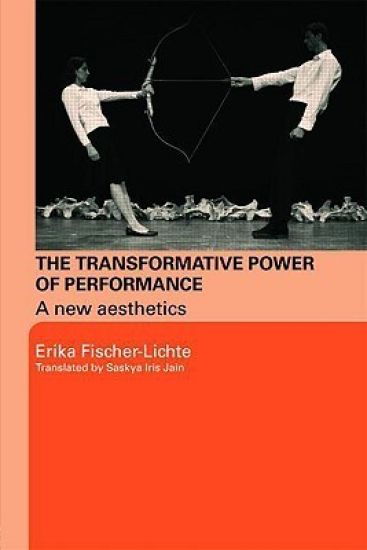
In this book, Erika Fischer-Lichte traces the emergence of performance as 'an art event' in its own right. In setting performance art on an equal footing with the traditional art object, she heralds a new aesthetics.The peculiar mode of experience that a performance provokes – blurring distinctions between artist and audience, body and mind, art and life – is here framed as the breeding ground for a new way of understanding performing arts, and through them even wider social and cultural processes.With an introduction by Marvin Carlson, this translation of the original Ästhetik des Performativen addresses key issues in performance art, experimental theatre and cultural performances to lay the ground for a new appreciation of the artistic event.
Das Theater erscheint wie Roland Barthes festgestellt hat, als ein besonders "privilegiertes semiologisches Objekt". Denn es arbeitet nicht nur wie andere Kunstgattungen - z.B. Literatur und Malerei - mit einem einzigen Zeichensystem, sondern vereinigt in sich eine Vielzahl heterogener Zeichensysteme (wie Sprache und Gestik, Kostüm und Dekoration, Musik und Beleuchtung), deren jedes nach anderen Prinzipien Bedeutung hervorbringt. Soll das Theater seinerseits als ein spezifisches bedeutungserzeugendes System begriffen und erforscht werden, müssen daher die einzelnen beteiligten Zeichensysteme einerseits in ihrer jeweiligen Eigenart, andrerseits in ihren Beziehungen zueinander untersucht werden. Der von Coseriu in der Linguistik getroffenen Unterscheidung zwischen den Ebenen des Systems, der Norm und der Rede entsprechend wird diese Untersuchung unter systematischem, historischem und analytischem Aspekt durchgeführt.
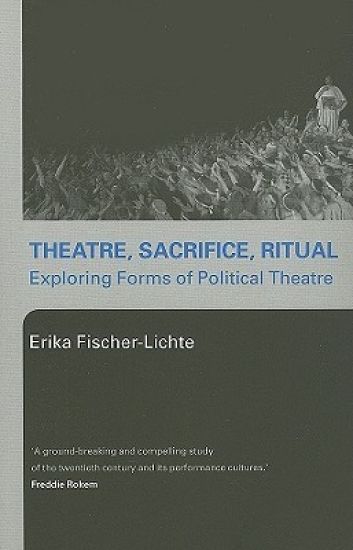
Theatre, Sacrifice, Ritual: Exploring Forms of Political Theatre
Erika Fischer-Lichte
Routledge
2005
nidottu
In this fascinating volume, acclaimed theatre historian Erika Fischer-Lichte reflects on the role and meaning accorded to the theme of sacrifice in Western cultures as mirrored in particular fusions of theatre and ritual. Theatre, Sacrifice, Ritual presents a radical re-definition of ritual theatre through analysis of performances as diverse as:Max Reinhardt's new people's theatrethe mass spectacles of post-revolutionary RussiaAmerican Zionist pageantsthe Olympic Games.In offering both a performative and a semiotic analysis of such performances, Fischer-Lichte expertly demonstrates how theatre and ritual are fused in order to tackle the problem of community-building in societies characterised by loss of solidarity and disintegration, and exposes the provocative connection between the utopian visions of community they suggest, and the notion of sacrifice. This innovative study of twentieth-century performative culture boldly examines the complexities of political theatre, propaganda and manipulation of the masses, and offers a revolutionary approach to the study of theatre and performance history.

Theatre, Sacrifice, Ritual: Exploring Forms of Political Theatre
Erika Fischer-Lichte
Routledge
2005
sidottu
In this fascinating volume, acclaimed theatre historian Erika Fischer-Lichte reflects on the role and meaning accorded to the theme of sacrifice in Western cultures as mirrored in particular fusions of theatre and ritual. Theatre, Sacrifice, Ritual presents a radical re-definition of ritual theatre through analysis of performances as diverse as:Max Reinhardt's new people's theatrethe mass spectacles of post-revolutionary RussiaAmerican Zionist pageantsthe Olympic Games.In offering both a performative and a semiotic analysis of such performances, Fischer-Lichte expertly demonstrates how theatre and ritual are fused in order to tackle the problem of community-building in societies characterised by loss of solidarity and disintegration, and exposes the provocative connection between the utopian visions of community they suggest, and the notion of sacrifice. This innovative study of twentieth-century performative culture boldly examines the complexities of political theatre, propaganda and manipulation of the masses, and offers a revolutionary approach to the study of theatre and performance history.

This major study reconstructs the vast history of European drama from Greek tragedy through to twentieth-century theatre, focusing on the subject of identity. Throughout history, drama has performed and represented political, religious, national, ethnic, class-related, gendered, and individual concepts of identity.Erika Fischer-Lichte's topics include:* ancient Greek theatre* Shakespeare and Elizabethan theatre by Corneilli, Racine, Molière* the Italian commedia dell'arte and its transformations into eighteenth-century drama* the German Enlightenment - Lessing, Schiller, Goethe, and Lenz* romanticism by Kleist, Byron, Shelley, Hugo, de Vigny, Musset, Büchner, and Nestroy* the turn of the century - Ibsen, Strindberg, Chekhov, Stanislavski* the twentieth century - Craig, Meyerhold, Artaud, O'Neill, Pirandello, Brecht, Beckett, Müller.Anyone interested in theatre throughout history and today will find this an invaluable source of information.

This major study reconstructs the vast history of European drama from Greek tragedy through to twentieth-century theatre, focusing on the subject of identity. Throughout history, drama has performed and represented political, religious, national, ethnic, class-related, gendered, and individual concepts of identity.Erika Fischer-Lichte's topics include:* ancient Greek theatre* Shakespeare and Elizabethan theatre by Corneilli, Racine, Molière* the Italian commedia dell'arte and its transformations into eighteenth-century drama* the German Enlightenment - Lessing, Schiller, Goethe, and Lenz* romanticism by Kleist, Byron, Shelley, Hugo, de Vigny, Musset, Büchner, and Nestroy* the turn of the century - Ibsen, Strindberg, Chekhov, Stanislavski* the twentieth century - Craig, Meyerhold, Artaud, O'Neill, Pirandello, Brecht, Beckett, Müller.Anyone interested in theatre throughout history and today will find this an invaluable source of information.
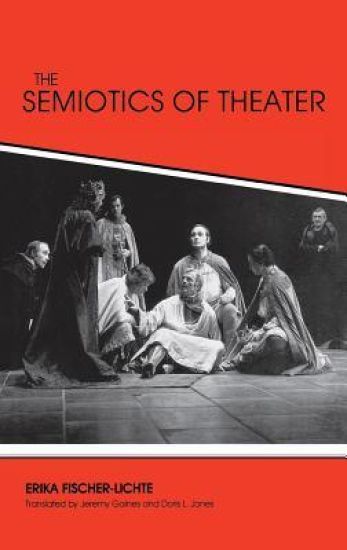
"The most thorough, systematic and convincing semiotics of the theater we have. . . . [L]ike those of Eco, it is an important conceptual synthesis, and a bibliographical gold mine." —Modern Language Notes" . . . impresses with its thoroughness and the informed perspective of its author . . . " —Theatre Survey" . . . a classic text . . . " —Theatre Research International"Immediately accessible to readers with some knowledge of theater but not much of semiotics. . . . For anyone with an interest in theater production and performance, or indeed theater history." —Marvin Carlson