Kirjojen hintavertailu. Mukana 12 657 676 kirjaa ja 12 kauppaa.

Kirjailija

Erin Stewart Mauldin

Kirjat ja teokset yhdessä paikassa: 11 kirjaa, julkaisuja vuosilta 2018-2026, suosituimpien joukossa The Land of Cotton. Vertaile teosten hintoja ja tarkista saatavuus suomalaisista kirjakaupoista.

11 kirjaa

Kirjojen julkaisuhaarukka 2018-2026.

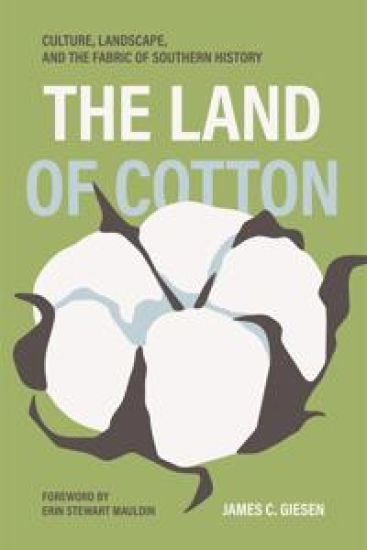
The Land of Cotton

The Land of Cotton

James C. Giesen; Erin Stewart Mauldin

UNIVERSITY OF GEORGIA PRESS
2026
sidottu
The Land of Cotton is a sweeping environmental and cultural history of cotton’s power in the American South. More than the region’s signature crop, cotton was a material, symbolic, economic, and ideological force. James. C. Giesen’s central claim is that the culture of cotton—the ways planters, laborers, boosters, tourist boards, musicians, and a host of others representing the crop—shifted not only with the political moment but in response to the physical world. Cotton lands eroding and becoming forests, labor and technological upheaval, and the rise and fall of constructed environments all changed the rhetorical possibility of the thin white fiber. Cotton festivals, country songs, and sharecroppers’ memories shaped and were shaped by the conditions of Southern landscapes. By grounding this history in two distinct Southern landscapes—the South Carolina Piedmont and the Mississippi Delta—Giesen reveals how these local conditions forged cotton’s cultural power and practical uses. Spanning one-hundred-fifty years, this study shows how the South’s most iconic crop remained a literal and figurative site for debates over environmental change, political ideology, and historical memory.
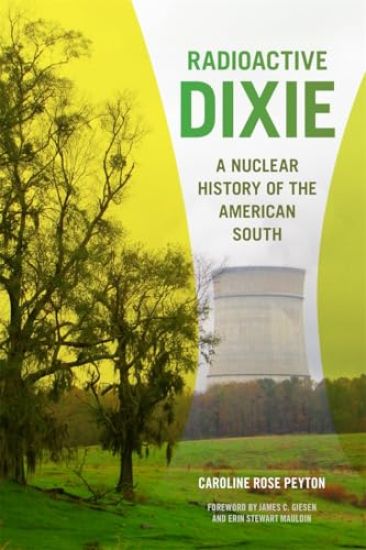
Radioactive Dixie

Radioactive Dixie

Caroline Peyton; James C. Giesen; Erin Stewart Mauldin

UNIVERSITY OF GEORGIA PRESS
2025
sidottu
How and why did the South’s history, culture, and politics shape the region’s nuclear and energy industries? And how is that history linked to broader developments in the nuclear and energy industries—nationally and globally? Radioactive Dixie answers those questions as it traces the origins of the U.S. South’s love affair with the atom.The South contains more nuclear reactors than any other region in the United States and much of the nation’s radioactive waste. This book shows how the South’s atomic footprint resulted from a decades-long effort by southern politicians, industry figures, universities, and government officials to transform the American South into a nuclear-oriented region. Waving the atomic talisman, the nuclear industry served as one pivotal part in a larger project of regional modernization—a process that began in the nineteenth century and lasted more than a century. From this perspective, bomb plants and nuclear reactors promised to expand the South’s economy and to cast its identity as a center of modern industry, science, and engineering and as a producer of cheap, limitless energy. Radioactive Dixie is the first book to chronicle this regional story that had national implications. Southern history informed national siting decisions, regulatory oversight, and attitudes toward the various nuclear projects that proliferated in the post–World War II period.
Radioactive Dixie

Radioactive Dixie

Caroline Peyton; James C. Giesen; Erin Stewart Mauldin

UNIVERSITY OF GEORGIA PRESS
2025
pokkari
How and why did the South’s history, culture, and politics shape the region’s nuclear and energy industries? And how is that history linked to broader developments in the nuclear and energy industries—nationally and globally? Radioactive Dixie answers those questions as it traces the origins of the U.S. South’s love affair with the atom.The South contains more nuclear reactors than any other region in the United States and much of the nation’s radioactive waste. This book shows how the South’s atomic footprint resulted from a decades-long effort by southern politicians, industry figures, universities, and government officials to transform the American South into a nuclear-oriented region. Waving the atomic talisman, the nuclear industry served as one pivotal part in a larger project of regional modernization—a process that began in the nineteenth century and lasted more than a century. From this perspective, bomb plants and nuclear reactors promised to expand the South’s economy and to cast its identity as a center of modern industry, science, and engineering and as a producer of cheap, limitless energy. Radioactive Dixie is the first book to chronicle this regional story that had national implications. Southern history informed national siting decisions, regulatory oversight, and attitudes toward the various nuclear projects that proliferated in the post–World War II period.
Race and the Greening of Atlanta

Race and the Greening of Atlanta

Christopher C. Sellers; Erin Stewart Mauldin; James C. Giesen

UNIVERSITY OF GEORGIA PRESS
2023
sidottu
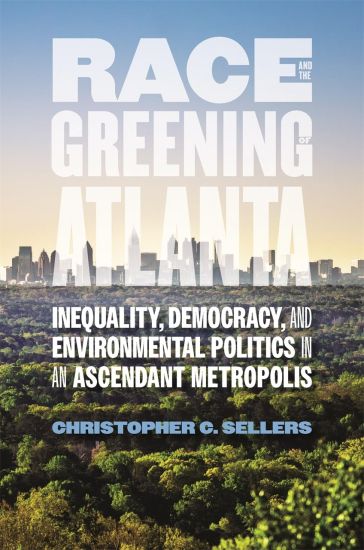
Race and the Greening of Atlanta turns an environmental lens on Atlanta’s ascent to thriving capital of the Sunbelt over the twentieth century. Uniquely wide ranging in scale, from the city’s variegated neighborhoods up to its place in regional and national political economies, this book reinterprets the fall of Jim Crow as a democratization born of two metropolitan movements: a well-known one for civil rights and a lesser known one on behalf of “the environment.” Arising out of Atlanta’s Black and white middle classes respectively, both movements owed much to New Deal capitalism’s undermining of concentrated wealth and power, if not racial segregation, in the Jim Crow South.Placing these two movements on the same historical page, Christopher C. Sellers spotlights those environmental inequities, ideals, and provocations that catalyzed their divergent political projects. He then follows the intermittent, sometimes vital alliances they struck as civil rights activists tackled poverty, as a new environmental state arose, and as Black politicians began winning elections. Into the 1980s, as a wealth-concentrating style of capitalism returned to the city and Atlanta became a national “poster child” for sprawl, the seedbeds spread both for a national environmental justice movement and for an influential new style of antistatism. Sellers contends that this new conservativism, sweeping the South with an antienvironmentalism and budding white nationalism that echoed the region’s Jim Crow past, once again challenged the democracy Atlantans had achieved.
Race and the Greening of Atlanta

Race and the Greening of Atlanta

Christopher C. Sellers; Erin Stewart Mauldin; James C. Giesen

UNIVERSITY OF GEORGIA PRESS
2023
pokkari
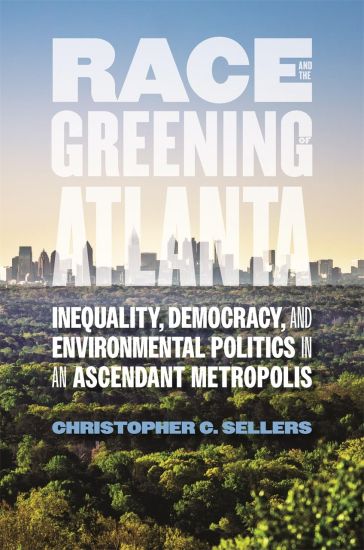
Race and the Greening of Atlanta turns an environmental lens on Atlanta’s ascent to thriving capital of the Sunbelt over the twentieth century. Uniquely wide ranging in scale, from the city’s variegated neighborhoods up to its place in regional and national political economies, this book reinterprets the fall of Jim Crow as a democratization born of two metropolitan movements: a well-known one for civil rights and a lesser known one on behalf of “the environment.” Arising out of Atlanta’s Black and white middle classes respectively, both movements owed much to New Deal capitalism’s undermining of concentrated wealth and power, if not racial segregation, in the Jim Crow South.Placing these two movements on the same historical page, Christopher C. Sellers spotlights those environmental inequities, ideals, and provocations that catalyzed their divergent political projects. He then follows the intermittent, sometimes vital alliances they struck as civil rights activists tackled poverty, as a new environmental state arose, and as Black politicians began winning elections. Into the 1980s, as a wealth-concentrating style of capitalism returned to the city and Atlanta became a national “poster child” for sprawl, the seedbeds spread both for a national environmental justice movement and for an influential new style of antistatism. Sellers contends that this new conservativism, sweeping the South with an antienvironmentalism and budding white nationalism that echoed the region’s Jim Crow past, once again challenged the democracy Atlantans had achieved.
Poison Powder

Poison Powder

Gregory S. Wilson; James C. Giesen; Erin Stewart Mauldin

UNIVERSITY OF GEORGIA PRESS
2023
sidottu
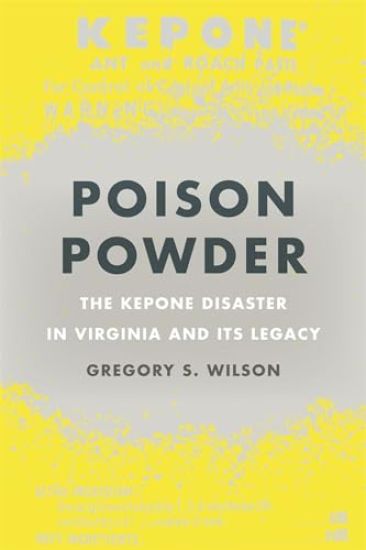
In 1975 workers at Life Science Products, a small makeshift pesticide factory in Hopewell, Virginia, became ill after exposure to Kepone, the brand name for the pesticide chlordecone. They made the poison under contract for a much larger Hopewell company, Allied Chemical. Life Science workers had been breathing in the dust for more than a year. Ingestion of the chemical made their bodies seize and shake. News of ill workers eventually led to thediscovery of widespread environmental contamination of the nearby James River and the landscape of the small, working-class city. Not only had Life Science dumped the chemical, but so had Allied when the company manufactured it in the 1960s and early 1970s. The resulting toxic impact was not only on the city of Hopewell but also on the faraway fields where Kepone was used as an insecticide.Aspects of this environmental tragedy are all too common: corporate avarice, ignorance, and regulatory failure combined with race and geography to determine toxicity and shape the response. But the Kepone story also contains some surprising medical, legal, and political moments amid the disaster. With Poison Powder, Gregory S. Wilson explores the conditions that put the Kepone factory and the workers there in the first place and the effects of the poison on the people and natural world long after 1975. Although the manufacture and use of Kepone is now banned by the Environmental Protection Agency, organochlorines have long half-lives, and these toxic compounds and their residues still remain in the environment.
Poison Powder

Poison Powder

Gregory S. Wilson; James C. Giesen; Erin Stewart Mauldin

UNIVERSITY OF GEORGIA PRESS
2023
pokkari
In 1975 workers at Life Science Products, a small makeshift pesticide factory in Hopewell, Virginia, became ill after exposure to Kepone, the brand name for the pesticide chlordecone. They made the poison under contract for a much larger Hopewell company, Allied Chemical. Life Science workers had been breathing in the dust for more than a year. Ingestion of the chemical made their bodies seize and shake. News of ill workers eventually led to thediscovery of widespread environmental contamination of the nearby James River and the landscape of the small, working-class city. Not only had Life Science dumped the chemical, but so had Allied when the company manufactured it in the 1960s and early 1970s. The resulting toxic impact was not only on the city of Hopewell but also on the faraway fields where Kepone was used as an insecticide.Aspects of this environmental tragedy are all too common: corporate avarice, ignorance, and regulatory failure combined with race and geography to determine toxicity and shape the response. But the Kepone story also contains some surprising medical, legal, and political moments amid the disaster. With Poison Powder, Gregory S. Wilson explores the conditions that put the Kepone factory and the workers there in the first place and the effects of the poison on the people and natural world long after 1975. Although the manufacture and use of Kepone is now banned by the Environmental Protection Agency, organochlorines have long half-lives, and these toxic compounds and their residues still remain in the environment.
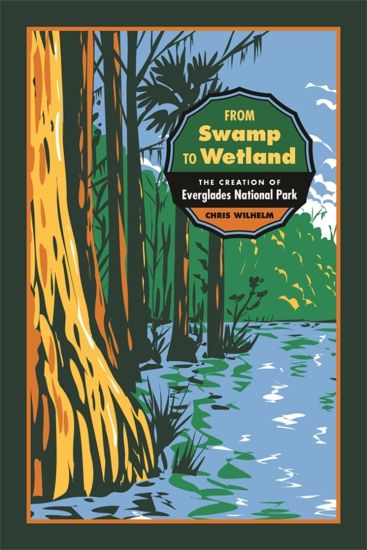
From Swamp to Wetland

From Swamp to Wetland

Chris Wilhelm; Erin Stewart Mauldin; James C. Giesen

UNIVERSITY OF GEORGIA PRESS
2022
pokkari
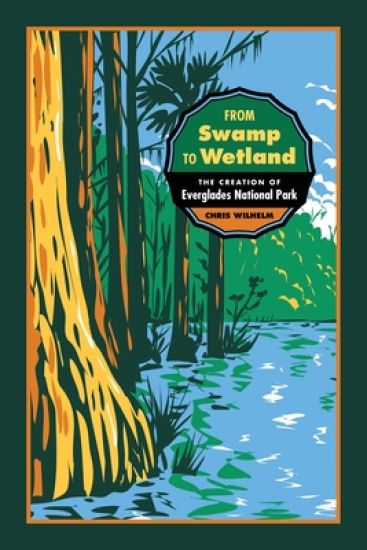
This book chronicles the creation of Everglades National Park, the largest subtropical wilderness in the United States. This effort, which spanned 1928 to 1958, was of central importance to the later emergence of modern environmentalism. Prior to the park’s creation, the Everglades was seen as a reviled and useless swamp, unfit for typical recreational or development projects. The region’s unusual makeup also made it an unlikely candidate to become a national park, as it had none of the sweeping scenic vistas or geological monuments found in other nationally protected areas.Park advocates drew on new ideas concerning the value of biota and ecology, the importance of wilderness, and the need to protect habitats, marine ecosystems, and plant life to redefine the Everglades. Using these ideas, the Everglades began to be recognized as an ecologically valuable and fragile wetland—and thus a region in need of protective status.While these new ideas foreshadowed the later emergence of modern environmentalism, tourism and the economic desires of Florida’s business and political elites also impacted the park’s future. These groups saw the Everglades’ unique biology and ecology as a foundation on which to build a tourism empire. They connected the Everglades to Florida’s modernization and commercialization, hoping the park would help facilitate the state’s transformation into the Sunshine State. Political conservatives welcomed federal power into Florida so long as it brought economic growth.Yet, even after the park’s creation, conservative landowners successfully fought to limit the park and saw it as a threat to their own economic freedoms. Today, a series of levees on the park’s eastern border marks the line between urban and protected areas, but development into these areas threatens the park system. Rising sea levels caused by global warming are another threat to the future of the park. The battle to save the swamp’s biodiversity continues, and Everglades Park stands at the center of ongoing restoration efforts.
From Swamp to Wetland

From Swamp to Wetland

Chris Wilhelm; Erin Stewart Mauldin; James C. Giesen

UNIVERSITY OF GEORGIA PRESS
2022
sidottu
This book chronicles the creation of Everglades National Park, the largest subtropical wilderness in the United States. This effort, which spanned 1928 to 1958, was of central importance to the later emergence of modern environmentalism. Prior to the park’s creation, the Everglades was seen as a reviled and useless swamp, unfit for typical recreational or development projects. The region’s unusual makeup also made it an unlikely candidate to become a national park, as it had none of the sweeping scenic vistas or geological monuments found in other nationally protected areas.Park advocates drew on new ideas concerning the value of biota and ecology, the importance of wilderness, and the need to protect habitats, marine ecosystems, and plant life to redefine the Everglades. Using these ideas, the Everglades began to be recognized as an ecologically valuable and fragile wetland—and thus a region in need of protective status.While these new ideas foreshadowed the later emergence of modern environmentalism, tourism and the economic desires of Florida’s business and political elites also impacted the park’s future. These groups saw the Everglades’ unique biology and ecology as a foundation on which to build a tourism empire. They connected the Everglades to Florida’s modernization and commercialization, hoping the park would help facilitate the state’s transformation into the Sunshine State. Political conservatives welcomed federal power into Florida so long as it brought economic growth.Yet, even after the park’s creation, conservative landowners successfully fought to limit the park and saw it as a threat to their own economic freedoms. Today, a series of levees on the park’s eastern border marks the line between urban and protected areas, but development into these areas threatens the park system. Rising sea levels caused by global warming are another threat to the future of the park. The battle to save the swamp’s biodiversity continues, and Everglades Park stands at the center of ongoing restoration efforts.
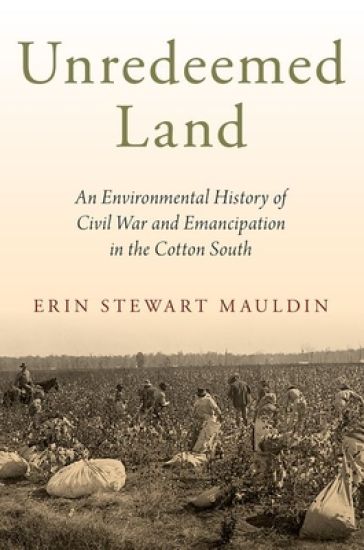
Unredeemed Land

Unredeemed Land

Erin Stewart Mauldin

OXFORD UNIVERSITY PRESS INC
2022
nidottu
How did the Civil War and the emancipation of four million slaves reconfigure the natural landscape in the South and the farming economy dependent upon it? An innovative reconsideration of the Civil War's profound impact on southern history, Unredeemed Land traces the environmental constraints that shaped the rural South's transition to capitalism during the late nineteenth century. Dixie's "King Cotton" required extensive land use techniques across large swaths of acreage, fresh soil, and slave-based agriculture in order to remain profitable. But wartime destruction and the rise of the contract labor system closed off those possibilities and necessitated increasingly intensive methods of cultivation that worked against the environment. The resulting disconnect between farmers' use of the land and what the natural environment could support intensified the economic dislocation of freed people, poor farmers, and sharecroppers. Erin Stewart Mauldin demonstrates how the Civil War and emancipation accelerated ongoing ecological change in ways that hastened the postbellum collapse of the region's subsistence economy, encouraged the expansion of cotton production, and ultimately kept cotton farmers trapped in a cycle of debt and tenancy. The first environmental history to bridge the antebellum, Civil War, and Reconstruction periods, Unredeemed Land powerfully examines the ways military conflict and emancipation left enduring ecological legacies.
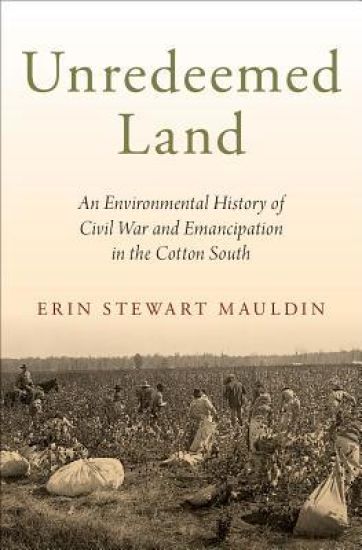
Unredeemed Land

Unredeemed Land

Erin Stewart Mauldin

Oxford University Press Inc
2018
sidottu
How did the Civil War and the emancipation of the South's four million slaves reconfigure the natural landscape and the farming economy dependent upon it? An innovative reconsideration of the Civil War's role in southern history, Unredeemed Land uncovers the environmental constraints that shaped the rural South's transition to capitalism during the late nineteenth century. Dixie's "King Cotton" required extensive land use techniques, fresh soil, and slave-based agriculture in order to remain profitable. But wartime destruction and the rise of the contract labor system closed off those possibilities and necessitated increasingly intensive cultivation in ways that worked against the environment. The resulting disconnect between farmers' use of the land and what the natural environment could support went hand-in-hand with the economic dislocation of freedpeople, poor farmers, and sharecroppers. Erin Stewart Mauldin demonstrates how the Civil War and emancipation accelerated ongoing ecological change in ways that hastened the postbellum collapse of the region's subsistence economy, encouraged the expansion of cotton production, and ultimately kept cotton farmers trapped in a cycle of debt and tenancy. The first environmental history to bridge the antebellum, Civil War, and Reconstruction periods, this work will appeal to anyone who is interested in the landscape of the South or the legacies of the Civil War.