Kirjojen hintavertailu. Mukana 12 390 323 kirjaa ja 12 kauppaa.

Kirjailija

Ernest LePore

Kirjat ja teokset yhdessä paikassa: 9 kirjaa, julkaisuja vuosilta 1991-2015, suosituimpien joukossa Donald Davidson's Truth-Theoretic Semantics. Vertaile teosten hintoja ja tarkista saatavuus suomalaisista kirjakaupoista.

9 kirjaa

Kirjojen julkaisuhaarukka 1991-2015.

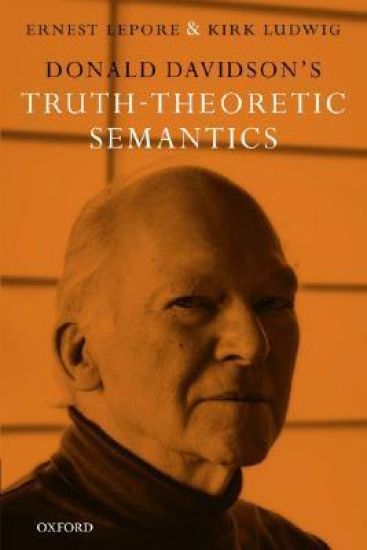
Donald Davidson's Truth-Theoretic Semantics

Donald Davidson's Truth-Theoretic Semantics

Ernest LePore; Kirk Ludwig

Clarendon Press
2007
sidottu
Ernest Lepore and Kirk Ludwig examine the foundations and applications of Davidson's influential program of truth-theoretic semantics for natural languages. The program uses an axiomatic truth theory for a language, which meets certain constraints, to serve the goals of a compositional meaning theory. Lepore and Ludwig explain and clarify the motivations for the approach, and then consider how to apply the framework to a range of important natural language constructions, including quantifiers, proper names, indexicals, simple and complex demonstratives, quotation, adjectives and adverbs, the simple and perfect tenses, temporal adverbials and temporal quantifiers, tense in sentential complement clauses, attitude and indirect discourse reports, and the problem of interrogative and imperative sentences. They not only discuss Davidson's own contributions to these subjects but consider criticisms, developments, and alternatives as well. They conclude with a discussion of logical form in natural language in light of the approach, the role of the concept of truth in the program, and Davidson's view of it. Anyone working on meaning will find this book invaluable.
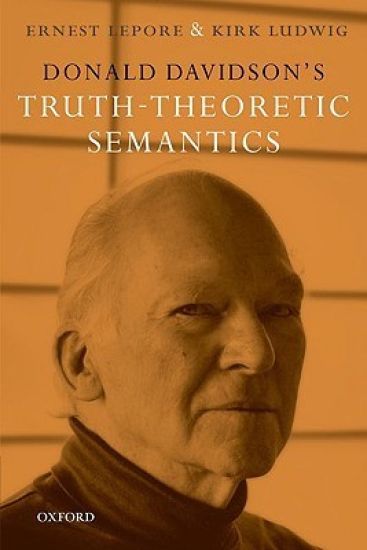
Donald Davidson's Truth-Theoretic Semantics

Donald Davidson's Truth-Theoretic Semantics

Ernest LePore; Kirk Ludwig

Oxford University Press
2009
nidottu
Ernest Lepore and Kirk Ludwig examine the foundations and applications of Davidson's influential program of truth-theoretic semantics for natural languages. The program uses an axiomatic truth theory for a language, which meets certain constraints, to serve the goals of a compositional meaning theory. Lepore and Ludwig explain and clarify the motivations for the approach, and then consider how to apply the framework to a range of important natural language constructions, including quantifiers, proper names, indexicals, simple and complex demonstratives, quotation, adjectives and adverbs, the simple and perfect tenses, temporal adverbials and temporal quantifiers, tense in sentential complement clauses, attitude and indirect discourse reports, and the problem of interrogative and imperative sentences. They not only discuss Davidson's own contributions to these subjects but consider criticisms, developments, and alternatives as well. They conclude with a discussion of logical form in natural language in light of the approach, the role of the concept of truth in the program, and Davidson's view of it. Anyone working on meaning will find this book invaluable.
Meaning and Argument

Meaning and Argument

Ernest Lepore; Sam Cumming

John Wiley Sons Inc
2012
nidottu
Meaning and Argument is a popular introduction to philosophy of logic and philosophy of language. Offers a distinctive philosophical, rather than mathematical, approach to logicConcentrates on symbolization and works out all the technical logic with truth tables instead of derivationsIncorporates the insights of half a century's work in philosophy and linguistics on anaphora by Peter Geach, Gareth Evans, Hans Kamp, and Irene Heim among othersContains numerous exercises and a corresponding answer keyAn extensive appendix allows readers to explore subjects that go beyond what is usually covered in an introductory logic courseUpdated edition includes over a dozen new problem sets and revisions throughoutFeatures an accompanying website at http://ruccs.rutgers.edu/~logic/MeaningArgument.html
Language Turned on Itself

Language Turned on Itself

Herman Cappelen; Ernest Lepore

Oxford University Press
2007
sidottu
Language Turned on Itself examines what happens when language becomes self-reflexive; when language is used to talk about language. Those who think, talk, and write about language are habitual users of various metalinguistic devices, but reliance on these devices begins early: kids are told, 'That's called a "rabbit"'. It's not implausible that a primitive capacity for the meta-linguistic kicks in at the beginning stages of language acquisition. But no matter when or how frequently these devices are invoked, one thing is clear: they present theorists of language with a complex data pattern. Herman Cappelen and Ernest Lepore show that the study of these devices and patterns not only represents an interesting and neglected project in the philosophy of language, but also carries important consequences for other parts of philosophy. Part I is devoted to presenting data about various aspects of our metalinguistic practices. In Part II, the authors examine and reject the four leading metalinguistic theories, and offer a new account of our use of quotation in a variety of different contexts. But the primary goal of this book is not to promote one theory over another. Rather, it is to present a deeply puzzling set of problems and explain their significance
Holism

Holism

Jerry Fodor; Ernest Lepore

JOHN WILEY AND SONS LTD
1991
nidottu
The main question addressed in this book is whether individuation of the contents of thoughts and linguistic expressions is inherently holistic. The authors consider arguments that are alleged to show that the meaning of a scientific hypothesis depends on the entire theory that entails it, or that the content of a concept depends on the entire belief system of which it is part. If these arguments are sound then it would follow that the meanings of words, sentences, hypotheses, predictions, discourses, dialogs, texts, thoughts and the like are merely derivative. The implications of holism about meaning for other philosophical issues (intentional explanation, translation, Realism, skepticism, etc.) will also be explored. Authors discussed include Quine, Davidson, Lewis, Bennett, Block, Field, Churchland, and others. The book is intended for all those interested in language, mind, metaphysics or epistemology.
Language Turned on Itself

Language Turned on Itself

Herman Cappelen; Ernest Lepore

Oxford University Press
2009
nidottu
Language Turned on Itself examines what happens when language becomes self-reflexive; when language is used to talk about language. Those who think, talk, and write about language are habitual users of various metalinguistic devices, but reliance on these devices begins early: kids are told, 'That's called a "rabbit"'. It's not implausible that a primitive capacity for the meta-linguistic kicks in at the beginning stages of language acquisition. But no matter when or how frequently these devices are invoked, one thing is clear: they present theorists of language with a complex data pattern. Herman Cappelen and Ernest Lepore show that the study of these devices and patterns not only represents an interesting and neglected project in the philosophy of language, but also carries important consequences for other parts of philosophy. Part I is devoted to presenting data about various aspects of our metalinguistic practices. In Part II, the authors examine and reject the four leading metalinguistic theories, and offer a new account of our use of quotation in a variety of different contexts. But the primary goal of this book is not to promote one theory over another. Rather, it is to present a deeply puzzling set of problems and explain their significance
Insensitive Semantics

Insensitive Semantics

Herman Cappelen; Ernest Lepore

Wiley-Blackwell (an imprint of John Wiley Sons Ltd)
2004
nidottu
Insensitive Semantics is an overview of and contribution to the debates about how to accommodate context sensitivity within a theory of human communication, investigating the effects of context on communicative interaction and, as a corollary, what a context of utterance is and what it is to be in one. Provides detailed and wide-ranging overviews of the central positions and arguments surrounding contextualismAddresses broad and varied aspects of the distinction between the semantic and non-semantic content of languageDefends a distinctive and explanatorily powerful combination of semantic minimalism and speech act pluralismConfronts core problems which not only run to the heart of philosophy of language and linguistics, but which arise in epistemology, metaphysics, and moral philosophy as well
Insensitive Semantics

Insensitive Semantics

Herman Cappelen; Ernest Lepore

Wiley-Blackwell (an imprint of John Wiley Sons Ltd)
2004
sidottu
Insensitive Semantics is an overview of and contribution to the debates about how to accommodate context sensitivity within a theory of human communication, investigating the effects of context on communicative interaction and, as a corollary, what a context of utterance is and what it is to be in one. Provides detailed and wide-ranging overviews of the central positions and arguments surrounding contextualismAddresses broad and varied aspects of the distinction between the semantic and non-semantic content of languageDefends a distinctive and explanatorily powerful combination of semantic minimalism and speech act pluralismConfronts core problems which not only run to the heart of philosophy of language and linguistics, but which arise in epistemology, metaphysics, and moral philosophy as well