Kirjojen hintavertailu. Mukana 12 595 353 kirjaa ja 12 kauppaa.

Kirjailija

Ernest Mathijs

Kirjat ja teokset yhdessä paikassa: 19 kirjaa, julkaisuja vuosilta 2004-2025, suosituimpien joukossa Big Brother International. Vertaile teosten hintoja ja tarkista saatavuus suomalaisista kirjakaupoista.

19 kirjaa

Kirjojen julkaisuhaarukka 2004-2025.

100 Cult Films: The Sequel

100 Cult Films: The Sequel

Ernest Mathijs; Xavier Mendik

BLOOMSBURY PUBLISHING PLC
2025
sidottu
In this follow up to their 100 Cult Films, Ernest Mathijs and Xavier Mendik provide a guide to one hundred more incredible films from the history and present of cult cinema around the world, from the 1911 Italian silent Dante's Inferno to Jordan Peele's 2017 horror classic Get Out. Their richly-illustrated guide addresses the work of filmmakers including Stanley Kubrick, Paul Verhoeven, Julien Temple, Ana Lily Amirpour, Lizzie Borden, Rob Reiner and John Carpenter, and movies from countries ranging from Iran to Peru, South Korea, Sweden, Japan and the USA. The films represent genres including sci-fi, romance, horror, vampire, comedy and action, and in their subject matter and through the debates (and sometimes controversies) that surrounds them raise issues about identity, home, belonging, exoticism, censorship and what it means to be 'weird'. By presenting films that confirm and interrogate the notion of what makes a ‘cult film’, 100 Cult Films: The Sequel reinvigorates the debate about cult cinema while affirming its foundations in today’s volatile and vibrant cultural climate.

100 Cult Films: The Sequel

100 Cult Films: The Sequel

Ernest Mathijs; Xavier Mendik

BLOOMSBURY PUBLISHING PLC
2025
nidottu
In this follow up to their 100 Cult Films, Ernest Mathijs and Xavier Mendik provide a guide to one hundred more incredible films from the history and present of cult cinema around the world, from the 1911 Italian silent Dante's Inferno to Jordan Peele's 2017 horror classic Get Out. Their richly-illustrated guide addresses the work of filmmakers including Stanley Kubrick, Paul Verhoeven, Julien Temple, Ana Lily Amirpour, Lizzie Borden, Rob Reiner and John Carpenter, and movies from countries ranging from Iran to Peru, South Korea to Sweden, Japan to the USA. The films represent genres including sci-fi, romance, horror, vampire, comedy and action, and in their subject matter and through the debates (and sometimes controversies) that surrounds them raise issues about identity, home, belonging, exoticism, censorship and what it means to be 'weird'. By presenting 100 films that confirm and interrogate the notion of what makes a film a ‘cult film’, 100 Cult Films Redux reinvigorates the debate about cult cinema while affirming its foundations in today’s volatile and vibrant cultural climate.

John Fawcett's Ginger Snaps

John Fawcett's Ginger Snaps

Ernest Mathijs

University of Toronto Press
2013
sidottu
Few studies of Canadian cinema to date have engaged deeply with genre cinema and its connection to Canadian culture. Ernest Mathijs does just that in this volume, which traces the inception, production, and reception of Canada’s internationally renowned horror film, Ginger Snaps (2000). This tongue-in-cheek Gothic film, which centres on two death-obsessed teenage sisters, draws a provocative connection between werewolf monstrosity and female adolescence and boasts a dedicated world-wide fan base. The first book-length study of this popular film, John Fawcett’s Ginger Snaps is based on the author’s privileged access to most of its cast and crew and to its enthusiasts around the world. Examining themes of genre, feminism, identity, and adolescent belonging, Mathijs concludes that Ginger Snaps deserves to be recognized as part of the Canadian canon, and that it is a model example of the kind of crossover cult film that remains unjustly undervalued by film scholars.
John Fawcett's Ginger Snaps

John Fawcett's Ginger Snaps

Ernest Mathijs

University of Toronto Press
2013
pokkari
Few studies of Canadian cinema to date have engaged deeply with genre cinema and its connection to Canadian culture. Ernest Mathijs does just that in this volume, which traces the inception, production, and reception of Canada’s internationally renowned horror film, Ginger Snaps (2000). This tongue-in-cheek Gothic film, which centres on two death-obsessed teenage sisters, draws a provocative connection between werewolf monstrosity and female adolescence and boasts a dedicated world-wide fan base. The first book-length study of this popular film, John Fawcett’s Ginger Snaps is based on the author’s privileged access to most of its cast and crew and to its enthusiasts around the world. Examining themes of genre, feminism, identity, and adolescent belonging, Mathijs concludes that Ginger Snaps deserves to be recognized as part of the Canadian canon, and that it is a model example of the kind of crossover cult film that remains unjustly undervalued by film scholars.
100 Cult Films

100 Cult Films

Ernest Mathijs; Xavier Mendik

BFI Publishing
2011
nidottu
Some films should never have been made. They are too unsettling, too dangerous, too challenging, too outrageous and even too badly made to be let loose on unsuspecting audiences. Yet these films, from the shocking Cannibal Holocaust to the apocalyptic Donnie Darko, from the destructive Tetsuo to the awfully bad The Room, from the hilarious This Is Spinal Tap to the campy Showgirls, from the asylum of Das Cabinet des Dr. Caligari to the circus of Freaks, from the gangs of The Warriors to the gangsters of In Bruges and from the flamboyant Rocky Horror Picture Show to the ultimate cool of The Big Lebowski, have all garnered passionate fan followings. Cult cinema has made tragic misfits, monsters and cyborgs, such as Edward Scissorhands or Blade Runner's replicants, heroes of our times. 100 Cult Films explains why these figures continue to inspire fans around the globe. Cult film experts Ernest Mathijs and Xavier Mendik round up the most cultish of giallo, blaxploitation, anime, sexploitation, zombie, vampire and werewolf films, exploring both the cults that live hidden inside the underground (Nekromantik, Cafe Flesh) and the cult side of the mainstream (Dirty Dancing, The Lord of the Rings, and even The Sound of Music). 1 00 Cult Films is a true trip around the world, providing a lively and illuminating guide to films from more than a dozen countries, across nine decades, representing a wide range of genres and key cult directors such as David Cronenberg, Terry Gilliam and David Lynch. Drawing on exclusive interviews with some of the world's most iconic cult creators and performers, including Dario Argento, Pupi Avati, Alex Cox, Ruggero Deodato, Jesus Franco, Lloyd Kaufman, Harry Kumel, H. G. Lewis, Christina Lindberg, Takashi Miike, Franco Nero, George A. Romero and Brian Yuzna, and featuring a foreword by cult director Joe Dante, 100 Cult Films is your ultimate ticket to the midnight movie show.
Cult Cinema

Cult Cinema

Ernest Mathijs; Jamie Sexton

Wiley-Blackwell (an imprint of John Wiley Sons Ltd)
2011
nidottu
Cult Cinema: an Introduction presents the first in-depth academic examination of all aspects of the field of cult cinema, including audiences, genres, and theoretical perspectives. Represents the first exhaustive introduction to cult cinemaOffers a scholarly treatment of a hotly contested topic at the center of current academic debateCovers audience reactions, aesthetics, genres, theories of cult cinema, as well as historical insights into the topic
Cult Cinema

Cult Cinema

Ernest Mathijs; Jamie Sexton

Wiley-Blackwell (an imprint of John Wiley Sons Ltd)
2011
sidottu
Cult Cinema: an Introduction presents the first in-depth academic examination of all aspects of the field of cult cinema, including audiences, genres, and theoretical perspectives. Represents the first exhaustive introduction to cult cinemaOffers a scholarly treatment of a hotly contested topic at the center of current academic debateCovers audience reactions, aesthetics, genres, theories of cult cinema, as well as historical insights into the topic
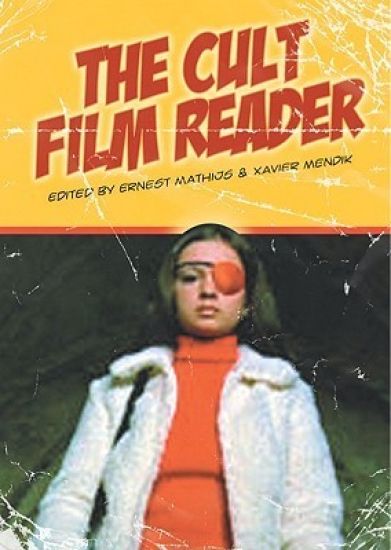
The Cult Film Reader

The Cult Film Reader

Ernest Mathijs; Xavier Mendik

Open University Press
2007
nidottu
"An invaluable collection for anyone researching or teaching cult cinema ... The Cult Film Reader is an authoritative text that should be of value to any student or researcher interested in challenging and transgressive cinema that pushes the boundaries of conventional cinema and film studies." Science Fiction Film and Television"A really impressive and comprehensive collection of the key writings in the field. The editors have done a terrific job in drawing together the various traditions and providing a clear sense of this rich and rewarding scholarly terrain. This collection is as wild and diverse as the films that it covers. Fascinating." Mark Jancovich, Professor of Film and Television Studies, University of East Anglia, UK"It's about time the lunatic fans and loyal theorists of cult movies were treated to a book they can call their own. The effort and knowledge contained in The Cult Film Reader will satisfy even the most ravenous zombie's desire for detail and insight. This book will gnaw, scratch and infect you just like the cult films themselves."Brett Sullivan, Director of Ginger Snaps Unleashed and The Chair"The Cult Film Reader is a great film text book and a fun read."John Landis, Director of The Blues Brothers, An American Werewolf in London and Michael Jackson's Thriller"Excellent overview of the subject, and a comprehensive collection of significant scholarship in the field of cult film. Very impressive and long overdue." Steven Rawle, York St John University, UKWhether defined by horror, kung-fu, sci-fi, sexploitation, kitsch musical or ‘weird world cinema’, cult movies and their global followings are emerging as a distinct subject of film and media theory, dedicated to dissecting the world’s unruliest images. This book is the world’s first reader on cult film. It brings together key works in the field on the structure, form, status, and reception of cult cinema traditions. Including work from key established scholars in the field such as Umberto Eco, Janet Staiger, Jeffrey Sconce, Henry Jenkins, and Barry Keith Grant, as well as new perspectives on the gradually developing canon of cult cinema, the book not only presents an overview of ways in which cult cinema can be approached, it also re-assesses the methods used to study the cult text and its audiences.With editors’ introductions to the volume and to each section, the book is divided into four clear thematic areas of study – The Conceptions of Cult; Cult Case Studies; National and International Cults; and Cult Consumption – to provide an accessible overview of the topic. It also contains an extensive bibliography for further related readings.Written in a lively and accessible style, The Cult Film Reader dissects some of biggest trends, icons, auteurs and periods of global cult film production. Films discussed include Casablanca, The Rocky Horror Picture Show, Eraserhead, The Texas Chainsaw Massacre, Showgirls and Ginger Snaps.Essays by: Jinsoo An; Jane Arthurs; Bruce Austin; Martin Barker; Walter Benjamin; Harry Benshoff; Pierre Bourdieu; Noel Carroll; Steve Chibnall; Umberto Eco; Nezih Erdogan; Welch Everman; John Fiske; Barry Keith Grant ; Joan Hawkins; Gary Hentzi; Matt Hills; Ramaswami Harindranath; J.Hoberman; Leon Hunt; I.Q. Hunter; Mark Jancovich; Henry Jenkins; Anne Jerslev; Siegfried Kracauer; Gina Marchetti; Tom Mes; Gary Needham; Sheila J. Nayar; Annalee Newitz; Lawrence O’Toole; Harry Allan Potamkin; Jonathan Rosenbaum; Andrew Ross; David Sanjek; Eric Schaefer; Steven Jay Schneider; Jeffrey Sconce; Janet Staiger; J.P. Telotte; Parker Tyler; Jean Vigo; Harmony Wu
Watching The Lord of the Rings

Watching The Lord of the Rings

Martin Barker; Ernest Mathijs

Peter Lang Publishing Inc
2007
sidottu
How did audiences across the world respond to the films of "The Lord of the Rings"? This book presents findings from the largest film audience project ever undertaken, drawing from 25,000 questionnaire responses and a wide array of other materials. Contributors use these materials to explore a series of widely speculated questions: why is film fantasy important to different kinds of viewers? Through marketing, previews and reviews, debates and cultural chatter, how are audiences prepared for a film like this? How did fans of the book respond to its adaptation on screen? How do people choose their favorite characters? How was the films' reception shaped by different national and cultural contexts? The answers to these questions shed fresh light on the extraordinary popularity of "The Lord of the Rings" and provide important new insights into the global reception of cinema in the twenty-first century.
Watching The Lord of the Rings

Watching The Lord of the Rings

Martin Barker; Ernest Mathijs

Peter Lang Publishing Inc
2007
nidottu
How did audiences across the world respond to the films of The Lord of the Rings? This book presents findings from the largest film audience project ever undertaken, drawing from 25,000 questionnaire responses and a wide array of other materials. Contributors use these materials to explore a series of widely speculated questions: why is film fantasy important to different kinds of viewers? Through marketing, previews and reviews, debates and cultural chatter, how are audiences prepared for a film like this? How did fans of the book respond to its adaptation on screen? How do people choose their favorite characters? How was the films' reception shaped by different national and cultural contexts? The answers to these questions shed fresh light on the extraordinary popularity of The Lord of the Rings and provide important new insights into the global reception of cinema in the twenty-first century.
The Cinema of the Low Countries

The Cinema of the Low Countries

Ernest Mathijs; George Sluizer

Wallflower Press
2004
nidottu
Films of the Low Countries have long been regarded as isolated texts. This book points to the interconnectedness between Low Countries films from different genres, regions, languages, and formats. Building on each films relationship with its particular cultural context, the volume presents twenty-four especially commisioned essays by renowned writers, each one focusing on one key film. The volume covers the work of internationally acclaimed directors such as Joris Ivens, Henri Storck, Paul Verhoeven, and the Dardenne Brothers. Key films discussed include "Turkish Delight, The Vanishing, Daughters of Darkness, Character, Rosetta," and "Man Bites Dog."
The Cinema of the Low Countries

The Cinema of the Low Countries

Ernest Mathijs; George Sluizer

Wallflower Press
2004
sidottu
Films of the Low Countries have long been regarded as isolated texts. This book points to the interconnectedness between Low Countries films from different genres, regions, languages, and formats. Building on each film's relationship with its particular cultural context, the volume presents twenty-four especially commisioned essays by renowned writers, each one focusing on one key film. The volume covers the work of internationally acclaimed directors such as Joris Ivens, Henri Storck, Paul Verhoeven, and the Dardenne Brothers. Key films discussed include Turkish Delight, The Vanishing, Daughters of Darkness, Character, Rosetta and Man Bites Dog.
Alternative Europe

Alternative Europe

Ernest Mathijs

Wallflower Press
2004
nidottu
This second title in the "AlterImage" series that investigates previously under-explored areas of popular and cult cinema ("Underground U.S.A." being the first volume) features over 20 essays from an eclectic range of writers uncovering the cult cinema of Europe. The writers consider such unusual and diverse topics as Russian horror cinema, British exploitation, Belgian alternative cinema and Black 'Emmanuelle' films. "Alternative Europe" also includes exclusive interviews with such 'trash' film directors as Jess Fano and Brian Yuzna ("Reanimator," etc.).