Kirjojen hintavertailu. Mukana 12 122 535 kirjaa ja 12 kauppaa.
Kirjailija
Ernest Rhys
Kirjat ja teokset yhdessä paikassa: 42 kirjaa, julkaisuja vuosilta 2006-2020, suosituimpien joukossa A treatise of human nature . By: David Hume, edited By: Ernest Rhys (Volume 2).: Hector Hugh Munro (18 December 1870 - 14 November 1916), better known. Vertaile teosten hintoja ja tarkista saatavuus suomalaisista kirjakaupoista.
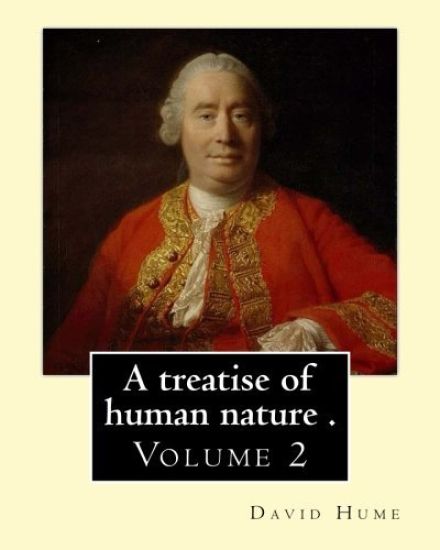
A Treatise of Human Nature (1738-40) is a book by Scottish philosopher David Hume, considered by many to be Hume's most important work and one of the most influential works in the history of philosophy. The Treatise is a classic statement of philosophical empiricism, skepticism, and naturalism. In the introduction Hume presents the idea of placing all science and philosophy on a novel foundation: namely, an empirical investigation into human nature. Impressed by Isaac Newton's achievements in the physical sciences, Hume sought to introduce the same experimental method of reasoning into the study of human psychology, with the aim of discovering the "extent and force of human understanding". Against the philosophical rationalists, Hume argues that passion rather than reason governs human behaviour. He introduces the famous problem of induction, arguing that inductive reasoning and our beliefs regarding cause and effect cannot be justified by reason; instead, our faith in induction and causation is the result of mental habit and custom. Hume defends a sentimentalist account of morality, arguing that ethics is based on sentiment and passion rather than reason, and famously declaring that "reason is, and ought only to be the slave to the passions". Hume also offers a skeptical theory of personal identity and a compatibilist account of free will. Contemporary philosophers have written of Hume that "no man has influenced the history of philosophy to a deeper or more disturbing degree", and that Hume's Treatise is "the founding document of cognitive science" and the "most important philosophical work written in English." However, the public in Britain at the time did not agree, and the Treatise was a commercial failure. Deciding that the Treatise had problems of style rather than of content, Hume reworked some of the material for more popular consumption in An Enquiry Concerning Human Understanding (1748) and An Enquiry Concerning the Principles of Morals (1751), which Hume wrote is "of all my writings, historical, philosophical, or literary, incomparably the best."........... Hector Hugh Munro (18 December 1870 - 14 November 1916), better known by the pen name Saki, and also frequently as H. H. Munro, was a British writer whose witty, mischievous and sometimes macabre stories satirize Edwardian society and culture. He is considered a master of the short story, and often compared to O. Henry citation needed] and Dorothy Parker citation needed]. Influenced by Oscar Wilde, Lewis Carroll and Rudyard Kipling, he himself influenced A. A. Milne, No l Coward and P. G. Wodehouse. Besides his short stories (which were first published in newspapers, as was customary at the time, and then collected into several volumes), he wrote a full-length play, The Watched Pot, in collaboration with Charles Maude; two one-act plays; a historical study, The Rise of the Russian Empire, the only book published under his own name; a short novel, The Unbearable Bassington; the episodic The Westminster Alice (a parliamentary parody of Alice in Wonderland); and When William Came, subtitled A Story of London Under the Hohenzollerns, a fantasy about a future German invasion and occupation of Britain....... Ernest Percival Rhys ( 17 July 1859 - 25 May 1946) was a Welsh-English writer, best known for his role as founding editor of the Everyman's Library series of affordable classics. He wrote essays, stories, poetry, novels and plays............
Mary I (18 February 1516 - 17 November 1558) was the Queen of England and Ireland from July 1553 until her death. Her executions of Protestants led to the posthumous sobriquet "Bloody Mary". She was the only child of Henry VIII by his first wife Catherine of Aragon to survive to adulthood. Her younger half-brother Edward VI (son of Henry and Jane Seymour) succeeded their father in 1547. When Edward became mortally ill in 1553, he attempted to remove Mary from the line of succession because of religious differences. On his death their first cousin once removed, Lady Jane Grey, was proclaimed queen. Mary assembled a force in East Anglia and deposed Jane, who was ultimately beheaded. Mary was-excluding the disputed reigns of Jane and the Empress Matilda-the first queen regnant of England. In 1554, Mary married Philip of Spain, becoming queen consort of Habsburg Spain on his accession in 1556. Mary is remembered for her restoration of Roman Catholicism after her half-brother's short-lived Protestant reign. During her five-year reign, she had over 280 religious dissenters burned at the stake in the Marian persecutions. After her death in 1558, her re-establishment of Roman Catholicism was reversed by her younger half-sister and successor Elizabeth I, daughter of Henry and Anne Boleyn.
Ralph Waldo Emerson (May 25, 1803 - April 27, 1882) was an American essayist, lecturer, and poet who led the transcendentalist movement of the mid-19th century. He was seen as a champion of individualism and a prescient critic of the countervailing pressures of society, and he disseminated his thoughts through dozens of published essays and more than 1,500 public lectures across the United States. Emerson gradually moved away from the religious and social beliefs of his contemporaries, formulating and expressing the philosophy of transcendentalism in his 1836 essay "Nature". Following this work, he gave a speech entitled "The American Scholar" in 1837, which Oliver Wendell Holmes Sr. considered to be America's "intellectual Declaration of Independence". Emerson wrote most of his important essays as lectures first and then revised them for print. His first two collections of essays, Essays: First Series (1841) and Essays: Second Series (1844), represent the core of his thinking. They include the well-known essays "Self-Reliance", "The Over-Soul", "Circles", "The Poet" and "Experience". Together with "Nature", these essays made the decade from the mid-1830s to the mid-1840s Emerson's most fertile period. Emerson wrote on a number of subjects, never espousing fixed philosophical tenets, but developing certain ideas such as individuality, freedom, the ability for humankind to realize almost anything, and the relationship between the soul and the surrounding world. Emerson's "nature" was more philosophical than naturalistic: "Philosophically considered, the universe is composed of Nature and the Soul". Emerson is one of several figures who "took a more pantheist or pandeist approach by rejecting views of God as separate from the world." He remains among the linchpins of the American romantic movement, and his work has greatly influenced the thinkers, writers and poets that followed him. When asked to sum up his work, he said his central doctrine was "the infinitude of the private man." Emerson is also well known as a mentor and friend of Henry David Thoreau, a fellow transcendentalist. Ernest Percival Rhys ( 17 July 1859 - 25 May 1946) was a Welsh-English writer, best known for his role as founding editor of the Everyman's Library series of affordable classics. He wrote essays, stories, poetry, novels and plays.Rhys was born in London, and brought up in Carmarthen and Newcastle-upon-Tyne. After working in the coal industry, he was employed doing editorial work on the Camelot Series of 65 reprints and translations from 1886, for five years, while he turned to writing as a profession. He was a founder member in 1890 of the Rhymers' Club in London, and a contributor to The Book of the Rhymers' Club (1893). In 1906, Rhys persuaded J. M. Dent, the publisher, for whom he was working on The Lyric Poets series, to start out on the ambitious Everyman project, aiming to publish 1000 titles; the idea was to put out ten at a time. The target was eventually reached, ten years after Rhys died.