Kirjojen hintavertailu. Mukana 12 123 013 kirjaa ja 12 kauppaa.

Kirjailija

Ernst Bloch

Kirjat ja teokset yhdessä paikassa: 26 kirjaa, julkaisuja vuosilta 1956-2024, suosituimpien joukossa Volksfronten: Popular Fronts. Vertaile teosten hintoja ja tarkista saatavuus suomalaisista kirjakaupoista.

26 kirjaa

Kirjojen julkaisuhaarukka 1956-2024.

Utopins anda

Utopins anda

Ernst Bloch; Mårten Björk

h:ström - Text Kultur AB
2024
nidottu
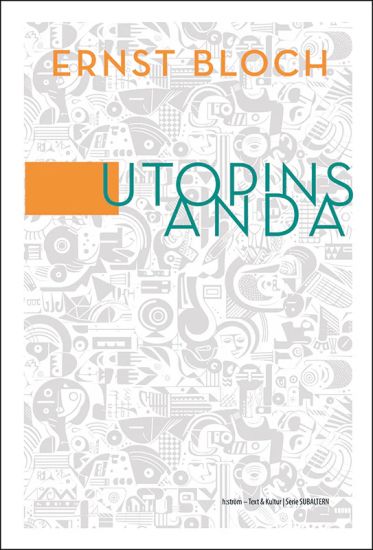
"Jag är. Vi är. Det räcker med det. Nu är det upp till oss själva att ta tag i uppgiften. Livet är lagt i våra händer." Så inleder Ernst Bloch sitt debutverk Utopins anda, skrivet under första världskrigets krigshets och publicerat 1918, för att sedan utkomma i en andra reviderad utgåva 1923. Utopins anda är lika mycket en apokalyptisk musik- och konstfilosofi som en antimilitaristisk och socialistisk stridsskrift av Bloch själv långt senare kallad en Sturm und Drang-bok. Med sin säregna blandning av bibliska, marxistiska och expressionistiskt poetiska ordalydelser utgör Utopins anda ett försök att på nytt tänka den västerländska kulturhistorien som en process av revolutionära brott, och rädda de utopiska frön som gror i traditionens konstföremål, religioner och filosofier. Här presenteras Blochs klassiska förstlingsverk i svensk översättning av Christer Persson. I en inledande essä ger teologen Mårten Björk en bakgrund till Blochs tänkande och vad som står på spel i Utopins anda. Han står vid vägskälet, innan det moderna i sig blev ett hinder, och han befinner sig på en odefinierad plats som är värd att utforska. Den utopiska anda som han förespråkade har idag inte förverkligats, om något så är vi med hans mått i med den moderna teknologins totalitära tidsålder än längre därifrån. Men när vi nu står mitt i det moderna är jag övertygad om att Blochs budskap och hans olika vägar och ingångar till det utopiska står sig än idag; vare sig du är teolog, filosof eller idéhistoriker. Om man bara ger honom lite tid och låter bokens delar växa in i varandras så tror jag att han har något unikt att säga. Det ligger i dina händer. - Max Frieberg i SITE Inte sällan framstår Bloch som en bibliotekarie som gräver i förråden för att visa hur hoppet om en bättre framtid där människan äntligen kan blomstra på både individuell och kollektiv nivå har varit ett centralt tema i den mänskliga strävan. - Martin Kehlmeier i Röda rummet
Aesthetics and Politics

Aesthetics and Politics

Fredric Jameson; Bertolt Brecht; Ernst Bloch; Georg Lukács; Theodor Adorno; Walter Benjamin

Verso Books
2020
nidottu
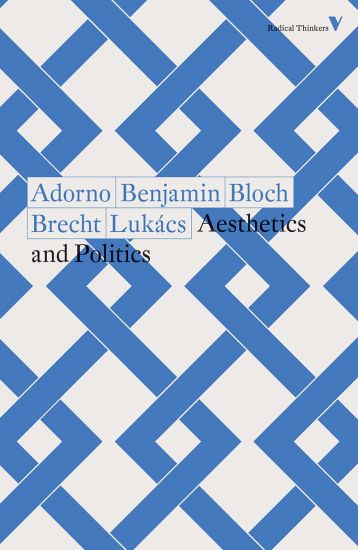
No other country and no other period has produced a tradition of major aesthetic debate to compare with that which unfolded in German culture from the 1930s to the 1950s. In Aesthetics and Politics the key texts of the great Marxist controversies over literature and art during these years are assembled in a single volume. They do not form a disparate collection but a continuous, interlinked debate between thinkers who have become giants of twentieth-century intellectual history.
Volksfronten: Popular Fronts

Volksfronten: Popular Fronts

Ekaterina Degot; Ernst Bloch; Mevis & Van Deursen

Hatje Cantz
2019
nidottu
What is the role of the “popular” in a time of rising right-wing populism? How to resist or subvert these increasingly aggressive framings of “the people”? How to engage with all these tangled histories and uncertain futures? Such are the questions at the heart of the 51st edition of steirischer herbst, a major interdisciplinary festival of contemporary art in Europe, held every autumn in Graz and in Styria, Austria. The title of the accompanying reader, Volksfronten | Popular Fronts, refers to the historical front populaire—the broad coalition of communists and liberals that unsuccessfully tried to challenge fascism in the 1930s. Nine essays as well as artists’ texts and full color images examine the relevance of that historical context and illuminate the role of critical thinking and artistic practice.
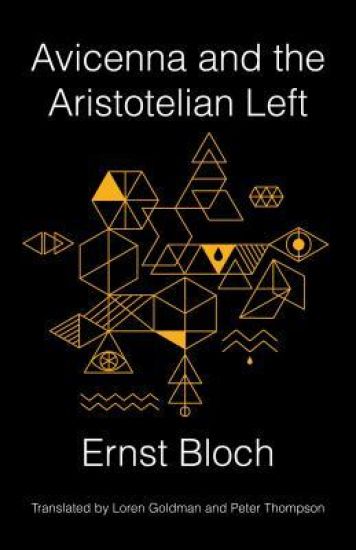
Avicenna and the Aristotelian Left

Avicenna and the Aristotelian Left

Ernst Bloch

Columbia University Press
2018
sidottu
Ernst Bloch was one of the most significant twentieth-century German thinkers, yet he remains overshadowed by his Frankfurt School contemporaries. Known for his engagement with utopianism and religious thought, Bloch also wrote incisively about ontological questions. In his short masterpiece Avicenna and the Aristotelian Left, Bloch gives a striking account of materialism that traces emancipatory elements of modern thought to medieval Islamic philosophers’ encounter with Aristotle.Bloch argues that the great medieval Islamic philosopher Avicenna (Ibn Sina) planted the seeds of a radical materialism still relevant for critical theory today. He contrasts Avicenna’s and Aquinas’s interpretations of Aristotle on form and matter to argue that Avicenna’s reading democratizes power and undermines clerical and political authority. Bloch explores Avicenna’s world and metaphysics in detail, showing how even his most recondite theoretical concerns prove capable of pointing toward radical social transformation. He blazes an original path through the history of ideas, including Averroes (Ibn Rushd), Spinoza, and Marx as well as lesser-known figures. Here translated into English for the first time, Avicenna and the Aristotelian Left is at once a succinct summation of Bloch’s own idiosyncratic materialism, a provocative reconstruction of the Western philosophical tradition in light of its exchanges with Islamic thought, and a vital resource for contemporary debates about materialism in critical theory.
Avicenna and the Aristotelian Left

Avicenna and the Aristotelian Left

Ernst Bloch

Columbia University Press
2018
pokkari
Ernst Bloch was one of the most significant twentieth-century German thinkers, yet he remains overshadowed by his Frankfurt School contemporaries. Known for his engagement with utopianism and religious thought, Bloch also wrote incisively about ontological questions. In his short masterpiece Avicenna and the Aristotelian Left, Bloch gives a striking account of materialism that traces emancipatory elements of modern thought to medieval Islamic philosophers’ encounter with Aristotle.Bloch argues that the great medieval Islamic philosopher Avicenna (Ibn Sina) planted the seeds of a radical materialism still relevant for critical theory today. He contrasts Avicenna’s and Aquinas’s interpretations of Aristotle on form and matter to argue that Avicenna’s reading democratizes power and undermines clerical and political authority. Bloch explores Avicenna’s world and metaphysics in detail, showing how even his most recondite theoretical concerns prove capable of pointing toward radical social transformation. He blazes an original path through the history of ideas, including Averroes (Ibn Rushd), Spinoza, and Marx as well as lesser-known figures. Here translated into English for the first time, Avicenna and the Aristotelian Left is at once a succinct summation of Bloch’s own idiosyncratic materialism, a provocative reconstruction of the Western philosophical tradition in light of its exchanges with Islamic thought, and a vital resource for contemporary debates about materialism in critical theory.
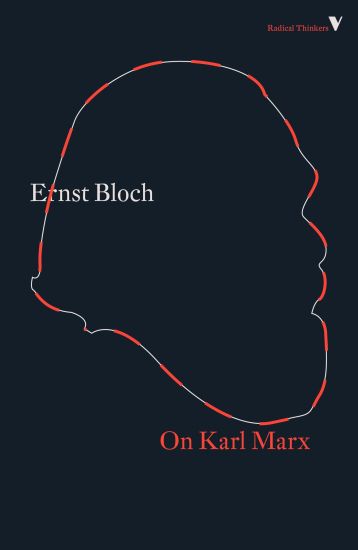
On Karl Marx

On Karl Marx

Ernst Bloch

Verso Books
2018
nidottu
This study of Marx serves not only as an excellent introduction to that most influential of "worldly philosophers" but is also a significant resume of the central issues of Bloch's own profound and wide-ranging thought.Special attention is given to the political maturation of the young Karl Marx and to his studies and intellectual relationship to important thinkers of his time. Bloch concludes with an insightful summons to the West to consider Marx anew as a thinker still vitally relevant to contemporary social issues, and not merely as the father of a sovietized political system.
Alfred Werners Theorie des Kohlenstoffatoms und die Stereochemie der Karbocyklischen Verbindungen
This work has been selected by scholars as being culturally important, and is part of the knowledge base of civilization as we know it. This work was reproduced from the original artifact, and remains as true to the original work as possible. Therefore, you will see the original copyright references, library stamps (as most of these works have been housed in our most important libraries around the world), and other notations in the work.This work is in the public domain in the United States of America, and possibly other nations. Within the United States, you may freely copy and distribute this work, as no entity (individual or corporate) has a copyright on the body of the work.As a reproduction of a historical artifact, this work may contain missing or blurred pages, poor pictures, errant marks, etc. Scholars believe, and we concur, that this work is important enough to be preserved, reproduced, and made generally available to the public. We appreciate your support of the preservation process, and thank you for being an important part of keeping this knowledge alive and relevant.
Das Prinzip Hoffnung

Das Prinzip Hoffnung

Ernst Bloch

SUHRKAMP VERLAG
2013
pokkari
Ein Schwerpunkt der philosophischen Untersuchung Blochs ist die Kategorie der Möglichkeit. Der Mensch ist >>die reale Möglichkeit all dessen, was in der Geschichte aus ihm geworden ist und vor allem mit ungesperrtem Fortschritt noch werden kannSeinszustand der Welt
The Heritage of Our Times

The Heritage of Our Times

Ernst Bloch

Polity Press
2009
nidottu
Heritage of Our Times is a brilliant examination of modern culture and its legacy by one of the most important and deeply influential thinkers of the 20th century. Bloch argues that the key elements of a genuine cultural tradition are not just to be found in the conveniently closed and neatly labeled ages of the past, but also in the open and experimental cultural process of our time. One of the most compelling aspects of this work is a contemporary analysis of the rise of Nazism. It probes its bogus roots in German history and mythology at the very moment when the ideologies of Blood and Soil and the Blond Beast were actually taking hold of the German people. The breadth and depth of Bloch's vision, together with the rich diversity of his interest, ensure this work a place as one of the key books of the 20th century.
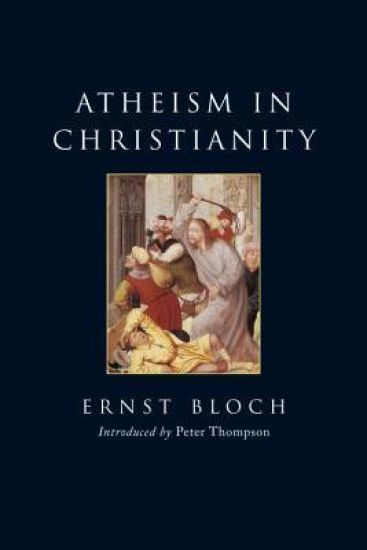
Atheism in Christianity

Atheism in Christianity

Ernst Bloch

Verso Books
2009
nidottu
In the twenty-first century, religion has come under determined attack from secular progressives in documentaries, opinion pieces and international bestsellers. Combative atheists have denounced faiths of every stripe, resulting in a crude intellectual polarization in which religious convictions and heritage must be rejected or accepted wholesale.In the long unavailable Atheism in Christianity, Ernst Bloch provides a way out from this either/or debate. He examines the origins of Christianity in an attempt to find its social roots, pursuing a detailed study of the Bible and its fascination for 'ordinary and unimportant' people. In the biblical promise of utopia and the scriptures' antagonism to authority, Bloch locates Christianity's appeal to the oppressed. Through a lyrical yet close and nuanced analysis, he explores the tensions within the Bible that promote atheism as a counter to the authoritarian metaphysical theism imposed by clerical exegesis. At the Bible's heart he finds a heretical core and the concealed message that, paradoxically, a good Christian must necessarily be a good atheist.This new edition includes an introduction by Peter Thompson, the Director of the Centre for Enrst Bloch Studies at the University of Sheffield.
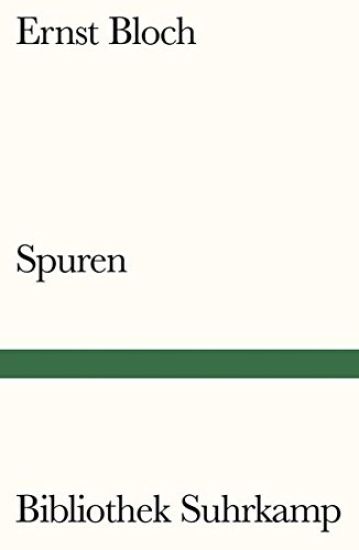
Traces

Traces

Ernst Bloch

Stanford University Press
2006
pokkari
Written between 1910 and 1929, Traces is considered Ernst Bloch's most important work next to The Principle of Hope and The Spirit of Utopia. This book, which collects aphorisms, essays, stories, and anecdotes, enacts Bloch's interest in showing how attention to "traces"—to the marks people make or to natural marks—can serve as a mode of philosophizing. In an elegant example of how the literary can become a privileged medium for philosophy, Bloch's chief philosophical invention is to begin with what gives an observer pause—what seems strange and astonishing. He then follows such traces into an awareness of the individual's relations to himself or herself and to history, conceived as a thinking into the unknown, the "not yet," and thus as utopian in essence. Traces, a masterwork of twentieth-century philosophy, is the most modest and beautiful proof of Bloch's utopian hermeneutics, taking as its source and its result the simplest, most familiar, and yet most striking stories and anecdotes.
Traces

Traces

Ernst Bloch

Stanford University Press
2006
sidottu
Written between 1910 and 1929, Traces is considered Ernst Bloch's most important work next to The Principle of Hope and The Spirit of Utopia. This book, which collects aphorisms, essays, stories, and anecdotes, enacts Bloch's interest in showing how attention to "traces"—to the marks people make or to natural marks—can serve as a mode of philosophizing. In an elegant example of how the literary can become a privileged medium for philosophy, Bloch's chief philosophical invention is to begin with what gives an observer pause—what seems strange and astonishing. He then follows such traces into an awareness of the individual's relations to himself or herself and to history, conceived as a thinking into the unknown, the "not yet," and thus as utopian in essence. Traces, a masterwork of twentieth-century philosophy, is the most modest and beautiful proof of Bloch's utopian hermeneutics, taking as its source and its result the simplest, most familiar, and yet most striking stories and anecdotes.
The Principle of Hope

The Principle of Hope

Ernst Bloch

MIT Press
1995
pokkari
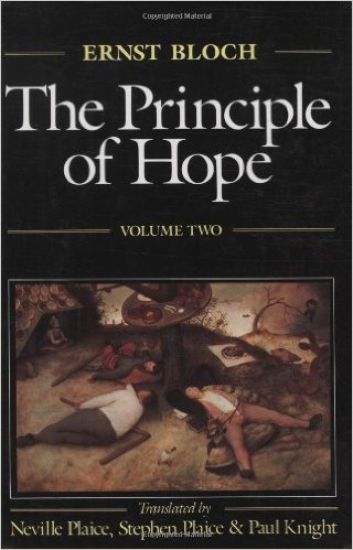
The Principle of Hope is one of the great works of the human spirit. It is a critical history of the utopian vision and a profound exploration of the possible reality of utopia. Even as the world has rejected the doctrine on which Bloch sought to base his utopia, his work still challenges us to think more insightfully about our own visions of a better world. The Principle of Hope is published in three volumes: Volume 1 lays the foundations of the philosophy of process and introduces the idea of the Not-Yet-Conscious-the anticipatory element that Bloch sees as central to human thought. It also contains a remarkable account of the aesthetic interpretations of utopian "wishful images" in fairy tales, popular fiction, travel, theater, dance, and the cinema. Volume 2 presents "the outlines of a better world." It examines the utopian systems that progressive thinkers have developed in the fields of medicine, painting, opera, poetry, and ultimately, philosophy. It is nothing less than an encyclopedic account of utopian thought from the Greeks to the present. Volume 3 offers a prescription for ways in which humans can reach their proper "homeland," where social justice is coupled with an openness to change and to the future.
The Principle of Hope

The Principle of Hope

Ernst Bloch

MIT Press
1995
pokkari
The Principle of Hope is one of the great works of the human spirit. It is a critical history of the utopian vision and a profound exploration of the possible reality of utopia. Even as the world has rejected the doctrine on which Bloch sought to base his utopia, his work still challenges us to think more insightfully about our own visions of a better world.The Principle of Hope is published in three volumes: Volume 1 lays the foundations of the philosophy of process and introduces the idea of the Not-Yet-Conscious-the anticipatory element that Bloch sees as central to human thought. It also contains a remarkable account of the aesthetic interpretations of utopian "wishful images" in fairy tales, popular fiction, travel, theater, dance, and the cinema. Volume 2 presents "the outlines of a better world." It examines the utopian systems that progressive thinkers have developed in the fields of medicine, painting, opera, poetry, and ultimately, philosophy. It is nothing less than an encyclopedic account of utopian thought from the Greeks to the present. Volume 3 offers a prescription for ways in which humans can reach their proper "homeland," where social justice is coupled with an openness to change and to the future.
The Principle of Hope

The Principle of Hope

Ernst Bloch

MIT Press
1995
pokkari
The Principle of Hope is one of the great works of the human spirit. It is a critical history of the utopian vision and a profound exploration of the possible reality of utopia. Even as the world has rejected the doctrine on which Bloch sought to base his utopia, his work still challenges us to think more insightfully about our own visions of a better world.The Principle of Hope is published in three volumes: Volume 1 lays the foundations of the philosophy of process and introduces the idea of the Not-Yet-Conscious-the anticipatory element that Bloch sees as central to human thought. It also contains a remarkable account of the aesthetic interpretations of utopian "wishful images" in fairy tales, popular fiction, travel, theater, dance, and the cinema. Volume 2 presents "the outlines of a better world." It examines the utopian systems that progressive thinkers have developed in the fields of medicine, painting, opera, poetry, and ultimately, philosophy. It is nothing less than an encyclopedic account of utopian thought from the Greeks to the present. Volume 3 offers a prescription for ways in which humans can reach their proper "homeland," where social justice is coupled with an openness to change and to the future.