Kirjailija
Ervin Laszlo
Kirjat ja teokset yhdessä paikassa: 58 kirjaa, julkaisuja vuosilta 1963-2026, suosituimpien joukossa El cambio cuántico. Vertaile teosten hintoja ja tarkista saatavuus suomalaisista kirjakaupoista.
Mukana myös kirjoitusasut: Érvín László
58 kirjaa
Kirjojen julkaisuhaarukka 1963-2026.

La revolución de la conciencia
Ervin Laszlo; Stanislav Grov; Peter Russell
Editorial Kairos
2009
nidottu
In this stimulating dialogue, three of today's most respected intellectuals analyze the roles that art, science, education, spirituality, and consciousness play in society. Many thought-provoking questions are explored, such as "How is the map of reality changing?""How do humans participate in the planet's global transformations?""How do these changes affect human lives?" and "How is peace to be fought for?" "En este dialogo estimulante, tres de los intelectuales mas respetados de la epoca analizan los papeles que jugan el arte, la ciencia, la educacion, la espiritualidad y la conciencia en la sociedad. Se exploran muchas cuestiones estimulantes como" Como esta cambiando el mapa de la realidad? Como participar en las transformaciones globales del planeta? Como afectan estos cambios a las vidas humanas? "y "Como luchar por la paz?
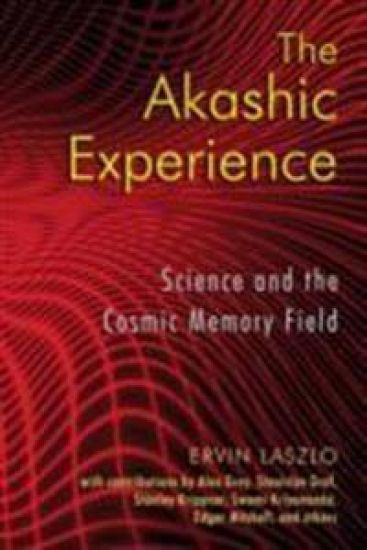
Knowing or feeling that we are all connected to each other and to the cosmos by more than our eyes and ears is not a new notion but one as old as humanity. Traditional indigenous societies were fully aware of nonmaterial connections and incorporated them into their daily life. The modern world, however, continues to dismiss and even deny these intangible links--taking as real only that which is physically manifest or proved “scientifically.” Consequently our mainstream culture is spiritually impoverished, and the world we live in has become disenchanted. In The Akashic Experience, 20 leading authorities in fields such as psychiatry, physics, philosophy, anthropology, natural healing, near death experience, and spirituality offer firsthand accounts of interactions with a cosmic memory field that can transmit information to people without having to go through the senses. Their experiences with the Akashic field are now validated and supported by evidence from cutting-edge sciences that shows that there is a cosmic memory field that contains all information--past, present, and future. The increasing frequency and intensity of these Akashic experiences are an integral part of a large-scale spiritual resurgence and evolution of human consciousness that is under way today.
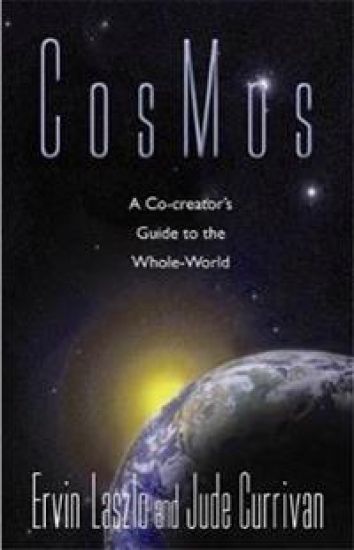
CosMos is co-authored by two explorers who combine almost a century of seeking to understand not only how the world is as it is, but why. Philosopher Ervin Laszlo, Ph.D., and healer and scientist Jude Currivan, Ph.D., offer a revisioned view of the world that is no longer fragmented, but is at last, whole. Theirs is a perception of a meaningful and co-creative world that is exquisitely tuned to be "as simple as it can be" for consciousness to explore itself. In these momentous times, the vision shared in CosMos invites us to open our hearts and minds to remember who we really are and to take our places as conscious co-creators of our realities and of our evolving cosmic destiny.
Mystics and sages have long maintained that there exists an interconnecting cosmic field at the roots of reality that conserves and conveys information, a field known as the Akashic record. Recent discoveries in vacuum physics show that this Akashic Field is real and has its equivalent in science's zero-point field that underlies space itself. This field consists of a subtle sea of fluctuating energies from which all things arise: atoms and galaxies, stars and planets, living beings, and even consciousness. This zero-point Akashic Field is the constant and enduring memory of the universe. It holds the record of all that has happened on Earth and in the cosmos and relates it to all that is yet to happen. In SCIENCE AND THE AKASHIC FIELD, philosopher and scientist Ervin Laszlo conveys the essential element of this information field in language that is accessible and clear. From the world of science he confirms our deepest intuitions of the oneness of creation in the Integral Theory of Everything. We discover that, as philosopher William James stated, "We are like islands in the sea, separate on the surface but connected in the deep." · Explains how modern science has rediscovered the Akashic Field of perennial philosophy · New edition updates ongoing scientific studies, presents new research inspired by the first edition, and includes new case studies and a section on animal telepathy

"The Consciousness Revolution is an extrodinary discussion among three of the very finest minds of our time, spirited in its exchange, compassionate in its embrace, brilliant in its clarion call to awaken our conscience and consciousness." Ken Wilber, author of Sex, Ecology, Spirituality and One Taste
The Connectivity Hypothesis
Ervin Laszlo; Ralph H. Abraham
State University of New York Press
2003
pokkari
Provides the foundations of a genuine unified field theory.Ervin Laszlo, widely regarded as the founder of systems philosophy and general evolution theory, introduces the foundations of a genuine unified theory of the world in this pioneering treatise on the new sciences. In contrast to other unified theories that center mainly on physics, Laszlo's embraces quantum, cosmos, life, as well as consciousness. He delineates the principles of a new physics of universal connectivity and puts forth the corresponding metaphysics, discussing the implications for such philosophical issues as the nature of matter and mind, freedom and morality, and design versus evolution. This landmark book lays the groundwork for the non-materialist and non-reductionist yet rigorous paradigm that is likely to signal the next revolution in science: the "paradigm of universal connectivity."

Macroshift: Navigating the Transformation to a Sustainable World
Ervin Laszlo
Berrett-Koehler
2001
sidottu
A Macroshift is a transformation of practically all aspects of life, from individual lifestyles to the global economy. Expert Ervin Laszlo argues that the Macroshift now upon the planet is unprecedented in scope, and, reverberating as it does at every level, warrants serious attention. This book describes the dynamics of today's Macroshift, cautioning that the values and behaviors associated with it have the power to either break through or break down world order. Readers learn about the essential dangers and opportunities they face and how they can begin to make informed, responsible choices.

Written by a team where the father is recognized as the world's foremost evolutionary systems scientist and the son is one of the youngest members of the top management of a Fortune 500 transnational company, The Insight Edge, in the words of James Ogilvy, comes at a crucial time and speaks to the needs of the time. It is essential reading in an age where information is the new capital, and knowledge of the basic trends that shape our world is a vital part of the required information.Managing postindustrial enterprises in today's information-linked and globalized business environment is vastly different from managing businesses in the bygone industrial era. Being a good manager in today's world means navigating in the turbulence of a global sea of rapid-fire interaction, and coping with myriad factors that are prone to change in a seemingly unpredictable fashion. Being a good manager also means living up to one's responsibilities, not only to one's company and stockholders, but also to one's coworkers, partners, customers, and society at large—even nature.Meeting the challenge that confronts today's managers calls for a fresh knowledge base; one that includes, in addition to the necessary technical knowledge handed down in management schools and seminars, familiarity with the dynamics that generate the seemingly unpredictable—but by no means casual and unforeseeable—patterns of change in the contemporary business environment. This book offers such a knowledge base. It brings to leading managers, and to everyone concerned with the effective and responsible management of business companies, the essential minimum of up-to-date scientific knowledge: the readily acquired foundations of evolutionary literacy.

Taking the view that understanding the meaning behind the complex formulas of science is more important than ever, this work attempts to explain the systems view of the world as the paradigm of the latest scientific developments.

The four authors of this book recognize that no one on the common human journey to the 21st century can pick the best route without consulting a map—that is to say, an interconnected set of understandings about what in a given situation is important, what demands action and attention, and what does not. The problem, they contend, is that the picture of the world we each carry in our mind may not be a true mapping of the reality that surrounds us. This picture, the cognitive map, could always be sharper. The authors prompt us to become more conscious of our own cognitive map, and explain how it can be adapted to the exigencies of our changing world so that it can be better-used to guide our steps toward the 21st century.We all carry a picture of the world in our mind, but is that map an assuredly true layout of the reality that surrounds us? If not, how can we use it to guide our steps toward the 21st century and beyond without creating shocks and surprises that impair our well-being and threaten our survival?We shall not survive, either as individuals or as a species, if our maps fail to reflect accurately the nature of the world that surrounds us. The authors attempt, through reviewing the origins, development, and current changes in individual and social cognitive maps, to prompt readers to become more conscious of their own map, and hence be better able to adapt it to the exigencies of our changing world. The book ends with a vision of the global bio- and socio-sphere: the unified cognitive map which is emerging in laboratories and workshops of the new physics, the new biology, the new ecology, and the avant-garde branches of the social and historical sciences. But Changing Visions recognizes that these sciences alone cannot promote the formation of faithful maps of lived reality, and that religion, common sense, and even art can fill in and sharpen one's world-picture.

The four authors of this book recognize that no one on the common human journey to the 21st century can pick the best route without consulting a map—that is to say, an interconnected set of understandings about what in a given situation is important, what demands action and attention, and what does not. The problem, they contend, is that the picture of the world we each carry in our mind may not be a true mapping of the reality that surrounds us. This picture, the cognitive map, could always be sharper. The authors prompt us to become more conscious of our own cognitive map, and explain how it can be adapted to the exigencies of our changing world so that it can be better-used to guide our steps toward the 21st century. We all carry a picture of the world in our mind, but is that map an assuredly true layout of the reality that surrounds us? If not, how can we use it to guide our steps toward the 21st century and beyond without creating shocks and surprises that impair our well-being and threaten our survival? We shall not survive, either as individuals or as a species, if our maps fail to reflect accurately the nature of the world that surrounds us. The authors attempt, through reviewing the origins, development, and current changes in individual and social cognitive maps, to prompt readers to become more conscious of their own map, and hence be better able to adapt it to the exigencies of our changing world. The book ends with a vision of the global bio- and socio-sphere: the unified cognitive map which is emerging in laboratories and workshops of the new physics, the new biology, the new ecology, and the avant-garde branches of the social and historical sciences. But Changing Visions recognizes that these sciences alone cannot promote the formation of faithful maps of lived reality, and that religion, common sense, and even art can fill in and sharpen one's world-picture.
Interconnected Universe, The: Conceptual Foundations Of Transdisciplinary Unified Theory
Ervin Laszlo
World Scientific Publishing Co Pte Ltd
1995
sidottu
This book offers an original hypothesis capable of unifying evolution in the physical universe with evolution in biology; herewith it lays the conceptual foundations of “transdisciplinary unified theory”. The rationale for the hypothesis is presented first; then the theoretical framework is outlined, and thereafter it is explored in regard to quantum physics, physical cosmology, micro- and macro-biology, and the cognitive sciences (neurophysiology, psychology, with attention to anomalous phenomena as well). The book closes with a variety of studies, both by the author and his collaborators, sketching out the implications of the hypothesis in regard to brain dynamics, cosmology, the concept of space, phenomena of creativity, and the prospects for the elaboration of a mature transdisciplinary unified theory. The Foreword is written by philosopher of science Arne Naess, and the Afterword is contributed by neuroscientist Karl Pribram.
This revised edition of the classic text of the period provides both the student and the specialist with an informative account of post-Roman English society.