Kirjojen hintavertailu. Mukana 12 569 562 kirjaa ja 12 kauppaa.

Kirjailija

Espen Hammer

Kirjat ja teokset yhdessä paikassa: 16 kirjaa, julkaisuja vuosilta 2002-2025, suosituimpien joukossa Framtiden i samtiden. Vertaile teosten hintoja ja tarkista saatavuus suomalaisista kirjakaupoista.

16 kirjaa

Kirjojen julkaisuhaarukka 2002-2025.

Framtiden i samtiden

Framtiden i samtiden

Antje Jackelén; Anna Bohlin; Bengt G Karlsson; Sara Ljungqvist; Espen Hammer; Linda E Thomas; Ruth Levitas

Artos Norma Bokförlag
2019
nidottu
Tidens Tecken ges ut en gång per år och erbjuder ett forum där samhälleliga och existentiella teman centrala för Svenska kyrkans verksamhet, vision och identitet belyses ur olika perspektiv. Vi lever i en tid präglad av förödande klimatförändringar, ökad polarisering och rekordstora flyktingströmmar. En växande krismedvetenhet sporrar visserligen till såväl innovationer som politisk handling men riskerar också hela tiden att övergå i uppgivenhet eller verklighetsflykt. I detta nummer utforskar författarna under temat Framtiden i samtiden hoppets och det utopiska tänkandets förändrade villkor i en tid där domedagsprofetiorna duggar tätt.
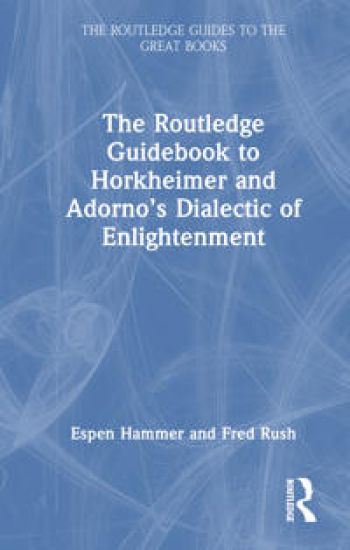
The Routledge Guidebook to Horkheimer and Adorno’s Dialectic of Enlightenment
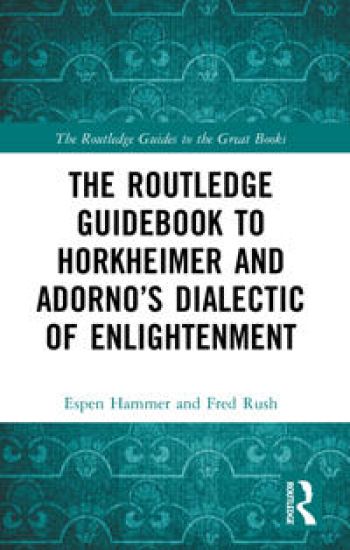
Composed whilst in exile in the United States during the Second World War, Max Horkheimer and Theodor W. Adorno’s Dialectic of Enlightenment is the most famous and influential text of the Frankfurt School. A theoretical exploration of history, modernity, and culture, its core warning of crisis and regression remains highly relevant today. However, it is also a notoriously complex work of philosophy.The Routledge Guidebook to Horkheimer and Adorno’s Dialectic of Enlightenment is the first fully contextualized introduction to this foundational text in philosophy and social theory, addressing its central themes, reception, and influence. The Guidebook examines:The conceptual and intellectual background to Dialectic of Enlightenment The ideas, themes, and arguments of the textThe reception and legacy of Dialectic of Enlightenment.A comprehensive and clearly written guide to this important text, The Routledge Guidebook to Horkheimer and Adorno’s Dialectic of Enlightenment will be invaluable to students coming to the work for the first time, as well as more advanced students and researchers in philosophy, politics, sociology, and the history of ideas.
The Routledge Guidebook to Horkheimer and Adorno’s Dialectic of Enlightenment
Composed whilst in exile in the United States during the Second World War, Max Horkheimer and Theodor W. Adorno’s Dialectic of Enlightenment is the most famous and influential text of the Frankfurt School. A theoretical exploration of history, modernity, and culture, its core warning of crisis and regression remains highly relevant today. However, it is also a notoriously complex work of philosophy.The Routledge Guidebook to Horkheimer and Adorno’s Dialectic of Enlightenment is the first fully contextualized introduction to this foundational text in philosophy and social theory, addressing its central themes, reception, and influence. The Guidebook examines:The conceptual and intellectual background to Dialectic of Enlightenment The ideas, themes, and arguments of the textThe reception and legacy of Dialectic of Enlightenment.A comprehensive and clearly written guide to this important text, The Routledge Guidebook to Horkheimer and Adorno’s Dialectic of Enlightenment will be invaluable to students coming to the work for the first time, as well as more advanced students and researchers in philosophy, politics, sociology, and the history of ideas.
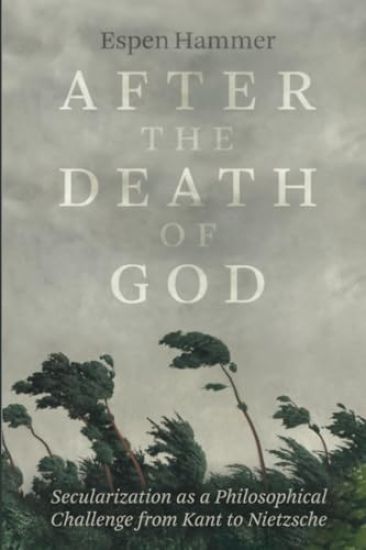
After the Death of God

After the Death of God

Espen Hammer

THE UNIVERSITY OF CHICAGO PRESS
2025
nidottu
A fresh history of nineteenth-century philosophy’s many ideas about secularization. The secularization thesis, which held that religious belief would gradually yield to rationality, has been thoroughly debunked. What, then, can we learn from philosophers for whom the death of God seemed so imminent? In this book, Espen Hammer offers a sweeping analysis of secularization in nineteenth-century German philosophy, arguing that the persistence of religion (rather than its absence) animated this tradition. Hammer shows that Kant, Hegel, Feuerbach, Marx, and Nietzsche, each in their own way, sought to preserve and transform religion’s ethical and communal aspirations for modern life. A renewed appreciation for this tradition’s generous thought, Hammer argues, can help us chart a path through needlessly destructive conflicts between secularists and fundamentalists today.
After the Death of God

After the Death of God

Espen Hammer

THE UNIVERSITY OF CHICAGO PRESS
2025
sidottu
A fresh history of nineteenth-century philosophy’s many ideas about secularization. The secularization thesis, which held that religious belief would gradually yield to rationality, has been thoroughly debunked. What, then, can we learn from philosophers for whom the death of God seemed so imminent? In this book, Espen Hammer offers a sweeping analysis of secularization in nineteenth-century German philosophy, arguing that the persistence of religion (rather than its absence) animated this tradition. Hammer shows that Kant, Hegel, Feuerbach, Marx, and Nietzsche, each in their own way, sought to preserve and transform religion’s ethical and communal aspirations for modern life. A renewed appreciation for this tradition’s generous thought, Hammer argues, can help us chart a path through needlessly destructive conflicts between secularists and fundamentalists today.
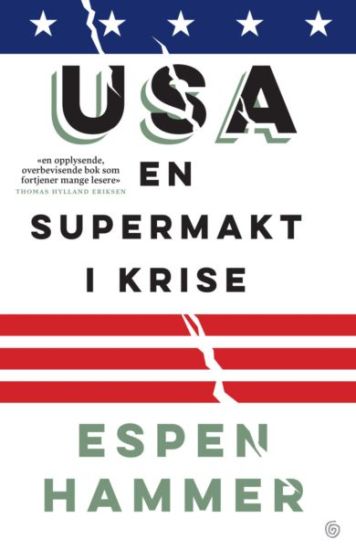
USA - en supermakt i krise

USA - en supermakt i krise

Espen Hammer

Kagge
2021
sidottu
Den amerikanske drømmen er over. Tre tiår etter kommunismens fall er stemningsleiet i USA et ganske annet enn da nasjonen sto igjen som seierherre. I dag hersker mismot, uro og til dels kaos. Hva gikk egentlig galt, og hva må gjøres? I boka tegner professor Espen Hammer et skarpt bilde av landets viktigste konfliktlinjer. Mens Donald Trump ofte pekes på som årsak til urolighetene, viser Hammer hvilke større krefter som over tid har virket under overflaten og forvandlet USA fra et relativt trygt folkehjem til en nasjon med enorme sosiale forskjeller, dyp politisk splittelse og et dysfunksjonelt demokrati. Gjennom å rette søkelyset mot økonomien, høyrepopulismen og krisen i det politiske systemet klargjør Hammer de avgjørende skjæringspunktene i dagens Amerika. Dette er en sylskarp bok som går rett til kjernen av USAs viktigste utfordringer. «Sylskarp analyse ... Den fortjener både mange lesere og å bli grundig diskutert» Dagbladet, terningkast 5
Ingeborg Stana

Ingeborg Stana

Espen Hammer; John Erik Riley; Erlend Loe; Nikolaj Frobenius; Jørgen Bakke; Ingeborg Stana

Uten tittel
2019
sidottu
Ingeborg Stana. Landskap, Maleri er en rikt illustrert praktbok og den mest omfattende presentasjonen av Ingeborg Stanas kunstnerskap. Gjennom tekster på norsk og engelsk av kunsthistoriker Jørgen Bakke, forfatterne Erlend Loe, John Erik Riley, Nikolaj Frobenius og filosof Espen Hammer gir boken ulike innganger til forståelsen av kunstnerens arbeid. Boken er designet av Halvor Bodin.
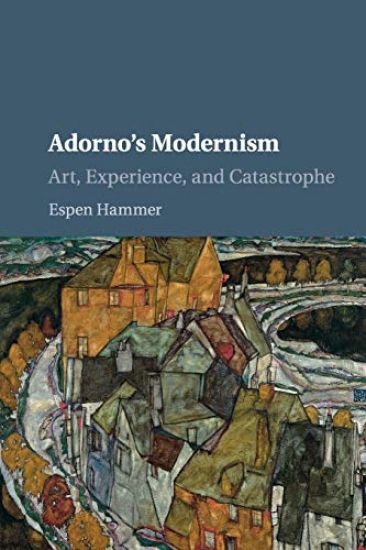
Adorno's Modernism

Adorno's Modernism

Espen Hammer

Cambridge University Press
2018
pokkari
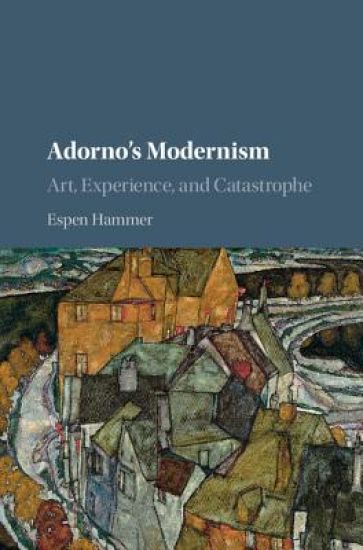
Theodor W. Adorno's aesthetics has dominated discussions about art and aesthetic modernism since World War II, and continues to inform contemporary theorizing. Situating Adorno's aesthetic theory in the context of post-Kantian European philosophy, Espen Hammer explores Adorno's critical view of art as engaged in reconsidering fundamental features of our relation to nature and reality. His book is structured around what Adorno regarded as the contemporary aesthetician's overarching task: to achieve a vision of the fate of art in the modern world, while demonstrating its unique cognitive potential. Hammer offers a lively examination of Adorno's work through the central problem of what full human self-actualization would require, and also discusses the wider philosophical significance of aesthetic modernism. This book will be a valuable resource for scholars and students of social philosophy, art, and aesthetics.
Adorno's Modernism

Adorno's Modernism

Espen Hammer

Cambridge University Press
2015
sidottu
Theodor W. Adorno's aesthetics has dominated discussions about art and aesthetic modernism since World War II, and continues to inform contemporary theorizing. Situating Adorno's aesthetic theory in the context of post-Kantian European philosophy, Espen Hammer explores Adorno's critical view of art as engaged in reconsidering fundamental features of our relation to nature and reality. His book is structured around what Adorno regarded as the contemporary aesthetician's overarching task: to achieve a vision of the fate of art in the modern world, while demonstrating its unique cognitive potential. Hammer offers a lively examination of Adorno's work through the central problem of what full human self-actualization would require, and also discusses the wider philosophical significance of aesthetic modernism. This book will be a valuable resource for scholars and students of social philosophy, art, and aesthetics.
Philosophy and Temporality from Kant to Critical Theory

Philosophy and Temporality from Kant to Critical Theory

Espen Hammer

Cambridge University Press
2013
pokkari
This book is a critical analysis of how key philosophers in the European tradition have responded to the emergence of a modern conception of temporality. Espen Hammer suggests that it is a feature of Western modernity that time has been forcibly separated from the natural cycles and processes with which it used to be associated. In a discussion that ranges over Kant, Hegel, Schopenhauer, Nietzsche, Heidegger and Adorno, he examines the forms of dissatisfaction which result from this, together with narrative modes of configuring time, the relationship between agency and temporality, and possible challenges to the modern world's linear and homogenous experience of time. His study is a rich exploration of an enduring philosophical theme: the role of temporality in shaping and reshaping modern human affairs.
Philosophy and Temporality from Kant to Critical Theory

Philosophy and Temporality from Kant to Critical Theory

Espen Hammer

Cambridge University Press
2011
sidottu
This book is a critical analysis of how key philosophers in the European tradition have responded to the emergence of a modern conception of temporality. Espen Hammer suggests that it is a feature of Western modernity that time has been forcibly separated from the natural cycles and processes with which it used to be associated. In a discussion that ranges over Kant, Hegel, Schopenhauer, Nietzsche, Heidegger and Adorno, he examines the forms of dissatisfaction which result from this, together with narrative modes of configuring time, the relationship between agency and temporality, and possible challenges to the modern world's linear and homogenous experience of time. His study is a rich exploration of an enduring philosophical theme: the role of temporality in shaping and reshaping modern human affairs.
Adorno and the Political

Adorno and the Political

Espen Hammer

Routledge
2005
sidottu
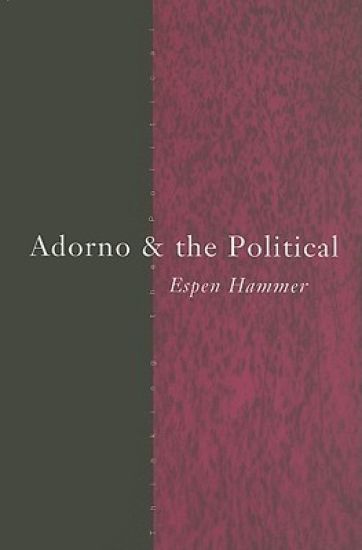
Interest in Theodor W. Adorno continues to grow in the English-speaking world as the significance of his contribution to philosophy, social and cultural theory, as well as aesthetics is increasingly recognized. Espen Hammer’s lucid book is the first to properly analyze the political implications of his work, paying careful attention to Adorno’s work on key thinkers such as Kant, Hegel and Benjamin.Examining Adorno’s political experiences and assessing his engagement with Marxist as well as liberal theory, Hammer looks at the development of Adorno’s thought as he confronts Fascism and modern mass culture. He then analyzes the political dimension of his philosophical and aesthetic theorizing. By addressing Jürgen Habermas’s influential criticisms, he defends Adorno as a theorist of autonomy, responsibility and democratic plurality. He also discusses Adorno’s relevance to feminist and ecological thinking. As opposed to those who see Adorno as someone who relinquished the political, Hammer’s account shows his reflections to be, on the most fundamental level, politically motivated and deeply engaged.This invigorating exploration of a major political thinker is a useful introduction to his thought as a whole, and will be of interest to scholars and students in the fields of philosophy, sociology, politics and aesthetics.
Adorno and the Political

Adorno and the Political

Espen Hammer

Routledge
2005
nidottu
Interest in Theodor W. Adorno continues to grow in the English-speaking world as the significance of his contribution to philosophy, social and cultural theory, as well as aesthetics is increasingly recognized. Espen Hammer’s lucid book is the first to properly analyze the political implications of his work, paying careful attention to Adorno’s work on key thinkers such as Kant, Hegel and Benjamin.Examining Adorno’s political experiences and assessing his engagement with Marxist as well as liberal theory, Hammer looks at the development of Adorno’s thought as he confronts Fascism and modern mass culture. He then analyzes the political dimension of his philosophical and aesthetic theorizing. By addressing Jürgen Habermas’s influential criticisms, he defends Adorno as a theorist of autonomy, responsibility and democratic plurality. He also discusses Adorno’s relevance to feminist and ecological thinking. As opposed to those who see Adorno as someone who relinquished the political, Hammer’s account shows his reflections to be, on the most fundamental level, politically motivated and deeply engaged.This invigorating exploration of a major political thinker is a useful introduction to his thought as a whole, and will be of interest to scholars and students in the fields of philosophy, sociology, politics and aesthetics.
Stanley Cavell

Stanley Cavell

Espen Hammer

Polity Press
2002
sidottu
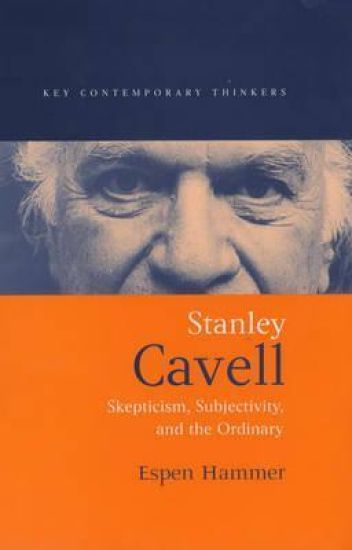
Stanley Cavell is a leading figure in American philosophy and one of the most exhilarating and wide-ranging intellectuals of our time. In this book Espen Hammer offers a lucid and thorough account of the development of Cavell's work, from his early writings on ordinary language philosophy and skepticism to his most recent contributions to film studies, literary theory, romanticism, ethics, and politics. The book traces the many lines of skepticism occurring in Cavell's work and shows how they amount to a rich and subtle picture of human subjectivity. Hammer explores Cavell's passionate engagement with Austin and Wittgenstein's visions of language, and his uncovering of conceptions of the ordinary in Emerson and Thoreau. Central sections of the book are devoted to the tragic and the comic as these modes of existence come into play in Shakespeare and Hollywood cinematic drama. In elaborating Cavell's responses to thinkers such as Heidegger, Levinas, and Derrida, the author situates Cavell's writing within the wider context of contemporary continental philosophy. Hammer clearly reveals the existential dimensions of Cavell's thought. He argues that his variant of ordinary language philosophy is a vital stimulus to self-transformation in cognitive, aesthetic, ethical, and political domains, contributing significantly to a rethinking of issues such as responsibility and autonomy, and the relationship between philosophy and literature. A critical introduction to the thought of an inordinately complex writer, this book will be of great interest to students and scholars in philosophy, literary theory, cultural theory, comparative literature, and media and cultural studies.
Stanley Cavell

Stanley Cavell

Espen Hammer

JOHN WILEY AND SONS LTD
2002
nidottu
Stanley Cavell is a leading figure in American philosophy and one of the most exhilarating and wide-ranging intellectuals of our time. In this book Espen Hammer offers a lucid and thorough account of the development of Cavell's work, from his early writings on ordinary language philosophy and skepticism to his most recent contributions to film studies, literary theory, romanticism, ethics, and politics. The book traces the many lines of skepticism occurring in Cavell's work and shows how they amount to a rich and subtle picture of human subjectivity. Hammer explores Cavell's passionate engagement with Austin and Wittgenstein's visions of language, and his uncovering of conceptions of the ordinary in Emerson and Thoreau. Central sections of the book are devoted to the tragic and the comic as these modes of existence come into play in Shakespeare and Hollywood cinematic drama. In elaborating Cavell's responses to thinkers such as Heidegger, Levinas, and Derrida, the author situates Cavell's writing within the wider context of contemporary continental philosophy. Hammer clearly reveals the existential dimensions of Cavell's thought. He argues that his variant of ordinary language philosophy is a vital stimulus to self-transformation in cognitive, aesthetic, ethical, and political domains, contributing significantly to a rethinking of issues such as responsibility and autonomy, and the relationship between philosophy and literature. A critical introduction to the thought of an inordinately complex writer, this book will be of great interest to students and scholars in philosophy, literary theory, cultural theory, comparative literature, and media and cultural studies.