Kirjojen hintavertailu. Mukana 12 390 323 kirjaa ja 12 kauppaa.

Kirjailija

Esther Milne

Kirjat ja teokset yhdessä paikassa: 4 kirjaa, julkaisuja vuosilta 2010-2024, suosituimpien joukossa Letters, Postcards, Email. Vertaile teosten hintoja ja tarkista saatavuus suomalaisista kirjakaupoista.

4 kirjaa

Kirjojen julkaisuhaarukka 2010-2024.

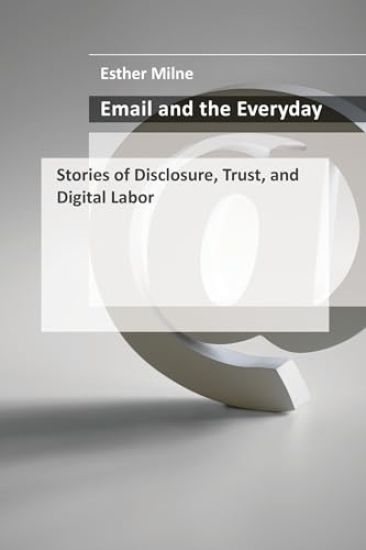
Email and the Everyday

Email and the Everyday

Esther Milne

MIT PRESS LTD
2024
pokkari
An exploration of how email is experienced, understood, and materially structured as a practice spanning our everyday domestic and work lives. Despite its many obituaries, email is not dead. As a global mode of business and personal communication, email outstrips newer technologies of online interaction; it is deeply embedded in our everyday lives. And yet--perhaps because the ubiquity of email has obscured its study--this is the first scholarly book devoted to email as a key historical, social, and commercial site of digital communication in our everyday lives. In Email and the Everyday, Esther Milne examines how email is experienced, understood, and materially structured as a practice spanning the domestic and institutional spaces of daily life. Email experiences range from the routine and banal to the surprising and shocking. Drawing on interviews and online surveys, Milne focuses on both the material and the symbolic properties of email. She maps the development of email as a technology and as an industry; considers institutional uses of email, including "bureaucratic intensity" of workplace email and the continuing vibrancy of email groups; and examines what happens when private emails end up in public archives, discussing the Enron email dataset and Hillary Clinton's infamous private server. Finally, Milne explores the creative possibilities of email, connecting eighteenth-century epistolary novels to contemporary "email novels," discussing the vernacular expression of ASCII art and mail art, and examining email works by Carl Steadman, Miranda July, and others.
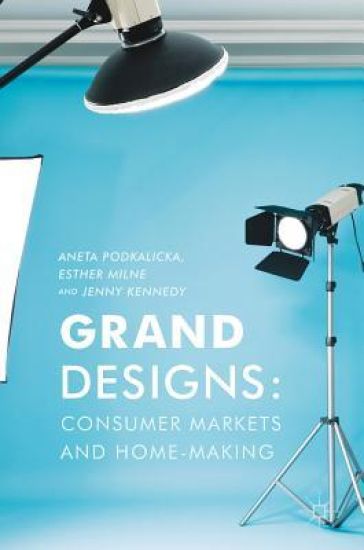
Grand Designs

Grand Designs

Aneta Podkalicka; Esther Milne; Jenny Kennedy

Palgrave Macmillan
2018
sidottu
This is the first academic book to examine the long running hit series Grand Designs, which occupies a significant place in the popular imagination internationally. The authors apply an empirically grounded, critical perspective to the study of television to reveal how people use the program in their everyday lives. The emphasis on everyday uses and meanings combines creatively with understanding the program theoretically, textually and in terms of its production structures. This position challenges framings of the popular lifestyle and factual television genre that has been dominated by a neoliberal or governmentality perspective for many years. Presented by British designer and writer, Kevin McCloud, Grand Designs follows the progress of home owners as they embark on design, renovation and building projects at almost always dizzying scales of endeavour. Understanding the program as both a text to analyse and a site ofmaterial impact, the book draws on interviews with production members, home renovators, building practitioners and audiences, as well as references to associated media formats to provide contextual depth to the analysis. The authors argue that, as a cultural object, the program is both shaped by and enacts social discourses of home-making, design value and taste. Navigating public, commercial and promotional logics, Grand Designs sparks new forms of cultural production and consumer markets.
Letters, Postcards, Email

Letters, Postcards, Email

Esther Milne

Routledge
2013
nidottu
In this original study, Milne moves between close readings of letters, postcards and emails, and investigations of the material, technological infrastructures of these forms, to answer the question: How does presence function as an aesthetic and rhetorical strategy within networked communication practices? As her work reveals, the relation between old and new communication systems is more complex than allowed in much contemporary media theory. Although the correspondents of letters, postcards and emails are not, usually, present to one another as they write and read their exchanges, this does not necessarily inhibit affective communication. Indeed, this study demonstrates how physical absence may, in some instances, provide correspondents with intense intimacy and a spiritual, almost telepathic, sense of the other’s presence. While corresponding by letter, postcard or email, readers construe an imaginary, incorporeal body for their correspondents that, in turn, reworks their interlocutor’s self-presentation. In this regard the fantasy of presence reveals a key paradox of cultural communication, namely that material signifiers can be used to produce the experience of incorporeal presence.
Letters, Postcards, Email

Letters, Postcards, Email

Esther Milne

Routledge
2010
sidottu
In this original study, Milne moves between close readings of letters, postcards and emails, and investigations of the material, technological infrastructures of these forms, to answer the question: How does presence function as an aesthetic and rhetorical strategy within networked communication practices? As her work reveals, the relation between old and new communication systems is more complex than allowed in much contemporary media theory. Although the correspondents of letters, postcards and emails are not, usually, present to one another as they write and read their exchanges, this does not necessarily inhibit affective communication. Indeed, this study demonstrates how physical absence may, in some instances, provide correspondents with intense intimacy and a spiritual, almost telepathic, sense of the other’s presence. While corresponding by letter, postcard or email, readers construe an imaginary, incorporeal body for their correspondents that, in turn, reworks their interlocutor’s self-presentation. In this regard the fantasy of presence reveals a key paradox of cultural communication, namely that material signifiers can be used to produce the experience of incorporeal presence.