
Kirjailija
Esther Pasztory
Kirjat ja teokset yhdessä paikassa: 8 kirjaa, julkaisuja vuosilta 1997-2020, suosituimpien joukossa Exile Space. Vertaile teosten hintoja ja tarkista saatavuus suomalaisista kirjakaupoista.
8 kirjaa
Kirjojen julkaisuhaarukka 1997-2020.
Exile Space: Encountering Ancient and Modern America in Memoir with Essay and Fiction has three main sections: 1. "Multiple Horizons: Tales From the Life of a Refugee" is the often humorous account of a Hungarian refugee trying to assimilate into American life and in the process discovering the Ancient American cultures of the Aztec, Maya, and Inca.2. "Stone Age Civilization in the New World" is a controversial memoir about Ancient America as it compares to Europe, as an overview written in the freedom of retirement. It is written as advice to the BBC, which had recently interviewed her for a program called Civilizations.3. The Maya Vase is a novel of fantasy in the reconstruction of ancient Maya life as seen through the eyes of a graduate student as the author once was, with comparisons to modern American life.
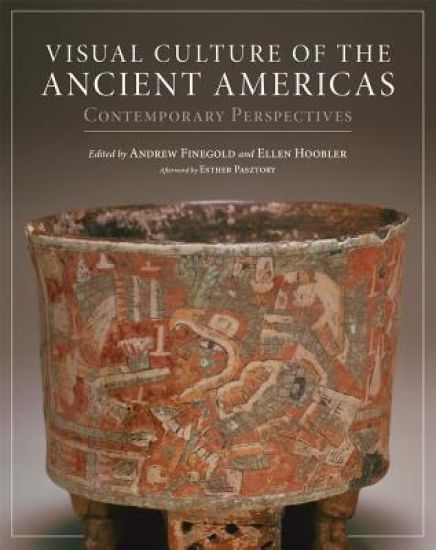
In the past fifty years, the study of indigenous and pre-Columbian art has evolved from a groundbreaking area of inquiry in the mid-1960s to an established field of research. This period also spans the career of art historian Esther Pasztory. Few scholars have made such a broad and lasting impact as Pasztory, both in terms of our understanding of specific facets of ancient American art as well as in our appreciation of the evolving analytical tendencies related to the broader field of study as it developed and matured. The essays collected in this volume reflect scholarly rigor and new perspectives on ancient American art and are contributed by many of Pasztory's former students and colleagues. A testament to the sheer breadth of Pasztory's accomplishments, Visual Culture of the Ancient Americas covers a wide range of topics, from Aztec picture-writing to nineteenth-century European scientific illustration of Andean sites in Peru. The essays, written by both established and rising scholars from across the field, focus on three areas: the ancient Andes, including its representation by European explorers and scholars of the nineteenth century; Classic period Mesoamerica and its uses within the cultural heritage debate of the twentieth and twenty-first centuries; and Postclassic Mesoamerica, particularly the deeper and heretofore often hidden meanings of its cultural production. Figures, maps, and color plates demonstrate the vibrancy and continued allure of indigenous artworks from the ancient Americas. ""Pre-Columbian art can give more,"" Pasztory declares, and the scholars featured here make a compelling case for its incorporation into art theory as a whole. The result is a collection of essays that celebrates Pasztory's central role in the development of the field of Ancient American visual studies, even as it looks toward the future of the discipline.
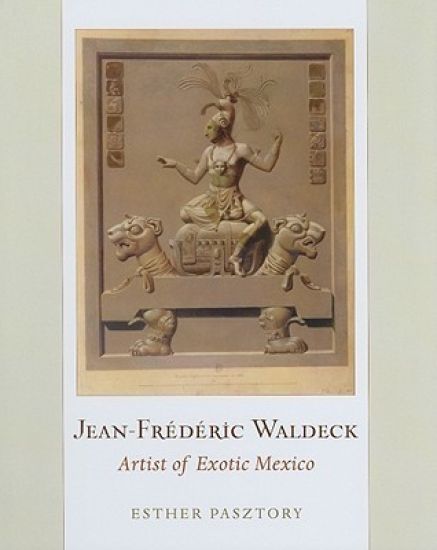
One of the first artists to visit the Mayan ruins at Palenque after Mexican independence, Jean-Frederic Waldeck has long been dismissed as unreliable, his drawings of pre-Columbian art marred by his excessive interest in European styles of beauty. With this fresh look at Waldeck's entire output, including his desire to exhibit at Paris salons, his reconstructions of Mayan and Aztec subjects can be understood as art rather than illustration. Pasztory sees him as a unique Neoclassicist who has never been fully appreciated. In addition to illustrating Maya antiquities in the days before photography, Waldeck painted imaginary reconstructions of pre-Columbian life and rituals and scenes of everyday life in nineteenth-century Mexico. Most his contemporaries looking for exotic subject matter went east and are now referred to as Orientalists. Waldeck went west and found the exotic in the New World, but as Esther Pasztory suggests, he is an Orientalist in spirit. Waldeck's work was not considered interesting or important in its day, but twenty-first century viewers can appreciate his sensibility, which combines the modern domestic with the ancient mythic and features a theatrical version of Neoclassicism that looks forward to a Hollywood that would not exist until decades after the artist's death in 1875 at the age of 109.
Esther Pasztory sought refuge in the United States after the 1956 anti-communist revolution in Hungary. Her memoir chronicles the difficulty of straddling two cultures both personally and professionally and Pasztory's escape into a third, ancient culture where she felt her spirit was free to roam. Interweaving her work with the Aztec and Incan history with her past experiences in Hungary and her present life in America. Her story will appeal not only to readers who wrestle with their dual heritage but also to historians who seek an intimate account of post-communist Hungary.
What is "art"? Why have human societies through all time and around the globe created those objects we call works of art? Is there any way of defining art that can encompass everything from Paleolithic objects to the virtual images created by the latest computer technology? Questions such as these have preoccupied Esther Pasztory since the beginning of her scholarly career. In this authoritative volume, she distills four decades of research and reflection to propose a pathbreaking new way of understanding what art is and why human beings create it that can be applied to all cultures throughout time. At its heart, Pasztory's thesis is simple and yet profound. She asserts that humans create things (some of which modern Western society chooses to call "art") in order to work out our ideas-that is, we literally think with things. Pasztory draws on examples from many societies to argue that the art-making impulse is primarily cognitive and only secondarily aesthetic. She demonstrates that "art" always reflects the specific social context in which it is created, and that as societies become more complex, their art becomes more rarefied. Pasztory presents her thesis in a two-part approach. The first section of the book is an original essay entitled "Thinking with Things" that develops Pasztory's unified theory of what art is and why we create it. The second section is a collection of eight previously published essays that explore the art-making process in both Pre-Columbian and Western societies. Pasztory's work combines the insights of art history and anthropology in the light of poststructuralist ideas. Her book will be indispensable reading for everyone who creates or thinks about works of art.
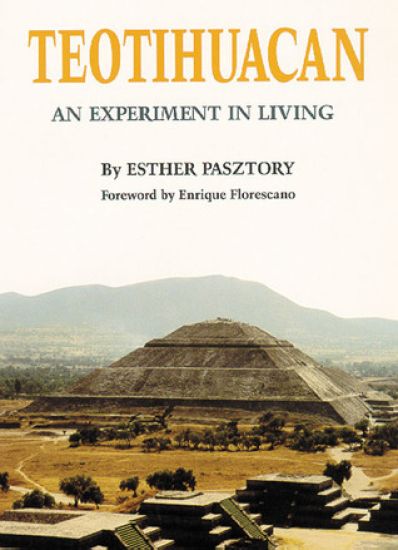
This book is the first comprehensive study and reinterpretation of the unique arts of Teotihuacan, including architecture, sculpture, mural painting, and ceramics. Comparing the arts of Teotihuacan - not previously judged ""artistic"" - with those of other ancient civilizations, Ester Pasztory demonstrates how they created and reflected the community's ideals.Most people associate the pyramids of central Mexico with the Aztecs, but these colossal constructions antedate the Aztecs by more than a thousand years. The people of Teotihuacan, who built the pyramids as part of a city of unprecedented size, remain a mystery.