Kirjojen hintavertailu. Mukana 12 592 927 kirjaa ja 12 kauppaa.

Kirjailija

Ethan Zuckerman

Kirjat ja teokset yhdessä paikassa: 8 kirjaa, julkaisuja vuosilta 2013-2023, suosituimpien joukossa The Coming Swarm. Vertaile teosten hintoja ja tarkista saatavuus suomalaisista kirjakaupoista.

8 kirjaa

Kirjojen julkaisuhaarukka 2013-2023.

Building Back Truth in an Age of Misinformation

Building Back Truth in an Age of Misinformation

Leslie F. Stebbins; Ethan Zuckerman

BLOOMSBURY PUBLISHING PLC
2023
sidottu
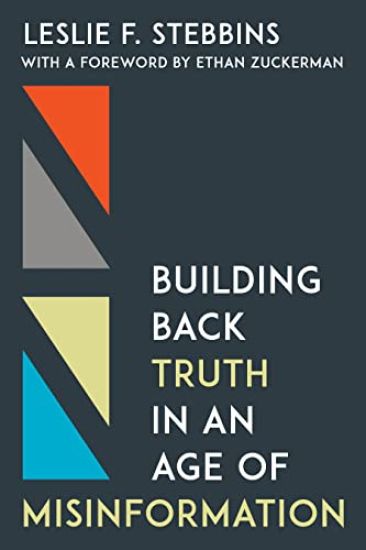
This book is about how we can build back truth online. It provides solutions so that we can repair our existing social media platforms and build better ones that prioritize value over profit, strengthen community ties and promote access to trustworthy information.This book explains the problem of misinformation within the larger context of “information disorder.” It provides a road map with six paths forward to understand how platforms are designed to exploit us, learn to embrace agency in our interactions with digital spaces, build tools to reduce harmful practices, require platform companies to prioritize the public good, repair journalism and strengthen curation to promote trusted content and create new healthier digital public squares. This book presents a comprehensive and connected strategy on how we can reduce misinformation and build back truth. New, experimental models that are ethically designed to build community and promote trustworthy content are having some early successes. We know that human social networks -- online and off-- magnify whatever they are seeded with. They are not neutral. We also know that to repair our systems we need to repair their design.We are being joined in the fight by some of the best and brightest minds of our current generation as they flee big tech companies in search of vocations that value integrity and public values. The problem of misinformation is not insurmountable. We can fix this.

Writing the Revolution

Writing the Revolution

Heather Ford; Ethan Zuckerman

MIT PRESS LTD
2022
nidottu
A close reading of Wikipedia's article on the Egyptian Revolution reveals the complexity inherent in establishing the facts of events as they occur and are relayed to audiences near and far. Wikipedia bills itself as an encyclopedia built on neutrality, authority, and crowd-sourced consensus. Platforms like Google and digital assistants like Siri distribute Wikipedia's facts widely, further burnishing its veneer of impartiality. But as Heather Ford demonstrates in Writing the Revolution, the facts that appear on Wikipedia are often the result of protracted power struggles over how data are created and used, how history is written and by whom, and the very definition of facts in a digital age. In Writing the Revolution, Ford looks critically at how the Wikipedia article about the 2011 Egyptian Revolution evolved over the course of a decade, both shaping and being shaped by the Revolution as it happened. When data are published in real time, they are subject to an intense battle over their meaning across multiple fronts. Ford answers key questions about how Wikipedia's so-called consensus is arrived at; who has the power to write dominant histories and which knowledges are actively rejected; how these battles play out across the chains of circulation in which data travel; and whether history is now written by algorithms.
Mistrust

Mistrust

Ethan Zuckerman

WW NORTON CO
2022
nidottu
From the Tea Party to Occupy Wall Street, and from cryptocurrency advocates to the #MeToo movement, citizens of democracies worldwide are losing confidence in the system. This loss of faith has spread beyond government to infect a broad swath of institutions—the press, corporations, digital platforms—none of which seem capable of holding us together. How should we encourage participation in public life when neither elections nor protests feel like paths to change? Drawing on work by political scientists, legal theorists and activists in the streets, Ethan Zuckerman offers a lens for understanding civic engagement that focuses on efficacy, the power of seeing the change you make in the world. Mistrust is a guidebook for those looking for new ways to make change as well as a fascinating explanation of how we’ve arrived at a moment where old ways of engagement are failing us.
Mistrust

Mistrust

Ethan Zuckerman

WW Norton Co
2021
sidottu
From the Tea Party to Occupy Wall Street, and from cryptocurrency advocates to the #MeToo movement, citizens of democracies worldwide are losing confidence in the system. This loss of faith has spread beyond government to infect a broad swath of institutions—the press, corporations, digital platforms—none of which seem capable of holding us together. How should we encourage participation in public life when neither elections nor protests feel like paths to change? Drawing on work by political scientists, legal theorists and activists in the streets, Ethan Zuckerman offers a lens for understanding civic engagement that focuses on efficacy, the power of seeing the change you make in the world. Mistrust is a guidebook for those looking for new ways to make change as well as a fascinating explanation of how we’ve arrived at a moment where old ways of engagement are failing us.
Digital Cosmopolitans

Digital Cosmopolitans

Ethan Zuckerman

WW Norton Co
2015
nidottu
In an age of connection supercharged by the Internet, we often assume that more people online means a smaller, more cosmopolitan world. In reality, it is easier to ship bottles of water from Fiji to Atlanta than it is to get news from Tokyo to New York. In Digital Cosmopolitans Ethan Zuckerman draws on contemporary research in psychology, sociology and his own work on how humans "flock together" to explain why the technological ability to reach someone does not inevitably lead to increased connection. For those who seek a wider picture—a picture now critical for global success—Zuckerman highlights the challenges and the headway already made by attempts to bridge cultures through translation, cross-cultural inspiration and the search for new, serendipitous experience. Digital Cosmopolitans offers a map of the innovations needed to more tightly connect the world.
The Coming Swarm

The Coming Swarm

Molly Sauter; Ethan Zuckerman

Bloomsbury Academic USA
2014
nidottu
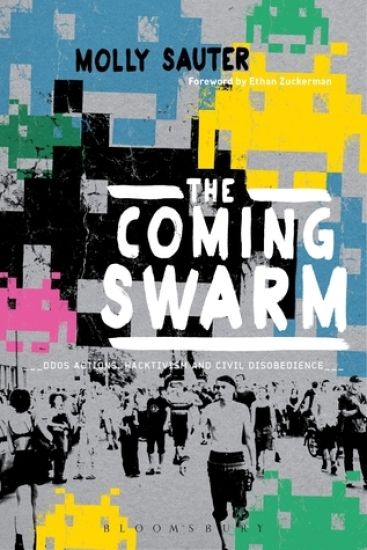
This book is available as open access through the Bloomsbury Open Access programme and is available on www.bloomsburycollections.com.What is Hacktivism? In The Coming Swarm, rising star Molly Sauter examines the history, development, theory, and practice of distributed denial of service actions as a tactic of political activism. The internet is a vital arena of communication, self expression, and interpersonal organizing. When there is a message to convey, words to get out, or people to unify, many will turn to the internet as a theater for that activity. As familiar and widely accepted activist tools—petitions, fundraisers, mass letter-writing, call-in campaigns and others—find equivalent practices in the online space, is there also room for the tactics of disruption and civil disobedience that are equally familiar from the realm of street marches, occupations, and sit-ins? With a historically grounded analysis, and a focus on early deployments of activist DDOS as well as modern instances to trace its development over time, The Coming Swarm uses activist DDOS actions as the foundation of a larger analysis of the practice of disruptive civil disobedience on the internet.
The Coming Swarm

The Coming Swarm

Molly Sauter; Ethan Zuckerman

Bloomsbury Academic USA
2014
sidottu
This book is available as open access through the Bloomsbury Open Access programme and is available on www.bloomsburycollections.com.What is Hacktivism? In The Coming Swarm, rising star Molly Sauter examines the history, development, theory, and practice of distributed denial of service actions as a tactic of political activism. The internet is a vital arena of communication, self expression, and interpersonal organizing. When there is a message to convey, words to get out, or people to unify, many will turn to the internet as a theater for that activity. As familiar and widely accepted activist tools—petitions, fundraisers, mass letter-writing, call-in campaigns and others—find equivalent practices in the online space, is there also room for the tactics of disruption and civil disobedience that are equally familiar from the realm of street marches, occupations, and sit-ins? With a historically grounded analysis, and a focus on early deployments of activist DDOS as well as modern instances to trace its development over time, The Coming Swarm uses activist DDOS actions as the foundation of a larger analysis of the practice of disruptive civil disobedience on the internet.
Rewire

Rewire

Ethan Zuckerman

WW Norton Co
2013
sidottu
We live in an age of connection, one that is accelerated by the Internet. This increasingly ubiquitous, immensely powerful technology often leads us to assume that as the number of people online grows, it inevitably leads to a smaller, more cosmopolitan world. We’ll understand more, we think. We’ll know more. We’ll engage more and share more with people from other cultures. In reality, it is easier to ship bottles of water from Fiji to Atlanta than it is to get news from Tokyo to New York. In Rewire, media scholar and activist Ethan Zuckerman explains why the technological ability to communicate with someone does not inevitably lead to increased human connection. At the most basic level, our human tendency to “flock together” means that most of our interactions, online or off, are with a small set of people with whom we have much in common. In examining this fundamental tendency, Zuckerman draws on his own work as well as the latest research in psychology and sociology to consider technology’s role in disconnecting ourselves from the rest of the world. For those who seek a wider picture—a picture now critical for survival in an age of global economic crises and pandemics—Zuckerman highlights the challenges, and the headway already made, in truly connecting people across cultures. From voracious xenophiles eager to explore other countries to bridge figures who are able to connect one culture to another, people are at the center of his vision for a true kind of cosmopolitanism. And it is people who will shape a new approach to existing technologies, and perhaps invent some new ones, that embrace translation, cross-cultural inspiration, and the search for new, serendipitous experiences. Rich with Zuckerman’s personal experience and wisdom, Rewire offers a map of the social, technical, and policy innovations needed to more tightly connect the world.