Kirjailija
Ethirajan Rathakrishnan
Kirjat ja teokset yhdessä paikassa: 17 kirjaa, julkaisuja vuosilta 2010-2026, suosituimpien joukossa Elements of Heat Transfer. Vertaile teosten hintoja ja tarkista saatavuus suomalaisista kirjakaupoista.
17 kirjaa
Kirjojen julkaisuhaarukka 2010-2026.
This textbook serves as a comprehensive guide to heat transfer, covering both theoretical and applied aspects for undergraduate and graduate courses. It introduces fundamental principles, thermodynamics, and heat transfer processes, including conduction, convection, radiation, mass transfer, boiling, condensation, and heat exchangers. The second edition adds cryogenics, addressing modern applications like superconductors and space systems. With detailed explanations, solved examples, and practical insights, the book spans the full temperature spectrum, offering valuable knowledge for senior undergraduate and graduate students in mechanical, aerospace, and heat transfer engineering. Provides a comprehensive yet concise introduction to the topic of heat and mass transfer. Covers conduction in both steady and unsteady states in a detailed manner. Discusses classification, performance and design aspects of heat exchangers. Explores the concept of cryogenics in the low-temperature heat transfer environment. Includes exercise problems, solutions manual, and lecture slides as instructors resources.
One-of-a-kind resource on theoretical and application aspects of hypersonic slender body aerodynamics with many didactic features included throughout Developed using class-tested course material, Hypersonic Slender Body Aerodynamics presents the theoretical and application aspects of the subject in a precise, concise, and student-friendly manner. The text includes a large number of worked examples, figures, diagrams, tables, and exercise problems. This book covers the subject material beginning from the definition of the slender body geometry through to the study of flow field around the body and the calculation of the aerodynamic and thermal loads acting on the body at speeds ranging from low to high (i.e., from incompressible to hypersonic speeds). The Mach number independence principle and approximate theories for caret wings are also covered, among many other key topics. This book is unique in its comprehensive coverage of the topic, enabling readers to find information in one place instead of scattered throughout proprietary wind tunnel test data, flight test data, government technical reports, scientific literature sources, and numerical methods. Some of the concepts explored in Hypersonic Slender Body Aerodynamics include: Wings of supersonic aircraft, covering sharp leading edges and ground and viscous effects, and pressure distribution on surfaces, covering transverse and longitudinal flowHypersonic aerodynamics, covering atmospheric properties, hypersonic-flow characteristics, governing equations, and flow past a semi-wedgeApplication of slender-body theory, covering leading-edge heat transfer, sublimation, aerodynamic effects, nose bluntness, blast-wave theory, and thin shock layersAxisymmetric slender bodies, covering potential flow solutions and pressure distribution, and drag of slender bodies, covering shape factor and blunt after-body corrections Skillfully written with a clear and engaging writing style, Hypersonic Slender Body Aerodynamics is an essential learning resource on the subject for undergraduate and graduate students of aerospace engineering and practicing engineers working in aerospace research labs and industries. It is a perfect textbook for courses on slender body aerodynamics.
This book explores the mysteries of the human brain and the potential of the mind. The peculiarities and infinitude of the mind have been a theme for research for scientists and philosophers alike, for centuries.This volume presents the unanswered and highly convoluted questions and hypotheses surrounding the human mind in a simplified way. It examines the binaries of religion and science, god and nature, and emotions and intelligence through a philosophical lens to posit that the relationships between cognition, belief, nature, and science are what we understand and infer based on our surroundings and how much we are willing to think, learn, and introspect.This book will be of interest to students of philosophy, psychology, science, popular science, psychoanalysis, cognitive studies, and mental health. It will also appeal to general readers.
Fluid and Thermal Dynamics Answer Bank for Engineers
Ethirajan Rathakrishnan
Brown Walker Press
2023
pokkari
This book was developed using material from teaching courses on fluid mechanics, high-speed flows, aerodynamics, high-enthalpy flows, experimental methods, aircraft design, heat transfer, introduction to engineering, and wind engineering. It precisely presents the theoretical and application aspects of the terms associated with these courses. It explains concepts such as cyclone, typhoon, hurricane, and tornado, by highlighting the subtle difference between them. The text comprehensively introduces the subject vocabulary of fluid mechanics for use in courses in engineering and the physical sciences.This book• Presents the theoretical aspects and applications of high-speed flows, aerodynamics, high-enthalpy flows, and aircraft design.• Provides a ready reference source for readers to learn essential concepts related to flow physics, rarefied, and stratified flows.• Comprehensively covers topics such as laser Doppler anemometer, latent heat of fusion, and latent heat of vaporisation.• Includes schematic sketches and photographic images to equip the reader with a better view of the concepts.This is ideal study material for senior undergraduate and graduate students in the fields of mechanical engineering, aerospace engineering, flow physics, civil engineering, automotive engineering, and manufacturing engineering.
Provides a broad and accessible introduction to the field of aerospace engineering, ideal for semester-long courses Aerospace engineering, the field of engineering focused on the development of aircraft and spacecraft, is taught at universities in both dedicated aerospace engineering programs as well as in wider mechanical engineering curriculums around the world-yet accessible introductory textbooks covering all essential areas of the subject are rare. Filling this significant gap in the market, Introduction to Aerospace Engineering: Basic Principles of Flight provides beginning students with a strong foundational knowledge of the key concepts they will further explore as they advance through their studies. Designed to align with the curriculum of a single-semester course, this comprehensive textbook offers a student-friendly presentation that combines the theoretical and practical aspects of aerospace engineering. Clear and concise chapters cover the laws of aerodynamics, pressure, and atmospheric modeling, aircraft configurations, the forces of flight, stability and control, rockets, propulsion, and more. Detailed illustrations, well-defined equations, end-of-chapter summaries, and ample review questions throughout the text ensure students understand the core topics of aerodynamics, propulsion, flight mechanics, and aircraft performance. Drawn from the author’s thirty years’ experience teaching the subject to countless numbers of university students, this much-needed textbook: Explains basic vocabulary and fundamental aerodynamic concepts Describes aircraft configurations, low-speed aerofoils, high-lift devices, and rockets Covers essential topics including thrust, propulsion, performance, maneuvers, and stability and control Introduces each topic in a concise and straightforward manner as students are guided through progressively more advanced material Includes access to companion website containing a solutions manual and lecture slides for instructors Introduction to Aerospace Engineering: Basic Principles of Flight is the perfect "one stop" textbook for instructors, undergraduates, and graduate students in Introduction to Aerospace Engineering or Introduction to Flight courses in Aerospace Engineering or Mechanical Engineering programs.
Instrumentation, Measurements, and Experiments in Fluids, Second Edition
Ethirajan Rathakrishnan
CRC Press
2020
nidottu
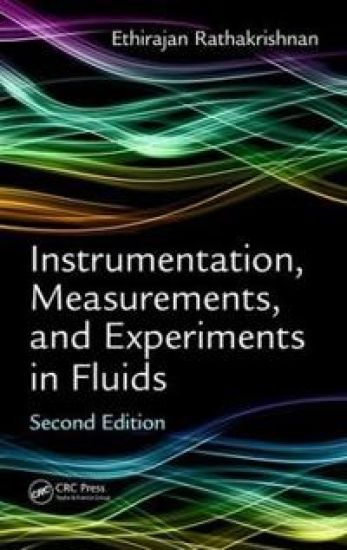
Instrumentation, Measurements, and Experiments in Fluids, Second Edition is primarily focused on essentials required for experimentation in fluids, explaining basic principles, and addressing the tools and methods needed for advanced experimentation. It also provides insight into the vital topics and issues associated with the devices and instruments used for fluid mechanics and gas dynamics experiments. The second edition adds exercise problems with answers, along with PIV systems of flow visualization, water flow channel for flow visualization, and pictures with Schlieren and shadowgraph—from which possible quantitative information can be extracted. Ancillary materials include detailed solutions manual and lecture slides for the instructors.
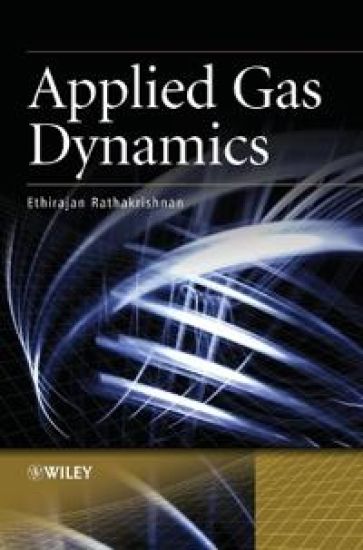
A revised edition to applied gas dynamics with exclusive coverage on jets and additional sets of problems and examples The revised and updated second edition of Applied Gas Dynamics offers an authoritative guide to the science of gas dynamics. Written by a noted expert on the topic, the text contains a comprehensive review of the topic; from a definition of the subject, to the three essential processes of this science: the isentropic process, shock and expansion process, and Fanno and Rayleigh flows. In this revised edition, there are additional worked examples that highlight many concepts, including moving shocks, and a section on critical Mach number is included that helps to illuminate the concept. The second edition also contains new exercise problems with the answers added. In addition, the information on ram jets is expanded with helpful worked examples. It explores the entire spectrum of the ram jet theory and includes a set of exercise problems to aid in the understanding of the theory presented. This important text: Includes a wealth of new solved examples that describe the features involved in the design of gas dynamic devices ?Contains a chapter on jets; this is the first textbook material available on high-speed jetsOffers comprehensive and simultaneous coverage of both the theory and applicationIncludes additional information designed to help with an understanding of the material covered Written for graduate students and advanced undergraduates in aerospace engineering and mechanical engineering, Applied Gas Dynamics, Second Edition expands on the original edition to include not only the basic information on the science of gas dynamics but also contains information on high-speed jets.
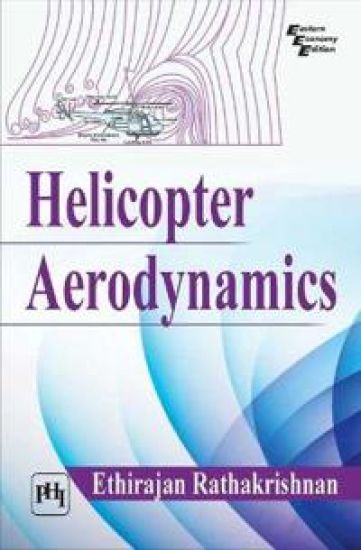
This book is developed to serve as a concise text for a course on helicopter aerodynamics at the introductory level. It introduces to the rotary-wing aerodynamics, with applications to helicopters, and application of the relevant principles to the aerodynamic design of a helicopter rotor and its blades. The basic aim of this book is to make a complete text covering both the basic and applied aspects of theory of rotary wing flying machine for students, engineers, and applied physicists. The philosophy followed in this book is that the subject of helicopter aerodynamics is covered combining the theoretical analysis, physical features and the application aspects. Considerable number of solved examples and exercise problems with answers are coined for this book. This book will cater to the requirement of numerical problems on helicopter flight performance, which is required for the students of aeronautical/aerospace engineering. SALIENT FEATURES: To provide an introductory treatment of the aerodynamic theory of rotary-wing aircraft To study the fundamentals of rotor aerodynamics for rotorcraft in hovering flight, axial flight, and forward flight modes To perform blade element analysis, investigate rotating blade motion, and quantify basic helicopter performance
Instrumentation, Measurements, and Experiments in Fluids, Second Edition
Ethirajan Rathakrishnan
Productivity Press
2016
sidottu
Instrumentation, Measurements, and Experiments in Fluids, Second Edition is primarily focused on essentials required for experimentation in fluids, explaining basic principles, and addressing the tools and methods needed for advanced experimentation. It also provides insight into the vital topics and issues associated with the devices and instruments used for fluid mechanics and gas dynamics experiments. The second edition adds exercise problems with answers, along with PIV systems of flow visualization, water flow channel for flow visualization, and pictures with Schlieren and shadowgraph—from which possible quantitative information can be extracted. Ancillary materials include detailed solutions manual and lecture slides for the instructors.
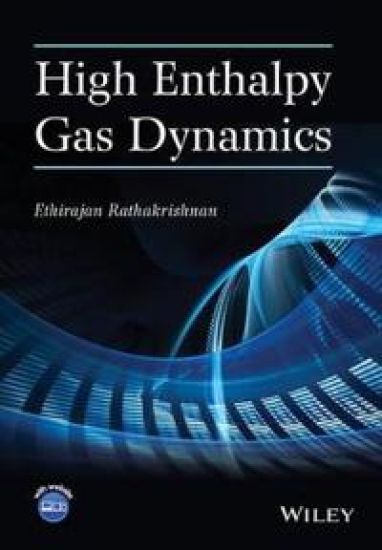
This is an introductory level textbook which explains the elements of high temperature and high-speed gas dynamics. written in a clear and easy to follow style, the author covers all the latest developments in the field including basic thermodynamic principles, compressible flow regimes and waves propagation in one volumecovers theoretical modeling of High Enthalpy Flows, with particular focus on problems in internal and external gas-dynamic flows, of interest in the fields of rockets propulsion and hypersonic aerodynamicsHigh enthalpy gas dynamics is a compulsory course for aerospace engineering students and this book is a result of over 25 years' teaching by the authoraccompanying website includes a Solutions Manual for exercises listed at the end of each chapter, plus lecture slides
Theoretical Aerodynamics is a user-friendly text for a full course on theoretical aerodynamics. The author systematically introduces aerofoil theory, its design features and performance aspects, beginning with the basics required, and then gradually proceeding to higher level. The mathematics involved is presented so that it can be followed comfortably, even by those who are not strong in mathematics. The examples are designed to fix the theory studied in an effective manner. Throughout the book, the physics behind the processes are clearly explained. Each chapter begins with an introduction and ends with a summary and exercises. This book is intended for graduate and advanced undergraduate students of Aerospace Engineering, as well as researchers and Designers working in the area of aerofoil and blade design. Provides a complete overview of the technical terms, vortex theory, lifting line theory, and numerical methodsPresented in an easy-to-read style making full use of figures and illustrations to enhance understanding, and moves well simpler to more advanced topicsIncludes a complete section on fluid mechanics and thermodynamics, essential background topics to the theory of aerodynamicsBlends the mathematical and physical concepts of design and performance aspects of lifting surfaces, and introduces the reader to the thin aerofoil theory, panel method, and finite aerofoil theoryIncludes a Solutions Manual for end-of-chapter exercises, and Lecture slides on the book's Companion Website
Experimental Investigation of Hypersonic Flow over Spiked Blunt Body
Raman Kalimuthu; Ethirajan Rathakrishnan; Rakhab C Mehta
LAP Lambert Academic Publishing
2012
pokkari
Written for chemical, mechanical, and aerospace engineering students taking courses on heat and mass transfer, this textbook presents the basics and proceeds to the required theory and its application aspects. Major topics covered include conduction, convection, radiation, boiling, heat exchangers, and mass transfer and are explained in a detailed, to the point manner. Along with coverage of the topics, the author provides appropriate numerical examples to clarify theory and concepts. Exercise problems are presented at the end of each chapter to test the understanding gained within each subject. A solutions manual and PowerPoint slides accompany the text, upon qualification.
In Applied Gas Dynamics, Professor Ethirajan Rathakrishnan introduces the high-tech science of gas dynamics, from a definition of the subject to the three essential processes of this science, namely, the isentropic process, shock and expansion process, and Fanno and Rayleigh flows. The material is presented in such a manner that beginners can follow the subject comfortably. Rathakrishnan also covers the theoretical and application aspects of high-speed flows in which enthalpy change becomes significant. Covers both theory and applicationsExplains involved aspects of flow processes in detailProvides a large number of worked through examples in all chaptersReinforces learning with concise summaries at the end of every chapterContains a liberal number of exercise problems with answersDiscusses ram jet and jet theory -- unique topics of use to all working in the fieldClassroom tested at introductory and advanced levelsSolutions manual and lecture slides available for instructors Applied Gas Dynamics is aimed at graduate students and advanced undergraduates in Aerospace Engineering and Mechanical Engineering who are taking courses such as Gas Dynamics, Compressible Flows, High-Speed Aerodynamics, Applied Gas Dynamics, Experimental Aerodynamics and High-Enthalpy Flows. Practicing engineers and researchers working with high speed flows will also find this book helpful. Lecture materials for instructors available at http://www.wiley.com/go/gasdyn