Kirjailija
Etienne Gilson
Kirjat ja teokset yhdessä paikassa: 74 kirjaa, julkaisuja vuosilta 1932-2026, suosituimpien joukossa John Duns Scotus. Vertaile teosten hintoja ja tarkista saatavuus suomalaisista kirjakaupoista.
Mukana myös kirjoitusasut: Étienne Gilson
74 kirjaa
Kirjojen julkaisuhaarukka 1932-2026.
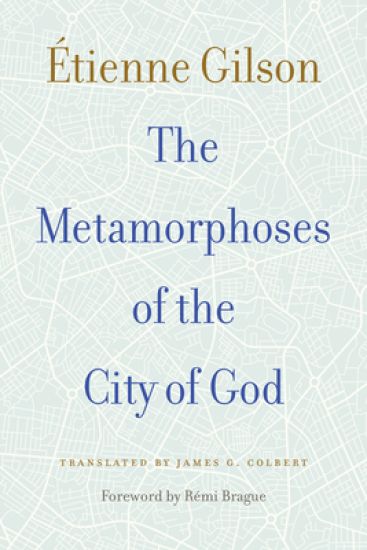
The Metamorphoses of the City of God
Etienne Gilson; Remi Brague
The Catholic University of America Press
2020
nidottu
Étienne Gilson (1884-1978) was a French philosopher and historian of philosophy, as well as a scholar of medieval philosophy. In 1946 he attained the distinction of being elected an ""Immortal"" (member) of the Académie française. He was nominated for the Nobel Prize in Literature in 1959 and 1964.The appearance of Gilson's Metamorphosis of the City of God, which were originally delivered as lectures at the University of Louvain, Belgium, in the Spring of 1952, coincided with the first steps toward what would become the European Union. The appearance of this English translation coincides with the upheaval of Brexit. Gilson traces the various attempts of thinkers through the centuries to describe Europe's soul and delimit its parts. The Scots, Catalonians, Flemings, and probably others may nod in agreement in Gilson's observation on how odd would be a Europe composed of the political entities that existed two and a half centuries ago. Those who think the European Union has lost its soul may not be comforted by the difficulty thinkers have had over the centuries in defining that soul. Indeed the difficulties that have thus far prevented integrating Turkey into the EU confirm Gilson's description of the conundrum involved even in distinguishing Europe's material components. And yet, the endeavor has succeeded, so that the problem of shared ideals remain inescapable. One wonders which of the thinkers in the succession studied by Gilson might grasp assent and illuminate the EU's path.

Oeuvres Completes Tome I: Un Philosophe Dans La Cite. 1908-1943
Etienne Gilson
Librarie Philosophique J. Vrin
2019
nidottu
Ce premier volume des OEuvres completes rassemble plus de cent-quinze textes publies par Etienne Gilson entre 1908 et 1943, afin de presenter l'ensemble des prises de parole du philosophe sur son actualite. Il comprend le volume Pour un ordre catholique (1934), les articles politiques que Gilson redige dans la presse nationale et confessionnelle, les entretiens, les conferences pedagogiques, les interventions publiques sur les intellectuels, les professeurs d'Universite ou les hommes de lettres contemporains. On trouvera egalement le cours ou Gilson examine avec acuite le phenomene totalitaire (automne 1933), ouvrant la voie au volume sur Les metamorphoses de la Cite de Dieu de 1952. Ce n'est qu'en filigrane que l'on percevra dans ce volume l'erudition du professeur de philosophie medievale. Ces opera minora ne sont pas secondaires cependant: nombreuses, precises et riches, comme des miniatures, elles dessinent un portrait neuf et revelent un itineraire intellectuel singulier et meconnu.
Etienne Gilson se propose ici de resumer l'aspect le moins etudie de la mystique cistercienne: ce que l'on pourrait nommer sa systematique. Bernard ne fut aucunement un metaphysicien, mais il devra aussi rester un theologien que sa puissance de synthese et sa vigueur speculative apparentent aux plus grands. Sans doute, sa theologie mystique est essentiellement la science d'une pratique, mais j'espere montrer que c'est bien une science et qu'il etait difficile de pousser plus loin la rigueur de la synthese. Les principes et la langue de l'auteur une fois connus, ses traites, et meme ses sermons, s'expliquent aussi exactement et techniquement que les pages les plus denses de saint Anselme ou de saint Thomas d'Aquin. Nul ne commettra la faute d'oublier l'ame du mystique; je pense qu'on la connaitre mieux, au contraire, si l'on oublie moins a l'avenir la pensee du theologien .
Theology and the Cartesian Doctrine of Freedom
Etienne Gilson; James G. Colbert
ST AUGUSTINE'S PRESS
2019
sidottu
History of Christian Philosophy in the Middle Ages
Etienne Gilson
The Catholic University of America Press
2019
nidottu

Per tienne Gilson, "philosophy is a collective enterprise in which no one can pretend to take part unless he is first properly introduced." To provide that proper introduction vis- -vis the modern period, Gilson and Langan move systematically through the landmark figures and ideas of the seventeenth and the eighteenth centuries. Beginning with the vestiges of medievalism in Montaigne and Bacon, they then cover the interplay of science and philosophy (Descartes, Newton, and Vico); the emergence of a new political ethos (Hobbes, Locke, and Rousseau); the installation of the golden age of modern metaphysics (Spinoza, Leibniz, and Wolff); the juxtaposition of materialism with idealism (Newton, Berkeley, and Hume); the Christian reaction (Pascal and Gerdil); and the rise of Romanticism (Lessing, Herder and Kant).With its emphasis on the doctrinal content of each philosopher, braced by healthy portions of biographical detail, Modern Philosophy is a comprehensive treatment of what it has meant and what it means to philosophize, the ambitious breadth of which is matched only by its absorbing depth.
This marks the first time Linguistics and Philosophy, published in France in 1969, has been translated into English. Here, philosopher Etienne Gilson examines linguistics—from Descartes to Derrida—as he argues for the irreducibility of thought to language. Reviewing the theories of figures such as Condillac, Mallarmé, de Saussure, and Vendryès, Gilson looks at the process whereby thought is translated into language, seeking to reestablish the notion of concepts as mediators. The temptation of linguists to philosophize in such areas as the relationship of thought, language, and the world prompted Gilson to write Linguistics and Philosophy. In the introduction he does not claim to be a linguist, but rather a philosopher exercizing his option of selecting certain issues involving language that seem to be "philosophic constants." Decidedly philosophical in his approach, Gilson examines the way in which words, meanings, and languages grow continually and creatively, an inextricable part of life in society. He also explores our ability to construct abstract thoughts that point to an immaterial power of human beings, and he laments the degeneration of modern language brought about by radio and television broadcasters, especially in connection with neologistic and linguistic borrowing from other languages. We are currently observing the deterioration of language through the spoken word. In this fascinating work, Gilson demonstrates that the linguist cannot be indifferent to this occurrence.
In this book (a translation of his well-known work L'esprit de la philosophie medievale), Etienne Gilson undertakes the task of defining the spirit of mediaeval philosophy. Gilson asks whether we can form the concept of a Christian philosophy and whether mediaeval philosophy is not its most adequate historical expression. He maintains that the spirit of mediaeval philosophy is the spirit of Christianity penetrating the Greek tradition, working within it, and drawing out of it a certain view of the world that is specifically Christian. To support his hypothesis, Gilson examines mediaeval thought in its nascent state, at that precise point where the Judeo-Christian graft was inserted into the Hellenic tradition. Gilson's demonstration is primarily historical and occasionally theoretical in suggesting how doctrines that satisfied our predecessors for so many centuries may still be found conceivable today.
Moral Values and the Moral Life: The Ethical Theory of St. Thomas Aquinas
Etienne Gilson
Literary Licensing, LLC
2013
sidottu
""Moral Values And The Moral Life: The Ethical Theory Of St. Thomas Aquinas"" by Etienne Gilson is a comprehensive exploration of the ethical theory of St. Thomas Aquinas, a prominent theologian and philosopher of the medieval period. The book delves into Aquinas' moral philosophy, which is grounded in his belief in natural law and the importance of reason in moral decision-making. Gilson provides a detailed analysis of Aquinas' views on virtue, the nature of the good, and the role of human reason in ethical decision-making. The book also explores the relationship between moral values and the moral life, and how Aquinas' ethical theory can inform contemporary debates on issues such as the meaning of human dignity, the nature of the common good, and the role of moral reasoning in public policy. Overall, ""Moral Values And The Moral Life"" offers a rich and insightful examination of one of the most influential ethical theories in Western philosophy.This is a new release of the original 1931 edition.This scarce antiquarian book is a facsimile reprint of the old original and may contain some imperfections such as library marks and notations. Because we believe this work is culturally important, we have made it available as part of our commitment for protecting, preserving, and promoting the world's literature in affordable, high quality, modern editions, that are true to their original work.
Moral Values and the Moral Life: The Ethical Theory of St. Thomas Aquinas
Etienne Gilson
Literary Licensing, LLC
2013
nidottu

The Establishment of the University of Being in the Doctrine of Meister Eckhart of Hochheim
Bernard J. Muller-Thym; Etienne Gilson
Literary Licensing, LLC
2013
nidottu
de La Bible a Francois Villon: Rabelais Franciscain
Etienne Gilson
Librarie Philosophique J. Vrin
2012
nidottu

Lors de la commemoration du septieme centenaire de l'anniversaire de la naissance de Dante Alighieri (1265-1321), Etienne Gilson qui avait publie dans les annees quarante un ouvrage rapidement devenu un classique sur la pensee de Dante (Dante et la philosophie), a repris la plume pour rendre hommage au grand poete et penseur italien. Dans ce volume sont publies les neuf articles qui abordent certains des themes fondamentaux de la reflexion de Dante comme la nature du ciel Empyree, le rapport entre poesie et theologie ou encore la signification de la vision merveilleuse . Le volume s'ouvre avec une belle introduction a la pensee de Dante et se termine par une meditation sur Dante et Eugene Delacroix.
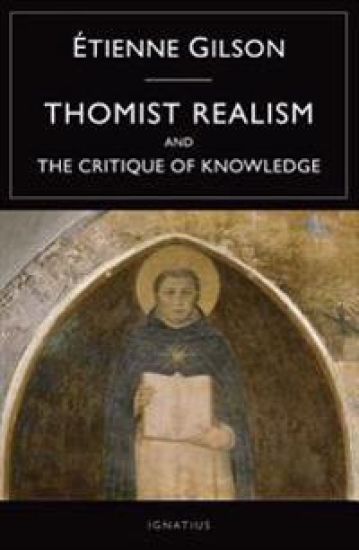
The highly regarded French philosopher, tienne Gilson, brilliantly plumbs the depths of Thomistic Realism, and false Thomisms as well, in this answer to Kantian modernism. The important work, exquisitely translated by Mark Wauck, brings the essential elements of philosophy into view as a cohesive, readily understandable, and erudite structure, and does so rigorously in the best tradition of St. Thomas.Written as the definitive answer to those philosophers who sought to reconcile critical philosophy with scholastic realism, Gilson saw himself as an historian of philosophy whose main task was one of restoration, and principally the restoration of the wisdom of the Common Doctor of the Church, St. Thomas Aquinas.Gilson's thesis was that realism was incompatible with the critical method and that realism, to the extent that it was reflective and aware of its guiding principles, was its own proper method. He gives a masterful account of the various forces that shaped the neo-scholastic revival, but Gilson is concerned with the past only as it sheds light on the present. In addition to his criticisms, Gilson presents a positive exposition of true Thomist realism, revealing the foundation of realism in the unity of the knowing subject.
History of Philosophy and Philosophical Education
Etienne Gilson
Literary Licensing, LLC
2012
nidottu
History of Philosophy and Philosophical Education
Etienne Gilson
Literary Licensing, LLC
2012
sidottu
""History of Philosophy and Philosophical Education"" by Etienne Gilson is a comprehensive study of the development of philosophy and its relationship with education. The book explores the evolution of philosophical thought from ancient Greece to the modern era, tracing the major schools of philosophy and their influence on education. Gilson examines the role of philosophy in shaping the intellectual and moral character of individuals and societies, and argues that a deep understanding of philosophy is essential for a well-rounded education. The book also addresses contemporary debates about the value and relevance of philosophy in the modern world, and offers insights into how philosophy can be taught effectively in the classroom. With its engaging style and insightful analysis, ""History of Philosophy and Philosophical Education"" is an essential resource for students, educators, and anyone interested in the history of ideas and their impact on education and society.Aquinas Lecture Fall, 1947.This scarce antiquarian book is a facsimile reprint of the old original and may contain some imperfections such as library marks and notations. Because we believe this work is culturally important, we have made it available as part of our commitment for protecting, preserving, and promoting the world's literature in affordable, high quality, modern editions, that are true to their original work.
Medieval Philosophy: A History of Philosophy
Armand A. Maurer; Etienne Gilson
Literary Licensing, LLC
2011
nidottu