

Kirjailija
Eudora Welty
Kirjat ja teokset yhdessä paikassa: 28 kirjaa, julkaisuja vuosilta 1967-2026, suosituimpien joukossa On William Faulkner. Vertaile teosten hintoja ja tarkista saatavuus suomalaisista kirjakaupoista.
28 kirjaa
Kirjojen julkaisuhaarukka 1967-2026.
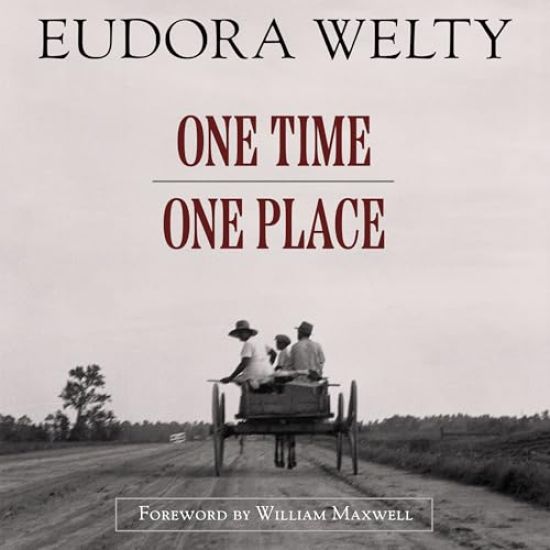
Eudora Welty is among the very few authors acclaimed for their work in both literature and photography. In 1971 she surprised her readers with this important book, for in One Time, One Place many of them learned for the first time that this revered writer was also a gifted photographer. One Time, One Place is the only book of Welty’s where she selected all images. Throughout her writing career, Welty's camera was a close companion. The one hundred pictures included here are for the first time digitally scanned to maximize the contrast and beauty of her vision. These are her selections from many she took during the Great Depression as she traveled in her home state of Mississippi. These pictures are poignant images of human endurance. For her, looking back, they showed a record of a time and a place, an impoverished world that against great odds sustained a sense of community. Both Black and white, the men, women, and children she photographed, unaware that they are coping with dire conditions, press onward with their lives. "The Depression, in fact," Welty says in her introduction, "was not a noticeable phenomenon in the poorest state in the Union." The foreword by William Maxwell, Eudora Welty's dear friend and esteemed colleague in literature, offers an appreciation of this photographer's special genius and a loving glimpse into her artistic world. This new version of One Time, One Place keeps the original photos and foreword intact, while providing higher quality versions of the classic images.

Featuring a new introduction, this updated edition of the New York Times bestselling classic by Pulitzer Prize and National Book Award-winning author and one of the most revered figures in American letters is "profound and priceless as guidance for anyone who aspires to write" (Los Angeles Times). Born in 1909 in Jackson, Mississippi, Eudora Welty shares details of her upbringing that show us how her family and her surroundings contributed to the shaping not only of her personality but of her writing as well. Everyday sights, sounds, and objects resonate with the emotions of recollection: the striking clocks, the Victrola, her orphaned father's coverless little book saved since boyhood, the tall mountains of the West Virginia back country that became a metaphor for her mother's sturdy independence, Eudora's earliest box camera that suspended a moment forever and taught her that every feeling awaits a gesture. In her vivid descriptions of growing up in the South--of the interplay between black and white, between town and countryside, between dedicated schoolteachers and the children they taught--she recreates the vanished world of her youth with the same subtlety and insight that mark her fiction, capturing "the mysterious transfiguring gift by which dream, memory, and experience become art" (Los Angeles Times Book Review). Part memoir, part exploration of the seeds of creativity, this unique distillation of a writer's beginnings offers a rare glimpse into the Mississippi childhood that made Eudora Welty the acclaimed and important writer she would become.
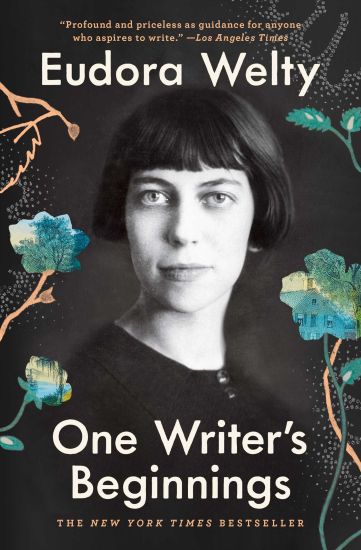
Featuring a new introduction, this updated edition of the New York Times bestselling classic by Pulitzer Prize and National Book Award-winning author and one of the most revered figures in American letters is "profound and priceless as guidance for anyone who aspires to write" (Los Angeles Times). Born in 1909 in Jackson, Mississippi, Eudora Welty shares details of her upbringing that show us how her family and her surroundings contributed to the shaping not only of her personality but of her writing as well. Everyday sights, sounds, and objects resonate with the emotions of recollection: the striking clocks, the Victrola, her orphaned father's coverless little book saved since boyhood, the tall mountains of the West Virginia back country that became a metaphor for her mother's sturdy independence, Eudora's earliest box camera that suspended a moment forever and taught her that every feeling awaits a gesture. In her vivid descriptions of growing up in the South--of the interplay between black and white, between town and countryside, between dedicated schoolteachers and the children they taught--she recreates the vanished world of her youth with the same subtlety and insight that mark her fiction, capturing "the mysterious transfiguring gift by which dream, memory, and experience become art" (Los Angeles Times Book Review). Part memoir, part exploration of the seeds of creativity, this unique distillation of a writer's beginnings offers a rare glimpse into the Mississippi childhood that made Eudora Welty the acclaimed and important writer she would become.

With a new introduction from Anne Tyler. From one our most treasured American writers, Delta Wedding is a vivid and charming portrait of a large southern family, the Fairchilds, who live on a plantation in the Mississippi delta. The story, set in 1923, is exquisitely woven from the ordinary events of family life, centered around the visit of a young relative, Laura McRaven, and the family's preparations for her cousin Dabney's wedding.

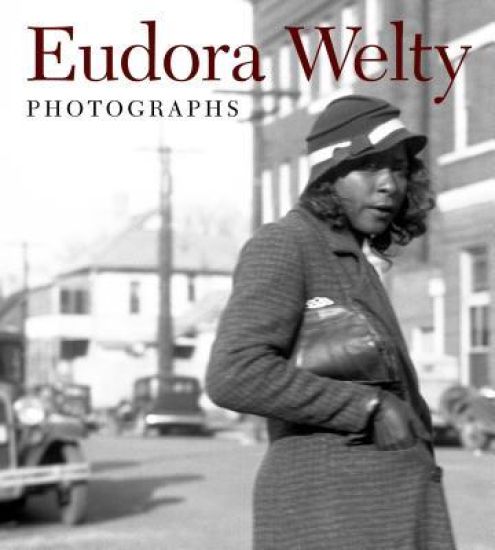
Photographs
Eudora Welty; Reynolds Price; Natasha Trethewey
University Press of Mississippi
2019
sidottu
Eudora Welty's Photographs, originally published in 1989, serves as the definitive book of the critically acclaimed writer's photographs. Her camera's viewfinder captured deep compassion and her artist's sensibilities. Photographs is a deeply felt documentation of 1930s Mississippi taken by a keenly observant photographer who showed the human side of her subjects. Also included in the book are pictures from Welty's travels to New York, New Orleans, South Carolina, Mexico, and Europe in the 1930s, '40s, and '50s.The photographs in this edition are new digital scans of Welty's original negatives and authentic prints, restoring the images to their original glory. It also features sixteen additional images, several of which were selected by Welty for her 1936 photography exhibit in New York City and have never before been reproduced for publication, along with a resonant, new foreword by Pulitzer Prize–winning writer and Mississippi native Natasha Trethewey.
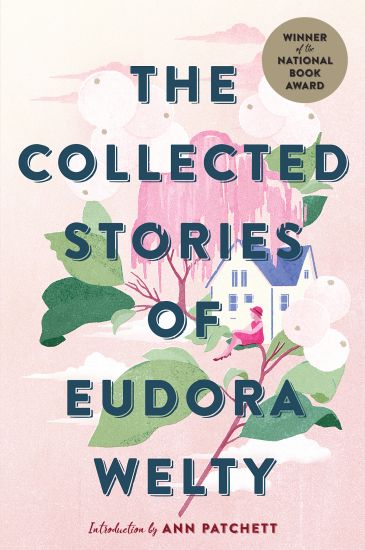
The Collected Stories of Eudora Welty: A Collection
Eudora Welty
Mariner Books Classics
2019
nidottu
With a new introduction from best-selling author Ann Patchett, this National Book Award-winning story collection is one of the great works of twentieth-century American literature. Eudora Welty wrote novels, novellas, and reviews over the course of her long career, but the heart and soul of her literary vision lay with the short story, and her National Book Award-winning Collected Stories confirmed her as a master of short fiction. The forty-one pieces collected in this new edition, written over a period of three decades, showcase Welty's incredible dexterity as a writer. Her style seamlessly shifts from the comic to the tragic, from realistic portraits to surrealistic ones, as she deftly moves between folklore and myth, race and history, family and farce, and the Mississippi landscape she knew so well, her wry wit and keen sense of observation always present on the page.
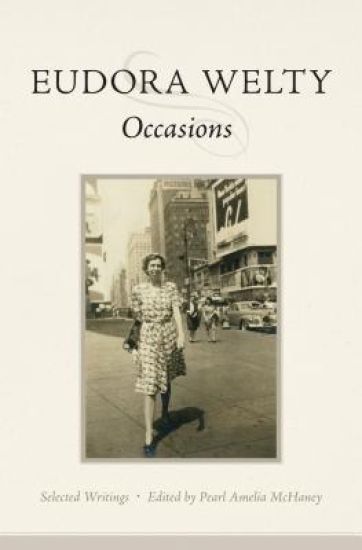
Occasions is a celebration of the short works of one of America's most beloved writers. To mark the centennial of Eudora Welty's birth, Pearl Amelia McHaney has collected more than sixty pieces by Welty (1909-2001) that are largely unknown and have not been reprinted since their first appearances in magazines, journals, newsletters, and newspapers.The gathering includes one of Welty's earliest stories, ""Acrobats in the Park""; a self-analysis of her art printed in the Twenty Photographs portfolio; a recipe for Aunt Beck's Chicken Pie served up in the novel Losing Battles; and a parody of Edmund Wilson's scurrilous New Yorker review of one of William Faulkner's late novels. These occasional essays, tributes, stories, and comments will delight readers and reveal more of the genius of a favorite author deeply engaged with her people and their customs.In these pieces Welty put pen to paper for just causes: electing honorable officials, selling war bonds, and promoting reading and the arts. Her sophistication and insight resonate in tributes to Isak Dinesen, Flannery O'Connor, and Walker Percy; in reviews of sculpture, painting, dance, and photography; and in her candid remarks about her Pulitzer Prize-winning novel, The Optimist's Daughter. Her sly humor emerges in ""Women!! Make Turban in Own Home!,"" a delightful parody of projects suggested in Popular Mechanics. Written between the 1930s and the 1990s, these fictions, essays, commemorations, reviews, and salutes reveal the sparkling imagination of a celebrated writer who continues her hold on a wide audience through these newfound pleasures.

A Depression-era comic masterpiece, E. P. O'Donnell's The Great Big Doorstep centers on the Crochets, a Cajun family who live in a ramshackle house between the levee and the Mississippi River. The Crochets dream of one day owning a stately plantation befitting the magnificent cypress doorstep they have salvaged from the river and proudly display outside their humble home. The memorable characters in this novel have their own concerns: the patriarch, Commodo, is full of wild bravado as he fluctuates between scheming, laboring, and malingering; his wife reigns as the queen of retort, though toughened by years of making do and doing without. The Crochet children also cope with personal struggles: Topal, twenty, restless, and moody, and recently dumped by her fiancé; Arthur, eighteen, attempts to strike out on his own while dodging the coddling of his mother and the fury of his father; Evvie, almost fifteen, plans to join a religious order after renouncing a lover; and twins Gussie and Paul, and baby T. J., provide an ongoing chorus of laughter and tears. The Great Big Doorstep has remained a literary and cultural classic since its publication in 1941. In an 1979 afterword, Eudora Welty praises O'Donnell's comic genius, citing his ""supreme gift"" for dialogue, while Bryan Giemza's introduction underscores the work's place in the tradition of comic Southern novels.
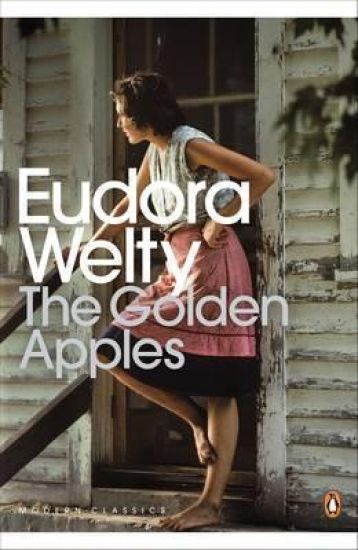
First published in 1949, THE GOLDEN APPLES is an acutely observed, richly atmospheric portrayal of small town life in Morgana, Mississippi. There's Snowdie, who has to bring up her twin boys alone after her husband, King Maclain, disappears one day, discarding his hat on the banks of the Big Black. There's Loch Morrison, convalescing with malaria, who watches from his bedroom window as wayward Virgie Rainey meets a sailor in the vacant house opposite. Meanwhile, Miss Eckhart the piano teacher, grieving the loss of her most promising pupil, tries her hand at arson.Eudora Welty has a fine ear for dialogue and describes each of the characters in incisive, haunting prose. '...in the South,' she says, 'everybody stays busy talking all the time - they're not sorry for you to overhear their tales'. Welty deftly picks up their stories to create an unflinching potrait of everyday life in the American South and offers a deeply moving look at human nature.
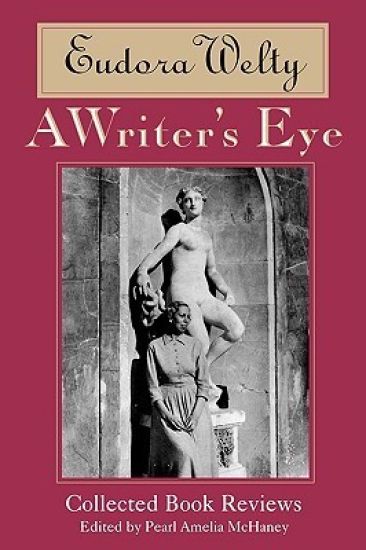
Although she is eminent primarily as the prize-winning author of classic works of fiction, Eudora Welty is notable also as an astute literary critic. Her essays on the art of fiction and on the writers who enlarged the range of the short story and the novel are definitive pieces. Her distinguished book reviews, along with her critical essays, augment her reputation for being one of the most discerning author-critics in literary America.This collection of her book reviews manifests the connecting of her penetrating eye with her responsive intellect in forming sympathetic judgments of the books she reviewed. Between 1942 and 1984 Welty wrote sixty-seven reviews of seventy-four books. Fifty-eight of these appeared in the New York Times Book Review , and others in the Saturday Review of Literature, Tomorrow, theHudson Review, the New York Post, and the Sewanee Review. The reviewed books include novels, short story collections, books of essays, biographies and memoirs, books of letters, children's books, books of ghost stories, photography books, books of literary criticism, and books of World War II art.Over nearly half a century she reviewed books by some of the foremost authors of her time: Virginia Woolf, William Faulkner, V.S. Pritchett, Colette, Isak Dinesen, E.B. White, E.M. Forster, J.D. Salinger, Ross Macdonald, Patrick White, S.J. Perelman, Annie DIllard, Elizabeth Bowen, and Katherine Anne Porter.A Writer's Eye includes all of Welty's book reviews, even one published in the under the pseudonym ""Michael Ravenna."" SIxteen of the reviews were collected previously in Welty's The Eye of the Story (1978). In this collection Pearl Amelia McHaney's introduction records the history of Welty's career in book reviewing and illuminates the honestly and compassion with which Welty wrote reviews.Welty's keen vision, her wit, and her refined style make these ""monuments to interruption,"" a phrase she wrote in description of Virginia Woolf's essays and reviews, an important record of her literary standards and special interests. They show us as well how book reviewing consumed a large measure of creative time that she customarily devoted to fiction writing. Placed beside her authoritative critical essays, this volume enhances Welty's considerable literary stature and completes the image of Eudora Welty as a consummate woman of letters.
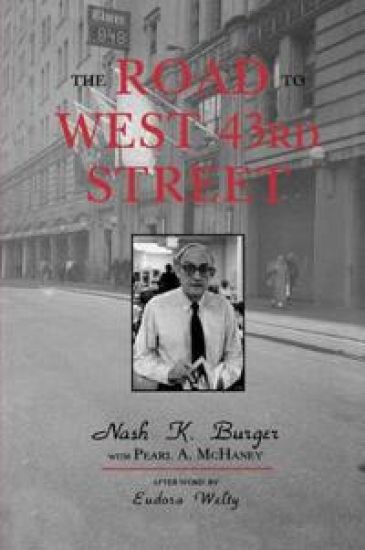
The Road to West 43rd Street
Nash K. Burger; Eudora Welty
University Press of Mississippi
2009
nidottu
For nearly thirty years and through the tenure of five editors-in-chief, Nash K. Burger was on the editorial staff of the New York Times Book Review. In this engaging reminiscence, he explores the route that took him to that bastion of the book world, headquartered in New York City on West 43rd Street. Burger is a natural raconteur whose ease with the word enhances this appealing narrative. His point-of-view, though particularly southern, has been honed for a national audience who will be entertained and enlightened by his personal perspective.Burger grew up in a circle of talented adolescents in Jackson, Mississippi, that includes one of his oldest friends, the author Eudora Welty, who preceded him at the Book Review during one summer when she served as copy editor. By 1945 Burger joined a few other distinguished Mississippians, such as Turner Catledge, at the New York Times, and in the stream of years that followed he reviewed more than 1,300 books.From his earliest days, Burger was a reader and a writer. Instinctively drawn to books, he moved on to editing. From his position at the Book Review, he wrote frequently but not exclusively on his favorite subjects: the Civil War, religion, and the literature of the American South. The trail he has left from West 43rd Street is that of the intelligent, mindful southern gentleman. Twenty years after his departure, as his friend Miss Welty proclaimed for his retirement party, his is ""a mind both clear and wise, responsive and reflective, that has yet to be amazed for the first time at the human comedy around him. He won't stop living with books; whatever he does, he'll write or edit or publish.""
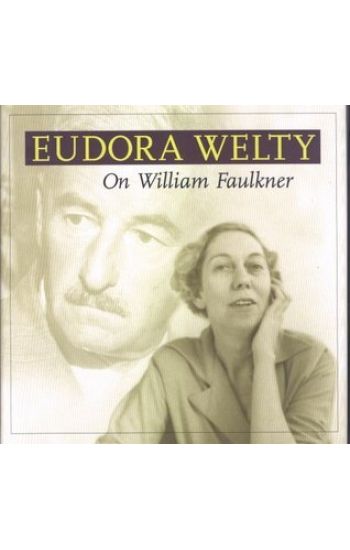
Eudora Welty (1909-2001) and William Faulkner (1897-1962) were almost unquestionably Mississippi's leading literary lions during the twentieth century. Their influence on American literature is immeasurable. On William Faulkner brings together Welty's reviews, essays, lectures, and musings on Faulkner, including such gems as her reviews of Intruder in the Dust and The Selected Letters of William Faulkner, as well as her comments during her presentation of the Gold Medal to Faulkner during the National Institute of Arts and Letters awards ceremony in 1962. The collection also features an excerpt from a letter she wrote to the novelist Jean Stafford, telling of meeting Faulkner and of going sailing with him. Included too are Welty's impassioned defense of Faulkner's work-published as a letter to the New Yorker-and the obituary of the Nobel laureate that she wrote for the Associated Press. In addition, the book includes a cryptic postcard Faulkner wrote to Welty from Hollywood, plus six photographs, and a caricature of Faulkner drawn by Welty during the 1930s. Commenting on the place of both writers in contemporary literature, an essay by the noted literary scholar Noel Polk puts the collection in context and offers assessment and appreciation of their achievements in American literature. On William Faulkner is a valuable resource for exploring Faulkner's work and sensing Welty's critical voice. Her sharp critical eye and graceful prose make her an astute commentator on his legacy. William Faulkner is the author of The Sound and the Fury, Light in August, Absalom, Absalom!, Sanctuary, As I Lay Dying, among others. He was awarded the Nobel Prize for Literature in 1949.

A great writer's poignant photographs of Mississippi graveyards and memorial stones For many years Eudora Welty wished to produce a book about country churchyards. Published at long last, in her ninety-first year, this book includes ninety of her photographs along with a conversation in which Welty shares her impressions and her memories of the 1930s and 1940s when she rambled through Mississippi cemeteries taking pictures. She recalls poignant and sometimes chilling experiences that occurred. ""I took a lot of cemetery pictures in my life,"" she said. ""For me cemeteries had a sinister appeal somehow."" Her camera eye focused on distinctive funerary emblems, statuary, storied urns, and appealing folklife qualities expressed in the gravestones. Just as many pieces of Welty's fiction feature lyrical descriptions of cemeteries and graves in a way that is expressly Weltian, so too do these photographs taken in the cool, sequestered churchyards and graveyards of Jackson, Port Gibson, Churchill, Rodney, Utica, Crystal Springs, Vicksburg, Rocky Springs, and sites near the old Natchez Trace. They not only document her rambles but also accent the images of regional cemeteries that appear in her stories and novels. This is her unique view of the southern graveyard and of its unusual artworks that arrested her attention -- chains, willows, baskets, angels, lambs, pointing hands, doves, and wreaths. ""I like the tombstones showing children asleep in seashells,"" she says. For her, an absorbed observer, there is charm in the stone motifs and in the sentimental modes of commemorating the dead. As a contemplative loner she called no attention to herself as she wandered quietly through small-town cemeteries with her camera. Both the country settings and the heart-felt inscriptions on decaying marble heightened her imagination and triggered her creative impulses. Accompanying the photographs are selected passages about graveyards and funerals from her fiction -- Losing Battles, The Golden Apples and Other Stories, A Curtain of Green and Other Stories, and The Optimist's Daughter -- and from her essay ""Some Notes on River Country."" In the introduction Elizabeth Spencer, a Mississippi writer who has been a life-long friend of Welty's, explores the photographic images for the meanings they yield, for the light they throw onto Welty's fiction, and for her own memories of their home state's evocative graveyards and burial customs. Eudora Welty, one of America's most acclaimed and honored writers, is the author of many novels and story collections, including The Optimist's Daughter (Pulitzer Prize), Losing Battles, The Ponder Heart, The Robber Bridegroom, and A Curtain of Green and Other Stories and two collections of her photographic work Photographs and One Time, One Place: Mississippi in the Depression (both from University Press of Mississippi).
The Optimist's Daughter is the story of Laurel McKelva Hand, a young woman who has left the South and returns, years later, to New Orleans, where her father is dying. After his death, she and her silly young stepmother go back still farther, to the small Mississippi town where she grew up. Alone in the old house, Laurel finally comes to an understanding of the past, herself, and her parents.
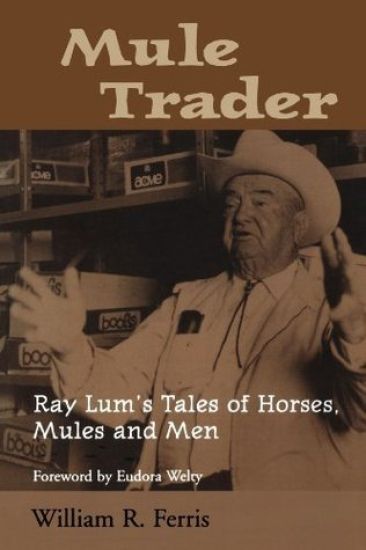
Readers captivated by this book will be happy that Bill Ferris found Ray Lum and that he thought to turn on a tape recorder. Lum (1891-1977) was a mule skinner, a livestock trader, an auctioneer, and an American original.This delightful book, first published in 1992 as You Live and Learn. Then You Die and Forget It All, preserves Lum's colorful folk dialect and captures the essence of this one-of-a-kind figure who seems to have stepped full-blooded from the pages of Mark Twain. This riveting tale-spinner was tall, heavy-set, and full of body rhythm as he talked. In his special world, he was famous for trading, for tale-telling, and for common-sense lessons that had made him a savvy bargainer and a shrewd businessman. His home and his auction barn were in Vicksburg, Mississippi, where mules were his main interest, but in trading he fanned out over twenty states and even into Mexico. A west Texas newspaper reported his fame this way, ""He is known all over cow country for his honest, fair dealing and gentlemanly attitude. . . .A letter addressed to him anywhere in Texas probably would be delivered.""Over several years, Ferris recorded Lum's many long conversations that detail livestock auctioneering, cheery memories of rustic Deep South culture, and a philosophy of life that is grounded in good horse sense. Even among the most spellbinding talkers, Lum is a standout both for what he has to say and for the way he says it. Ferris's lucky, protracted encounters with him turn out to be the best of good fortune for everybody.
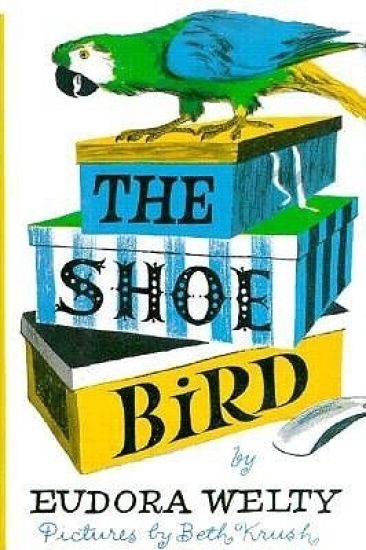
When Arturo the Parrot, whose job it was to help greet people as they came into The Friendly Shoe Store, picked up and repeated a small boy's disgruntled comment, "Shoes are for the birds!," it certainly changed the course of his life. This is Eudora Welty's only book specifically written for young readers.
At last it's available again, and in paperback, the book that Charlotte Capers' hosts of readers have been urging back into print. One of Mississippi's most fascinating personalities and one of its absolutely best raconteurs, Capers can hold any reader of listener enthralled with her witty, delicious narratives. Here she focuses upon whatever seized her insights--mainly life in its ordinary gait--yet her reports of the smalltown scene are as alluring as the tales of Shaharazade.These delightful essays, as Eudora Welty says in the foreward, ""were written to amuse, and they abundantly do so.""