Kirjojen hintavertailu. Mukana 12 595 353 kirjaa ja 12 kauppaa.

Kirjailija

Eugene B. Rumer

Kirjat ja teokset yhdessä paikassa: 6 kirjaa, julkaisuja vuosilta 1995-2017, suosituimpien joukossa Russian Foreign Policy Beyond Putin. Vertaile teosten hintoja ja tarkista saatavuus suomalaisista kirjakaupoista.

6 kirjaa

Kirjojen julkaisuhaarukka 1995-2017.

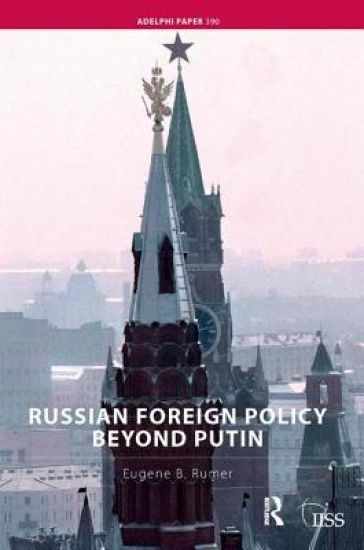
Russian Foreign Policy Beyond Putin

Russian Foreign Policy Beyond Putin

Eugene B. Rumer

Routledge
2017
sidottu
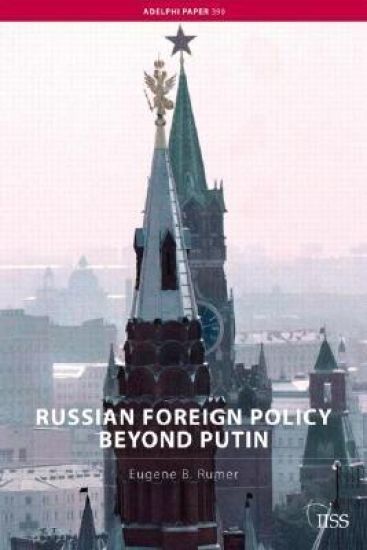
Russia‘s resurgence as an assertive actor in the global diplomatic arena after a long period of introspection and preoccupation with domestic troubles, and the economic revival that underpins it, are among the most striking developments in international relations of recent years. But what drives Russian foreign policy at the end of the Putin era? To what extent is it shaped by Russia‘s role as a major energy supplier, and how long can the country remain anenergy superpower if indeed it is one? How might Russian foreign policy change in the years ahead? Which way will Russia, faced with the might of growing powers around it, and struggling with the fragility of its economic success and stability at home, choose to face in international relations? This Adelphi Paper examines the domestic context of contemporary Russian foreign policy and its key political, economic, military and security drivers, as well as looking at the contrasting outlook that preceded it, and at how Russia‘s international posture may adjust again in the coming years. It concludes with recommendations for Western policy makers on how to respond to Russia‘s return.
Conflict in Ukraine

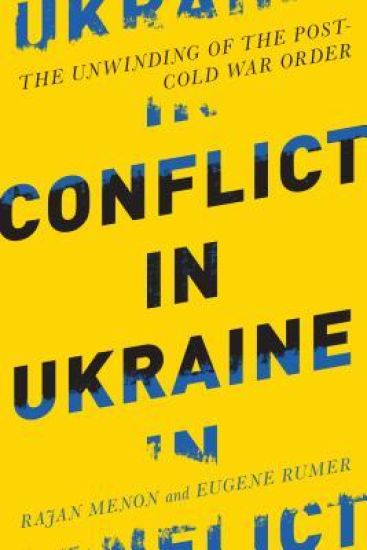
Conflict in Ukraine

Rajan Menon; Eugene B. Rumer

MIT Press
2015
pokkari
The crisis in Ukraine and its implications for both the Crimean peninsula and Russia's relations with the West.The current conflict in Ukraine has spawned the most serious crisis between Russia and the West since the end of the Cold War. It has undermined European security, raised questions about NATO's future, and put an end to one of the most ambitious projects of U.S. foreign policy-building a partnership with Russia. It also threatens to undermine U.S. diplomatic efforts on issues ranging from terrorism to nuclear proliferation. And in the absence of direct negotiations, each side is betting that political and economic pressure will force the other to blink first. Caught in this dangerous game of chicken, the West cannot afford to lose sight of the importance of stable relations with Russia.This book puts the conflict in historical perspective by examining the evolution of the crisis and assessing its implications both for the Crimean peninsula and for Russia's relations with the West more generally. Experts in the international relations of post-Soviet states, political scientists Rajan Menon and Eugene Rumer clearly show what is at stake in Ukraine, explaining the key economic, political, and security challenges and prospects for overcoming them. They also discuss historical precedents, sketch likely outcomes, and propose policies for safeguarding U.S.-Russia relations in the future. In doing so, they provide a comprehensive and accessible study of a conflict whose consequences will be felt for many years to come.
Russian Foreign Policy Beyond Putin

Russian Foreign Policy Beyond Putin

Eugene B. Rumer

Routledge
2007
nidottu
Russia’s resurgence as an assertive actor in the global diplomatic arena after a long period of introspection and preoccupation with domestic troubles, and the economic revival that underpins it, are among the most striking developments in international relations of recent years. But what drives Russian foreign policy at the end of the Putin era? To what extent is it shaped by Russia’s role as a major energy supplier, and how long can the country remain an ‘energy superpower’, if indeed it is one? How might Russian foreign policy change in the years ahead? Which way will Russia, faced with the might of growing powers around it, and struggling with the fragility of its economic success and stability at home, choose to face in international relations? This Adelphi Paper examines the domestic context of contemporary Russian foreign policy and its key political, economic, military and security drivers, as well as looking at the contrasting outlook that preceded it, and at how Russia’s international posture may adjust again in the coming years. It concludes with recommendations for Western policy makers on how to respond to Russia’s return.
Central Asia: Views from Washington, Moscow, and Beijing

Central Asia: Views from Washington, Moscow, and Beijing

Eugene B. Rumer; Dmitri Trenin; Huasheng Zhao

Routledge
2007
nidottu
The disintegration of the Soviet Union in 1991 rapidly and irrevocably transformed Central Asia's political landscape. This region of five sovereign states with a population of some fifty million people quickly became a major focus of interest and influence for competing poles of power. The eminent contributors to this volume offer a four-part analysis of the region's new importance in world affairs. Rajan Menon examines the place of Central Asia in a global perspective. Eugene Rumer considers the perspective of the post-9/11 United States. Dimitri Trenin looks at the region from the standpoint of traditional hegemon Russia. Huasheng Zhao provides the view from economic superpower-in-the-making China.
Central Asia: Views from Washington, Moscow, and Beijing

Central Asia: Views from Washington, Moscow, and Beijing

Eugene B. Rumer; Dmitri Trenin; Huasheng Zhao

Routledge
2007
sidottu
The disintegration of the Soviet Union in 1991 rapidly and irrevocably transformed Central Asia's political landscape. This region of five sovereign states with a population of some fifty million people quickly became a major focus of interest and influence for competing poles of power. The eminent contributors to this volume offer a four-part analysis of the region's new importance in world affairs. Rajan Menon examines the place of Central Asia in a global perspective. Eugene Rumer considers the perspective of the post-9/11 United States. Dimitri Trenin looks at the region from the standpoint of traditional hegemon Russia. Huasheng Zhao provides the view from economic superpower-in-the-making China.