Kirjojen hintavertailu. Mukana 12 476 193 kirjaa ja 12 kauppaa.

Kirjailija

Eugene E Lemcio

Kirjat ja teokset yhdessä paikassa: 11 kirjaa, julkaisuja vuosilta 2005-2023, suosituimpien joukossa Travels with St. Mark. Vertaile teosten hintoja ja tarkista saatavuus suomalaisista kirjakaupoista.

Mukana myös kirjoitusasut: Eugene E. Lemcio

11 kirjaa

Kirjojen julkaisuhaarukka 2005-2023.

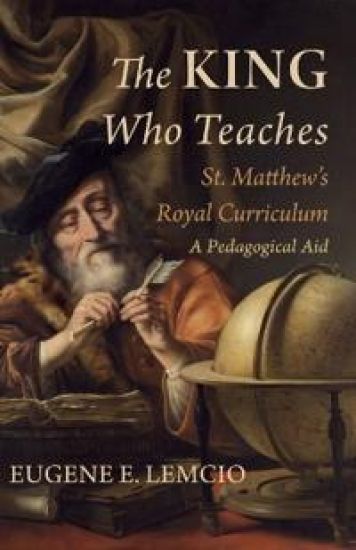
The King Who Teaches: St. Matthew's Royal Curriculum

The King Who Teaches: St. Matthew's Royal Curriculum

Eugene E Lemcio

Wipf Stock Publishers
2023
sidottu
This unique work is a teaching-learning guide to help instructors and students to determine "What makes Matthew Matthew?" Displays followed by leading questions and statements help one to determine how the Evangelist adopted, adapted, and arranged his sources (both "sacred" and "secular") in light of his convictions about and experience of Jesus. Comparing and contrasting the first Gospel with the other Synoptics (and occasionally with John) also contributes to identifying his concerns. Neither standalone nor comprehensive in its intention, method, or scope, this work of pedagogy is meant to be used (and not simply read) alongside--rather than instead--of standard tools such as introductions and commentaries. Although no knowledge of biblical languages is presupposed, references to Matthew's own use of Greek--and the Greek of his Jewish Scriptures--also enrich this study.
The King Who Teaches: St. Matthew's Royal Curriculum

The King Who Teaches: St. Matthew's Royal Curriculum

Eugene E Lemcio

Wipf Stock Publishers
2023
pokkari
This unique work is a teaching-learning guide to help instructors and students to determine "What makes Matthew Matthew?" Displays followed by leading questions and statements help one to determine how the Evangelist adopted, adapted, and arranged his sources (both "sacred" and "secular") in light of his convictions about and experience of Jesus. Comparing and contrasting the first Gospel with the other Synoptics (and occasionally with John) also contributes to identifying his concerns. Neither standalone nor comprehensive in its intention, method, or scope, this work of pedagogy is meant to be used (and not simply read) alongside--rather than instead--of standard tools such as introductions and commentaries. Although no knowledge of biblical languages is presupposed, references to Matthew's own use of Greek--and the Greek of his Jewish Scriptures--also enrich this study.
The Way of the Lord

The Way of the Lord

Eugene E Lemcio

Wipf Stock Publishers
2020
sidottu
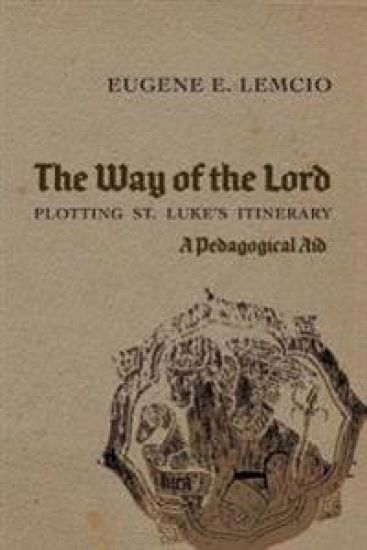
This unique work is not a reference tool, but a teaching-learning guide to studying the Gospel According to St. Luke. The focus is on showing how rather than on telling what. Tables followed by leading questions and statements help both faculty and students to see how the evangelist adopted and adapted his sacred texts (as well as Jewish and Greco-Roman resources) in light of his convictions about and experience of Jesus. Noticing the dominance of words, themes, and patterns leads one to discover the primary concerns of the author and his readers. Observing how the Third Evangelist internally arranged his materials provides a clue as to the kind of work it is and how it was meant to function.
Navigating Revelation: Charts for the Voyage

Navigating Revelation: Charts for the Voyage

Eugene E Lemcio

Wipf Stock Publishers
2011
pokkari
Synopsis: Not a reference tool, this unique work is a teaching-learning guide to studying the Book of Revelation. The focus is on showing how rather than on telling that. Charts followed by leading questions and statements help both faculty and students to see how St. John adopted and adapted his sacred texts (as well as Jewish and Greco-Roman resources) in light of his convictions about and experience of Jesus. Noticing the dominance of words and themes leads one to discover the primary concerns of the Author and his readers. Observing how John internally arranged his visions provides a clue as to the kind of work it is and how it was meant to function. Endorsement: "An indispensable tool for teachers and students of the Book of Revelation Crafted over many years of teaching this sacred text, Lemcio's charts are designed for classroom use and as guides for student learning rather than for their indoctrination into the one and only way of interpreting Revelation. Of particular importance is his interest in a theological reading of Revelation, set rightly within the context of the entire biblical canon. These are charts, then, that will help facilitate a student's conversation with all of Scripture, apropos of Revelation's role as Scripture's concluding and capstone witness. I recommend Lemcio's book enthusiastically for its use in the college or seminary classroom, and for any congregational setting in which a clearheaded and practical understanding of this magisterial book of Scripture is targeted." -Robert W. Wall The Paul T. Walls Professor of Scripture Seattle Pacific University Author Biography: Eugene E. Lemcio is Emeritus Professor of New Testament at Seattle Pacific University, where he taught for thirty-six years. His writings about Canonical Hermeneutics, the Gospels, the Son of Man, and the Unifying Kerygma of the New Testament have appeared in leading academic publications in the field.
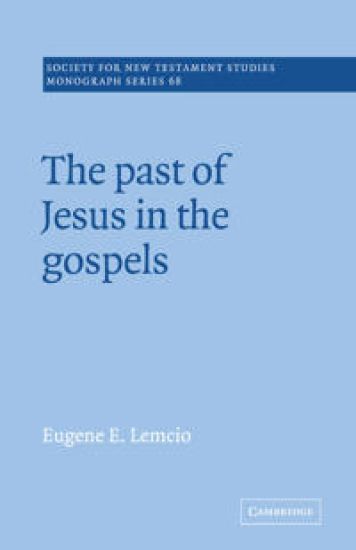
The Past of Jesus in the Gospels

The Past of Jesus in the Gospels

Eugene E. Lemcio

Cambridge University Press
2005
pokkari
The aim of this study is to show that the Evangelists, to an extent hitherto unrecognized, wrote narratives which set out to distinguish Jesus's time from their own. Such an effort, Professor Lemcio explains, went beyond their merely putting verbs in past tenses and dividing their accounts into pre- and post-resurrection periods. Rather, they took care that terminology appropriate to the Easter appearances did not appear beforehand, and that vocabulary used prior to Easter fell by the wayside afterwards. The author shows that words common to both eras bear a different nuance in each, and that the idiom used is seen to suit the time. These are not routine or incidental expressions, but reveal what Jesus the protaganist and the Evangelists as narrators believed about the Gospel, the Christ, the messianic task, and the nature of salvation. This much becomes apparent from a study of the internal evidence, and by next turning to data outside the Gospels, the author attempts to show how biographical and historical writings of the ancient world may prove useful in separate efforts to reconstruct the course of Jesus's life. Lemcio shows how expectations for idiomatic and linguistic verisimilitude in Graeco-Roman historical and biographical writing were met and often exceeded by the Evangelists. His study thus makes a valuable contribution towards our understanding of the literary art of the Gospel narratives, and highlights a literary sensitivity on their writers' part which has failed to receive the critical attention it deserves.