Kirjojen hintavertailu. Mukana 12 595 353 kirjaa ja 12 kauppaa.

Kirjailija

Eugenio Omodeo

Kirjat ja teokset yhdessä paikassa: 2 kirjaa, julkaisuja vuosilta 2001-2011, suosituimpien joukossa Set Theory for Computing. Vertaile teosten hintoja ja tarkista saatavuus suomalaisista kirjakaupoista.

2 kirjaa

Kirjojen julkaisuhaarukka 2001-2011.

Set Theory for Computing

Set Theory for Computing

Domenico Cantone; J.T. Schwartz; Eugenio Omodeo; Alberto Policriti

Springer-Verlag New York Inc.
2011
nidottu
Set Theory for Computing offers an up-to-date and comprehensive account of set-oriented symbolic manipulation and automated reasoning methods. Mastering today's variety of systems with crisp, formal tools is a prerequisite for a high degree of control over sets and aggregates. The many algorithmic methods and deductive techniques in this book offer readers a clear view of the use of set-theoretic notions in such critical areas as specification of problems, data types, and solution methods; algorithmic program verification; and automated deduction.The rigorous and largely self-contained style of presentation addresses readers wanting to complement their set intuition with the ability to exploit it in specification and verification and master it by symbolic, logically based techniques and methods. This book will be of interest to graduates and researchers in theoretical computer science and computational logic and automated reasoning.
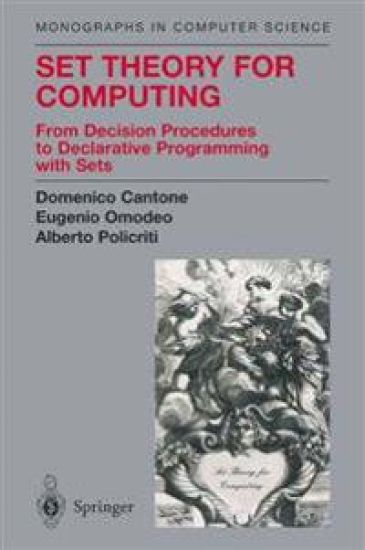
Set Theory for Computing

Set Theory for Computing

Domenico Cantone; J.T. Schwartz; Eugenio Omodeo; Alberto Policriti

Springer-Verlag New York Inc.
2001
sidottu
Set Theory for Computing offers an up-to-date and comprehensive account of set-oriented symbolic manipulation and automated reasoning methods. Mastering today's variety of systems with crisp, formal tools is a prerequisite for a high degree of control over sets and aggregates. The many algorithmic methods and deductive techniques in this book offer readers a clear view of the use of set-theoretic notions in such critical areas as specification of problems, data types, and solution methods; algorithmic program verification; and automated deduction.The rigorous and largely self-contained style of presentation addresses readers wanting to complement their set intuition with the ability to exploit it in specification and verification and master it by symbolic, logically based techniques and methods. This book will be of interest to graduates and researchers in theoretical computer science and computational logic and automated reasoning.