
Kirjailija
Euripides
Kirjat ja teokset yhdessä paikassa: 539 kirjaa, julkaisuja vuosilta 1802-2026, suosituimpien joukossa Euripides: Herakles. Vertaile teosten hintoja ja tarkista saatavuus suomalaisista kirjakaupoista.
Mukana myös kirjoitusasut: Eurípides, Euripides .
539 kirjaa
Kirjojen julkaisuhaarukka 1802-2026.
Iphigénéia Chez Les Taures. Rhèsos. Les Trôiades. Les Bakkhantes. Les Hèrakléides. Hélèné
Euripides
Hachette Livre - BNF
2018
pokkari
Hékabé. Orestès. Les Phoinissiennes. Mèdéia, Hippolytos, Alkèstis, Andromakhé
Euripides
Hachette Livre - BNF
2018
pokkari
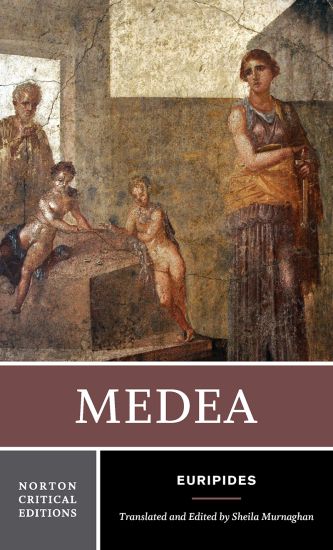
This Norton Critical Edition includes: ? Sheila Murnaghan's new translation of the great Greek tragedy of betrayal, revenge, and murder, set in Corinth in the fifth-century B.C.E. ? A full introduction and explanatory annotations by Sheila Murnaghan. ? Ancient perspectives on the unforgettable plot from Xenophon, Apollonius of Rhodes, and Seneca. ? Seminal essays on Medea by P. E. Easterling, Helene P. Foley, and Edith Hall. ? A Selected Bibliography. About the Series Read by more than 12 million students over fifty-five years, Norton Critical Editions set the standard for apparatus that is right for undergraduate readers. The three-part format-annotated text, contexts, and criticism-helps students to better understand, analyze, and appreciate the literature, while opening a wide range of teaching possibilities for instructors. Whether in print or in digital format, Norton Critical Editions provide all the resources students need.


Euripidou Ekkabe - The Hecuba of Euripides, with introduction and notes is an unchanged, high-quality reprint of the original edition of 1894. Hansebooks is editor of the literature on different topic areas such as research and science, travel and expeditions, cooking and nutrition, medicine, and other genres. As a publisher we focus on the preservation of historical literature. Many works of historical writers and scientists are available today as antiques only. Hansebooks newly publishes these books and contributes to the preservation of literature which has become rare and historical knowledge for the future.


Alcestis is an Athenian tragedy by the ancient Greek playwright Euripides. It was first produced at the City Dionysia festival in 438 BC. Euripides presented it as the final part of a tetralogy of unconnected plays in the competition of tragedies, for which he won second prize; this arrangement was exceptional, as the fourth part was normally a satyr play. Its ambiguous, tragicomic tone-which may be "cheerfully romantic" or "bitterly ironic"-has earned it the label of a "problem play." Alcestis is, possibly excepting the Rhesus, the oldest surviving work by Euripides, although at the time of its first performance he had been producing plays for 17 years. Odin's Library Classics is dedicated to bringing the world the best of humankind's literature from throughout the ages. Carefully selected, each work is unabridged from classic works of fiction, nonfiction, poetry, or drama.

Es un canto lleno de dramatismo por las consecuencias de la guerra. Se destaca la crueldad de los vencedores, que, en su desmesura (hybris), no tienen piedad con los vencidos, ni respeto a los dioses, ya que profanan sus templos. Ni siquiera tienen consideraci n con los ni os, manifestando as abiertamente su temor a ellos cuando crezcan. H cuba exclama ante la visi n del peque o cuerpo inerte del hijo de H ctor
La tragedia Medea trata de la conocida historia de Jas n tras las aventuras que lo llevaron a conquistar el vellocino de oro, trabajo impuesto por su t o Pelias. Jas n, tras el trabajo, se cas con Medea y tuvo un hijo en Yolcos. Para hacerse con el poder en Yolcos, Pelias hab a matado a Es n, padre de Jas n. A la muerte de Pelias, Jas n ha de abandonar Yolcos y huir con Medea y su hijo M rmero. En la muerte de Pelias estaba implicada Medea, que hab a enga ado a las hijas de l para que lo mataran. Por este motivo, Jas n y Medea han de huir de Yolcos. Arriban a Corinto, donde reina Creonte y transcurre la historia contada en la tragedia.

The Iphigenia in Tauris of Euripides
Euripides
Createspace Independent Publishing Platform
2017
nidottu
Euripides, the youngest of the trio of great Greek tragedians was born at Salamis in 480 B.C., on the day when the Greeks won their momentous naval victory there over the fleet of the Persians. The precise social status of his parents is not clear but he received a good education, was early distinguished as an athlete, and showed talent in painting and oratory. He was a fellow student of Pericles, and his dramas show the influence of the philosophical ideas of Anaxagoras and of Socrates, with whom he was personally intimate. Like Socrates, he was accused of impiety, and this, along with domestic infelicity, has been supposed to afford a motive for his withdrawal from Athens, first to Magnesia and later to the court of Anchela s in Macedonia where he died in 406 B.C. The first tragedy of Euripides was produced when he was about twenty-five, and he was several times a victor in the tragic contests. In spite of the antagonisms which he aroused and the criticisms which were hurled upon him in, for example, the comedies of Aristophanes, he attained a very great popularity; and Plutarch tells that those Athenians who were taken captive in the disastrous Sicilian expedition of 413 B.C. were offered freedom by their captors if they could recite from the works of Euripides. Of the hundred and twenty dramas ascribed to Euripides, there have come down to us complete eighteen tragedies and one satyric drama, "Cyclops," beside numerous fragments. The works of Euripides are generally regarded as showing the beginning of the decline of Greek tragedy. The idea of Fate hitherto dominant in the plays of his predecessors, tends to be degraded by him into mere chance; the characters lose much of their ideal quality; and even gods and heroes are represented as moved by the petty motives of ordinary humanity. The chorus is often quite detached from the action; the poetry is florid; and the action is frequently tinged with sensationalism. In spite of all this, Euripides remains a great poet; and his picturesqueness and tendencies to what are now called realism and romanticism, while marking his inferiority to the chaste classicism of Sophocles, bring him more easily within the sympathetic interest of the modern reader.

Medea (Translated with an Introduction and Annotations by Gilbert Murray)
Euripides
Digireads.com
2017
nidottu
The influence of Euripides on the development of the dramatic genre cannot be overstated. Along with Sophocles and Aeschylus he is regarded as one of the three great Greek tragedians from classical antiquity. One of the most important of Euripides' surviving dramas is "Medea", the story of its title character, the wife of Jason of the Argonauts, who seeks revenge upon her unfaithful husband when he abandons her for a another bride. Set in Corinth sometime after Jason's quest for the Golden Fleece, the play begins with Medea raging against her husband's plans to marry Glauce, daughter of Creon, King of Corinth. Jason tries to explain his intent to marry Glauce as an effort to improve his status and that afterwards he intends to unify the two families taking Medea as his mistress. Medea however is unconvinced and pursues a path of murderous revenge. The play is controversial for its depiction of Medea murdering her own children as part of her revenge. This depiction was unconventional and not well received with the contemporary Athenian audience who expected the more traditional depiction of Medea's children being killed by the Corinthians after her escape. Regardless of this unfavorable initial reaction, "Medea" has come to be regarded as one of the most important tragedies of classical antiquity. This edition is printed on premium acid-free paper and is translated with an introduction and annotations by Gilbert Murray.
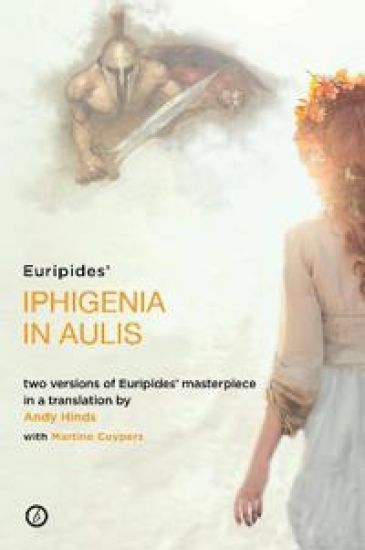
Two versions of Euripides’ masterpiece in a new verse translation by Andy Hinds, with Martine Cuypers. The first version of Iphigenia in Aulis in this volume is a translation of the complete text as it has come down to us via the only surviving manuscript – a highly corrupt text containing numerous interpolations by hands other than Euripides. The second, shorter version offers a tried and tested, more performable ‘stage’ version of the play. The translation is the result of a close collaboration between theatre director and playwright, Andy Hinds (author of Acting Shakespeare’s Language), and Classics scholar, Dr. Martine Cuypers (Trinity College, Dublin). Whilst preserving a scholarly fidelity to the original Greek, the translation is written in a clear and energetic verse, designed to be as 'performable' in the theatre, as it is ‘readable’ in the home or study. It will be of equal interest and use, therefore, to teachers, students and academics, to actors and directors, and to the general reader. Companion VolumeIphigenia in Aulis is released as a companion volume to Hinds’ translation of The Oresteia. Iphigenia represents Euripides’ version of a key episode in the great saga, The Fall of the House of Atreus, while The Oresteia relates Aeschylus’ version of the continuation and conclusion of the saga.