Kirjojen hintavertailu. Mukana 12 203 789 kirjaa ja 12 kauppaa.

Kirjailija

Eva Branscome

Kirjat ja teokset yhdessä paikassa: 3 kirjaa, julkaisuja vuosilta 2017-2025, suosituimpien joukossa Hans Hollein and Postmodernism. Vertaile teosten hintoja ja tarkista saatavuus suomalaisista kirjakaupoista.

3 kirjaa

Kirjojen julkaisuhaarukka 2017-2025.

Hans Hollein and Postmodernism

Hans Hollein and Postmodernism

Eva Branscome

Routledge
2020
nidottu
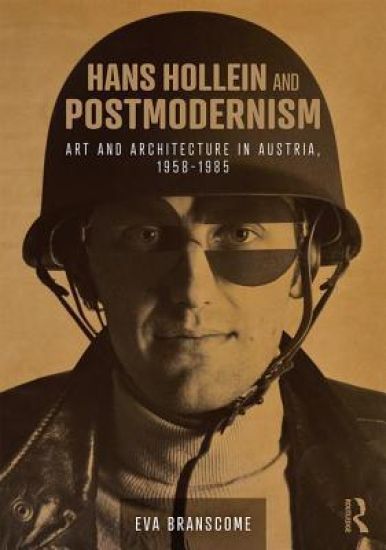
Set within the broader context of post-war Austria and the re-education initiatives set up by the Allied forces, particularly the US, this book investigates the art and architecture scene in Vienna to ask how this can inform our broader understanding of architectural Postmodernism. The book focuses on the outputs of the Austrian artist and architect, Hans Hollein, and on his appropriation as a Postmodernist figure. In Vienna, the circles of radical art and architecture were not distinct, and Hollein’s claim that ‘Everything is Architecture’ was symptomatic of this intermixing of creative practices. Austria's proximity to the so-called ‘Iron Curtain’ and its post-war history of four-power occupation gave a heightened sense of menace that emerged strongly in Viennese art in the Cold War era. Seen as a collective entity, Hans Hollein’s works across architecture, art, writing, exhibition design and publishing clearly require a more diverse, complex and culturally nuanced account of architectural Postmodernism than that offered by critics at the time. Across the five chapters, Hollein's outputs are viewed not as individual projects, but as symptomatic of Austria's attempts to come to terms with its Nazi past and to establish a post-war identity.
Hans Hollein and Postmodernism

Hans Hollein and Postmodernism

Eva Branscome

Routledge
2017
sidottu
Set within the broader context of post-war Austria and the re-education initiatives set up by the Allied forces, particularly the US, this book investigates the art and architecture scene in Vienna to ask how this can inform our broader understanding of architectural Postmodernism. The book focuses on the outputs of the Austrian artist and architect, Hans Hollein, and on his appropriation as a Postmodernist figure. In Vienna, the circles of radical art and architecture were not distinct, and Hollein’s claim that ‘Everything is Architecture’ was symptomatic of this intermixing of creative practices. Austria's proximity to the so-called ‘Iron Curtain’ and its post-war history of four-power occupation gave a heightened sense of menace that emerged strongly in Viennese art in the Cold War era. Seen as a collective entity, Hans Hollein’s works across architecture, art, writing, exhibition design and publishing clearly require a more diverse, complex and culturally nuanced account of architectural Postmodernism than that offered by critics at the time. Across the five chapters, Hollein's outputs are viewed not as individual projects, but as symptomatic of Austria's attempts to come to terms with its Nazi past and to establish a post-war identity.
Hans Hollein's Masterpiece

Hans Hollein's Masterpiece

Eva Branscome

LUND HUMPHRIES PUBLISHERS LTD
2025
sidottu
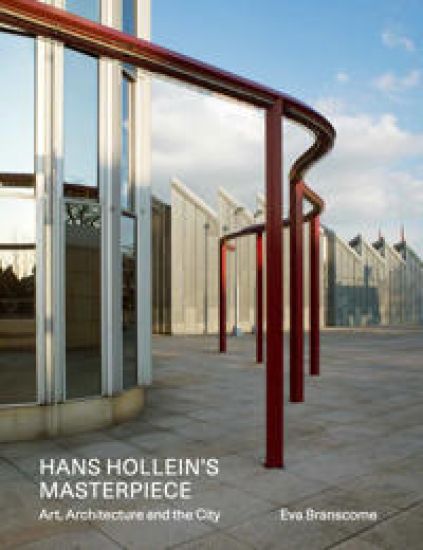
The Austrian architect-artist Hans Hollein was appointed in 1972 to design a new museum for the post-industrial city of Mönchengladbach in West Germany which transformed it into a centre for contemporary art. This book reveals the full story of this innovative masterpiece. Opening in 1982, Museum Abteiberg was instantly lauded by international critics and Hollein was duly awarded the 1985 Pritzker Prize. It rapidly became a place of architectural pilgrimage, with more than 20,000 people flocking to visit in its opening week, well over a decade before Frank Gehry completed the Guggenheim Museum in Bilbao. The book provides a timely and comprehensive reappraisal of the museum from concept, through the design process to its completion. It explains that Hollein was at his core a conceptual artist, perceiving the museum as provocative land art, with an architectural collage as exterior and a labyrinthine, ‘democratic’ interior, designed around the collection. It features a triptych of characters - Hollein, director Johannes Cladders and artist Joseph Beuys – whose close collaboration resulted in a museum which transformed thinking about how art, architecture and context – historical, cultural and geographical - should all relate. Radical at the time, many of the ideas that they first realised in this building have now become the norm in museum practice. Broader than a simple building study, this is a story which not only connects art with architecture and with the city, but with finance, corporate power and capital investment.