

Kirjailija
Eva Horn
Kirjat ja teokset yhdessä paikassa: 14 kirjaa, julkaisuja vuosilta 2007-2024, suosituimpien joukossa Tomás Saraceno: Aerocene. Vertaile teosten hintoja ja tarkista saatavuus suomalaisista kirjakaupoista.
14 kirjaa
Kirjojen julkaisuhaarukka 2007-2024.


The Anthropocene is a concept which challenges the foundations of humanities scholarship as it is traditionally understood. It calls not only for closer engagement with the natural sciences but also for a synthetic approach bringing together insights from the various subdisciplines in the humanities and social sciences which have addressed themselves to ecological questions in the past. This book is an introduction to, and structured survey of, the attempts that have been made to take the measure of the Anthropocene, and explores some of the paradigmatic problems which it raises. The difficulties of an introduction to the Anthropocene lie not only in the disciplinary breadth of the subject, but also in the rapid pace at which the surrounding debates have been, and still are, unfolding. This introduction proposes a conceptual map which, however provisionally, charts these ongoing discussions across a variety of scientific and humanistic disciplines.This book will be essential reading for students and researchers in the environmental humanities, particularly in literary and cultural studies, history, philosophy, and environmental studies.
The Anthropocene is a concept which challenges the foundations of humanities scholarship as it is traditionally understood. It calls not only for closer engagement with the natural sciences but also for a synthetic approach bringing together insights from the various subdisciplines in the humanities and social sciences which have addressed themselves to ecological questions in the past. This book is an introduction to, and structured survey of, the attempts that have been made to take the measure of the Anthropocene, and explores some of the paradigmatic problems which it raises. The difficulties of an introduction to the Anthropocene lie not only in the disciplinary breadth of the subject, but also in the rapid pace at which the surrounding debates have been, and still are, unfolding. This introduction proposes a conceptual map which, however provisionally, charts these ongoing discussions across a variety of scientific and humanistic disciplines.This book will be essential reading for students and researchers in the environmental humanities, particularly in literary and cultural studies, history, philosophy, and environmental studies.
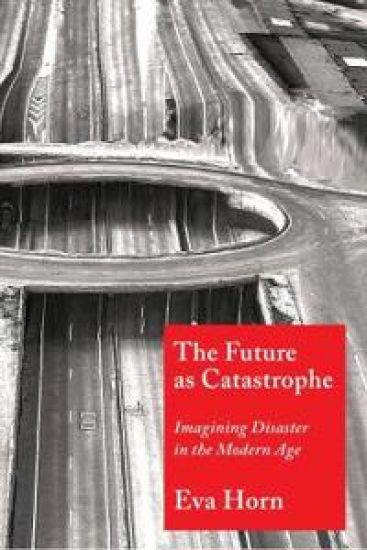
Why do we have the constant feeling that disaster is looming? Beyond the images of atomic apocalypse that have haunted us for decades, we are dazzled now by an array of possible catastrophe scenarios: climate change, financial crises, environmental disasters, technological meltdowns—perennial subjects of literature, film, popular culture, and political debate. Is this preoccupation with catastrophe questionable alarmism or complacent passivity? Or are there certain truths that can be revealed only in apocalypse?In The Future as Catastrophe, Eva Horn offers a novel critique of the modern fascination with disaster, which she treats as a symptom of our relationship to the future. Analyzing the catastrophic imaginary from its cultural and historical roots in Romanticism and the figure of the Last Man, through the narratives of climatic cataclysm and the Cold War’s apocalyptic sublime, to the contemporary popularity of disaster fiction and end-of-the-world blockbusters, Horn argues that apocalypse always haunts the modern idea of a future that can be anticipated and planned. Considering works by Lord Byron, J. G. Ballard, and Cormac McCarthy and films such as 12 Monkeys and Minority Report alongside scientific scenarios and political metaphors, she analyzes catastrophic thought experiments and the question of survival, the choices legitimized by imagined states of exception, and the contradictions inherent in preventative measures taken in the name of technical safety or political security. What makes today’s obsession different from previous epochs’ is the sense of a “catastrophe without event,” a stealthily creeping process of disintegration. Ultimately, Horn argues, imagined catastrophes offer us intellectual tools that can render a future shadowed with apocalyptic possibilities affectively, epistemologically, and politically accessible.

Why do we have the constant feeling that disaster is looming? Beyond the images of atomic apocalypse that have haunted us for decades, we are dazzled now by an array of possible catastrophe scenarios: climate change, financial crises, environmental disasters, technological meltdowns—perennial subjects of literature, film, popular culture, and political debate. Is this preoccupation with catastrophe questionable alarmism or complacent passivity? Or are there certain truths that can be revealed only in apocalypse?In The Future as Catastrophe, Eva Horn offers a novel critique of the modern fascination with disaster, which she treats as a symptom of our relationship to the future. Analyzing the catastrophic imaginary from its cultural and historical roots in Romanticism and the figure of the Last Man, through the narratives of climatic cataclysm and the Cold War’s apocalyptic sublime, to the contemporary popularity of disaster fiction and end-of-the-world blockbusters, Horn argues that apocalypse always haunts the modern idea of a future that can be anticipated and planned. Considering works by Lord Byron, J. G. Ballard, and Cormac McCarthy and films such as 12 Monkeys and Minority Report alongside scientific scenarios and political metaphors, she analyzes catastrophic thought experiments and the question of survival, the choices legitimized by imagined states of exception, and the contradictions inherent in preventative measures taken in the name of technical safety or political security. What makes today’s obsession different from previous epochs’ is the sense of a “catastrophe without event,” a stealthily creeping process of disintegration. Ultimately, Horn argues, imagined catastrophes offer us intellectual tools that can render a future shadowed with apocalyptic possibilities affectively, epistemologically, and politically accessible.
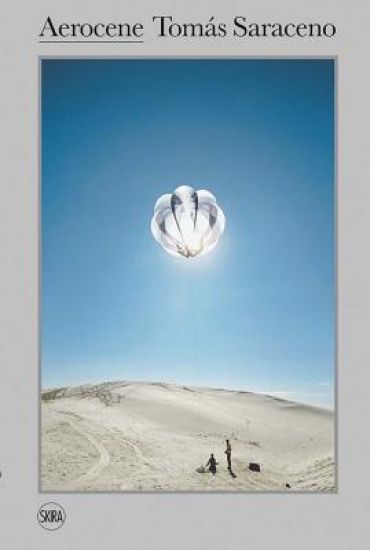
Tomás Saraceno: Aerocene
Hans Ulrich Obrist; Eva Horn; Timothy Morton; Tim Ingold
Skira
2018
sidottu
The book is an in-depth survey of the Aerocene project. The Aerocene project consists of a series of airborne sculptures made by Tom s Saraceno that will achieve the longest emissions-free journey around the world, becoming buoyant only by the heat of the Sun and infrared radiation from the surface of the Earth.

Latente Steuern im handelsrechtlichen Jahresabschluss. Grundlagen und besondere Anforderungen an die Prüfung
Eva Horn
Grin Verlag
2014
pokkari

The Secret War marks a new direction in the cultural history and theory of intelligence gathering and state secrecy in the twentieth and early twenty-first centuries. While historical truth remains hidden from the public, Eva Horn finds in political fiction, which serves as both an indicator and a tool, a means to analyse political secrets. Starting with a general theory of treason and military intelligence as a specific type of political knowledge, the book charts the history of intelligence gathering from 1900 to 9/11. The Secret War analyses literary and cinematic depictions of espionage from Rudyard Kipling and T. E. Lawrence to John Le Carré and Steven Spielberg. Horn considers these fictional accounts against the historical development of Western secret services from their inception in World War I to their struggle against current terrorist networks. The Secret War shows the crucial part fictions play in shaping conflicts, constructing “the enemy,” and deciding political strategies.



In ihrer brillanten Studie untersucht Eva Horn anhand einer Fülle von Beispielen aus Literatur und Film die Struktur des geheimen Staatswissens. Statt jedoch Staatsgeheimnisse "aufdecken" zu wollen, stützt sich die Autorin absichtlich auf Fiktionen, weil diese die Logik des Geheimen nicht aufbrechen, sondern analysieren. Sichtbar wird dabei die diffizile Ökonomie von Präsentiertem und Verborgenem, die moderne Politik bis heute prägt. Nur Fiktion so die Grundthese ist in der Lage, das Rätsel in seiner Rätselhaftigkeit zu lesen zu geben und damit eine Einsicht in das Funktionieren des politischen Geheimnisses zu ermöglichen, ohne es zu lösen.