Kirjojen hintavertailu. Mukana 12 390 323 kirjaa ja 12 kauppaa.

Kirjailija

Eve Manz

Kirjat ja teokset yhdessä paikassa: 3 kirjaa, julkaisuja vuosilta 2024-2025, suosituimpien joukossa Productive Uncertainty in Science Education. Vertaile teosten hintoja ja tarkista saatavuus suomalaisista kirjakaupoista.

3 kirjaa

Kirjojen julkaisuhaarukka 2024-2025.

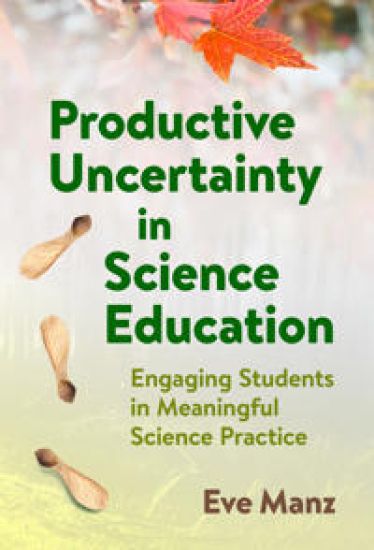
Productive Uncertainty in Science Education

Productive Uncertainty in Science Education

Eve Manz

TEACHERS' COLLEGE PRESS
2025
sidottu
Productive Uncertainty in Science Education provides the support that teachers and students need for more complex science investigations. Science is driven by the need to manage uncertainty—uncertainty about how to explain the world, but also how to represent the world in an investigation, what to measure, and how to convince peers to see what the scientist wants them to see. For children, uncertainty supports engagement with materials, more purposeful science practice, and deeper conceptual understanding, yet classroom investigations typically reflect little of the uncertainty that scientists grapple with. How can we move past cookbook science investigations and provide the support that teachers and students need for more complex work? This book introduces a framework describing specific forms of science activity, shares stories of children engaging with uncertainty, and provides practical supports to help K–12 teachers deepen their science teaching practice. The text includes tools for building classroom norms, planning and adapting investigations, leading discussions, and designing student sheets and other forms of support. The framework, tools, and examples are drawn from research conducted in partnership with elementary teachers and instructional leaders and have been applied in secondary science classrooms as well. Book Features: A new way of building engagement and supporting science practice through centering uncertainty, an essential human and scientific experience.Inspiring examples of students engaging in science practices, developed with teacher collaborators.A suite of tools to support the design, adaptation, and implementation of rich investigations for the science classroom.Sample classroom dialogue showing how teachers can facilitate student discussions that foster and build from uncertainty.A companion website with additional investigations, real classroom case studies, and helpful resources and tools (investigationsproject.org).
Productive Uncertainty in Science Education

Productive Uncertainty in Science Education

Eve Manz

TEACHERS' COLLEGE PRESS
2025
nidottu
Productive Uncertainty in Science Education provides the support that teachers and students need for more complex science investigations. Science is driven by the need to manage uncertainty—uncertainty about how to explain the world, but also how to represent the world in an investigation, what to measure, and how to convince peers to see what the scientist wants them to see. For children, uncertainty supports engagement with materials, more purposeful science practice, and deeper conceptual understanding, yet classroom investigations typically reflect little of the uncertainty that scientists grapple with. How can we move past cookbook science investigations and provide the support that teachers and students need for more complex work? This book introduces a framework describing specific forms of science activity, shares stories of children engaging with uncertainty, and provides practical supports to help K– 2 teachers deepen their science teaching practice. The text includes tools for building classroom norms, planning and adapting investigations, leading discussions, and designing student sheets and other forms of support. The framework, tools, and examples are drawn from research conducted in partnership with elementary teachers and instructional leaders and have been applied in secondary science classrooms as well. Book Features: A new way of building engagement and supporting science practice through centering uncertainty, an essential human and scientific experience.Inspiring examples of students engaging in science practices, developed with teacher collaborators.A suite of tools to support the design, adaptation, and implementation of rich investigations for the science classroom.Sample classroom dialogue showing how teachers can facilitate student discussions that foster and build from uncertainty.A companion website with additional investigations, real classroom case studies, and helpful resources and tools (investigationsproject.org).
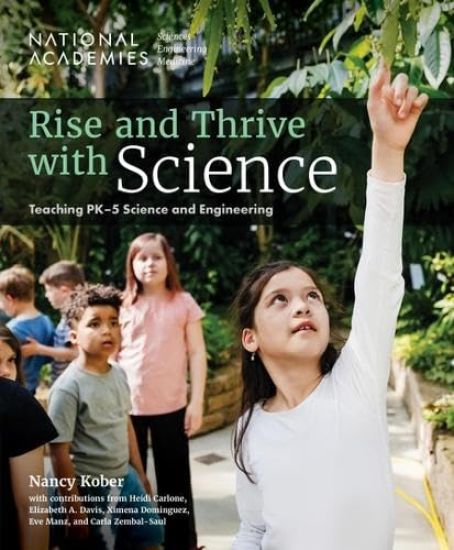
Rise and Thrive with Science

Rise and Thrive with Science

Carla Zembal-Saul; Eve Manz; Ximena Dominguez; Elizabeth A. Davis; Heidi Carlone; Nancy Kober

National Academies Press
2024
nidottu
Research shows that that children learn science and engineering subjects best by engaging from an early age in the kinds of practices used by real scientists and engineers. By doing science and engineering, children not only develop and refine their understanding of the core ideas and crosscutting concepts of these disciplines, but can also be empowered to use their growing understanding to make sense of questions and problems relevant to them. This approach can make learning more meaningful, equitable, and lasting. Using cases and shorter examples, Rise and Thrive with Science shows what high-quality teaching and learning in science and engineering can look like for preschool and elementary school children. Through analyses of these examples and summaries of research findings, the guide points out the key elements of a coherent, research-grounded approach to teaching and learning in science and engineering. This guide also discusses the kinds of support that educators need to implement effective and equitable instruction for all children. This book will provide inspiration for practitioners at the preschool and elementary levels to try new strategies for science and engineering education, whatever their level of experience. Rise and Thrive with Science will be an essential guide for teachers as they organize instruction to enable young children to carry out their own science investigations and engineering design projects, determine the kinds of instruction that lead to meaningful learning, and try to engage every one of their students.Table of ContentsFront Matter1 Moving to "I Can Teach Like This"2 Bringing Out the Brilliance of All Children3 Starting Strong with Investigation and Design4 Letting Children Lead During Investigation and Design5 All Together Now: Supporting Communication and Collaboration6 Revealing Learning through Assessments7 Everything Is Connected: Integrating Science and Engineering with Instruction in Other SubjectsEpilogue: Finding Your Own Sources of SupportBiographical Sketches of ConsultantsAbout the Author and Contributing AuthorsAcknowledgments