

Kirjailija
Everett L. Worthington
Kirjat ja teokset yhdessä paikassa: 9 kirjaa, julkaisuja vuosilta 1998-2013, suosituimpien joukossa The Road Home. Vertaile teosten hintoja ja tarkista saatavuus suomalaisista kirjakaupoista.
Mukana myös kirjoitusasut: Everett L Worthington
9 kirjaa
Kirjojen julkaisuhaarukka 1998-2013.

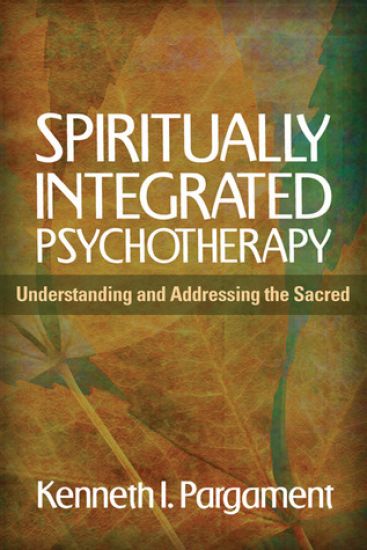
Spiritually Integrated Psychotherapy
Kenneth I. Pargament; William R. Miller; Donald Meichenbaum; Everett L. Worthington; Christopher Germer
Guilford Publications
2011
nidottu
From a leading researcher and practitioner, this volume provides an innovative framework for understanding the role of spirituality in people's lives and its relevance to the work done in psychotherapy. It offers fresh, practical ideas for creating a spiritual dialogue with clients, assessing spirituality as a part of their problems and solutions, and helping them draw on spiritual resources in times of stress. Written from a nonsectarian perspective, the book encompasses both traditional and nontraditional forms of spirituality. It is grounded in current findings from psychotherapy research and the psychology of religion, and includes a wealth of evocative case material.
Humility
Everett L. Worthington; Eileen (NRT) Brady; Charles (NRT) Roney
Templeton Foundation Press,U.S.
2007
cd
Humility may not be a skill people can learn, but people can be inspired to be humble, so says a leading researcher who reinforces the message that the unassuming virtue of humility transforms lives.
Humility is a virtue that can be difficult to describe because of its paradoxical nature: claiming authority about humility and claiming that one is humble both suggest a lack of humility. In Humility, Everett L.Worthington Jr. seeks a way around this paradox by looking to people who are considered by others to be humble. He suggests people as examples: Jesus, Siddhartha, Gandhi, Mother Teresa, and Martin Luther King Jr. He looks, too, at people whom he admires. He examines the characteristics of humility they share, and, in doing so, formulates a working understanding of humility. Science has made few attempts to measure humility,Worthington points out, but those few studies do give a different, but complementary, perspective on humility than the wisdom of the ages. Humility may not be a skill we can learn, but people can be inspired to be humble. "Great people-and ordinary people acting nobly-can inspire us," Worthington writes. "When we catch the spirit, we can transfer that spirit from ourselves to others." Quotations interspersed throughout the book reinforce the message that the unassuming virtue of humility transforms lives.

Forgiveness is a virtue that author Everett L.Worthington Jr. has advocated throughout his career as a counselor and psychologist. In this book, he explains the paradoxical power of forgiveness through his personal and professional experiences andthrough the wisdom of others. The paradox is that in forgiving for the well-being of others, we actually receive tremendous benefits for ourselves in terms of physical and mental health. This book treats forgiveness as a quest to find the treasure of restored relationships, personal peace, and even health, which has often become buried in relational harms, betrayals, and injustices. Worthington shows how one begins the quest, prepares the self for the rigors of the search, and makes the journey. In the process, he describes the resources and supports needed. He also discusses how enemies can continue to betray and how unruly angry emotions can arise but can be tamed by forgiving. Worthington shows readers the map to forgiveness using methods such as his time-tested and research-supported method of REACH, a five-step process of forgiving. The Power of Forgiving will inspire people to use forgiveness. It will show how forgiving is a transforming process that will enrich relationships and empower people to improve their own lives.

Forgiveness is a virtue that author Everett L.Worthington Jr. has advocated throughout his career as a counselor and psychologist. In this book, he explains the paradoxical power of forgiveness through his personal and professional experiences andthrough the wisdom of others. The paradox is that in forgiving for the well-being of others, we actually receive tremendous benefits for ourselves in terms of physical and mental health. This book treats forgiveness as a quest to find the treasure of restored relationships, personal peace, and even health, which has often become buried in relational harms, betrayals, and injustices. Worthington shows how one begins the quest, prepares the self for the rigors of the search, and makes the journey. In the process, he describes the resources and supports needed. He also discusses how enemies can continue to betray and how unruly angry emotions can arise but can be tamed by forgiving. Worthington shows readers the map to forgiveness using methods such as his time-tested and research-supported method of REACH, a five-step process of forgiving. The Power of Forgiving will inspire people to use forgiveness. It will show how forgiving is a transforming process that will enrich relationships and empower people to improve their own lives.
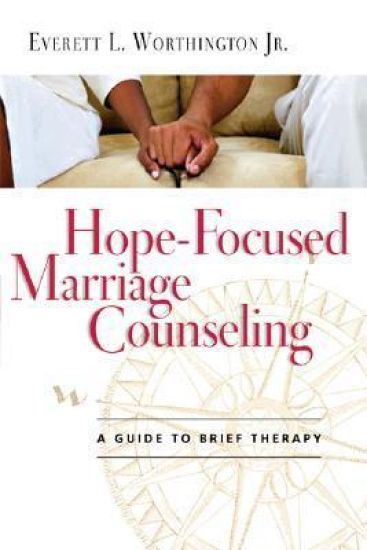

The scientific study of forgiveness is a new approach to an age-old problem. For thousands of years, people have practiced forgiveness within religious systems. Now, the field of scholarly research of forgiveness reveals the beneficial aspects of the process.p>Contributors include Elliot Dorff and Martin Marty discussing religious interpretations, followed by social implications explained by Kenneth Pargament and Mark Rye. Roy Baumeister, Julie Exline, and Kristin Sommer present the victim's point of view. Other contributors focusing on the forgiveness research are: Everett Worthington, Robert Enright, Catherine Coyle, Carl Thoresen, Frederic Luskin, and Alex Harris. An annotated bibliography by Michael McCullough, Julie Exline, and Roy Baumeister, covers the empirical literature on the subject. Lewis Smedes concludes with the four steps necessary for forgiveness: moving from estrangement to forgiveness to reconciliation to hope.