Kirjojen hintavertailu. Mukana 12 595 353 kirjaa ja 12 kauppaa.

Kirjailija

Evgeny Dobrenko

Kirjat ja teokset yhdessä paikassa: 8 kirjaa, julkaisuja vuosilta 1997-2022, suosituimpien joukossa Stalinist Cinema and the Production of History. Vertaile teosten hintoja ja tarkista saatavuus suomalaisista kirjakaupoista.

8 kirjaa

Kirjojen julkaisuhaarukka 1997-2022.

State Laughter

State Laughter

Evgeny Dobrenko; Natalia Jonsson-Skradol

Oxford University Press
2022
sidottu
Stalin's reign of terror was not all doom and gloom, much of it was (meant to be) funny! From comedy films to satirical theatre, from caricature to court speeches, and from Stalin's own writings to bawdy folk songs, humour pervaded the popular culture of the USSR. Until now, conventional wisdom has held that humour was a hallmark of the subversive, but in State Laughter Dobrenko and Jonsson-Skradol do away with that notion. Instead, tracing the development of official humour, satire, and comedy from the revolution through to the 1950s, they explore how and why laughter was a core component of the survival of the Soviet regime. Grounded in Soviet intellectual and cultural history, State Laughter offers the first comprehensive analysis of state-sponsored popular culture in Stalin's Soviet Union.
Late Stalinism

Late Stalinism

Evgeny Dobrenko

Yale University Press
2020
sidottu
How the last years of Stalin’s rule led to the formation ofan imperial Soviet consciousness In this nuanced historical analysis of late Stalinism organized chronologically around the main events of the period—beginning with Victory in May 1945 and concluding with the death of Stalin in March 1953—Evgeny Dobrenko analyzes key cultural texts to trace the emergence of an imperial Soviet consciousness that, he argues, still defines the political and cultural profile of modern Russia.
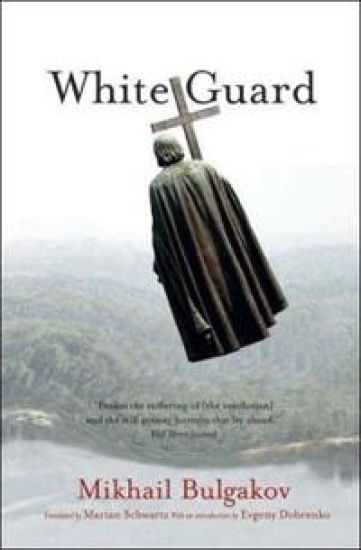
White Guard

White Guard

Mikhail Bulgakov; Marian Schwartz; Evgeny Dobrenko

Yale University Press
2009
pokkari
The first complete and accurate English translation of Bulgakov’s classic novel, accompanied by a substantial historical introduction “Bulgakov’s novel not only leads us into a majestic, more-than-1,000-year-old metropolis, but also gives us an understanding of how, in a single day, the world can change as radically as if decades had passed.”—Marci Shore, The Atlantic “Bulgakov’s novel evokes the suffering of the conflict and the still greater horrors that lay ahead.”—Joshua Rubenstein, Wall Street Journal White Guard, Mikhail Bulgakov’s semi-autobiographical first novel, is the story of the Turbin family in Kiev in 1918. Alexei, Elena, and Nikolka Turbin have just lost their mother—their father had died years before—and find themselves plunged into the chaotic civil war that erupted in the Ukraine in the wake of the Russian Revolution. In the context of this family’s personal loss and the social turmoil surrounding them, Bulgakov creates a brilliant picture of the existential crises brought about by the revolution and the loss of social, moral, and political certainties. He confronts the reader with the bewildering cruelty that ripped Russian life apart at the beginning of the last century as well as with the extraordinary ways in which the Turbins preserved their humanity. In this volume Marian Schwartz, a leading translator, offers the first complete and accurate translation of the definitive original text of Bulgakov’s novel. She includes the famous dream sequence, omitted in previous translations, and beautifully solves the stylistic issues raised by Bulgakov’s ornamental prose. Readers with an interest in Russian literature, culture, or history will welcome this superb translation of Bulgakov’s important early work. This edition also contains an informative historical essay by Evgeny Dobrenko.
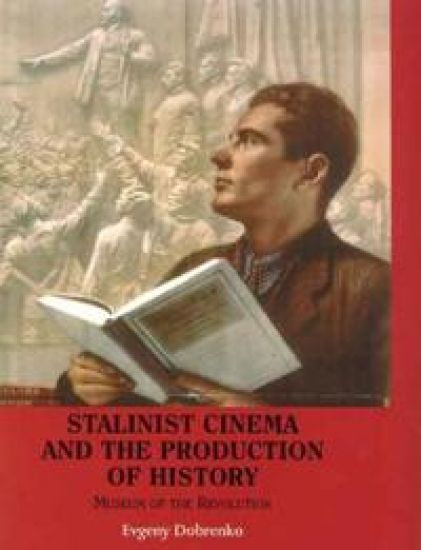
Stalinist Cinema and the Production of History

Stalinist Cinema and the Production of History

Evgeny Dobrenko

Yale University Press
2008
sidottu
This engrossing book explores the important role played by Stalinist cinema in legitimizing Stalinism and producing a new Soviet identity. Evgeny Dobrenko, a leading scholar of Soviet cultural history, asserts that both Lenin and Stalin valued cinema as the most effective form of propaganda and “organization of the masses.” Dobrenko looks at Stalinist historical films and the novels from which they drew and shows that they transformed the experience and trauma of the past into a legitimizing historical narrative—the basis of a new mythology. He examines the works of the great film directors of the revolutionary period in Stalinist cinema—including Sergei Eisenstein, Vsevolod Pudovkin, Grigorii Kozintsev, Leonid Trauberg, Fridrikh Ermler, Mark Donskoi, and Mikhail Romm—and explains how they worked with time, the past, and memory to construct the Soviet political imagination.
Stalinist Cinema and the Production of History

Stalinist Cinema and the Production of History

Evgeny Dobrenko

Edinburgh University Press
2008
sidottu
This book explores how Soviet film worked with time, the past, and memory. It looks at Stalinist cinema and its role in the production of history, the conversion of the present and experience into history, mechanisms of transfer, and what is located between history and the past. The representation of history is always the representation of power. The institution of legitimization and the mechanism for the production of identity, history is the past, constructed and served by the authorities who are attempting to curtail the experience by packaging it into a literary narrative and new visual imagery. Cinema's role in the legitimization of Stalinism and the production of a new Soviet identity was enormous. Both Lenin and Stalin saw in this 'most important of arts' the most effective form of propaganda and 'organisation of the masses'. By examining the works of the greatest Soviet filmmakers of the Stalin era -- Sergei Eisenstein, Vsevolod Pudovkin, Grigorii Kozintsev, Leonid Trauberg, Fridrikh Ermler, Mark Donskoi, Mikhail Romm -- the author explores the role of the cinema in the formation of the Soviet political imagination.Key Features *The first study of Stalinist cinema, which fills a gap in the history of Soviet film. *Covers the works of great Soviet film directors. *Focuses on Stalinist political imagination, one of the most understudied aspects of Stalinism.
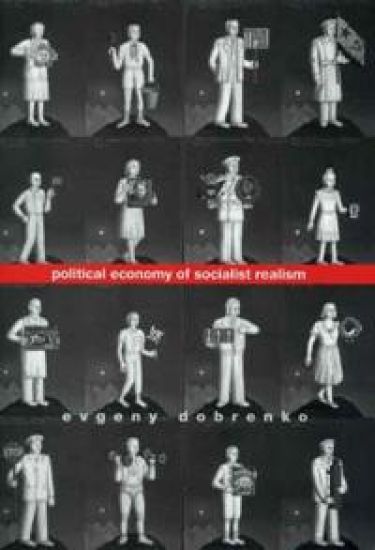
Political Economy of Socialist Realism

Political Economy of Socialist Realism

Evgeny Dobrenko

Yale University Press
2007
sidottu
For decades Stalinist literature, film, and art was almost exclusively deemed political propaganda imposed from on high, devoid of any aesthetic significance. In this book, Evgeny Dobrenko suggests an entirely new view: socialism did not produce Socialist Realism to “prettify reality”; rather, Socialist Realism itself produced socialism by elevating socialism to reality status, giving it material form. Without art, socialism could not have materialized. Bringing together the Soviet historical experience and Stalin-era art—novels, films, poems, songs, painting, photography, architecture, and advertising—Dobrenko examines Stalinism’s representational strategies and demonstrates how real socialism was begotten of Socialist Realism. Socialist Realism, he concludes, was Stalinism’s most effective sociopolitical institution.
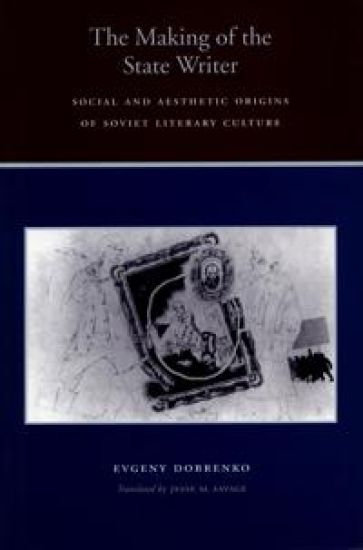
The Making of the State Writer

The Making of the State Writer

Evgeny Dobrenko

Stanford University Press
2002
sidottu
This book completes the author's study of the sociology of the literary process in Soviet Russia, begun in The Making of the State Reader: Social and Aesthetic Contexts of the Reception of Soviet Literature (Stanford, 1997). The history of the literary process of the Soviet era, understood as the living process of the clash of political and ideological aspirations and the interests and psychology of cultural elites, allows one to understand the social origins and cultural aims of Stalinist art in an entirely new way. Previous scholarship has concentrated largely on Sovietological answers to the basic problems of Stalinist aesthetics—such as "political control," "repressions," and "pressure from the regime." However, the author demonstrates that Socialist Realism is not so much directed as it is self-directed; it is not a matter of control but of self-control. The transformation of the author into his own censor is the true history of Soviet literature. Socialist Realism is cultural revolution not only from above but from below as well. The state simply took into account, and accurately discerned, the demands of the masses, and Soviet literature became the reader's answer to these demands. The reader not only shaped Socialist Realist aesthetics down to his own expectations, but in fact created it. The Soviet writer was yesterday's Soviet reader who had learned how to write books. The Soviet writer can be called the product of authority only to the extent that this authority recognized and institutionalized what Lenin called the "lively creativity of the masses." On the other hand, the author shows, the Soviet writer is the radical realization and embodiment of the nineteenth-century Russian populist utopia of enlightenment of the people.
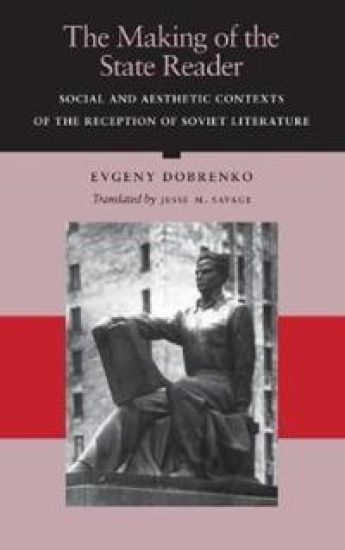
The Making of the State Reader

The Making of the State Reader

Evgeny Dobrenko

Stanford University Press
1997
sidottu
In Soviet culture, the reader was never a "consumer of books" in the Western sense. According to the aesthetic doctrine at the heart of Socialist Realism, the reader was a subject of education, to be reforged and molded. Because of this, Soviet culture cannot be examined properly without taking into account the reading masses. This book is a history of the shaping of the reader of Soviet literature, a history of the "State appropriation of the reader." The entire history of the formation and transformation of the institution of literature in the revolutionary and Soviet eras bears witness to the fact that literature was called upon to perform substantive political and ideological functions in the authorities' overall system (which included the publishing business, the book trade, libraries, and schools) aimed at ultimately creating a new Soviet person. This book shows how people from various social classes, in a dynamic unknown in pre-Soviet history, not only consumed the products of a new culture but in fact created that culture. On its own, the sociology of reading is scarcely capable of uncovering the variety, dynamism, and multilayered structure of the process of reading, for the reader is a composite figure. Soviet society in the Stalin era was not only a State-hierarchy system, but also a mosaic that was always divided into definite cultural strata, each of which consumed its own culture, which performed a host of familiar functions—escapist, socializing, compensating, informative, recreational, prestige-enhancing, aesthetic, and emotional—in addition to the specifically Soviet tastes connected with propaganda and mobilization. If we superimpose on this spectrum the diverse characteristics of individual readers, the resulting picture is extraordinarily variegated. At the same time, there is a certain cultural space in which these factors intersect—the space the author defines as the "situation of reading." In this book, he focuses on the basic lines of force that were at work in the Soviet reading space.