Kirjojen hintavertailu. Mukana 12 390 323 kirjaa ja 12 kauppaa.

Kirjailija

Evyatar Erell

Kirjat ja teokset yhdessä paikassa: 4 kirjaa, julkaisuja vuosilta 2005-2019, suosituimpien joukossa Urban Microclimate. Vertaile teosten hintoja ja tarkista saatavuus suomalaisista kirjakaupoista.

4 kirjaa

Kirjojen julkaisuhaarukka 2005-2019.

Roof Cooling Techniques

Roof Cooling Techniques

Evyatar Erell

Routledge
2019
sidottu
Natural heating and cooling of buildings helps to improve energy efficiency in the built environment. This book considers the principles of roof design and specific systems and cooling techniques. The authors explain the fundamental principles of roof cooling and describe in detail the relevant components, applications, built precedents, recent experimental work and key design considerations. Specific systems and techniques are examined, including the main advantages and disadvantages of each strategy.Environmental functions are considered in terms of protective strategies and selective strategies. Protective strategies include solar control, thermal insulation, heat storage and thermal inertia. Selective strategies include radiative, evaporative and convective cooling and planting of roofs. Traditional and current roof construction practices are described, exemplified by case studies from across Europe. Including downloadable resources with software that enables readers to evaluate their own designs, this book will be invaluable for architects and engineers who wish to create buildings that are more energy-efficient.
Urban Microclimate

Urban Microclimate

Evyatar Erell; David Pearlmutter; Terence Williamson

Routledge
2015
nidottu
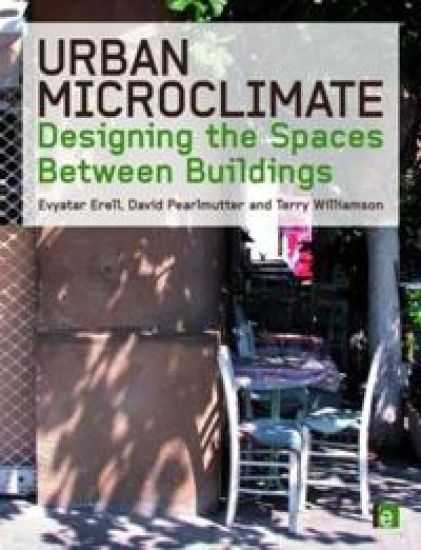
The quality of life of millions of people living in cities could be improved if the form of the city were to evolve in a manner appropriate to its climatic context. Climatically responsive urban design is vital to any notion of sustainability: it enables individual buildings to make use of renewable energy sources for passive heating and cooling, it enhances pedestrian comfort and activity in outdoor spaces, and it may even encourage city dwellers to moderate their dependence on private vehicles. Urban Microclimate bridges the gap between climatology research and applied urban design. It provides architects and urban design professionals with an understanding of how the structure of the built environment at all scales affects microclimatic conditions in the space between buildings, and analyzes the interaction between microclimate and each of the elements of the urban landscape. In the first two sections of the book, the extensive body of work on this subject by climatologists and geographers is presented in the language of architecture and planning professionals. The third section follows each step in the design process, and in part four a critical analysis of selected case study projects provides a demonstration of the complexity of applied urban design. Practitioners will find in this book a useful guide to consult, as they address these key environmental issues in their own work.
Urban Microclimate

Urban Microclimate

Evyatar Erell; David Pearlmutter; Terence Williamson

Earthscan Ltd
2010
sidottu
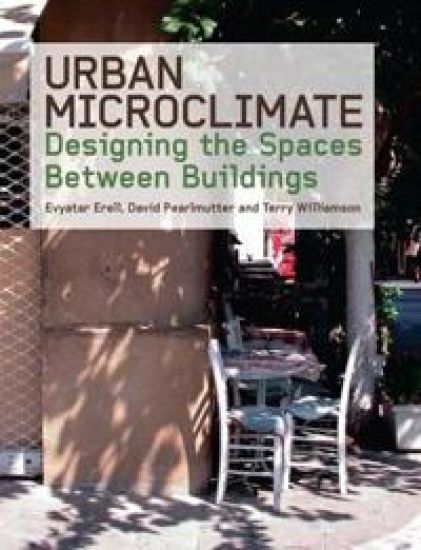
The quality of life of millions of people living in cities could be improved if the form of the city were to evolve in a manner appropriate to its climatic context. Climatically responsive urban design is vital to any notion of sustainability: it enables individual buildings to make use of renewable energy sources for passive heating and cooling, it enhances pedestrian comfort and activity in outdoor spaces, and it may even encourage city dwellers to moderate their dependence on private vehicles. Urban Microclimate bridges the gap between climatology research and applied urban design. It provides architects and urban design professionals with an understanding of how the structure of the built environment at all scales affects microclimatic conditions in the space between buildings, and analyzes the interaction between microclimate and each of the elements of the urban landscape. In the first two sections of the book, the extensive body of work on this subject by climatologists and geographers is presented in the language of architecture and planning professionals. The third section follows each step in the design process, and in part four a critical analysis of selected case study projects provides a demonstration of the complexity of applied urban design. Practitioners will find in this book a useful guide to consult, as they address these key environmental issues in their own work.
Roof Cooling Techniques

Roof Cooling Techniques

Evyatar Erell

Earthscan Ltd
2005
nidottu
Natural heating and cooling of buildings helps to improve energy efficiency in the built environment. This book considers the principles of roof design and specific systems and cooling techniques. The authors explain the fundamental principles of roof cooling and describe in detail the relevant components, applications, built precedents, recent experimental work and key design considerations. Specific systems and techniques are examined, including the main advantages and disadvantages of each strategy.Environmental functions are considered in terms of protective strategies and selective strategies. Protective strategies include solar control, thermal insulation, heat storage and thermal inertia. Selective strategies include radiative, evaporative and convective cooling and planting of roofs. Traditional and current roof construction practices are described, exemplified by case studies from across Europe. Including downloadable resources with software that enables readers to evaluate their own designs, this book will be invaluable for architects and engineers who wish to create buildings that are more energy-efficient.