Kirjojen hintavertailu. Mukana 12 390 323 kirjaa ja 12 kauppaa.
Kirjailija
Ewan Harrison
Kirjat ja teokset yhdessä paikassa: 7 kirjaa, julkaisuja vuosilta 2004-2026, suosituimpien joukossa Architecture, Empire, and Trade. Vertaile teosten hintoja ja tarkista saatavuus suomalaisista kirjakaupoista.
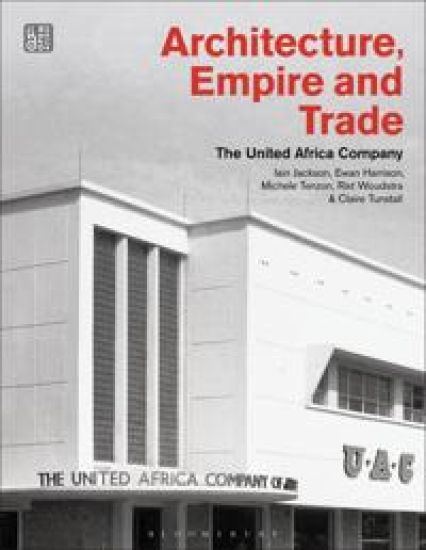
This open access book tells a new and untold history of the architecture of West Africa in the colonial era, as revealed for the first time through the archives of the United Africa Company (UAC). From the imperial Royal Niger Company’s charter in the 1890s through to its suave African department stores of the 1960s, the UAC – a British company firmly embedded in the economies of colonialism, extraction, and exploitation – became the largest commercial firm in West Africa, involved in almost every commercial enterprise and sector, and responsible for procuring architecture, infrastructure, and city real-estate across a vast region. Based on unprecedented access to the UAC archives, this book pieces together a new architectural history of West Africa from the high colonial period through to independence. It reproduces an extraordinary array of newly-uncovered material – from photographs of streetscapes, buildings, and West African everyday life to civic reports and city plans – and presents these alongside critical and theoretical discussions to reveal an alternative account of the architecture of the region which stands in contrast to more conventional state-focused histories. The book explores technological, aesthetic, and political shifts through an architectural lens, and brings to the fore an awareness of the violence and appropriation which underlie each architectural episode, showing how the UAC, as a case-study, presents a unique opportunity to investigate how architecture manifests power, culture, and identity in colonial and post-colonial contexts. The ebook editions of this book are available open access under a CC BY-NC-ND 4.0 licence on bloomsburycollections.com. Open access was funded by the University of Liverpool.

This open access book tells a new and untold history of the architecture of West Africa in the colonial era, as revealed for the first time through the archives of the United Africa Company (UAC).From the imperial Royal Niger Company’s charter in the 1890s through to its suave African department stores of the 1960s, the UAC – a British company firmly embedded in the economies of colonialism, extraction, and exploitation – became the largest commercial firm in West Africa, involved in almost every commercial enterprise and sector, and responsible for procuring architecture, infrastructure, and city real-estate across a vast region.Based on unprecedented access to the UAC archives, this book pieces together a new architectural history of West Africa from the high colonial period through to independence. It reproduces an extraordinary array of newly-uncovered material – from photographs of streetscapes, buildings, and West African everyday life to civic reports and city plans – and presents these alongside critical and theoretical discussions to reveal an alternative account of the architecture of the region which stands in contrast to more conventional state-focused histories. The book explores technological, aesthetic, and political shifts through an architectural lens, and brings to the fore an awareness of the violence and appropriation which underlie each architectural episode, showing how the UAC, as a case-study, presents a unique opportunity to investigate how architecture manifests power, culture, and identity in colonial and post-colonial contexts.The ebook editions of this book are available open access under a CC BY-NC-ND 4.0 licence on bloomsburycollections.com. Open access was funded by the University of Liverpool.
This book explores the paradox of the worldwide spread of democracy and capitalism in an era of Western decline. The rest is overtaking the West as Samuel Huntington predicted, but because it is adopting Western institutions. The emerging global order offers unprecedented opportunities for the expansion of peace, prosperity, and freedom. Yet this is not the 'end of history', but the beginning of a post-Western future for the democratic project. The major conflicts of the future will occur between the established democracies of the West and emerging democracies in the developing world as they seek the benefits and recognition associated with membership of the democratic community. This 'clash of democratizations' will define world politics.
The end of the Cold War has opened up a 'real world laboratory' in which to test and refine general theories of international relations. Using the frameworks provided by structural realism, institutionalism and liberalism, The Post-Cold War International System examines how major powers responded to the collapse of the Soviet Union and developed their foreign policies over the period of post-Cold War transition. The book argues that the democratic peace has begun to generate powerful socialisation effects, due to the emergence of a critical mass of liberal democratic states since the end of the Cold War. The trend this has produced is similar to a pattern that classical realists have interpreted as 'bandwagoning' within a unipolar power structure. Case studies of Germany, China and Japan - identified as key states with the potential to challenge US dominance - provide evidence to support the assessment of international change. The author concludes by exploring the implications of September 11th for the analysis developed. This important volume argues that the end of the Cold War was a major historical turning point in the development of world politics with fundamental implications for the basic way in which the dynamics of the international system are conceptualised.