Kirjojen hintavertailu. Mukana 12 390 323 kirjaa ja 12 kauppaa.

Kirjailija

Eyal Weizman

Kirjat ja teokset yhdessä paikassa: 14 kirjaa, julkaisuja vuosilta 2000-2026, suosituimpien joukossa Shigeru Ban. Vertaile teosten hintoja ja tarkista saatavuus suomalaisista kirjakaupoista.

14 kirjaa

Kirjojen julkaisuhaarukka 2000-2026.

Ungrounding

Ungrounding

Eyal Weizman

Vintage Publishing
2026
sidottu
An urgent and devastating exploration of the role of architecture in understanding the relation between the coloniser and colonised 'A work of profound moral clarity and scientific precision, based on years of tireless collaboration and advocacy. Urgent and essential reading' DAVID WENGROW Written while the organisation he directs, Forensic Architecture, works to produce evidence for the International Court of Justice’s genocide case against Israel, in Ungrounding Eyal Weizman explores the larger geographical and historical context, from the displacement of the Nakba in 1948 to the present day. In unflinching and forensic detail, Ungrounding shows how architectural and territorial analysis is key to understanding the relationship between the coloniser and the colonised. It is an extraordinary and eye-opening journey through the ‘deep cartography’ of the area extending from Gaza’s subterranean tunnels through to its militarised topography, settlements and barriers. Territory is never a neutral backdrop nor the location within which a colonisation takes place. Instead, it is a mechanism by which colonisation is undertaken and key to understanding how Israel’s attack on Gaza in the wake of 7 October has escalated into violence so extreme as to, Weizman argues, meet the definition of genocide.
Before & After

Before & After

Eyal Weizman; Ines Weizman

Diaphanes AG
2025
nidottu
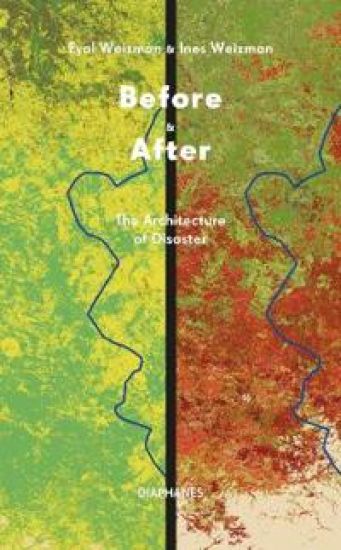
A study of the history of before-and-after images of catastrophes, bombed-out cities, and large-scale political transformations. Image complexes of humanitarian and ecological upheaval document the world as a sequence of catastrophes. But who decides how events are presented, determines the resolution of our visual worlds, and controls the circulation or censorship of images? Eyal and Ines Weizman trace the history of the before-and-after image from nineteenth-century photography to contemporary satellite images and discover a gap that not only conceals the devastating event: it is the human subject itself that is in danger of disappearing from the images. Do humanitarian work and the documentation and reconstruction of war crimes, in which people’s fates and rights should be at the center of attention, paradoxically enter a post-human phase? How can the gap between images become a site of critical counter-reading rather than a symbol of erasure? In the context of their current research, Eyal and Ines Weizman discuss the history, present, and future of the paradigm of the before-and-after image in an exclusive conversation with Marie Glassl.
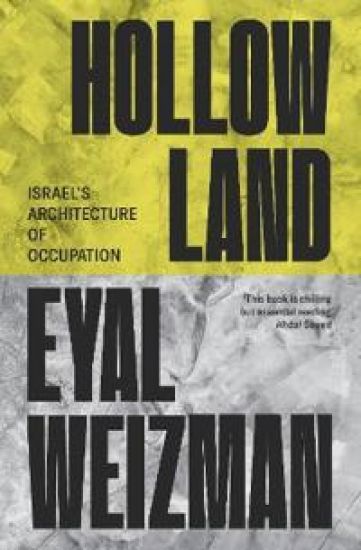
Hollow Land

Hollow Land

Eyal Weizman

Verso Books
2024
nidottu
How does Israel extend its control over Palestinian lands? From the tunnels of Gaza to the militarized airspace of the Occupied Territories, Eyal Weizman unravels the mechanisms of control and how they have transformed Gaza and the West Bank into a war zone. This is essential reading for understanding how architecture and infrastructure are used as lethal weapons in the formation of Israel.In this new edition, Weizman explains how the events following the invasion of Gaza in October 2023 bear witness to the continuing policies of oppression. He details how this book became a foundational text for Forensic Architecture.
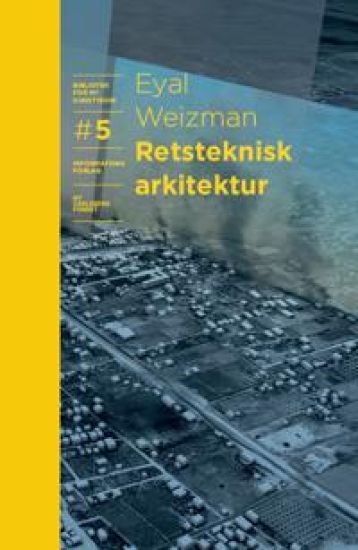
Retsteknisk arkitektur

Retsteknisk arkitektur

Eyal Weizman

Informations Forlag
2022
sidottu
I Retsteknisk arkitektur tager Eyal Weizman læserne fra droneangreb i Afghanistan til interneringslejre i Syrien og fra bombeattentater i Gaza til bjergene i Guatemala. Med detaljeret dokumentation præsenterer bogen en æstetisk og visuelt udfordrende undersøgelsespraksis, der intervenerer direkte i virkeligheden. Eyal Weizmans forskningsgruppe Forensic Architecture arbejder for at stille de ansvarlige for menneskerettighedsbrud til regnskab. Ved virtuelt at rekonstruere gerningssteder, bombede bygninger og udpinte landskaber skaber gruppen rammerne for nye erkendelser og vidnesbyrd. Eyal Weizman (f. 1970) er britisk-israelsk arkitekt og professor ved Goldsmiths, University of London. Forensic Architecture har bidraget med bevismaterialer til bl.a. Amnesty International og Human Rights Watch og udstillet sine modeller og efterforskninger på Tate Britain, Louisiana og documenta.Bibliotek for ny kunstteori er en bogserie med oversættelser af international kunst- og kulturteori udgivet i samarbejde mellem Ny Carlsbergfondet og Informations Forlag. Retsteknisk arkitektur er den femte titel i serien. Tidligere er bøger af Sianne Ngai, Jacques Rancière, Juliane Rebentisch og Hito Steyerl udkommet.Anmeldelser:"En forrygende bog." ???????????? - Politiken
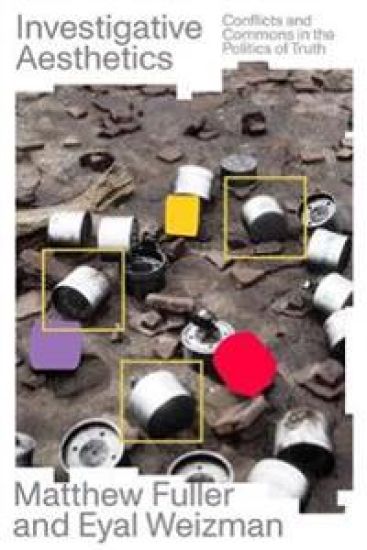
Investigative Aesthetics

Investigative Aesthetics

Matthew Fuller; Eyal Weizman

Verso Books
2021
nidottu
Today, artists are engaged in investigation. They probe corruption, state violence, environmental destruction and repressive technologies. At the same time, fields not usually associated with aesthetics make powerful use of it. Journalists and legal professionals pore over open source videos and satellite imagery to undertake visual investigations. This combination of diverse fields is what the authors call "investigative aesthetics": mobilising sensibilities often associated with art, architecture and other such practices to find new ways of speaking truth to power.This book draws on theories of knowledge, ecology and technology, evaluates the methods of citizen counter-forensics, micro-history and art, and examines radical practices such as those of Wikileaks, Bellingcat, and Forensic Architecture. Investigative Aesthetics takes place in the studio and the laboratory, the courtroom and the gallery, online and in the streets, as it strives towards the construction of a new 'common sensing'.The book is an inspiring introduction to a new field that brings together investigation and aesthetics to change how we understand and confront power today.To Nour Abuzaid for your brilliance, perseverance, and unshaken belief in the liberation of Palestine.
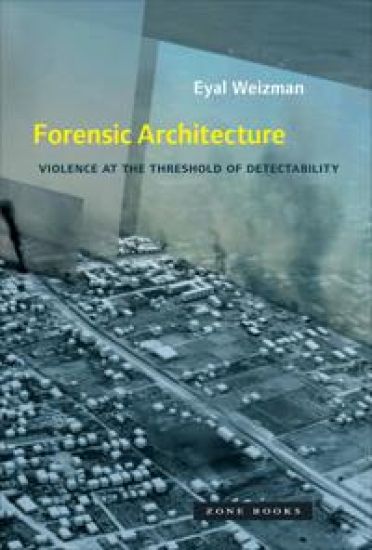
Forensic Architecture

Forensic Architecture

Eyal Weizman

Zone Books
2019
pokkari
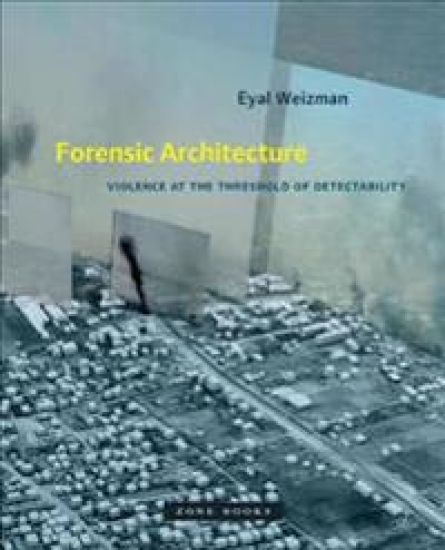
A new form of investigative practice that uses architecture as an optical device to investigate armed conflicts and environmental destruction.In recent years, the group Forensic Architecture began using novel research methods to undertake a series of investigations into human rights abuses. Today, the group provides crucial evidence for international courts and works with a wide range of activist groups, NGOs, Amnesty International, and the UN. Forensic Architecture has not only shed new light on human rights violations and state crimes across the globe, but has also created a new form of investigative practice that bears its name. The group uses architecture as an optical device to investigate armed conflicts and environmental destruction, as well as to cross-reference a variety of evidence sources, such as new media, remote sensing, material analysis, witness testimony, and crowd-sourcing.In Forensic Architecture, Eyal Weizman, the group's founder, provides, for the first time, an in-depthintroduction to the history, practice, assumptions, potentials, and double binds of this practice. The book includes an extensive array of images, maps, and detailed documentation that records the intricate work the group has performed. Traversing multiple scales and durations, the case studies in this volume include the analysis of the shrapnel fragments in a room struck by drones in Pakistan, the reconstruction of a contested shooting in the West Bank, the architectural recreation of a secret Syrian detention center from the memory of its survivors, a blow-by-blow account of a day-long battle in Gaza, and an investigation of environmental violence and climate change in the Guatemalan highlands and elsewhere.Weizman's Forensic Architecture,stunning and shocking in its critical narrative, powerful images,and daring investigations, presents a new form of public truth, technologically, architecturally, and aesthetically produced. The practice calls for a transformative politics in which architecture as a field of knowledge and a mode of interpretation exposes and confronts ever-new forms of state violence and secrecy.
The Least of All Possible Evils

The Least of All Possible Evils

Eyal Weizman

Verso Books
2017
nidottu
The principle of the 'lesser evil'-the acceptability of pursuing one exceptional course of action in order to prevent a greater injustice-has long been a cornerstone of Western ethical philosophy. From its roots in classical ethics and Christian theology, to Hannah Arendt's exploration of the work of the Jewish Councils during the Nazi regime, Weizman explores its development in three key transformations of the problem: the defining intervention of Médecins Sans Frontières in mid-1980s Ethiopia; the separation wall in Israel-Palestine; and international and human rights law in Bosnia, Gaza and Iraq.Drawing on a wealth of new research, Weizman charts the latest manifestation of this age-old idea. In doing so he shows how military and political intervention acquired a new 'humanitarian' acceptability and legality in the late twentieth and early twenty-first centuries.
Forensic Architecture

Forensic Architecture

Eyal Weizman

Zone Books
2017
sidottu
A new form of investigative practice that uses architecture as an optical device to investigate armed conflicts and environmental destruction.In recent years, the group Forensic Architecture began using novel research methods to undertake a series of investigations into human rights abuses. Today, the group provides crucial evidence for international courts and works with a wide range of activist groups, NGOs, Amnesty International, and the UN. Forensic Architecture has not only shed new light on human rights violations and state crimes across the globe, but has also created a new form of investigative practice that bears its name. The group uses architecture as an optical device to investigate armed conflicts and environmental destruction, as well as to cross-reference a variety of evidence sources, such as new media, remote sensing, material analysis, witness testimony, and crowd-sourcing.In Forensic Architecture, Eyal Weizman, the group's founder, provides, for the first time, an in-depthintroduction to the history, practice, assumptions, potentials, and double binds of this practice. The book includes an extensive array of images, maps, and detailed documentation that records the intricate work the group has performed. Traversing multiple scales and durations, the case studies in this volume include the analysis of the shrapnel fragments in a room struck by drones in Pakistan, the reconstruction of a contested shooting in the West Bank, the architectural recreation of a secret Syrian detention center from the memory of its survivors, a blow-by-blow account of a day-long battle in Gaza, and an investigation of environmental violence and climate change in the Guatemalan highlands and elsewhere.Weizman's Forensic Architecture,stunning and shocking in its critical narrative, powerful images,and daring investigations, presents a new form of public truth, technologically, architecturally, and aesthetically produced. The practice calls for a transformative politics in which architecture as a field of knowledge and a mode of interpretation exposes and confronts ever-new forms of state violence and secrecy.
Negative Publicity

Negative Publicity

Edmund Clark; Crofton Black; Eyal Weizman

Aperture
2016
kierre
British photographer Edmund Clark and counterterrorism investigator Crofton Black have assembled photographs and documents that confront the nature of contemporary warfare and the invisible mechanisms of state control. From George W. Bush’s 2001 declaration of the “war on terror” until 2008, an unknown number of people disappeared into a network of secret prisons organized by the U.S. Central Intelligence Agency—transfers without legal process known as extraordinary renditions. No public records were kept as detainees were shuttled all over the globe. Some were eventually sent to Guantánamo Bay or released without charge, while others remain unaccounted for. The paper trail assembled in this volume shows these activities via the weak points of business accountability: invoices, documents of incorporation, and billing reconciliations produced by the small-town American businesses enlisted in detainee transportation. Clark has traveled worldwide to photograph former detention sites, detainees’ homes, and government locations. He and Black recreate the network that links CIA “black sites,” and evoke ideas of opacity, surface, and testimony in relation to this process—a system hidden in plain sight. Negative Publicity: Artefacts of Extraordinary Rendition, copublished with the Magnum Foundation, its creation supported by Magnum Foundation’s Emergency Fund, raises fundamental questions about the accountability and complicity of our governments, and the erosion of our most basic civil rights.
Shigeru Ban

Shigeru Ban

Claude Bruderlein; Michael Kimmelman; Koh Kitayama; Brad Pitt; Naomi Pollock; Eyal Weizman; Heidi Zuckerman Jacobson

Aspen Art Museum,US
2014
nidottu
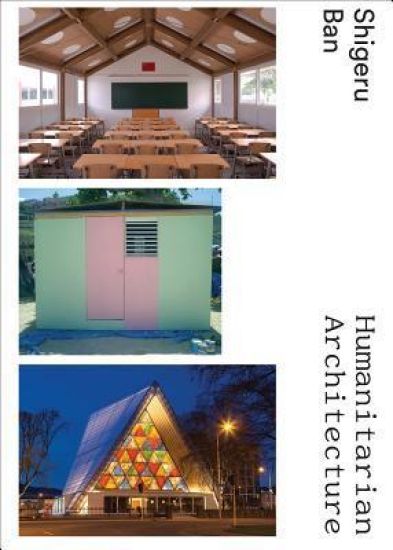
"Architects are not building temporary housing because we are too busy building for the privileged people.... I'm not saying I'm against building monuments, but I'm thinking we can work more for the public." - Shigeru Ban, Pritzker Prize, 2014In 1994, after seeing photographs of the plastic sheets given to Rwandan refugees to live under, Shigeru Ban went to the United Nations High Commissioner for Refugees to propose ideas for better shelters. Since then, Ban has been critically heralded for his innovative approaches to environmentally sound architecture and his devotion to humanitarian efforts in the wake of some of the most devastating natural and man-made disasters. His temporary housing has employed everything from plastic beer cartons to paper tubes to create ingeniously flexible spaces. By sourcing unconventional, recycled, inexpensive, local and sustainable materials, he stimulates devastated economies by involving local resources and labor. These works stem from empathy and have restored shelter and gathering places, offering comfort, protection and dignity to stricken communities around the world.This important volume is the first book-length study to collect, catalogue and examine Shigeru Ban's architectural responses to disaster relief. Essays and discussions of individual projects, drawings in the artist's hand, instruction manuals, diverse photographs and a timeline and map make an essential compendium for the most personal and relevant aspect of Ban's work. The book is a major contribution to the broad subjects of humanitarian relief and sustainable design solutions, and provides an inspiring testament to Ban's ongoing dedication to our planet and its people.Born in Tokyo in 1957, Shigeru Ban studied at the Southern California Institute of Architecture and went on to Cooper Union's School of Architecture where he studied under John Hejduk. At age 48, Ban won the 2005 Thomas Jefferson Medal in Architecture from the University of Virginia. He was profiled by Time in their projection of twenty-first-century innovators in the field of architecture and design. Ban was awarded the Pritzker Architecture Prize in 2014.
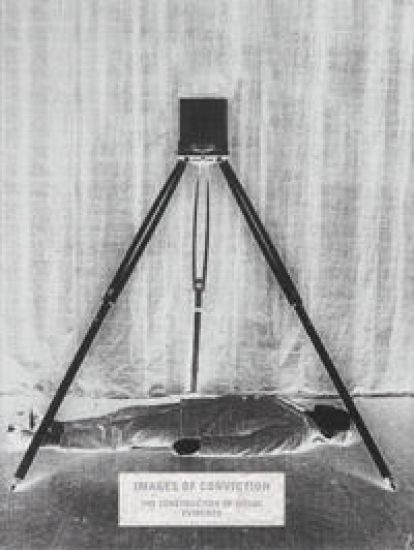
Images of Conviction - the Construction of Visual Evidence

Images of Conviction - the Construction of Visual Evidence

Eyal Weizman; Tom Keenan

Editions Xavier Barral
2000
sidottu
Images of Conviction shows, through 11 cases, how the photographic image is constructed to become evidence.From the scientific methods developed by Alphonse Bertillon, a criminologist who worked for the Pr fecture de Police de Paris in the late 19th century, to the first aerial images of the front taken by the army during World War I, to the shots allowing the victims of Stalin's Great Purge to be identified--for over 150 years photography has served as proof, testifying to crime and thus seeming to deliver truths. In the 11 cases presented here, each one situated within its historical and political context, the question of the status of images is acutely posed. Whether it be the famous shots of the Shroud of Turin, the images of the Nuremberg trial, the skull of Josef Mengele or photos taken with cell phones recording the damage of drone strikes in Afghanistan and Israel, forensic images are now part of any police or political investigation.