Kirjojen hintavertailu. Mukana 12 390 323 kirjaa ja 12 kauppaa.

Kirjailija

Ezio Di Nucci

Kirjat ja teokset yhdessä paikassa: 13 kirjaa, julkaisuja vuosilta 2008-2025, suosituimpien joukossa Klinisk beslutningslære og One Health. Vertaile teosten hintoja ja tarkista saatavuus suomalaisista kirjakaupoista.

13 kirjaa

Kirjojen julkaisuhaarukka 2008-2025.

Klinisk beslutningslære og One Health

Klinisk beslutningslære og One Health

Ezio Di Nucci; Carsten Strøby Jensen; John Brandt Brodersen; Jesper Kjærgaard; Mats Jacob Hermansson Lindberg; Andreas Lundh; Karina Dahl Steffensen; Liza Rosenbaum Nielsen; Luca Guardabassi; Claus Moser; Tina Møller Sørensen; Jens Peter Nielsen; Anders Miki Bojesen; Anne Holm; Lisbeth Rem Jessen; Ida Elisabeth Irene Penninga; Niels Høiby; Lars Erik Larsen; Mia Gall Grandahl; Christoffer Haase; Marc Sørensen; Finn Møller Pedersen; Jørgen E. Olesen; Anne Lykkeskov; Alexandra Jønsson

Gyldendal
2025
nidottu
Bogen Klinisk beslutningslære og One Health er den første af sin slags, der samler disse aspekter. Den henvender sig i et lettilgængeligt sprog og med mange illustrationer primært til medicin- og veterinærstuderende, som deltager i kurset i klinisk beslutningslære. Derudover til andre sundhedsprofessionelle og alle med interesse for One Health. Bogen består af to dele: I. Etik og evidensbaserede beslutninger samt II. One Health-perspektivet. Første del fokuserer på, hvad det vil sige at træffe evidensbaserede kliniske beslutninger, samtidig med at der integreres bæredygtige behandlingsmetoder uden at gå på kompromis med patientens helbred. Læseren bliver introduceret til værktøjer, der kan hjælpe med at balancere mellem evidens og etik. Anden del præsenterer en unik tilgang til fælles beslutningstagning ved at forene medicin- og veterinærstuderende i en fælles One Health-forståelse. Formålet er at fremme tværfaglig viden om antimikrobiel resistens (AMR) gennem samarbejde mellem læger, dyrlæger, biologer, farmaceuter og samfundsforskere. Målet med bogen er at give studerende og sundhedsprofessionelle en helhedsorienteret tilgang til klinisk beslutningstagning, som styrker det tværfaglige samarbejde og inddrager flere perspektiver i behandlingsprocessen.
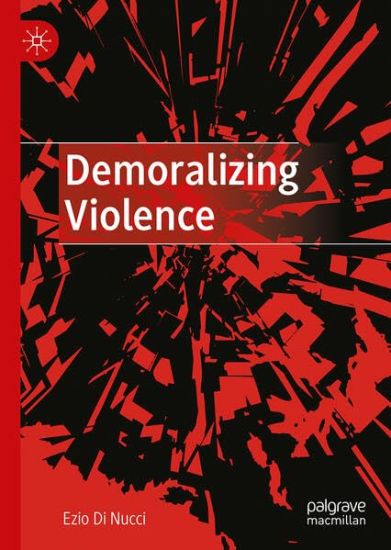
Demoralizing Violence

Demoralizing Violence

Ezio Di Nucci

Springer International Publishing AG
2025
sidottu
Is non-violence oppressive? This book argues that non-violent ethics keeps minoritized peoples down and helps the bourgeoisie tolerate structural injustice. Like sex, violence needs de-moralizing, in order to fulfil its emancipatory potential. Social injustice and global inequality will not deprive the privileged of their sleep, if radical measures are morally ruled out from the start. And the ethics of non-violence robs the working classes of one of the few mechanisms they have left to help them cope with our increasingly digitalized bureaucracies, developed around the needs of highly educated urban classes. There is not just the normative obvious point that it is not fair to deprive the oppressed of one of the only resources they have left; it is also that it isn’t surprising that the bourgeoisie would settle on a non-violent ethics, since that happens to prop up their privileged position – while at the same time soothing their precious conscience: capital with a soul. The book defends three overall claims: first, non-violence is oppressive, in the traditional feminist sense of keeping people down; second, non-violence helps the bourgeoisie tolerate structural injustice; and thirdly, that access to violent means is not distributed fairly across gender or race, for example.
Ethics4Medics

Ethics4Medics

Ezio Di Nucci

Gyldendal
2023
nidottu
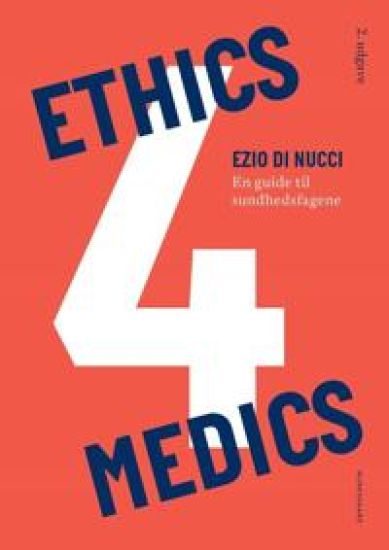
Bogen er en guide til etik og filosofi skrevet for studerende og professionelle inden for sundhedsfagene. Hvad vil det sige at gøre det rigtige? Og ifølge hvilke principper? Skal man for eksempel altid respektere patientens ønsker? Hvad med de tilfælde, hvor (du mener) du ved bedre? Hvad med vanskelige sager som aktiv dødshjælp? Og hvilket ansvar har man som henholdsvis sundhedsprofessionel og patient? Sundhedsprofessionelle stilles hver dag over for svære afgørelser. Og derfor er det vigtigt – ja, faktisk helt grundlæggende – at sundhedsprofessionelle kan håndtere etiske og filosofiske spørgsmål. Denne bog ruster læseren til den etiske refleksion. I et dagligdags sprog og ved brug af mange eksempler bliver læseren præsenteret for redskaber fra filosofiens værktøjskasse og for centrale begreber som utilitarisme og paternalisme samt de dilemmaer, der knytter sig til begreberne.
The Control Paradox

The Control Paradox

Ezio Di Nucci

Rowman Littlefield International
2020
sidottu
Is technological innovation spinning out of control? Within one week in 2018, social media was revealed to have had a huge influence on the 2016 presidential election in the United States; while the first fatality from self-driving cars was recorded. What's paradoxical about these understandable fears of machines taking control through software, robots and AI, is that often new technology is introduced for the very purpose of improving our control over a certain task. This is what Ezio di Nucci calls the 'control paradox'. Di Nucci also brings this notion to bear on politics: we delegate power and control to representatives in order for our country to be run by a centralised group of experts. However, recent populist uprisings have shown that populations can feel disempowered and neglected by this system. Through the notion of the control paradox, the author shows how this lack of control can be motivating populism and demonstrates that a better understanding of delegation would be a possible solution.
The Control Paradox

The Control Paradox

Ezio Di Nucci

Rowman Littlefield International
2020
nidottu
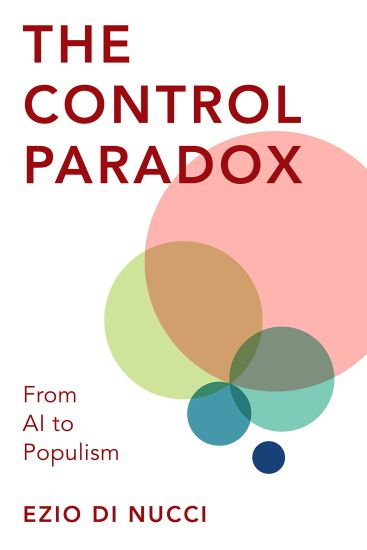
Is technological innovation spinning out of control? Within one week in 2018, social media was revealed to have had a huge influence on the 2016 presidential election in the United States; while the first fatality from self-driving cars was recorded. What's paradoxical about these understandable fears of machines taking control through software, robots and AI, is that often new technology is introduced for the very purpose of improving our control over a certain task. This is what Ezio di Nucci calls the 'control paradox'. Di Nucci also brings this notion to bear on politics: we delegate power and control to representatives in order for our country to be run by a centralised group of experts. However, recent populist uprisings have shown that populations can feel disempowered and neglected by this system. Through the notion of the control paradox, the author shows how this lack of control can be motivating populism and demonstrates that a better understanding of delegation would be a possible solution.
8 cases i medicinsk etik

8 cases i medicinsk etik

Ezio Di Nucci; Martin Ejsing Christensen; Rasmus Thybo Jensen; Peter Laurs Sørensen; Jeanette Bresson Ladegaard Knox; Morten Hillgaard Bülow; Marie-Louise Holm; Finn Guldmann; Jacob Busch; Aaro Tupasela; Lars Poulsen

Gyldendal
2020
nidottu
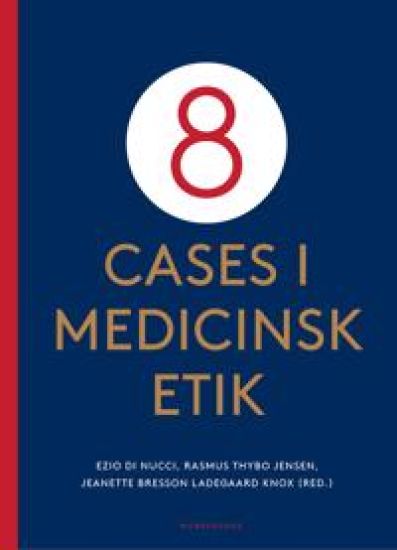
8 CASES I MEDICINSK ETIK er en træningsbog for medicinstuderende og andre sundhedsprofessionelle. I sundhedsvæsenet træffes der kontinuerligt beslutninger, og enhver beslutning involverer en vurdering baseret på værdier og hermed etik. Bogen præsenterer 8 cases, der både tjener som eksempler på de kom­plekse etiske og filosofiske spørgsmål, der ligger bag medicinsk beslut­ningstagning, og viser den måde, hvorpå sundhedsydelser konstant ud­vikler sig gennem teknologisk innovation. Eksempler på cases, der optræder i bogen er: den aktuelle praksis med operation af nyfødte med atypiske kønskarakteristika (Kapitel 4); forslag om såkaldt formodet samtykke i forbindelse med organ­donation og brugen af nudging i den sammenhæng (Kapitel 5 og 6); brugen af specifikke teknologier såsom IBM Watson (Kapitel 8) og Sundhedsplatformen (Kapitel 7). Hvert kapitel afsluttes med studie­spørgsmål. Bogens hensigt er, at de principper, sondringer, teorier og begreber, som bruges til at analysere de 8 udvalgte cases med, kan overføres til mange andre cases inden for sundhedsvæsenet og dermed hjælpe den sundhedsprofessionelle til at træffe de rigtige valg i en kompleks hverdag.
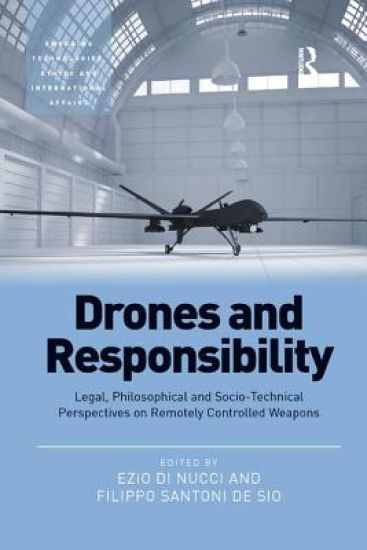
Drones and Responsibility

Drones and Responsibility

Ezio Di Nucci; Filippo Santoni de Sio

Routledge
2019
nidottu
How does the use of military drones affect the legal, political, and moral responsibility of different actors involved in their deployment and design? This volume offers a fresh contribution to the ethics of drone warfare by providing, for the first time, a systematic interdisciplinary discussion of different responsibility issues raised by military drones. The book discusses four main sets of questions: First, from a legal point of view, we analyse the ways in which the use of drones makes the attribution of criminal responsibility to individuals for war crimes more complicated and what adjustments may be required in international criminal law and in military practices to avoid ’responsibility gaps’ in warfare. From a moral and political perspective, the volume looks at the conditions under which the use of military drones by states is impermissible, permissible, or even obligatory and what the responsibilities of a state in the use of drones towards both its citizens and potential targets are. From a socio-technical perspective, what kind of new human machine interaction might (and should) drones bring and which new kinds of shared agency and responsibility? Finally, we ask how the use of drones changes our conception of agency and responsibility. The book will be of interest to scholars and students in (military) ethics and to those in law, politics and the military involved in the design, deployment and evaluation of military drones.
Ethics in Healthcare

Ethics in Healthcare

Ezio Di Nucci

Rowman Littlefield
2018
sidottu
Structured around eight chapters, this book introduces ethical theory and practice to healthcare students and professionals, including those working in medicine, nursing, public health, dentistry, and research. Increasingly, students and professionals within healthcare are faced with difficult questions and decisions: medical progress and technological innovation are widening the therapeutic scope, thereby both allowing for new, exciting possibilities but also making clinical decisions more intricate. That’s why it is no longer enough to provide healthcare students and professionals with some basics in biomedical ethics; rather, what is needed is also an accessible guide to ethical theories and practices, which does not presuppose any background or training in philosophy while at the same time not renouncing the fundamental questions at the core of the medical profession – this book aims to be exactly that ethical guide.
Ethics in Healthcare

Ethics in Healthcare

Ezio Di Nucci

Rowman Littlefield
2018
nidottu
Structured around eight chapters, this book introduces ethical theory and practice to healthcare students and professionals, including medicine, nursing, public health, dentistry, and research. Increasingly, students and professionals within healthcare are faced with difficult questions and decisions: medical progress and technological innovation are widening the therapeutic scope, thereby both allowing for new, exciting possibilities but also making clinical decisions more intricate. That's why it is no longer enough to provide healthcare students and professionals with some basics in biomedical ethics; rather, what is needed is also an accessible guide to ethical theories and practices, which does not presuppose any background or training in philosophy while at the same time not renouncing the fundamental questions at the core of the medical profession – this book aims to be exactly that ethical guide.
Drones and Responsibility

Drones and Responsibility

Ezio Di Nucci; Filippo Santoni de Sio

Routledge
2016
sidottu
How does the use of military drones affect the legal, political, and moral responsibility of different actors involved in their deployment and design? This volume offers a fresh contribution to the ethics of drone warfare by providing, for the first time, a systematic interdisciplinary discussion of different responsibility issues raised by military drones. The book discusses four main sets of questions: First, from a legal point of view, we analyse the ways in which the use of drones makes the attribution of criminal responsibility to individuals for war crimes more complicated and what adjustments may be required in international criminal law and in military practices to avoid ’responsibility gaps’ in warfare. From a moral and political perspective, the volume looks at the conditions under which the use of military drones by states is impermissible, permissible, or even obligatory and what the responsibilities of a state in the use of drones towards both its citizens and potential targets are. From a socio-technical perspective, what kind of new human machine interaction might (and should) drones bring and which new kinds of shared agency and responsibility? Finally, we ask how the use of drones changes our conception of agency and responsibility. The book will be of interest to scholars and students in (military) ethics and to those in law, politics and the military involved in the design, deployment and evaluation of military drones.
Ethics Without Intention

Ethics Without Intention

Ezio Di Nucci

Bloomsbury Academic
2014
nidottu
Ethics Without Intention tackles the questions raised by difficult moral dilemmas by providing a critical analysis of double effect and its most common ethical and political applications. The book discusses the philosophical distinction between intended harm and foreseen but unintended harm. This distinction, which, according to the doctrine of double effect, makes a difference to the moral justification of actions, is widely applied to some of the most controversial ethical and political questions of our time: collateral damages in wars and acts of terrorism; palliative care, euthanasia, abortion, and embryo research; self-defence, suicide, and self-sacrifice. It is also crucial to the now notorious theoretical cases of the trolley problem and the knobe effect. Di Nucci approaches the doctrine of double effect from four key directions: its historical origins, which can be traced further back than the classic attribution to Aquinas; its theoretical coherence, which is the subject of a lively contemporary debate in philosophy; its moral intuitiveness, which has always been taken for granted but has recently begun to be questioned; and finally its relevance to the difficult moral and political decisions of our time. An engaging and comprehensive introduction to the doctrine of double effect.
Ethics Without Intention

Ethics Without Intention

Ezio Di Nucci

Bloomsbury Academic
2014
sidottu
Ethics Without Intention tackles the questions raised by difficult moral dilemmas by providing a critical analysis of double effect and its most common ethical and political applications. The book discusses the philosophical distinction between intended harm and foreseen but unintended harm. This distinction, which, according to the doctrine of double effect, makes a difference to the moral justification of actions, is widely applied to some of the most controversial ethical and political questions of our time: collateral damages in wars and acts of terrorism; palliative care, euthanasia, abortion, and embryo research; self-defence, suicide, and self-sacrifice. It is also crucial to the now notorious theoretical cases of the trolley problem and the knobe effect. Di Nucci approaches the doctrine of double effect from four key directions: its historical origins, which can be traced further back than the classic attribution to Aquinas; its theoretical coherence, which is the subject of a lively contemporary debate in philosophy; its moral intuitiveness, which has always been taken for granted but has recently begun to be questioned; and finally its relevance to the difficult moral and political decisions of our time. An engaging and comprehensive introduction to the doctrine of double effect.