Kirjojen hintavertailu. Mukana 12 135 951 kirjaa ja 12 kauppaa.
Kirjailija
F David Farnell
Kirjat ja teokset yhdessä paikassa: 4 kirjaa, julkaisuja vuosilta 1998-2019, suosituimpien joukossa Is the Gift of Prophecy for Today?. Vertaile teosten hintoja ja tarkista saatavuus suomalaisista kirjakaupoista.
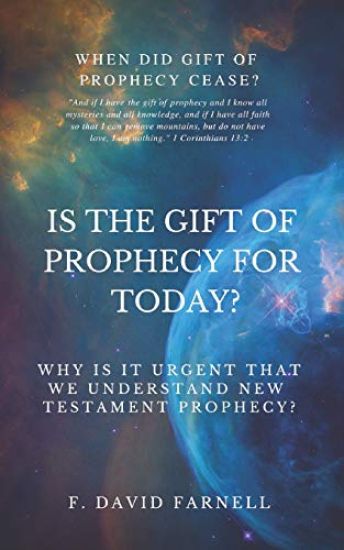
In the first century A.D., miraculous gifts occurred with the baptism with the Holy Spirit. These served as signs that God was no longer using the Israelite nation but that his approval now rested on the Christian church, which had been established by his Son. (Heb 2:2-4) On the day of Pentecost, miraculous gifts followed the outpouring of the Holy Spirit, and in each case mentioned in the New Testament where the miraculous gifts of the Spirit were given, at least one of the 12 apostles or Paul was present. (Ac 2:1, 4, 14; 8:9-20; 10:44-46; 19:6) With the death of the apostles, the transmittal of the gifts of the Spirit ended. Did the miraculous gifts of the Spirit cease? Is the gift of prophecy for today? It is imperative that we know the correct answer to that question.
Was the Gospel of Mark Written First? Were the Gospel Writers Plagiarists? What is the Q Document? What about Document Q? Critical Bible scholars have assumed that Matthew and Luke used the book of Mark to compile their Gospels and that they consulted a supplementary source, a document the scholars call Q from the German Quelle, or source. From the close of the first century A.D. to the 18th century, the reliability of the Gospels was never really brought into question.However, once we enter the so-called period of enlightenment, especially from the 19th century onward, some critical Bible scholars viewed the Gospels not as the inspired, inerrant Word of God but rather as the word of man, and a jumbled word at that. In addition, they determined that the Gospels were not written by Matthew, Mark, Luke, and John, saying the Gospels were written after the apostles, denying that the writers of the Gospels had any firsthand knowledge of Jesus; therefore, for these Bible critics such men were unable to offer a record of reliable history.Moreover, these critical Bible scholars came to the conclusion that the similarities in structure and content in the synoptic (similar view) Gospels (Matthew, Mark, and Luke), suggests that the evangelists copied extensively from one other. Further, the critical Bible scholars have rejected that the miracles of Jesus and his resurrection ever occurred as recorded in the Gospels. Lastly, some have even gone so far as to reject the historicity of Jesus himself.
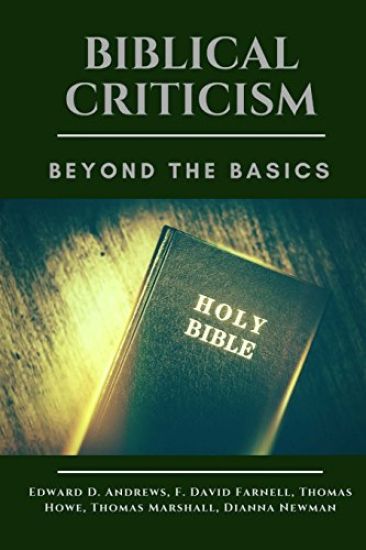
Biblical criticism is an umbrella term covering various techniques for applying literary historical-critical methods in analyzing and studying the Bible and its textual content. Biblical criticism is also known as higher criticism, literary criticism, and historical criticism. Biblical criticism has done nothing more than weaken and demoralize people's assurance in the Bible as being the inspired and fully inerrant Word of God and is destructive in its very nature. Historical criticism is made up of many forms of biblical criticism that are harmful to the authoritative Word of God: historical criticism, source criticism, form criticism, redaction criticism, social-science criticism, canonical criticism, rhetorical criticism, structural criticism, narrative criticism, reader-response criticism, and feminist criticism. Not just liberal scholarship, but many moderate, even some "conservative" scholars have adopted historical criticism at some level. The authors herein show how adopting any level of biblical criticism by pastors, biblical teachers, students, and scholars, will only diminish the trustworthiness of God's Word, e.g., inerrancy. Biblical criticism is extremely flawed, and its attack on the Bible has failed to demonstrate that the Bible is not the Word of God. On this Dr. Robert L. Thomas writes, Someone needs to sound the alarm when evangelical leaders mislead the body of Christ. A mass evangelical exodus from this time-honored principle of interpreting Scripture is jeopardizing the church's access to the truths taught therein. Whether interpreters have forsaken the principle intentionally or have subconsciously ignored it, the damage is the same.-Robert L. Thomas. Evangelical Hermeneutics: The New Versus the Old (p. 160).
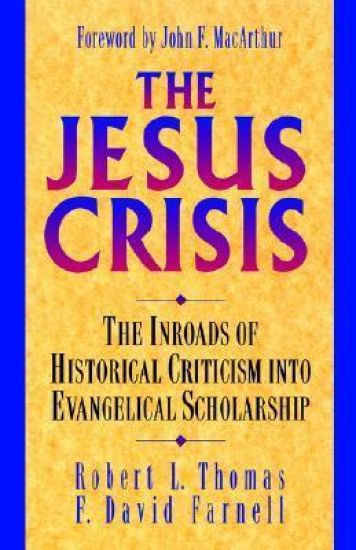
"The authors examine dangerous trends that seem to be luring many . . . toward skeptical rationalism and theological liberalism." --John F. MacArthur Jr.