
Kirjailija
F F Bruce
Kirjat ja teokset yhdessä paikassa: 6 kirjaa, julkaisuja vuosilta 2006-2012, suosituimpien joukossa Pablo. Vertaile teosten hintoja ja tarkista saatavuus suomalaisista kirjakaupoista.
Mukana myös kirjoitusasut: F. F. Bruce
6 kirjaa
Kirjojen julkaisuhaarukka 2006-2012.
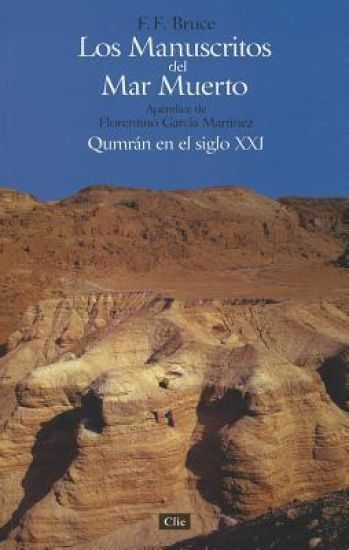
El descubrimiento de los primeros siete rollos de Manuscritos del Mar Muerto o Rollos de Qumram hecho por Jum'a y su primo Mohammed ed-Dhib, dos pastores beduinos de la tribu Ta'amireh, en una cueva a orillas del Mar Muerto en 1947, pusieron en marcha una revolucion en la investigacion del texto biblico y en nuestra comprension de los origenes del cristianismo, que hoy en dia, a comienzos del Siglo XXI, ningun teologo serio se atreve a cuestionar. Este conjunto de manuscritos judios, escritos en hebreo y arameo entre los anos 150 a.C al 70 d.C., y descubiertos progresivamente a lo largo de los ultimos cincuenta anos en once cuevas, alcanza ya la cifra de 900. Incluyen los libros del "Tanaj" o A.T. excepto el libro de Ester; los llamados "Deuterocanonicos"; comentarios a cada uno de los libros del A.T.; las reglas, manuales y oraciones de la Comunidad; y otros textos diversos del periodo intertestamentario, como el "Libro de Enoc," "El Testamento de los Doce Patriarcas," "El Libro de los Jubileos," etc. Los interrogantes que este descubrimiento plantea, en lo que hace referencia al A.T. como al N.T. son tan fascinantes como importantes: Respecto al Antiguo Testamento: Como encajan estos antiguos manuscritos biblicos con los que ya conociamos y en los que se basa el texto de nuestras versiones de la Biblia? Nos permiten introducir correcciones a gran escala en los manuscritos masoreticos? Por que no se ha encontrado entre ellos el libro de Ester? Respecto el Nuevo Testamento: Hasta donde llegan los antecedentes teologicos y los paralelismos entre algunas ensenanzas de esos Manuscritos y las del Nuevo Testamento? Hubo realmente una colaboracion entre cristianos y esenios durante un periodo determinado y luego se separaron? Estuvo Pablo con los esenios de Damasco cuando escribe "fui a la region de Arabia (o Desierto), de donde luego regrese a Damasco" (Ga. 1:17)? Esta obra da respuesta a estas y otras muchas incognitas son las que tratan de aclarar F.F. Bruce y Florentino Garcia en este libro reflexivo, divulgativo y actual, sobre los Manuscritos del Mar Muerto y Qumran, estructurado en once capitulos y un apendice de actualizacion.
Bruce hace una magnifica interpretacion del original griego, teniendo en cuenta el contexto historico y teologico de la epistola, y manteniendo un serio dialogo con casi todos los eruditos que han escrito sobre Galatas. Con su conocimiento y estilo, le da al texto biblico una vitalidad que atrae tanto a estudiosos como a pastores. Este comentario enfatiza la doctrina paulina de la justificacion por fe y presenta al Espiritu como el principio de la nueva vida en Cristo. Esta obra tambien contiene un resumen de la investigacion paulina realizada en los ultimos 25 anos, y de los teologos y estudios mas recientes. Ademas, incluye una bibliografia en espanol para el lector que quiera realizar un estudio amplio de la epistola.
The Time is Fulfilled In this volume of essays, based on the 1977 Moore College lectures in Sydney, Australia, F. F. Bruce examines five examples of the fulfillment of the Old Testament in the New. In the first essay, from which the title of the book is taken, Bruce addresses Jesus' words in Mark 1:14-15: The time is fulfilled, and the kingdom of God has drawn near; repent and believe the good news. Bruce stresses that in fulfilling the time Jesus is not merely responding passively to conditions favorable to the establishment of his kingdom; rather, he has decisively taken the initiative to inaugurate the fullness of time which he has announced. The remaining essays discuss other instances of the development of Old Testament themes in the New Testament: the ways in which the ministry of Jesus confirms the testimony of Moses; Abraham as the prototype of those elected by God; the notion of a shadow of good things to come (Heb. 10:1); and the spirit of prophecy (Rev. 19:10).

Tradition is a notoriously bad master, but it can be a useful servant. In this book Professor Bruce traces the development of Christian Tradition through the last 2,000 years and examines its special relevance to Christian thought today. Hold fast to the traditions wrote Paul to the Christians in Corinth. Yet some would regard complete freedom from any kind of tradition as the sign of spiritual maturity and emancipation. That is because of the mistaken idea that tradition is always bad, and this book is a valuable corrective of that idea. In it Professor Bruce examines the part that tradition has played in Biblical interpretation, in theology, in creeds, in Christian education, and particularly in Church life and organization, beginning with the ancient Jewish Traditions of the Elders down to the present day. He shows how even in quarters that profess to have discarded tradition, and whose very position is based on their declared freedom from it, that very fact can become a tradition in itself. In a final chapter Professor Bruce shows the relevance of different streams of tradition in the dialogue between Christians in the present day.
In this reader-friendly overview, one of the twentieth century's leading biblical scholars offers his insights into the importance of the Dead Sea Scrolls for biblical studies and the histories of Judaism and Christianity. He tells the story of the discovery of the scrolls and their ongoing significance. Contents Prologue 1 The First Discoveries 2 Later Discoveries 3 Dating the Finds 4 Khirbet Qumran 5 Wadi Murabba'at and Khirbet Mird 6 The Scrolls and the Old Testament 7 Biblical Interpretation and the Messianic Hope 8 The Teacher of Righteousness and His Enemies 9 The Qumran Community 10 Qumran and the Essenes 11 Qumran and Christianity Epilogue