Kirjojen hintavertailu. Mukana 12 595 353 kirjaa ja 12 kauppaa.

Kirjailija

Fady Joudah

Kirjat ja teokset yhdessä paikassa: 10 kirjaa, julkaisuja vuosilta 2008-2024, suosituimpien joukossa [...] Dikter. Vertaile teosten hintoja ja tarkista saatavuus suomalaisista kirjakaupoista.

10 kirjaa

Kirjojen julkaisuhaarukka 2008-2024.

[...] Dikter

[...] Dikter

Fady Joudah

Norstedts
2024
nidottu
”Till dem som kommer att mördas under krigets sista dag. Till dem som kommer att mördas under den första dagen efter kriget. Till dem som förgås av skräck under humanitära pauser. En timme innan uppehållet, en minut efter. Till dem som dör av brustet hjärta under och efter kriget.”[…] är den palestinsk-amerikanske poeten Fady Joudahs första bok på svenska. Den skrevs senhösten och vintern 2023, med utgångspunkt i Gaza, och gestaltar poetiskt och egensinnigt det stycke nutidshistoria som Joudah kallar för "utplåningens tid". I dikter som spänner mellan humor och sorg, som både rymmer barnteckningens grälla färger och djup cynism, skildrar Joudah räddningsarbetare täckta i damm som drar fram en flicka ur rasmassorna, skräckslagna grodungar, minnen av barndomslekar och gamla kärlekar, meditationer kring medeltida arabiska poeter och deras möten med verkliga och uppdiktade vargar, språkets kollaps och "imperiets stumma gamar, med sina utredningar om kadaver de inte har dödat." .Fady Joudah är en palestinsk-amerikansk poet född 1971. Han har gett ut sex prisade diktsamlingar och översatt Mahmoud Darwish, Ghassan Zaqtan och Amjad Nasser från arabiska till engelska. Han är även en av grundarna till Etel Adnan Poetry Prize. Fady Joudah arbetar som läkare och bor i Houston med sin familj. Athena Farrokhzad och Johannes Anyuru är två av Sveriges mest tongivande författare. Tillsammans har de under sommaren 2024 översatt [...] och skrivit ett efterord till boken.
[...]

[...]

Fady Joudah

Milkweed Editions
2024
pokkari
Finalist for the 2024 National Book Award for PoetryWinner of the 2024 Jackson Poetry PrizeA Reading the West Book Award FinalistFrom one of our most acclaimed contemporary writers, an urgent and essential collection of poems illuminating the visionary presence of Palestinians.Fady Joudah’s powerful sixth collection of poems opens with, “I am unfinished business,” articulating the ongoing pathos of the Palestinian people. A rendering of Joudah’s survivance, [...] speaks to Palestine’s daily and historic erasure and insists on presence inside and outside the ancestral land. Responding to the unspeakable in real time, Joudah offers multiple ways of seeing the world through a Palestinian lens—a world filled with ordinary desires, no matter how grand or tragic the details may be—and asks their reader to be changed by them. The sequences are meditations on a carousel: the past returns as the future is foretold. But “Repetition won’t guarantee wisdom,” Joudah writes, demanding that we resuscitate language “before [our] wisdom is an echo.” These poems of urgency and care sing powerfully through a combination of intimate clarity and great dilations of scale, sending the reader on heartrending spins through echelons of time. […] is a wonder. Joudah reminds us “Wonder belongs to all.”
[...]

[...]

Fady Joudah

Out-Spoken Press
2024
pokkari
Responding to the unspeakable in real time, Joudah offers multiple ways of seeing the world through a Palestinian lens. Fady Joudah is the author of six previous collections of poems: The Earth in the Attic; Alight; Textu, a book-long sequence of short poems whose meter is based on cellphone character count; Footnotes in the Order of Disappearance; and, most recently, Tethered to Stars. He has translated several collections of poetry from the Arabic and is the co-editor and co-founder of the Etel Adnan Poetry Prize. He was a winner of the Yale Series of Younger Poets competition in 2007 and has received a PEN award, a Banipal/Times Literary Supplement prize from the UK, the Griffin Poetry Prize, a Guggenheim Fellowship, and the Arab American Book Award. He lives in Houston, with his wife and kids, where he practices internal medicine.
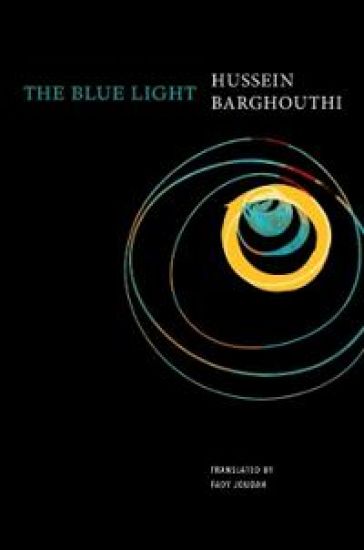
The Blue Light

The Blue Light

Hussein Barghouthi; Fady Joudah

SEAGULL BOOKS LONDON LTD
2023
sidottu
The Blue Light is an autobiographical novel in chapters and vignettes that travels through memory, time, and language. Hussein Bargouthi tells his story with Bari, a Turkish American Sufi, during Bargouthi’s years as a graduate student at the University of Washington in the late 1980s. The Blue Light has several beginnings and many returns—from Beirut’s traumatic sea to musings on color and identity, from Buddhist paths to Rajneesh disciples, from military rule to colonial insanity, from drug addiction to sacred rock. Written and lived between Arabic and English, this is a unique book whose depth is as clear as its surface. It will tempt you to dismiss it as it compels you to devour it for illumination. Merging memoir with fiction, and the hallowed with the profane, The Blue Light is a meditation on and liberation from madness—a brilliant, inimitable literary achievement.
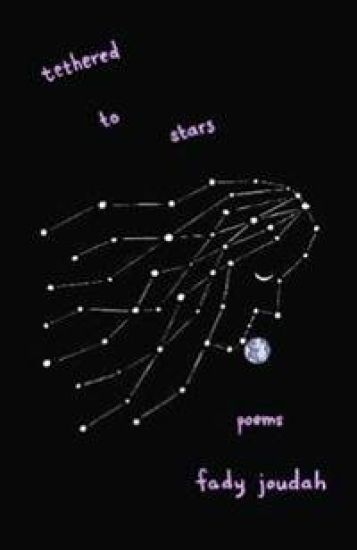
Tethered to Stars

Tethered to Stars

Fady Joudah

Milkweed Editions
2021
pokkari
A Library Journal Best Book of Poetry of 2021A collection born of polyphony and the rhythms of our cosmos—intimate in its stakes, celestial in its dreams.Tethered to Stars inhabits the deductive tongue of astronomy, the oracular throat of astrology, and the living language of loss and desire. With an analytical eye and a lyrical heart, Fady Joudah shifts deftly between the microscope, the telescope, and sometimes even the horoscope. His gaze lingers on the interior space of a lung, on a butterfly poised on a filament, on the moon temple atop Huayna Picchu, on a dismembered live oak. In each lingering, Joudah shares with readers the palimpsest of what makes us human: “We are other worms / for other silk roads.” The solemn, the humorous, the erotic, the transcendent—all of it, in Joudah’s poems, steeped in the lexicon of the natural world. “When I say honey,” says one lover, “I’m asking you whose pollen you contain.” “And when I say honey,” replies another, “you grip my sweetness / on your life, stigma and anthophile.”Teeming with life but tinged with a sublime proximity to death, Tethered to Stars is a collection that flows “between nuance and essentialization,” from one of our most acclaimed poets.
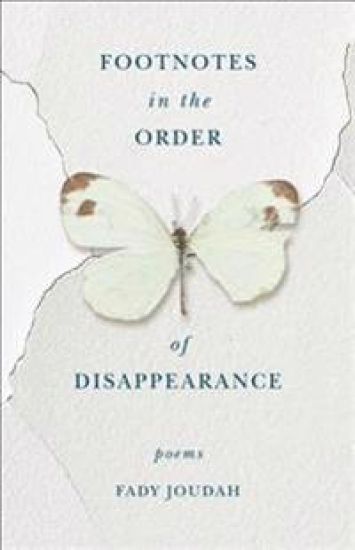
Footnotes in the Order of Disappearance

Footnotes in the Order of Disappearance

Fady Joudah

Milkweed Editions
2018
pokkari
An exquisite and humane collection set to leave its mark on American poetics of the body and the body politic. In Footnotes in the Order of Disappearance, Fady Joudah has written love poems to the lovely and unlovely, the loved and unloved. Here he celebrates moments of delight and awe with his wife, his mentors, his friends, and the beauty of the natural world. Yet he also finds tenderness for the other, the dead, and the disappeared, bringing together the language of medicine with the language of desire in images at once visceral and vulnerable. A symptomatic moon. A peach, quartered like a heart, and a heart, quartered like a peach. “I call the finding of certain things loss.” Joudah is a translator between the heart and the mind, the flesh and the more-than-flesh, the word body and the world body—and between languages, with a polyglot’s hyperresonant sensibility. In “Sagittal Views,” the book’s middle section, Joudah collaborates with Golan Haji, a Kurdish Syrian writer, to foreground the imaginative act of constructing memory and history. Together they mark the place the past occupies in the body, the cut that “runs deeper than speech.” Generous in its scope, inventive in its movements and syntax, Footnotes in the Order of Disappearance is a richly rewarding and indispensable collection.
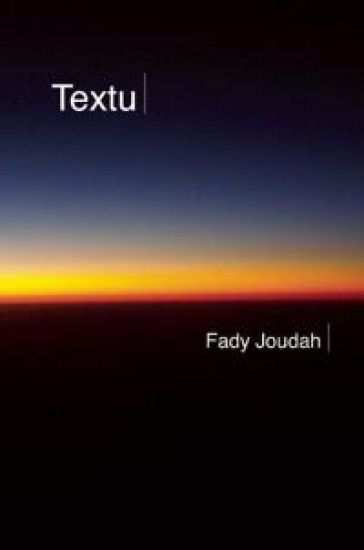
Textu

Textu

Fady Joudah

Copper Canyon Press
2015
pokkari
Joudah's poetry thrives on dramatic shifts in perspective, on continually challenging received notions.--The GuardianEmerging in the era of tweets and text messages, poet Fady Joudah has invented a new poetic form: textu. The u in textu echoes the one in haiku, and also emphasizes the intimate you. A textu poem has a single rule: be exactly 160 characters long. As theme, form, and style are wide opened, a textu reveals new possibilities and poetry in unexpected ways.TextuYour spine a river into the forestcan't tell the neurons for the treesI light & lightyou up with sound profilethreading the image habitof pleasureConscienceWhen we learn how an infant in the wombSleeps precisely in a parent's posesay with fist closedpillowing the templeWhat will becomeof the poemA collection of poems that takes its form from the text message necessarily raises similar questions about attention, and attendant questions about empathy. Each poem in Fady Joudah's Textu was composed on a smart phone's text message screen, and is "exactly 160 characters long, specific to text message parameters." Aren't text messages the epitome of what we glance at in passing, and then just as quickly forget, in that often-described stream of information and stimulation?This book is not a reductive critique of this stream, or what it is doing to us. Neither does the collection let its premise--the textu form--justify itself without inquiry, as though shaping a poem according to the strictures of a text message necessarily makes the poem interesting. Instead, the form feels central to these poems, and to what they are doing. Joudah has pointed out that for most people in the world who can't afford unlimited texting, exceeding the character count means incurring additional costs; the character is a unit of economic value. The constraint of character count in the book, then, is not only a new kind of meter. It is also a metonym for the ways in which our language and our relationships are constrained by the world in which we live: by taking their form from one born of late capitalism, the text message, what these poems implicitly suggest is that all of our communication--and all of our poems--are shaped by this system, whether we would prefer to hold our attention on this fact or not.It is fitting, then, that even as Textu asks us to consider the context in which lyric poems are made, it draws on and locates itself within the lyric tradition. The textu form shares the lyric's feel of intimate address, the "u" in "textu" suggesting an interlocutor to whom the poems are addressed. And the poems in the collection take on, among other subjects, the conventionally lyric subjects of natural beauty, loss, and desire. --Margaree Little, Kenyon Review OnlineFady Joudah is a poet, translator, and emergency room physician. His first book, The Earth in the Attic, won the 2007 Yale Series of Younger Poets competition. He lives near Houston, Texas.
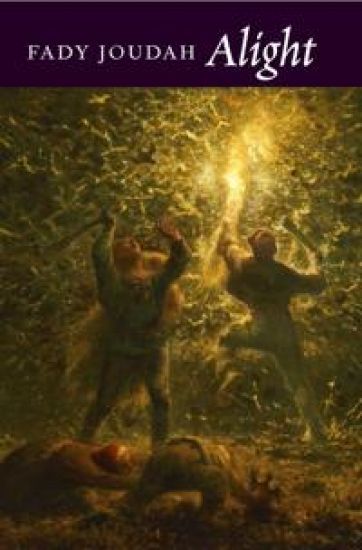
Alight

Alight

Fady Joudah

Copper Canyon Press
2013
pokkari
With anatomical precision, Joudah illustrates scenes that are at once uncanny and contemporary, be it a Bedouin woman's lavender mourning veil, the chrome doors to an alchemist's home, or the mysterious speaker in 'Smoke, ' who exits abruptly and claims to have 'scripts to write and scrolls to find, ' a testament to the duties of attending physician and displaced poet alike. In both roles, Joudah has records to keep and history to revisit, and does so beautifully.--Booklist"Joudah's poetry is rich with the influences and styles of both American and Arabic poetry. It can be personal and image-driven, by turns, as well as discursive and social. Its lyric gifts are as powerful as its narrative impulse."--Kenyon Review"Throughout Alight's carefully structured arc of movement and within its individual poems, the quotidian resides within the mythic. Joudah's is an art written out of experience, rather than about it...Poetry like Joudah's strikes a match into our dark places."--Poet LoreThe poems in Alight alternate between the estranging familial and strangely familiar, between burning and illumination. As father, husband, and physician, Fady Joudah gives children and vulnerable others voice in this hauntingly lyrical collection, where, with quiet ferociousness, one's self can be reclaimed from suffering's grip over mind and spirit.Fady Joudah is a Palestinian-American poet, translator, and physician of internal medicine. He received his medical training from the Medical College of Georgia and University of Texas, and served with Doctors Without Borders in 2002 and 2005. His first book, The Earth in the Attic, won the 2007 Yale Series of Younger Poets competition, judged by Louise Gl ck. In 2010 he received a PEN translation award for his translations of Palestinian poet Mahmoud Darwish.
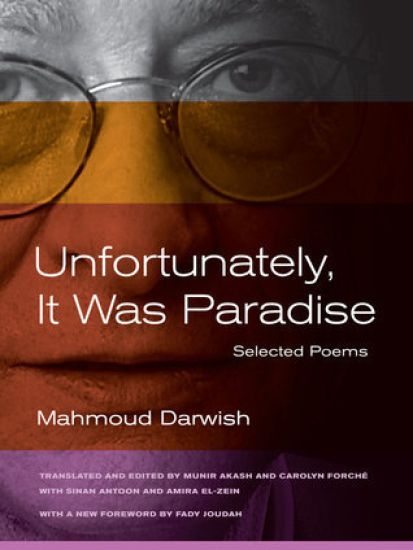
Unfortunately, It Was Paradise

Unfortunately, It Was Paradise

Mahmoud Darwish; Fady Joudah

University of California Press
2013
pokkari
Mahmoud Darwish is a literary rarity: at once critically acclaimed as one of the most important poets in the Arabic language, and beloved as the voice of his people. A legend in Palestine, his lyrics are sung by fieldworkers and schoolchildren. He has assimilated some of the world's oldest literary traditions while simultaneously struggling to open new possibilities for poetry. This collection spans Darwish's entire career, nearly four decades, revealing an impressive range of expression and form. A splendid team of translators has collaborated with the poet on these new translations, which capture Darwish's distinctive voice and spirit. Fady Joudah's foreword, new to this edition, addresses Darwish's enduring legacy following his death in 2008.
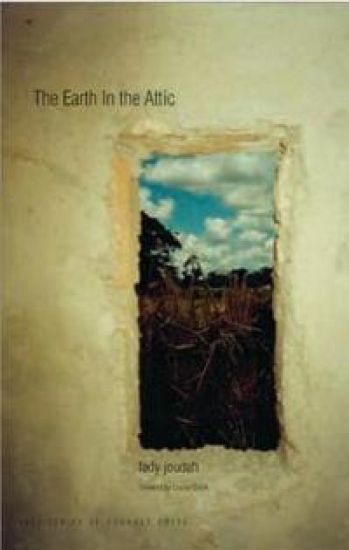
The Earth in the Attic

The Earth in the Attic

Fady Joudah; Louise Glück

Yale University Press
2008
pokkari
“The Earth in the Attic reads like a quiet storm of human emotions and experiences. . . . Joudah's poems explore loss, displacement, suffering, and longing. They drift from the personal and specific to the larger stories of peoples and nations that Joudah encounters. . . . [His] unique talent is to offer poetry readers a look at a wounded and fractured world through his eyes.”—Lena Khalaf Tuffaha, Institute for Middle East Understanding Winner of the Yale Younger Poets competition, 2007 In The Earth in the Attic, Fady Joudah, a Palestinian-American physician, explores big themes—identity, war, religion, what we hold in common—while never losing sight of the quotidian, the specific. Contest judge Louise Glück describes the poet in her Foreword as “that strange animal, the lyric poet in whom circumstance and profession . . . have compelled obsession with large social contexts and grave national dilemmas.” She finds in his poetry an incantatory quality and concludes, “These are small poems, many of them, but the grandeur of conception is inescapable. The Earth in the Attic is varied, coherent, fierce, tender; impossible to put down, impossible to forget.”