
Kirjailija
Fanny Howe
Kirjat ja teokset yhdessä paikassa: 19 kirjaa, julkaisuja vuosilta 1984-2026, suosituimpien joukossa Robeson Street. Vertaile teosten hintoja ja tarkista saatavuus suomalaisista kirjakaupoista.
19 kirjaa
Kirjojen julkaisuhaarukka 1984-2026.

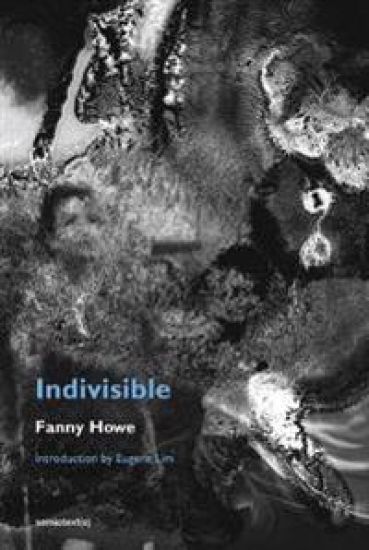
The conclusion of a radically philosophical and personal series of Fanny Howe novels animated by questions of race, spirituality, childhood, transience, resistance, and poverty. First published by Semiotexte in 2001, Indivisible concludes a radically philosophical and personal series of Fanny Howe novels animated by questions of race, spirituality, childhood, transience, wonder, resistance, and poverty. Depicting the tempestuous multiracial world of artists and activists who lived in working-class Boston during the 1960s, Indivisible begins when its narrator, Henny, locks her husband in a closet so that she might better discuss things with God. On the verge of a religious conversion, Henny attempts to make peace with the dead by telling their stories.
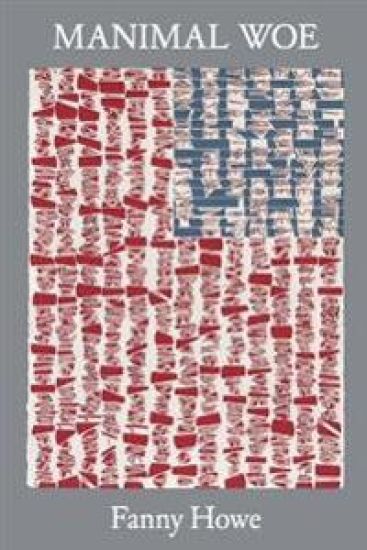
Fanny Howe's Manimal Woe maps the intersection between history and family as few books have. Through poetry, prose, and primary sources, Howe invites us on a journey with the spirit of her father, Civil Rights lawyer and professor Mark DeWolfe Howe, who died suddenly in 1967. The past, both personal and historical, is utterly present, yet just out of reach. From her ancestors' dark legacy as slave traders, to her father's work during the Civil Rights era, to her own interracial marriage and family, Fanny Howe delves deep into the heart of the mysterious and the mystical, and emerges with the questions that so rarely find their way to us.
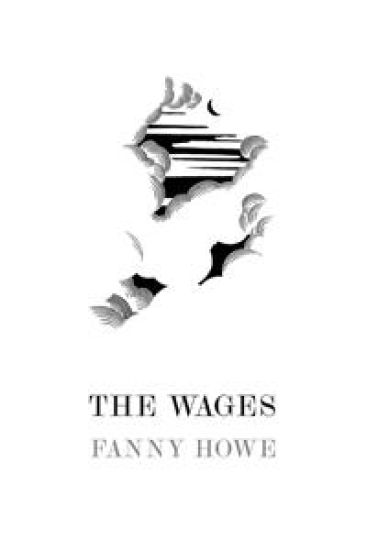
Born amidst tragedy and implacable hatreds, the young Peter McCutcheon is denied his freedom, his birthright, and the fruits of his labors by cruel masters, and by a society and history which denies the truth. The Wages is a monument to individual courage and to the ongoing injustices caused by the suppression of memories and the oppression of people. It is also a powerful document of America's entanglement in slavery and vicious myths of race. The wages of sin, according to the Bible, is death. Fanny Howe’ s novel demonstrates that the wages of hate are pain, and a cost not always borne by the perpetrator, or even the current generation.
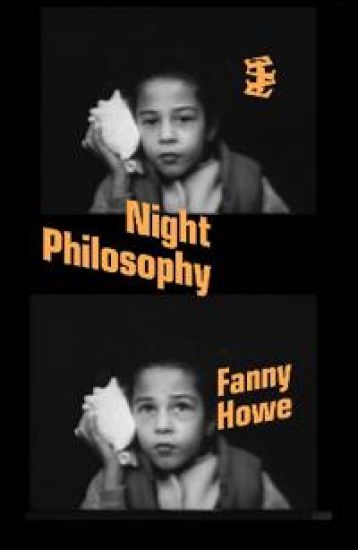
Poetry. Literary Nonfiction. NIGHT PHILOSOPHY is collected around the figure of the child, the figure of the child not just as a little person under the tutelage of adults, but also the submerged one, who knows, who is without power, who doesn't matter. The book proposes a minor politics that disperses all concentrations of power. Fanny Howe chronicles the weak and persistent, those who never assimilate at the cost of having another group to dominate. She explores transgression and the dynamics of the child as victim in a desensitized era, when victimization is the political zeitgeist.
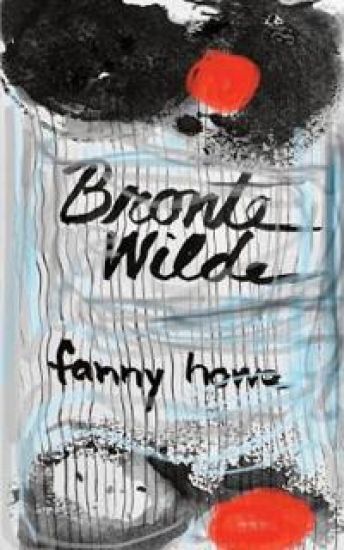
An early novel by the distinguished American writer Fanny Howe, recently revised, Bronte Wilde, set against the background of the emerging counter-culture of the early 1960s, is the tragic tale of a dispossessed young woman, in thrall to a childhood friend, who flees from the East to the West coast of the USA in a vain bid to reinvent herself.Fanny Howe, acclaimed as a poet and novelist, was born in Buffalo, NY, and brought up in Boston. For some years she was professor of literature at the University of California, San Diego, and later visiting writer/lecturer at various colleges in the USA and Ireland. She was shortlisted for the Griffin Poetry Prize in 2001 and 2005, and for the Man Booker International Prize in 2015. She has won the National Poetry Foundation Award (twice) and the American Book Award for Fiction, among others.

The newest collection from "one of America's most dazzling poets" (O, The Oprah Magazine) Set in transit even as they investigate the transitory, the cinematic poems in Love and I move like a handheld camera through the eternal, the minds of passengers, and the landscapes of Ireland and America. From this slight remove, Fanny Howe explores the edge of "pure seeing" and the worldly griefs she encounters there, cast in an otherworldly light. These poems layer pasture and tarmac, the skies above where airline passengers are compressed with their thoughts and the ground where miseries accumulate, alongside comedies, in the figures of children in a park. Love can do little but walk with the person and suddenly vanish, and that recurrent abandonment makes it necessary for these poems to find a balance between seeing and believing. For Howe, that balance is found in the Word, spoken in language, in music, in and on the wind, as invisible and continuous lyric thinking heard by the thinker alone. These are poems animated by belief and unbelief. Love and I fulfills Howe's philosophy of Bewilderment.
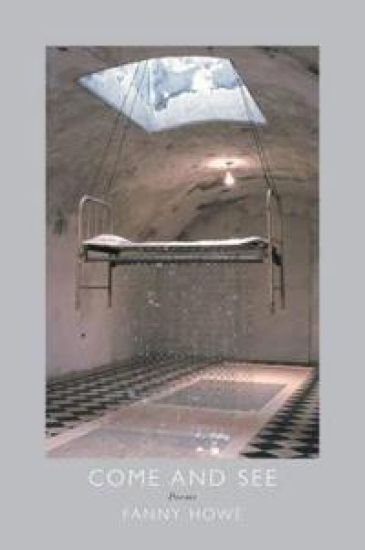
In Fanny Howe's latest collection of poems, she beckons readers towards the origins of collective knowledge but also reveals the origins of collective misconception. Her poems move from one country to another and from one archetypal position - parent, grandparent, child - to another in the wake of the 20th century. Jam-packed with startling revelations and lyrical power, Come and See urges readers to observe the world anew.

Fanny Howe's richly contemplative The Winter Sun is a collection of essays on childhood, language and meaning by one of America's most original contemporary poets. Through a collage of reflections on people, places and times that have been part of her life, she shows the origins and requirements of a vocation that has no name'. She finds proof of this in the lives of others - including Jacques Lusseyran, Scottish nun Sara Grant, Abbe Dubois, Antonia White and Emily Bronte.'
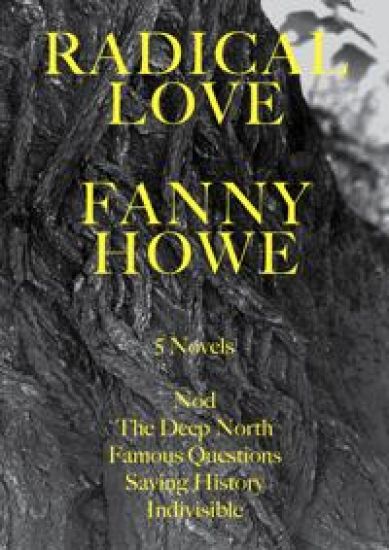
Radical Love gathers five of Fanny Howe's novels: Nod, The Deep North, Famous Questions, Saving History, and Indivisible, previously out-of-print and hard to find classics whose characters wrestle with serious political and metaphysical questions against the backdrop of urban, suburban, and rural America.
In this brilliant work that transcends genre—lyric essay, prose poem, philosophical fiction—Fanny Howe pursues her realization that keen metaphysical inquiry is radically essential to everyday life.
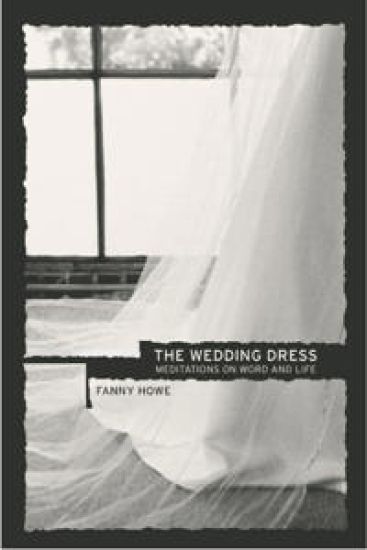
In times of great uncertainty, the urgency of the artist's task is only surpassed by its difficulty. Ours is such a time, and rising to the challenge, novelist and poet Fanny Howe suggests new and fruitful ways of thinking about both the artist's role and the condition of doubt. In these original meditations on bewilderment, motherhood, imagination, and art-making, Howe takes on conventional systems of belief and argues for another, brave way of proceeding. In the essays 'Immanence' and 'Work and Love' and those on writers such as Carmelite nun Edith Stein, French mystic Simone Weil, Thomas Hardy, and Ilona Karmel - who were particularly affected by political, philosophical, and existential events in the twentieth century - she directly engages questions of race, gender, religion, faith, language, and political thought and, in doing so, expands the field of the literary essay. A richly evocative memoir, "Seeing Is Believing", situates Howe's own domestic and political life in Boston in the late '60s and early '70s within the broader movement for survival and social justice in the face of that city's racism. Whether discussing Weil, Stein, Meister Eckhart, Saint Teresa, Samuel Beckett, or Lady Wilde, Howe writes with consummate authority and grace, turning bewilderment into a lens and a light for finding our way.
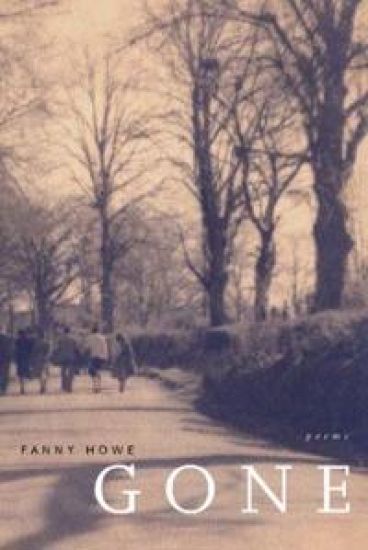
This collection of new poems by one of the most respected poets in the United States uses motifs of advance and recovery, doubt and conviction - in an emotional relation to the known world. Heralded as 'one of our most vital, unclassifiable writers' by the "Voice Literary Supplement", Fanny Howe has published more than twenty books and is the recipient of the Gold Medal for Poetry from the Commonwealth Club of California. In addition, her "Selected Poems" received the 2001 Lenore Marshall Poetry Prize for the Most Outstanding Book of Poetry Published in 2000 from the Academy of American Poets. The poems in "Gone" describe the transit of a psyche, driven by uncertainty and by love, through various stations and experiences. This volume of short poems and one lyrical essay, all written in the last five years, is broken into five parts; and the longest of these, "The Passion," consecrates the contradictions between these two emotions. "The New York Times" Book Review said, 'Howe has made a long-term project of trying to determine how we fit into God's world, and her aim is both true and marvellously free of sentimental piety'. With "Gone", readers will have the opportunity to experience firsthand Howe's continuation of that elusive and fascinating endeavor.
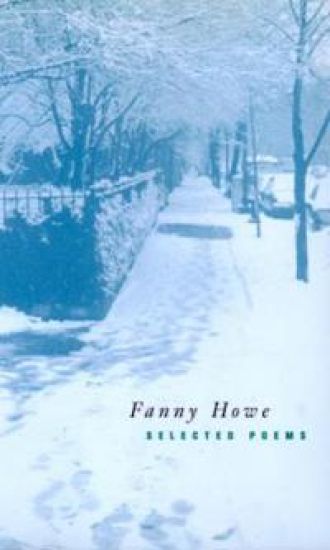
One of the best and most respected experimental poets in the United States, Fanny Howe has published more than twenty books, mostly with small presses, and this publication of her selected poems is a major event. Howe's theme is the exile of the spirit in this world and the painfully exciting, tiny margin in which movement out of exile is imaginable and perhaps possible. Her best poems are simultaneously investigations of that possibility and protests against the difficulty of salvation. Boston is the setting of some of the early poems, and Ireland, the birthplace of Howe's mother, is the home of O'Clock, a spiritually piquant series of short poems included in Selected Poems. The metaphysics and the physics of this world play off each other in these poems, and there is a toughness to Howe's unique, fertile nervousness of spirit. Her spare style makes a nest for the soul: Zero built a nest in my navel. Incurable Longing. Blood too-- From violent actions It's a nest belonging to one But zero uses it And its pleasure is its own --from The Quietist
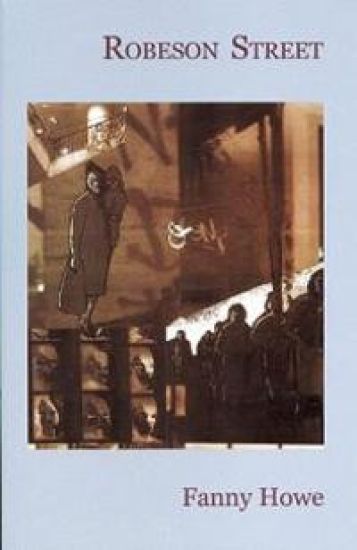
Fanny Howe, acclaimed poet and winner the 2001 Lenore Marshall Poetry Prize, explores the fears and freedoms of single motherhood in this newly reprinted collection, featuring cover art by her son, Maceo Senna.

In The Middle of Nowhere is a fictional story set in a New England town. It shows a glimpse into the meeting of the lives of four characters. Moods of landscape and weather reflect their states of mind, and incline them towards actions which represent the terminal points of character.