Kirjojen hintavertailu. Mukana 12 595 353 kirjaa ja 12 kauppaa.

Kirjailija

Federica Russo

Kirjat ja teokset yhdessä paikassa: 6 kirjaa, julkaisuja vuosilta 2008-2022, suosituimpien joukossa Causality and Causal Modelling in the Social Sciences. Vertaile teosten hintoja ja tarkista saatavuus suomalaisista kirjakaupoista.

6 kirjaa

Kirjojen julkaisuhaarukka 2008-2022.

Techno-Scientific Practices

Techno-Scientific Practices

Federica Russo

Rowman Littlefield International
2022
sidottu
In scholarly debates, as well as in everyday parlance, we tend to pull science and technology apart: science gives us theory, and technology applies it. In practice, however, science and technologies are highly intertwined. This book sets out to look at the practice of science, and to elucidate the role of technologies and of instruments in the process of knowledge production. In this exercise, it becomes evident that technologies cannot be analyzed on their own, but always in relation to us epistemic agents. Thus, the book pleads for the importance to look at the process of knowledge production in techno-scientific practices, in which there is a triad of relations to look at: us – the instruments – and the world. The book thus builds bridges between Philosophy of Science, Philosophy of Technology, and Science and Technology Studies in an unprecedent way.

Techno-Scientific Practices

Techno-Scientific Practices

Federica Russo

BLOOMSBURY PUBLISHING PLC
2022
nidottu
In scholarly debates, as well as in everyday parlance, we tend to pull science and technology apart: science gives us theory, and technology applies it. In practice, however, science and technologies are highly intertwined. This book sets out to look at the practice of science, and to elucidate the role of technologies and of instruments in the process of knowledge production. In this exercise, it becomes evident that technologies cannot be analyzed on their own, but always in relation to us epistemic agents. Thus, the book pleads for the importance to look at the process of knowledge production in techno-scientific practices, in which there is a triad of relations to look at: us – the instruments – and the world. The book thus builds bridges between Philosophy of Science, Philosophy of Technology, and Science and Technology Studies in an unprecedent way.
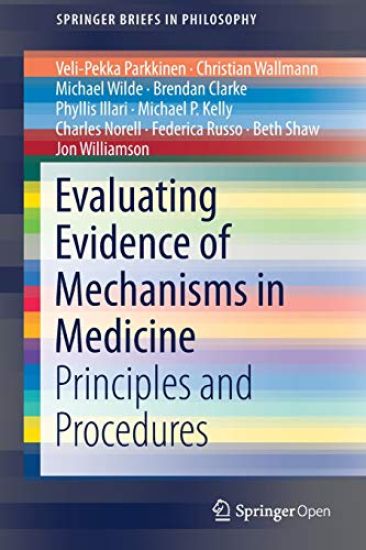
Evaluating Evidence of Mechanisms in Medicine

Evaluating Evidence of Mechanisms in Medicine

Veli-Pekka Parkkinen; Christian Wallmann; Michael Wilde; Brendan Clarke; Phyllis Illari; Michael P Kelly; Charles Norell; Federica Russo; Beth Shaw; Jon Williamson

Springer International Publishing AG
2018
nidottu
This book is open access under a CC BY license. This book is the first to develop explicit methods for evaluating evidence of mechanisms in the field of medicine. It explains why it can be important to make this evidence explicit, and describes how to take such evidence into account in the evidence appraisal process. In addition, it develops procedures for seeking evidence of mechanisms, for evaluating evidence of mechanisms, and for combining this evaluation with evidence of association in order to yield an overall assessment of effectiveness. Evidence-based medicine seeks to achieve improved health outcomes by making evidence explicit and by developing explicit methods for evaluating it. To date, evidence-based medicine has largely focused on evidence of association produced by clinical studies. As such, it has tended to overlook evidence of pathophysiological mechanisms and evidence of the mechanisms of action of interventions. The bookoffers a useful guide for all those whose work involves evaluating evidence in the health sciences, including those who need to determine the effectiveness of health interventions and those who need to ascertain the effects of environmental exposures.
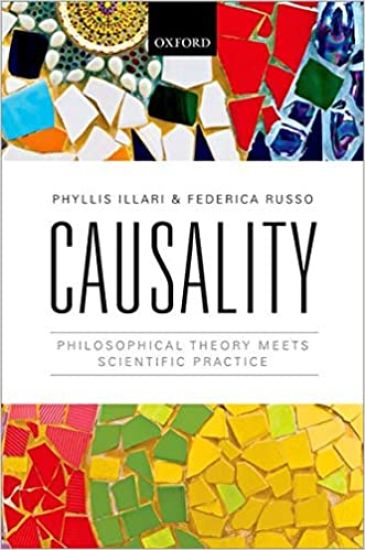
Causality

Causality

Phyllis Illari; Federica Russo

Oxford University Press
2014
sidottu
Head hits cause brain damage - but not always. Should we ban sport to protect athletes? Exposure to electromagnetic fields is strongly associated with cancer development - does that mean exposure causes cancer? Should we encourage old fashioned communication instead of mobile phones to reduce cancer rates? According to popular wisdom, the Mediterranean diet keeps you healthy. Is this belief scientifically sound? Should public health bodies encourage consumption of fresh fruit and vegetables? Severe financial constraints on research and public policy, media pressure, and public anxiety make such questions of immense current concern not just to philosophers but to scientists, governments, public bodies, and the general public. In the last decade there has been an explosion of theorizing about causality in philosophy, and also in the sciences. This literature is both fascinating and important, but it is involved and highly technical. This makes it inaccessible to many who would like to use it, philosophers and scientists alike. This book is an introduction to philosophy of causality - one that is highly accessible: to scientists unacquainted with philosophy, to philosophers unacquainted with science, and to anyone else lost in the labyrinth of philosophical theories of causality. It presents key philosophical accounts, concepts and methods, using examples from the sciences to show how to apply philosophical debates to scientific problems.
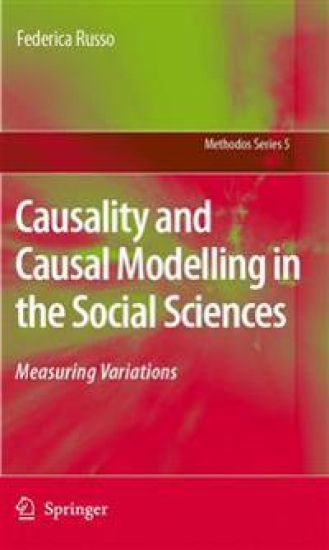
Causality and Causal Modelling in the Social Sciences
The anti-causal prophecies of last century have been disproved. Causality is neither a ‘relic of a bygone’ nor ‘another fetish of modern science’; it still occupies a large part of the current debate in philosophy and the sciences. This investigation into causal modelling presents the rationale of causality, i.e. the notion that guides causal reasoning in causal modelling. It is argued that causal models are regimented by a rationale of variation, nor of regularity neither invariance, thus breaking down the dominant Human paradigm. The notion of variation is shown to be embedded in the scheme of reasoning behind various causal models: e.g. Rubin’s model, contingency tables, and multilevel analysis. It is also shown to be latent – yet fundamental – in many philosophical accounts. Moreover, it has significant consequences for methodological issues: the warranty of the causal interpretation of causal models, the levels of causation, the characterisation of mechanisms, and the interpretation of probability. This book offers a novel philosophical and methodological approach to causal reasoning in causal modelling and provides the reader with the tools to be up to date about various issues causality rises in social science. "Dr. Federica Russo's book is a very valuable addition to a small number of relevant publications on causality and causal modelling in the social sciences viewed from a philosophical approach". (Prof. Guillaume Wunsch, Institute of Demography, University of Louvain, Belgium)
Causality and Causal Modelling in the Social Sciences

Causality and Causal Modelling in the Social Sciences

Federica Russo

Springer-Verlag New York Inc.
2008
sidottu
The anti-causal prophecies of last century have been disproved. Causality is neither a ‘relic of a bygone’ nor ‘another fetish of modern science’; it still occupies a large part of the current debate in philosophy and the sciences. This investigation into causal modelling presents the rationale of causality, i.e. the notion that guides causal reasoning in causal modelling. It is argued that causal models are regimented by a rationale of variation, nor of regularity neither invariance, thus breaking down the dominant Human paradigm. The notion of variation is shown to be embedded in the scheme of reasoning behind various causal models: e.g. Rubin’s model, contingency tables, and multilevel analysis. It is also shown to be latent – yet fundamental – in many philosophical accounts. Moreover, it has significant consequences for methodological issues: the warranty of the causal interpretation of causal models, the levels of causation, the characterisation of mechanisms, and the interpretation of probability. This book offers a novel philosophical and methodological approach to causal reasoning in causal modelling and provides the reader with the tools to be up to date about various issues causality rises in social science. "Dr. Federica Russo's book is a very valuable addition to a small number of relevant publications on causality and causal modelling in the social sciences viewed from a philosophical approach". (Prof. Guillaume Wunsch, Institute of Demography, University of Louvain, Belgium)