
Kirjailija
Felicitas D Goodman
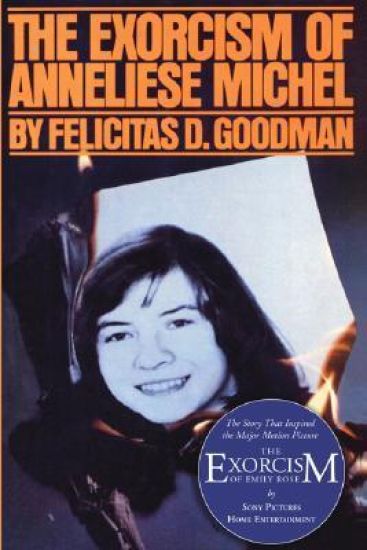
Kirjat ja teokset yhdessä paikassa: 7 kirjaa, julkaisuja vuosilta 1988-2021, suosituimpien joukossa The Exorcism of Anneliese Michel. Vertaile teosten hintoja ja tarkista saatavuus suomalaisista kirjakaupoista.
Mukana myös kirjoitusasut: Felicitas D. Goodman
7 kirjaa
Kirjojen julkaisuhaarukka 1988-2021.

EINE SCHAMANISCHE VISIONSREISE In einem au ergew hnlichen Bewusstseinszustand erlebt Felicitas Goodman die Vision ihres eigenen Todes. Dabei begibt sie sich auf eine spannende Reise in die Jenseitswelt des s dwest-amerikanischen Pueblo-Volks der Tewa. Dort trifft sie Geistwesen wie den B ffelbruder, Gro vater B r, Grillengeist und Kr henmann, die sie beratend auf ihrer Reise begleiten. Eindr cklich schildert sie ihre Reise in die Welt der Mythen und Rituale der Pr riev lker verwoben mit ihrer eigenen Nachtod-Vision. Mit sachkundiger Sensibilit t, wissenschaftlicher Sorgfalt und literarischer Lebendigkeit f hrt sie die Leserinnen und Leser in die andere Wirklichkeit einer alten Kultur und Spiritualit t ein und relativiert damit unsere vertrauten abendl ndischen Vorstellungen ber das Jenseits.
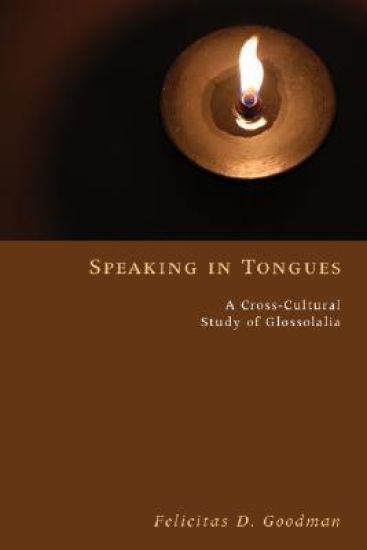
Speaking in tongues, or glossolalia, is practiced in many different religions around the world. Dismissed as meaningless gibberish by some observers, it has been the subject of only a few fragmentary studies. The work of Felicitas D. Goodman represents the first cross-cultural analysis of this enigmatic behavior, and she brings to her research an extensive background in linguistics and anthropology. Dr. Goodman's fieldwork included living with apostolic congregations in Mexico City, in the Yucatan with Maya Indians, and visits with a congregation in Hammond, Indiana. Her observations were preserved on a remarkable collection of sound recordings and films. For this book she presents a selection of conversion stories that highlights the personality structure and experiences of the speakers. A detailed analysis of the phonological and suprasegmental features of the recorded utterances show a surprising cross-cultural agreement. This led Goodman to believe that glossolalists speak the way they do because their speech behavior is modified in a particular mental state, often termed trance, into which they place themselves. In this light the glossolalia utterance is seen as an artifact of a hyperaroused mental state, or, in Chomskyan terms, as the surface structure of a nonlinguistic deep structure, that of the altered state of consciousness. Goodman describes the hyperaroused mental state as a neurophysiological phenomenon, as well as the associated patterns of movement, and the problems of waking from it. Goodman's diachronic approach yielded equally surprising data about the changes and the waning of the behavior over time. But, as she observes, ""we have barely touched the edge of a very large area of inquiry."" Her fascinating study opens a number of new avenues of research for anthropologists, such as the study of physiological states accompanying linguistic and ritual behavior. Felicitas D. Goodman (1914-2005), an internationally accredited translator and interpreter, was Associate Professor Emeritus of Anthropology at Denison University in Granville, Ohio. She also authored a number of papers on glossolalia. A religious anthropoligist, she wrote numerous books including How About Demons?; Where the Spirits Ride the Wind; and Ecstasy, Ritual, and Alternate Reality.
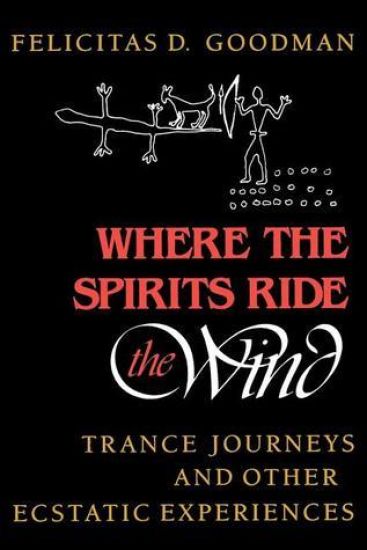
"The book is clearly written for the general reader and includes many descriptions of trance experiences. It may serve as a good introduction to the nature and appeal of the shamanic revival in modern Western cultures." —Theological Book Review " . . . a case study in experiential anthropology that offers a unique mix of autobiography, mythology, experiential research, and archaeological data to support a challenging thesis—that certain body postures may help induce specific trance states." —Shaman's Drum "This is a spellbinding and exceptionally readable book by an extraordinary woman." —Yoga Journal "And suddenly the understanding of my own vision washed over me like a mighty wave . . . For life or for death, I was committed to that mighty realm of which I was shown a brief reminder, the world where all was forever motion and emergence, that realm where the spirits ride the wind." —from the Prologue Goodman reexamines our notions of the nature of reality by studying the ritual postures of native art assumed by her subjects during trance states. For readers desiring to discover this world of ancient myths, she has included a practical guide on how to achieve such ecstatic experiences.

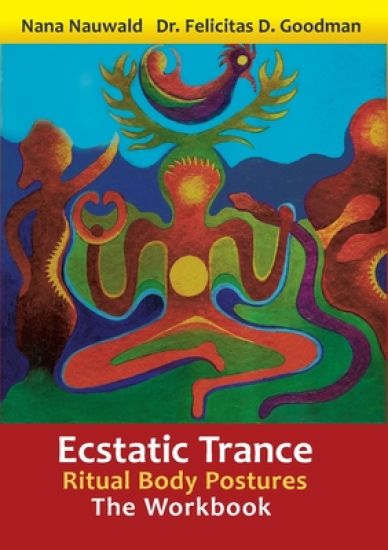
"An important book which deserves the careful attention of serious students of religion." —Religious Studies Review Anthropologist and spiritual explorer Felicitas Goodman offers a "unified field theory" of religion as human behavior. She examines ritual, the religious trance, alternate reality, ethics and moral code, and the named category designating religion.
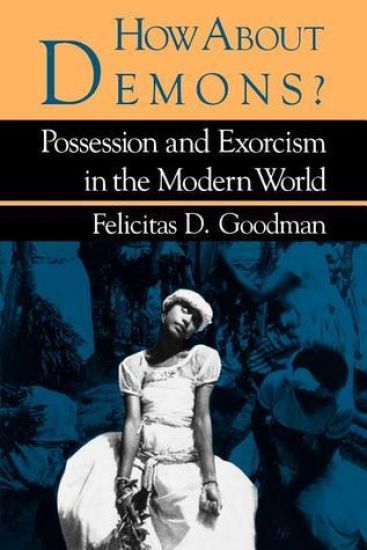
"Quite an interesting book . . . " —Religious Studies Review "It is by far superior to anything else on demons we have seen in the past few years." —The American Rationalist " . . . Goodman is to be commended for a stimulating and wide-reaching treatment of a compelling and much-debated subject." —Journal of Folklore Research Rich in detail derived from the author's fieldwork and the anthropological literature, this work paints a picture of possession as one of the usually positive and most widespread of human religious experiences. It also details the ritual of exorcism, which is applied when things go wrong.