Kirjojen hintavertailu. Mukana 12 595 353 kirjaa ja 12 kauppaa.
Kirjailija
Fernando Ramírez
Kirjat ja teokset yhdessä paikassa: 13 kirjaa, julkaisuja vuosilta 2015-2026, suosituimpien joukossa Latin American Blackberries Biology, Vol. 3. Vertaile teosten hintoja ja tarkista saatavuus suomalaisista kirjakaupoista.
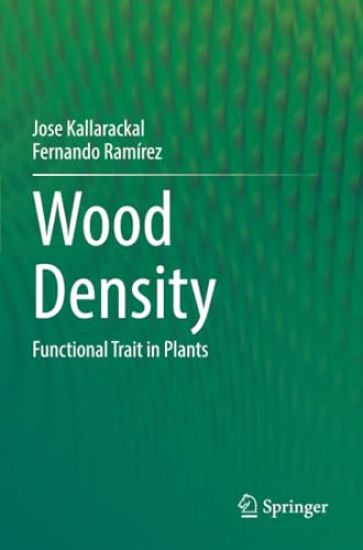
Recent research has shed light on the crucial role of wood density, a fundamental physical property, as a functional trait. This means wood density isn't just about how much a piece of wood weighs, but how it influences a plant's entire strategy for survival and growth. While variations exist between individual species, a surprising trend has emerged: the majority of this variation can be traced back to a plant's genus or even family. This strong phylogenetic signal indicates that wood density is a deeply ingrained characteristic, shaped by a plant's evolutionary history. This newfound understanding allows us to leverage wood density as a taxon-based functional trait. By considering the typical wood density of a plant group (like a genus or family), we can improve models and predictions related to various ecological and functional aspects in forests and plantations. Over the past couple of decades, scientists have been actively exploring the connections between wood density and a wide range of plant functions. Denser wood is often linked to slower growth rates, delayed reproduction, and increased mechanical strength. It also influences a plant's ability to transport water, resist death (mortality rate), and manage internal water balance (water potential). Additionally, wood density is closely tied to physiological aspects such as gas exchange and xylem hydraulic conductance, which are crucial for nutrient and water movement. Wood density is also an important parameter to determine the carbon sequestration capacity of a tree or vegetation, thus important in climate change research. This proposed book will delve into these fascinating connections, highlighting how wood density acts as a key player in shaping the lives of plants and the overall health of forest ecosystems.
This book explores two Rubus species from South America. It will address the species Rubus bogotensis Kunth and Rubus acanthophyllos Focke. It addresses aspects, such as origin, phenology, propagation, floral and fruit morphology, arthropod visitors, pollination, breeding, morphological diversity, and genetic diversity. It includes new unpublished data and results about plant phenology, flowering, insect visitors, fruit length-weight relationships, and fruit and pyrene morphology. This work includes an in-depth review of the most recently published information on the topic. The Rubus species studies are underutilized crops from Latin America. Furthermore, these species could be used in breeding programs for improvement. They can also be hybridized with other Rubus species to obtain better-quality hybrids. This book contains numerous photographs selected by the author to provide the reader with detailed information about the plant´s morphological features and arthropod visitors.
The current book focuses on Mora de Castilla (Rubus glaucus Benth.). It explores aspects, such as origin, phenology, propagation, floral and fruit morphology, arthropod visitors, pollination mechanisms, propagation methods, chromosome number, fruit development, breeding, morphological diversity, and the impact of climate change. It includes novel data about plant phenology, flowering, insect visitors, seed germination, fruit morphology, and allometric relationships. This work includes an in-depth review of the most recently published information on the topic. Mora de Castilla is an economically important fruit crop from the Andes. It has been crossed with other Rubus species due to its high yield and everbearing habit. Currently, it is an economically important plant. It has been hybridized with other Rubus species producing new and better-quality hybrids This book contains numerous photographs selected by the author to provide the reader with detailed information about the plant´s morphological features and arthropod visitors.
The current book focuses on Mora de Castilla (Rubus glaucus Benth.). It explores aspects, such as origin, phenology, propagation, floral and fruit morphology, arthropod visitors, pollination mechanisms, propagation methods, chromosome number, fruit development, breeding, morphological diversity, and the impact of climate change. It includes novel data about plant phenology, flowering, insect visitors, seed germination, fruit morphology, and allometric relationships. This work includes an in-depth review of the most recently published information on the topic. Mora de Castilla is an economically important fruit crop from the Andes. It has been crossed with other Rubus species due to its high yield and everbearing habit. Currently, it is an economically important plant. It has been hybridized with other Rubus species producing new and better-quality hybrids This book contains numerous photographs selected by the author to provide the reader with detailed information about the plant´s morphological features and arthropod visitors.
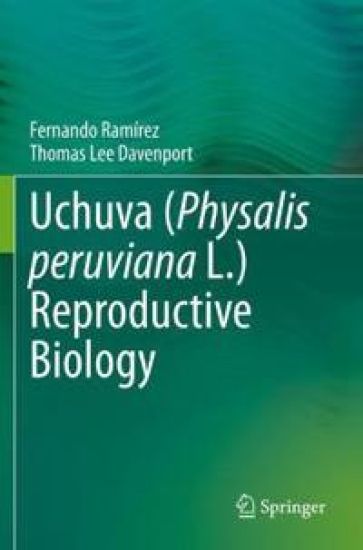
This work reviews and explores various aspects of uchuva growth and development from seed germination, vegetative growth and phyllotaxy, floral development, pollination, and pollen morphology through fruit development, properties and health benefits. Other sections of the book cover uchuva genetic diversity, hybridization, chromosome number and morphological diversity. Uchuva is economically important in most South American counties, has been growing in popularity in Central America, and is marketed in North American and Europe as the golden berry. This is the first concise reference work that delves into the fascinating world of uchuva reproductive biology. It includes the latest scientific references, some of which have been contributed by the authors of the current book. The authors have observed the plant in the field and have produced a unique photographic record to help the reader see the actual morphological structures and developmental processes in action.
This work reviews and explores various aspects of uchuva growth and development from seed germination, vegetative growth and phyllotaxy, floral development, pollination, and pollen morphology through fruit development, properties and health benefits. Other sections of the book cover uchuva genetic diversity, hybridization, chromosome number and morphological diversity. Uchuva is economically important in most South American counties, has been growing in popularity in Central America, and is marketed in North American and Europe as the golden berry. This is the first concise reference work that delves into the fascinating world of uchuva reproductive biology. It includes the latest scientific references, some of which have been contributed by the authors of the current book. The authors have observed the plant in the field and have produced a unique photographic record to help the reader see the actual morphological structures and developmental processes in action.
Not so long ago, in a place not so far away, there was born a very special dog named Umber. Wonderfully soft and covered in lovely dark and golden fur, Umber was different from the other dogs. Umber was born blind. Even though he couldn't see, his nose and ears let him learn to run and play with the other dogs. Umber was happy in his little home with his friends and things might have gone on like that forever, but one day, something incredible happened. From that moment on, his life would change forever. Join Umber and his friends as he learns that through hard work and dedication, even the impossible can be made real.
This SpringerBrief focuses on the principles of ecotourism such as relevance of the field, origin, fundamental aspects, definitions, philosophy, implications in biodiversity conservation and environmental impacts. Special emphasis is also given to the interaction between ecotourism and education and it is supported by recent publications from the authors.
This brief reviews the pollination aspects of both wild and domesticated fruit tree species in a global climate change context. It explores cross-pollination mediated by insects, vertebrates and abiotic factors, self-pollination and their global warming implications. The authors identify the link between abiotic factors such as precipitation and severe droughts in the context of tree pollination and climate change. Furthermore, pollination and conservation implications in agriculture as well as wild tree populations are explored. Emphasis has been given to fruit trees growing in tropical, subtropical and temperate environments.
?Global climate change is expected to produce increased carbon dioxide levels in the atmosphere, higher temperatures, aberrant precipitation patterns and a host of other climatic changes that would affect all life on this planet. This review article addresses the impact of climate change on fruit trees and the response of the trees to a changing environment. The response of fruit trees to increasing carbon dioxide levels, phenological changes occurring in the trees themselves due to increased temperature and the lower chilling hours especially in the temperate regions, ecophysiological adaptations of the trees to the changing climate, impact of aberrant precipitation, etc. are reviewed. There is very little data on the impact of rising CO2 levels on fruit tree performance or productivity including the temperate region. Based on a large number of observations on the phenology, there is reason to believe that the flowering and fruiting of most species have advanced by quite a few days, but with variations in different crops and on different continents. The chilling hours have also grown shorter in many regions, causing considerable reductions in yield for several species. In the tropics, there is very little work on fruit trees; however, the available data show that precipitation is a major factor regulating their phenology and yield. The ecophysiological adaptations vary from species to species, and there is a need to develop phenological models in order to estimate the impact of climate change on plant development in different regions of the world. More research is also called for to develop adaptation strategies to circumvent the negative impacts of climate change.