Kirjojen hintavertailu. Mukana 12 297 405 kirjaa ja 12 kauppaa.

Kirjailija

Ferzan Kimberly Kessler

Kirjat ja teokset yhdessä paikassa: 2 kirjaa, julkaisuja vuodelta 2009, suosituimpien joukossa Crime and Culpability. Vertaile teosten hintoja ja tarkista saatavuus suomalaisista kirjakaupoista.

2 kirjaa

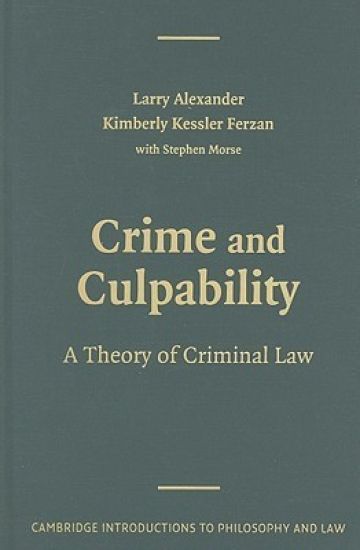
Crime and Culpability

Crime and Culpability

Larry Alexander; Ferzan Kimberly Kessler

Cambridge University Press
2009
sidottu
This book presents a comprehensive overview of what the criminal law would look like if organised around the principle that those who deserve punishment should receive punishment commensurate with, but no greater than, that which they deserve. Larry Alexander and Kimberly Kessler Ferzan argue that desert is a function of the actor's culpability, and that culpability is a function of the risks of harm to protected interests that the actor believes he is imposing and his reasons for acting in the face of those risks. The authors deny that resultant harms, as well as unperceived risks, affect the actor's desert. They thus reject punishment for inadvertent negligence as well as for intentions or preparatory acts that are not risky. Alexander and Ferzan discuss the reasons for imposing risks that negate or mitigate culpability, the individuation of crimes, and omissions.
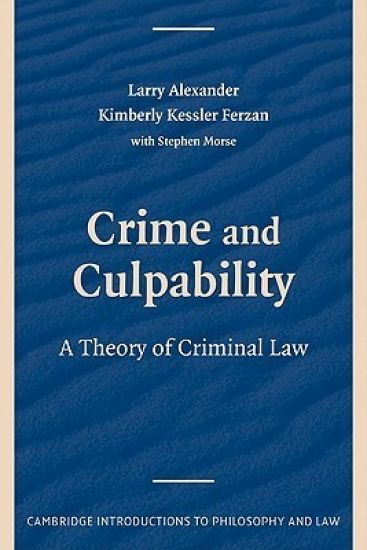
Crime and Culpability

Crime and Culpability

Larry Alexander; Ferzan Kimberly Kessler

Cambridge University Press
2009
pokkari
This book presents a comprehensive overview of what the criminal law would look like if organised around the principle that those who deserve punishment should receive punishment commensurate with, but no greater than, that which they deserve. Larry Alexander and Kimberly Kessler Ferzan argue that desert is a function of the actor's culpability, and that culpability is a function of the risks of harm to protected interests that the actor believes he is imposing and his reasons for acting in the face of those risks. The authors deny that resultant harms, as well as unperceived risks, affect the actor's desert. They thus reject punishment for inadvertent negligence as well as for intentions or preparatory acts that are not risky. Alexander and Ferzan discuss the reasons for imposing risks that negate or mitigate culpability, the individuation of crimes, and omissions.