Kirjojen hintavertailu. Mukana 12 390 323 kirjaa ja 12 kauppaa.

Kirjailija

Festus E. Obiakor

Kirjat ja teokset yhdessä paikassa: 16 kirjaa, julkaisuja vuosilta 2002-2025, suosituimpien joukossa Reducing Hate Through Multicultural Education and Transformation. Vertaile teosten hintoja ja tarkista saatavuus suomalaisista kirjakaupoista.

Mukana myös kirjoitusasut: Festus E Obiakor

16 kirjaa

Kirjojen julkaisuhaarukka 2002-2025.

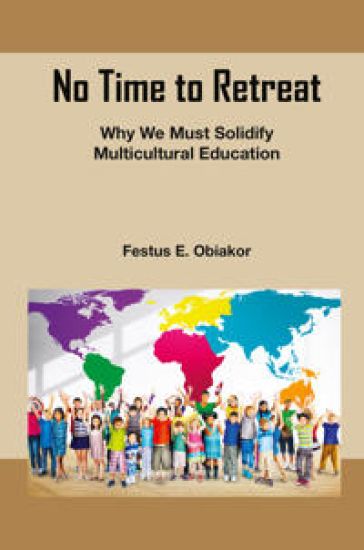
No Time to Retreat

No Time to Retreat

Festus E. Obiakor

Emerald Publishing Limited
2025
nidottu
While there is much goodness in today's world, it often feels like the world is ablaze. Across all regions, we face conflicts, wars, inhumane actions, racism, xenophobia, crimes against humanity, poverty, social injustice, and other forms of hatred. As global citizens, we seem to have forgotten the value of our multicultural world and the importance of embracing our differences. No Time to Retreat: Why We Must Solidify Multicultural Education is a book that acknowledges these challenges and advocates for leveraging our diverse thoughts, talents, strengths, and skills to create a more liveable world. Our global problems are evident in our nations, communities, organizations, institutions, schools, and among individuals. In the United States, for example, many of our multicultural gains in diversity, equity, and inclusion (DEI) are under attack; and our hard-fought freedoms are eroding. This book reminds us that we are in this together and urges us to shift paradigms, refocus our energies, and realign our vision and strategies to achieve our goals. On the whole, this book emphasizes that now is “no time to retreat” and that we must “solidify multicultural education.”
No Time to Retreat

No Time to Retreat

Festus E. Obiakor

Emerald Publishing Limited
2025
sidottu
While there is much goodness in today's world, it often feels like the world is ablaze. Across all regions, we face conflicts, wars, inhumane actions, racism, xenophobia, crimes against humanity, poverty, social injustice, and other forms of hatred. As global citizens, we seem to have forgotten the value of our multicultural world and the importance of embracing our differences. No Time to Retreat: Why We Must Solidify Multicultural Education is a book that acknowledges these challenges and advocates for leveraging our diverse thoughts, talents, strengths, and skills to create a more liveable world. Our global problems are evident in our nations, communities, organizations, institutions, schools, and among individuals. In the United States, for example, many of our multicultural gains in diversity, equity, and inclusion (DEI) are under attack; and our hard-fought freedoms are eroding. This book reminds us that we are in this together and urges us to shift paradigms, refocus our energies, and realign our vision and strategies to achieve our goals. On the whole, this book emphasizes that now is “no time to retreat” and that we must “solidify multicultural education.”
Reducing Hate Through Multicultural Education and Transformation
Reducing Hate through Multicultural Education and Transformation is a book that reminds us that we live in a complex world; and at micro and macro levels, the demography is changing and people are worried about the current state of affairs, their future, and the future of their children. At local, national, and global levels, there appears to be unsteadiness, crises, and struggles in our economies, politics, and societies. Disruptions, disasters, and deaths are visible at all spectra of our lives; and our leaders seem unready, unwilling, underprepared, and unprepared to bring us together to solve our problems for the common good. Even when we make efforts to respond to human differences and multicultural valuing, they seem to be half-baked cakes that are unready for consumption; and there continues to be visible hateful actions that devastate our sacred existence. While these hateful actions have filtered into our families, schools, communities, nation, and world, we pretend to solve them by engaging in phony community relations, fraudulent multiculturalism, and unreasonable “wokeness” to masquerade our inefficiency, inflexibility, prejudice, and jaundiced views. Reducing Hate through Multicultural Education and Transformation provides cutting edge solutions for innovative educators and leaders. Yes, hate is a controversial construct that is rarely researched, studied, and discussed in education. The reason is that teachers and related professionals are supposedly very liberal people who cannot hate their culturally and linguistically diverse (CLD) students, parents, and colleagues. And, the lingering question is, can a teacher who is always liberal be also hateful? This question seems legitimate; and, to answer it, we must look deeper into traditional presumptions. The reality is that White educators and professionals who dominate the educational profession are human-beings who live in their respective White dominated communities. As a result, they teach or lead people who they do not know very well. If not, why should CLD individuals continue to experience hateful misidentifications, misassessments, miscategorizations, misplacements, and misinstructions in school programs? And, why should disproportionate placements of CLD learners with special education needs, gifts and talents, and emotional/behavioral problems continue to be burning issues in education? This book provides outside-the-box solutions!
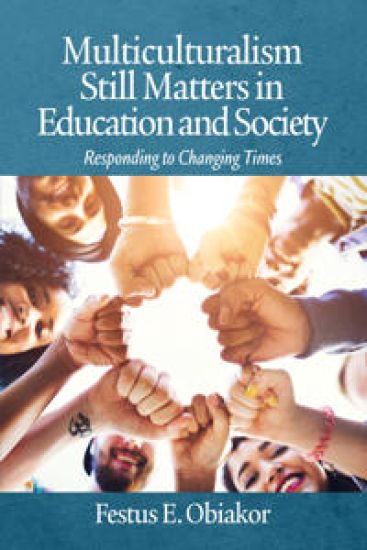
Multiculturalism Still Matters in Education and Society

Multiculturalism Still Matters in Education and Society

Festus E. Obiakor

Emerald Publishing Inc
2021
sidottu
Today, we live in changing times and how we respond to these changes creates some uneasiness in our daily lives. Some of these changes reflect demographic shifts in power and paradigm in the United States, while others reflect the reckless assumption that our problems are insurmountable. Multiculturalism Still Matters in Education and Society: Responding to Changing Times urges us to collaborate, consult, and cooperate for our common good. It rightly emphasizes that multiculturalism will always matter in whatever we do in our complex world. In addition, it challenges us to continue to see differences as strengths that must be valued in dealing with our students, educational professionals, leaders, and communities. Finally, this book inspires us to expand our discourses, create avenues for “hearty” conversations, look for ways to make invisible voices visible, and help culturally and linguistically diverse (CLD) and vulnerable populations to maximize their fullest potential.
Multiculturalism Still Matters in Education and Society

Multiculturalism Still Matters in Education and Society

Festus E. Obiakor

Emerald Publishing Inc
2021
nidottu
Today, we live in changing times and how we respond to these changes creates some uneasiness in our daily lives. Some of these changes reflect demographic shifts in power and paradigm in the United States, while others reflect the reckless assumption that our problems are insurmountable. Multiculturalism Still Matters in Education and Society: Responding to Changing Times urges us to collaborate, consult, and cooperate for our common good. It rightly emphasizes that multiculturalism will always matter in whatever we do in our complex world. In addition, it challenges us to continue to see differences as strengths that must be valued in dealing with our students, educational professionals, leaders, and communities. Finally, this book inspires us to expand our discourses, create avenues for “hearty” conversations, look for ways to make invisible voices visible, and help culturally and linguistically diverse (CLD) and vulnerable populations to maximize their fullest potential.
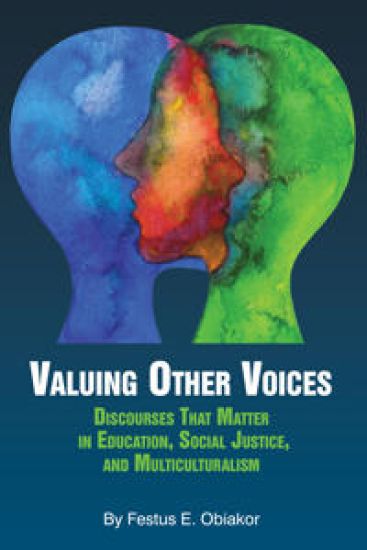
Valuing Other Voices

Valuing Other Voices

Festus E. Obiakor

Information Age Publishing
2020
sidottu
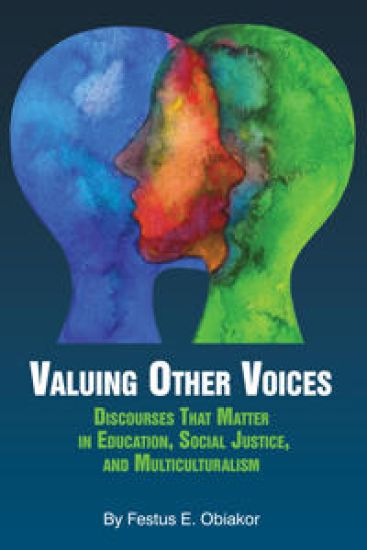
How can we build an organization or institution that treats people equitably? How do we develop conscientious communities where people’s voices are heard and not silenced? How can we go from half-truths and alternative facts to real truths? How can we reduce or eliminate societal ills such as racism, ethnocentrism, xenophobia, religious dogmatism, sexism, homophobia, tribalism, colonial mentality, slave mentality, Messiah Complex, and terrorism? How can we get into the mind’s eyes of others and “treat them as we would like to be treated?” How do we create environments that stimulate fearless or “hearty” conversations between peoples? How do we learn from history or other people’s experiences to make functional goal-directed decisions? And, how can we inspire people to value their differences and similarities as they think and talk in our global village? These are questions that deserve answers in our respective communities, states, nations, and world. This book, Valuing Other Voices: Discourses That Matter in Education, Social Justice, and Multiculturalism opens doors of communication for all people willing to create a community, state, nation, or world of harmony.
Valuing Other Voices

Valuing Other Voices

Festus E. Obiakor

Information Age Publishing
2020
nidottu
How can we build an organization or institution that treats people equitably? How do we develop conscientious communities where people’s voices are heard and not silenced? How can we go from half-truths and alternative facts to real truths? How can we reduce or eliminate societal ills such as racism, ethnocentrism, xenophobia, religious dogmatism, sexism, homophobia, tribalism, colonial mentality, slave mentality, Messiah Complex, and terrorism? How can we get into the mind’s eyes of others and “treat them as we would like to be treated?” How do we create environments that stimulate fearless or “hearty” conversations between peoples? How do we learn from history or other people’s experiences to make functional goal-directed decisions? And, how can we inspire people to value their differences and similarities as they think and talk in our global village? These are questions that deserve answers in our respective communities, states, nations, and world. This book, Valuing Other Voices: Discourses That Matter in Education, Social Justice, and Multiculturalism opens doors of communication for all people willing to create a community, state, nation, or world of harmony.
Life Lessons of African Proverbs

Life Lessons of African Proverbs

Festus E Obiakor

Cissus World Press
2017
nidottu
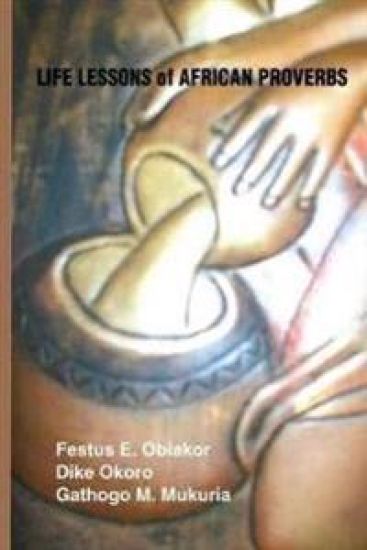
African folklore, narratives, idiomatic expressions, and cultures are weaved into short sentences that are rich with wisdom. The primary goal of this book is to disseminate knowledge and share the rich culture of Africa, one does not have to be African to appreciate the creative language at play in this book. Readers are encouraged to use the wisdom embedded in these proverbs to transform their lives and the lives of their loved ones and friends.
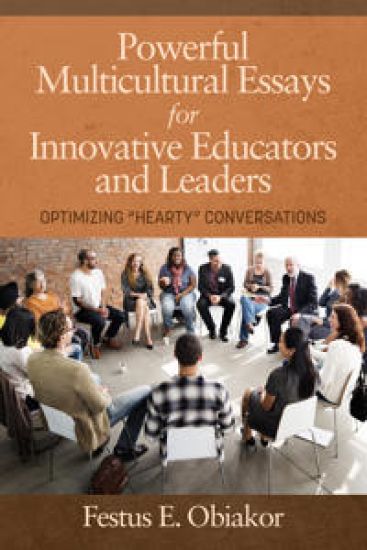
Powerful Multicultural Essays For Innovative Educators and Leaders
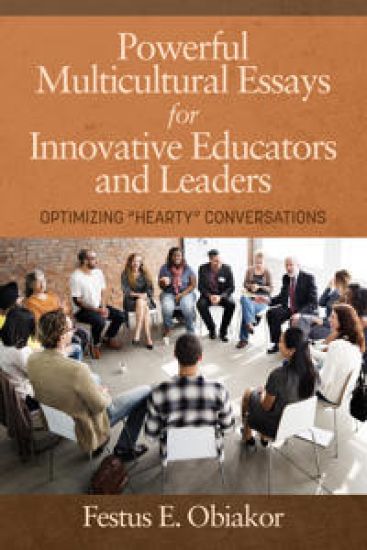
Powerful Multicultural Essays for innovative Educators and Leaders is written for this day, age, and time. We need to tear down our walls of hatred to optimize “hearty” conversations. In addition, we need to challenge ourselves and our institutions to do the right things. We must revisit our inner spiritual connectivity--- there are biblical allusions that could buttress our understanding about multiculturalism. For instance, human valuing is the engine behind the Parable of the Good Samaritan and the Parable of the Sower. Should our goal not be to sow good seeds that bloom to be beautiful flowers and even grow to be strong trees? Should our actions be divorced from supporting those who are different from us? Reading this book will help us to answer these questions. As often as possible, we must be action-oriented and practical as we arrive at our central hub and enhance our potential or existential collaboration, consultation, and cooperation at all levels of our human interactions.This is a book for students of life, which means all of us! We are all learners whether we are students, teachers, community leaders, university professors and leaders, researchers, scholars, politicians, to mention a few. We all need to read this book to optimize conversations, create open and healthy environments, and advance our nations and world. The days for hiding from discourses are over! We can no longer sweep our problems and actions under the rug! And, we cannot divorce ourselves from our own realities. Hopefully, this book will yield remarkable fruitful dividends with regard to human valuing.
Powerful Multicultural Essays For Innovative Educators and Leaders
Powerful Multicultural Essays for innovative Educators and Leaders is written for this day, age, and time. We need to tear down our walls of hatred to optimize “hearty” conversations. In addition, we need to challenge ourselves and our institutions to do the right things. We must revisit our inner spiritual connectivity--- there are biblical allusions that could buttress our understanding about multiculturalism. For instance, human valuing is the engine behind the Parable of the Good Samaritan and the Parable of the Sower. Should our goal not be to sow good seeds that bloom to be beautiful flowers and even grow to be strong trees? Should our actions be divorced from supporting those who are different from us? Reading this book will help us to answer these questions. As often as possible, we must be action-oriented and practical as we arrive at our central hub and enhance our potential or existential collaboration, consultation, and cooperation at all levels of our human interactions.This is a book for students of life, which means all of us! We are all learners whether we are students, teachers, community leaders, university professors and leaders, researchers, scholars, politicians, to mention a few. We all need to read this book to optimize conversations, create open and healthy environments, and advance our nations and world. The days for hiding from discourses are over! We can no longer sweep our problems and actions under the rug! And, we cannot divorce ourselves from our own realities. Hopefully, this book will yield remarkable fruitful dividends with regard to human valuing.
Multicultural Education for Learners with Special Needs in the Twenty-First Century
Multicultural Education for Learners with Special Needs in the Twenty-First Century provides general and special educators innovative information that address the road blocks to effective practice such that diverse learners will be appropriately; identified, assessed, categorized, placed and instructed. The book provides those who instruct diverse learners comprehensive, creative and best practice chapters by scholars in the area of multicultural education. The book is an important addition to the education of multicultural learners with special needs as it provides much needed direction for the effective instructional practices for today’s diverse students. The book can be used as current best practices for special and general educators as well as school administrators.
Multicultural Education for Learners with Special Needs in the Twenty-First Century
Multicultural Education for Learners with Special Needs in the Twenty-First Century provides general and special educators innovative information that address the road blocks to effective practice such that diverse learners will be appropriately; identified, assessed, categorized, placed and instructed. The book provides those who instruct diverse learners comprehensive, creative and best practice chapters by scholars in the area of multicultural education. The book is an important addition to the education of multicultural learners with special needs as it provides much needed direction for the effective instructional practices for today’s diverse students. The book can be used as current best practices for special and general educators as well as school administrators.
Foreign-Born African Americans

Foreign-Born African Americans

Festus E Obiakor; Patrick A Grant

Nova Biomedical
2002
sidottu
In this book immigrant minorities from Africa and the Caribbean tell their unique stories. These 'new' Americans recount their travels in the American maze, and thus, allow their voices to be heard. Who really cares for these voices? They do care and Americans should care! Foreign born African Americans frequently find themselves in precarious situations. They confront three intriguing questions: How Black are they? How much racism do they endure? How do they survive in spite of the odds? In reality, they are Blacks who are Black enough to encounter problems that other Blacks in America experience. However, they also understand that they must succeed in a competitive complex society like America. On the one hand, they are grateful to be in America; but on the other hand, they wonder why they must cross so many rubicons to achieve their goals. This book is unique! Never before have voices of Africans (from Africa and the Caribbean) been heard in this manner!! These voices provide multidimensional cases for scholars, educators, program planners, community leaders, and politicians. This book could be a required text for courses in international/global education, intercultural education, and multicultural education. It could also be a supplementary text for courses in general education and African/African American Studies. In fact, it should be on the reading list of every American interested in making our world a better place to live.