Kirjojen hintavertailu. Mukana 12 329 876 kirjaa ja 12 kauppaa.

Kirjailija

Fiona McDermott

Kirjat ja teokset yhdessä paikassa: 8 kirjaa, julkaisuja vuosilta 2003-2024, suosituimpien joukossa Entanglement. Vertaile teosten hintoja ja tarkista saatavuus suomalaisista kirjakaupoista.

8 kirjaa

Kirjojen julkaisuhaarukka 2003-2024.

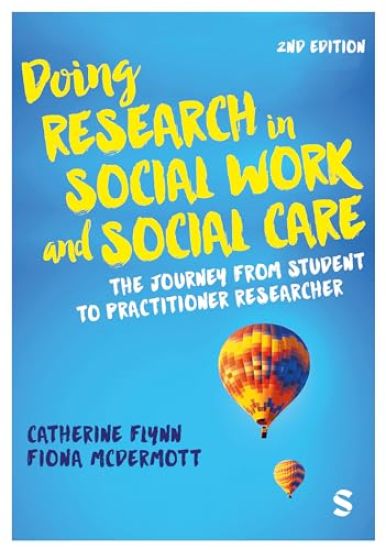
Doing Research in Social Work and Social Care

Doing Research in Social Work and Social Care

Catherine Flynn; Fiona McDermott

SAGE PUBLICATIONS LTD
2024
sidottu
Do you want to understand how best to embrace the challenges, surprises, and successes of research? This book acts as a journey through research to empower you to make the necessary connections between research and professional practice. From understanding the concepts of research and gathering data, to guiding you in writing it up and achieving positive change, this book will give you: · a confident start with clarity on core concepts and getting it right ethically. · an insight into diversity in approaches, the impact of context, and how to overcome problems. · A better understanding of the realities of social work and social care practice. · Step-by-step guidance at each point in the research process Equipped with a wealth of case studies and real-world examples to help you put your knowledge into practice, this book is the perfect companion for students who want to transition to successful practitioner researchers.
Doing Research in Social Work and Social Care

Doing Research in Social Work and Social Care

Catherine Flynn; Fiona McDermott

SAGE PUBLICATIONS LTD
2024
nidottu
Do you want to understand how best to embrace the challenges, surprises, and successes of research? This book acts as a journey through research to empower you to make the necessary connections between research and professional practice. From understanding the concepts of research and gathering data, to guiding you in writing it up and achieving positive change, this book will give you: · a confident start with clarity on core concepts and getting it right ethically. · an insight into diversity in approaches, the impact of context, and how to overcome problems. · A better understanding of the realities of social work and social care practice. · Step-by-step guidance at each point in the research process Equipped with a wealth of case studies and real-world examples to help you put your knowledge into practice, this book is the perfect companion for students who want to transition to successful practitioner researchers.
Complexity Theory for Social Work Practice

Complexity Theory for Social Work Practice

Fiona McDermott; Kerry Brydon; Alex Haynes; Felicity Moon

Springer International Publishing AG
2024
nidottu
This textbook provides a grounding in complexity theory, demonstrating how it can influence and shape social work interventions in policy, management, and practice, as well as forming an epistemological and methodological basis for research. It provides a contemporary theoretical basis for social work practice, equipping social workers to work in a 21st-Century world. The authors argue that the history of social work demonstrates the profession's engagement with the social and structural problems of each era since its emergence 150 years ago. However, in the 21st Century, such things as globalisation, the COVID-19 pandemic, and climate change have highlighted that existing theories and practice models are insufficient to the task of working with the complicatedness of contemporary life in a fast-changing world. Distilling the central tenets of Complexity Theory and the notion of complex adaptive systems in partnership with pragmatism, the book provides practice perspectives and guidelines which build on social work's enduring commitment to understanding the person-in-context. The recognition that social workers require conceptual and theoretical agility to work across micro, meso and macro 'levels' remains central, but the argument is made that their focus and practice must primarily be at the meso level. The authorship of combined academic and practice expertise enables such perspectives to be brought to life through the theoretical and practical analysis of conceptual and 'real-world' challenges. The book consists of 13 chapters organized in three sections:Part I: Complex Practice in a Complex WorldPart II: Thinking Complexity in PracticePart III: Thinking Complexity in Public Policy, Research and EducationComplexity Theory for Social Work Practice encourages social workers to 'think complexity' and 'act pragmatically'. It is intended for final-year social work students; academics and researchers working in a range of disciplines, primarily in the social work field but also in the areas of sociology, psychology and anthropology; and practitioners in policy, research, management and practice settings.
Complexity Theory for Social Work Practice

Complexity Theory for Social Work Practice

Fiona McDermott; Kerry Brydon; Alex Haynes; Felicity Moon

Springer International Publishing AG
2023
sidottu
This textbook provides a grounding in complexity theory, demonstrating how it can influence and shape social work interventions in policy, management, and practice, as well as forming an epistemological and methodological basis for research. It provides a contemporary theoretical basis for social work practice, equipping social workers to work in a 21st-Century world. The authors argue that the history of social work demonstrates the profession's engagement with the social and structural problems of each era since its emergence 150 years ago. However, in the 21st Century, such things as globalisation, the COVID-19 pandemic, and climate change have highlighted that existing theories and practice models are insufficient to the task of working with the complicatedness of contemporary life in a fast-changing world. Distilling the central tenets of Complexity Theory and the notion of complex adaptive systems in partnership with pragmatism, the book provides practice perspectives and guidelines which build on social work's enduring commitment to understanding the person-in-context. The recognition that social workers require conceptual and theoretical agility to work across micro, meso and macro 'levels' remains central, but the argument is made that their focus and practice must primarily be at the meso level. The authorship of combined academic and practice expertise enables such perspectives to be brought to life through the theoretical and practical analysis of conceptual and 'real-world' challenges. The book consists of 13 chapters organized in three sections:Part I: Complex Practice in a Complex WorldPart II: Thinking Complexity in PracticePart III: Thinking Complexity in Public Policy, Research and EducationComplexity Theory for Social Work Practice encourages social workers to 'think complexity' and 'act pragmatically'. It is intended for final-year social work students; academics and researchers working in a range of disciplines, primarily in the social work field but also in the areas of sociology, psychology and anthropology; and practitioners in policy, research, management and practice settings.
Inside Group Work

Inside Group Work

Fiona McDermott

Routledge
2021
sidottu
A valuable guide to working with groups for a variety of purposes in the human services. Its distinctive strength is the focus on 'thinking group' and on theory informed reflective practice. Grounded throughout in the rich experiences of 'group insiders', the book is both engaging and informative. Definitely a recommended resource for practitioners, students and educators.Ros Thorpe, Professor of Social Work and Community Welfare, James Cook UniversityGroup facilitation is a core skill for social workers, community workers, youth workers, health workers and psychologists. Inside Group Work offers a guide to group work theory and practice in a variety of human service settings.Drawing on thought-provoking contributions from experienced group leaders and participants, Fiona McDermott outlines the various ways in which group work can be used. Focusing particularly on psychoeducation groups, psychotherapy groups, mutual aid groups and social action groups, she explains that the purpose of the group should determine the form it takes.The key facilitation skills of listening, observing, intervening and responding under pressure are outlined. But McDermott argues these skills by themselves are not sufficient. Rather, facilitators need to 'think group' in order to be most effective.McDermott also explains the various stages groups go through, and looks at ways in which group facilitators can handle typical problems. She explores issues of power and leadership, and also the influence of gender, sexuality, ethnicity and age.
Social Work and the Body

Social Work and the Body

N. Cameron; Fiona McDermott

Red Globe Press
2007
nidottu
This book brings sociological and neuroscientific perspectives on the body together to inform a new understanding of person-in-environment. It offers important new ways of working with people in various social work and social care settings from child protection to aged care, mental health and work with drug and alcohol use.
Inside Group Work

Inside Group Work

Fiona McDermott

Allen Unwin
2003
nidottu
A valuable guide to working with groups for a variety of purposes in the human services. Its distinctive strength is the focus on 'thinking group' and on theory informed reflective practice. Grounded throughout in the rich experiences of 'group insiders', the book is both engaging and informative. Definitely a recommended resource for practitioners, students and educators.Ros Thorpe, Professor of Social Work and Community Welfare, James Cook UniversityGroup facilitation is a core skill for social workers, community workers, youth workers, health workers and psychologists. Inside Group Work offers a guide to group work theory and practice in a variety of human service settings.Drawing on thought-provoking contributions from experienced group leaders and participants, Fiona McDermott outlines the various ways in which group work can be used. Focusing particularly on psychoeducation groups, psychotherapy groups, mutual aid groups and social action groups, she explains that the purpose of the group should determine the form it takes.The key facilitation skills of listening, observing, intervening and responding under pressure are outlined. But McDermott argues these skills by themselves are not sufficient. Rather, facilitators need to 'think group' in order to be most effective.McDermott also explains the various stages groups go through, and looks at ways in which group facilitators can handle typical problems. She explores issues of power and leadership, and also the influence of gender, sexuality, ethnicity and age.