Kirjojen hintavertailu. Mukana 12 390 323 kirjaa ja 12 kauppaa.

Kirjailija

Fiona Paisley

Kirjat ja teokset yhdessä paikassa: 9 kirjaa, julkaisuja vuosilta 1996-2019, suosituimpien joukossa Loving Protection?. Vertaile teosten hintoja ja tarkista saatavuus suomalaisista kirjakaupoista.

9 kirjaa

Kirjojen julkaisuhaarukka 1996-2019.

Writing Transnational History

Writing Transnational History

Fiona Paisley; Pamela Scully

Bloomsbury Academic
2019
nidottu
Over the past two decades, transnational history has become an established term describing approaches to the writing of world or global history that emphasise movement, dynamism and diversity. This book investigates the emergence of the ‘transnational’ as an approach, its limits, and parameters.It focuses particular attention on the contributions of postcolonial and feminist studies in reformulating transnational historiography as a move beyond the national to one focusing on oceans, the movement of people, and the contributions of the margins. It ends with a consideration of developing approaches such as translocalism. The book considers the new kinds of history that need to be written now that the transnational perspective has become widespread. Providing an accessible and engaging chronology of the field, it will be key reading for students of historiography and world history.
Writing Transnational History

Writing Transnational History

Fiona Paisley; Pamela Scully

Bloomsbury Academic
2019
sidottu
Over the past two decades, transnational history has become an established term describing approaches to the writing of world or global history that emphasise movement, dynamism and diversity. This book investigates the emergence of the ‘transnational’ as an approach, its limits, and parameters.It focuses particular attention on the contributions of postcolonial and feminist studies in reformulating transnational historiography as a move beyond the national to one focusing on oceans, the movement of people, and the contributions of the margins. It ends with a consideration of developing approaches such as translocalism. The book considers the new kinds of history that need to be written now that the transnational perspective has become widespread. Providing an accessible and engaging chronology of the field, it will be key reading for students of historiography and world history.
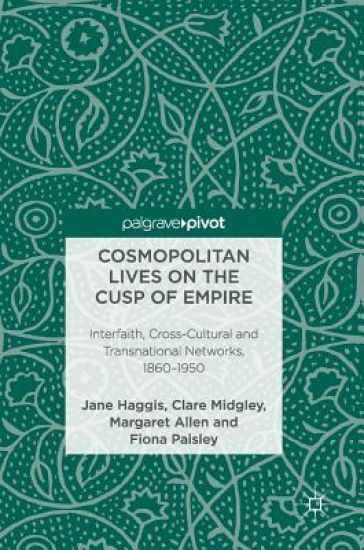
Cosmopolitan Lives on the Cusp of Empire

Cosmopolitan Lives on the Cusp of Empire

Jane Haggis; Clare Midgley; Margaret Allen; Fiona Paisley

Springer International Publishing AG
2018
nidottu
This book looks back to the period 1860 to 1950 in order to grasp how alternative visions of amity and co-existence were forged between people of faith, both within and resistant to imperial contact zones. It argues that networks of faith and friendship played a vital role in forging new vocabularies of cosmopolitanism that presaged the post-imperial world of the 1950s. In focussing on the diverse cosmopolitanisms articulated within liberal transnational networks of faith it is not intended to reduce or ignore the centrality of racisms, and especially hegemonic whiteness, in underpinning the spaces and subjectivities that these networks formed within and through. Rather, the book explores how new forms of cosmopolitanism could be articulated despite the awkward complicities and liminalities inhabited by individuals and characteristic of cosmopolitan thought zones.
Cosmopolitan Lives on the Cusp of Empire

Cosmopolitan Lives on the Cusp of Empire

Jane Haggis; Clare Midgley; Margaret Allen; Fiona Paisley

Springer International Publishing AG
2017
sidottu
This book looks back to the period 1860 to 1950 in order to grasp how alternative visions of amity and co-existence were forged between people of faith, both within and resistant to imperial contact zones. It argues that networks of faith and friendship played a vital role in forging new vocabularies of cosmopolitanism that presaged the post-imperial world of the 1950s. In focussing on the diverse cosmopolitanisms articulated within liberal transnational networks of faith it is not intended to reduce or ignore the centrality of racisms, and especially hegemonic whiteness, in underpinning the spaces and subjectivities that these networks formed within and through. Rather, the book explores how new forms of cosmopolitanism could be articulated despite the awkward complicities and liminalities inhabited by individuals and characteristic of cosmopolitan thought zones.
Across the World with the Johnsons

Across the World with the Johnsons

Prue Ahrens; Lamont Lindstrom; Fiona Paisley

Routledge
2016
nidottu
During the interwar period Osa and Martin Johnson became famous for their films that brought exotic and far-off locations to the American cinema. Before the advent of mass tourism and television, their films played a major part in providing the means by which large audiences in the US and beyond became familiar with distant and 'wild' places across the world. Taking the celebrity of the Johnsons as its case study, this book investigates the influence of these new forms of visual culture, showing how they created their own version of America's imperial drama. By representing themselves as benevolent figures engaged in preserving on film the world's last wild places and peoples, the Johnsons' films educated US audiences about their apparent destiny to rule, contributing significantly to the popularity of empire. Bringing together research in the fields of film and politics - including gender and empire, historical anthropology, photography and visual studies - this book provides a comprehensive evaluation of the Johnsons, their work and its impact. It considers the Johnsons as a celebrity duo, their status as national icons, how they promoted themselves and their expeditions, and how their careers informed American expansionism, thus providing the first scholarly investigation of this remarkable couple and their extensive output over nearly three decades and across several continents.
Across the World with the Johnsons

Across the World with the Johnsons

Prue Ahrens; Lamont Lindstrom; Fiona Paisley

Ashgate Publishing Limited
2013
sidottu
During the interwar period Osa and Martin Johnson became famous for their films that brought exotic and far-off locations to the American cinema. Before the advent of mass tourism and television, their films played a major part in providing the means by which large audiences in the US and beyond became familiar with distant and 'wild' places across the world. Taking the celebrity of the Johnsons as its case study, this book investigates the influence of these new forms of visual culture, showing how they created their own version of America's imperial drama. By representing themselves as benevolent figures engaged in preserving on film the world's last wild places and peoples, the Johnsons' films educated US audiences about their apparent destiny to rule, contributing significantly to the popularity of empire. Bringing together research in the fields of film and politics - including gender and empire, historical anthropology, photography and visual studies - this book provides a comprehensive evaluation of the Johnsons, their work and its impact. It considers the Johnsons as a celebrity duo, their status as national icons, how they promoted themselves and their expeditions, and how their careers informed American expansionism, thus providing the first scholarly investigation of this remarkable couple and their extensive output over nearly three decades and across several continents.
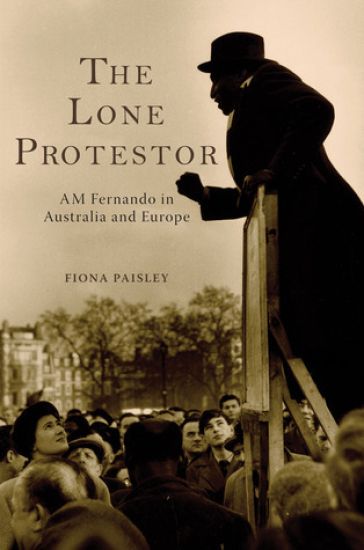
The Lone Protestor

The Lone Protestor

Fiona Paisley

Aboriginal Studies Press
2012
nidottu
The late 1920s marked an extraordinary protest by an Australian Aboriginal man on the streets of London. Standing outside Australia House, cloaked in tiny skeletons, Anthony Martin Fernando condemned the failure of British rule in his country. Drawn from an extensive search in archives from Australia and Europe, this is the first full-length study of Fernando's life and the self-professed mission that lasted half his adult life. A moving account, it chronicles the various forms of action taken by Fernando--from pamphlets on the streets of Rome to speeches in the famous Speakers' Corner in Hyde Park--and brings to light previously unknown details about his extraordinary life in Australia and overseas.
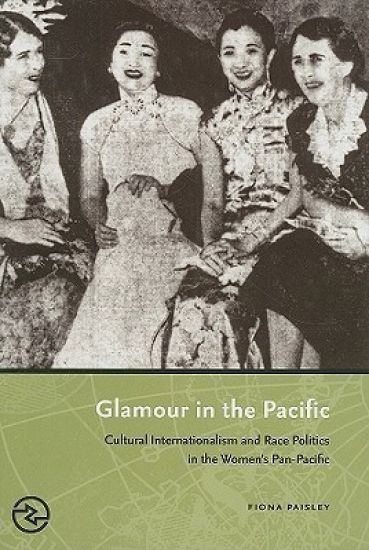
Glamour in the Pacific

Glamour in the Pacific

Fiona Paisley

University of Hawai'i Press
2009
sidottu
Since its inception in 1928, the Pan-Pacific Women's Association (PPWA) has witnessed and contributed to enormous changes in world and Pacific history. Operating out of Honolulu, this women's network established a series of conferences that promoted social reform and an internationalist outlook through cultural exchange. For the many women attracted to the project - from China, Japan, the Pacific Islands, and the major settler colonies of the region - the association's vision was enormously attractive, despite the fact that as individuals and national representatives they remained deeply divided by colonial histories. ""Glamour in the Pacific"" tells this multifaceted story by bringing together critical scholarship from across a wide range of fields, including cultural history, international relations and globalization, gender and empire, postcolonial studies, population and world health studies, world history, and transnational history. The internationalist vision of the early twentieth century imagined a world in which race and empire had been relegated to the past. Significant numbers of women from around the Pacific brought this shared vision to the lively, even glamorous, political experiment of the Pan-Pacific Women's Association. Fiona Paisley relates the stories of this extraordinary group of women and illuminates the challenges and rewards of their politics of antiracism - one that still resonates today.
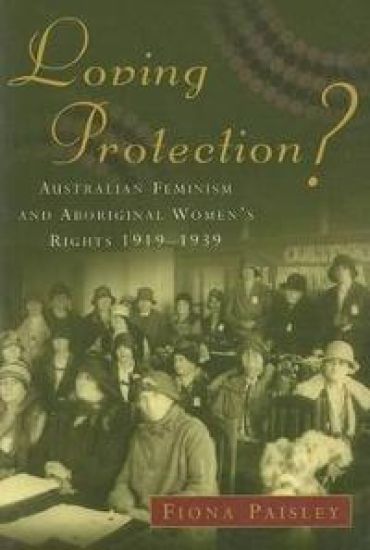
Loving Protection?

Loving Protection?

Fiona Paisley

Melbourne University Press
1996
pokkari
In the 1920s and 1930s, there was a highly visible network of white women activists who vigorously promoted the rights of Australian Aboriginals. In this little-known campaign-by middle-class women's organisations such as the Australian Federation of Women Voters-Anglo-Australian women, among them Bessie Rischbieth, Edith Jones, Constance Cooke and Mary Bennett, took to the world stage to expose the plight of Aboriginal women. Their campaign made headline news, and Australian state and federal governments were shamed into action. One important outcome was the 1934 Royal Commission into Aboriginal Status and Conditions in Western Australia, at which white women activists presented compelling evidence of the need for reform in Aboriginal policy. These women strongly opposed assimilationist policies of the time such as child removal, institutionalisation and dispersal, promoting in their place assimilation based on universal and specific rights. Loving Protection? breaks new ground, highlighting white women's challenges to federal Aboriginal policy, and their attempt to complement men in the running of modern Australia.