Kirjojen hintavertailu. Mukana 12 390 323 kirjaa ja 12 kauppaa.

Kirjailija

Fiona Stafford

Kirjat ja teokset yhdessä paikassa: 8 kirjaa, julkaisuja vuosilta 2000-2025, suosituimpien joukossa Jane Austen. Vertaile teosten hintoja ja tarkista saatavuus suomalaisista kirjakaupoista.

8 kirjaa

Kirjojen julkaisuhaarukka 2000-2025.

Jane Austen

Jane Austen

Fiona Stafford

Yale University Press
2017
pokkari
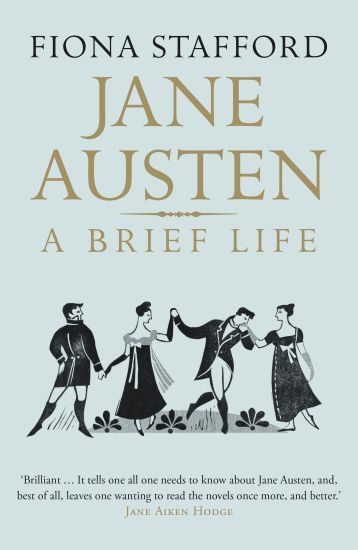
An elegant and accessible introduction to the life and works of one of England's greatest and most popular novelists"I want to salute Fiona Stafford's brilliant [book]. . . . It tells one all one needs to know about Jane Austen, and, best of all, leaves one wanting to read the novels once more, and better."—Jane Aiken Hodge Every devoted reader feels that, in some way, they know Jane Austen. But how can we make sense of her extraordinary achievements? At a time when most women received so little formal education and none could obtain a place at university, how did Austen come to write novels that have commanded the attention of some of the most brilliant minds ever since? Why were hers the books that Darwin knew by heart and Churchill read during the Blitz? In this graceful introduction to the author’s life and works, Fiona Stafford offers a fresh and accessible perspective, discussing Austen’s six astonishing novels in the context of their time. Newly updated, Jane Austen: A Brief Life offers a rich and sympathetic insight into a writer who was just as much the Romantic genius as Keats, Shelley or Byron—full of youthful exuberance, intensely creative once she had found her individual voice, and dead before she reached middle age.
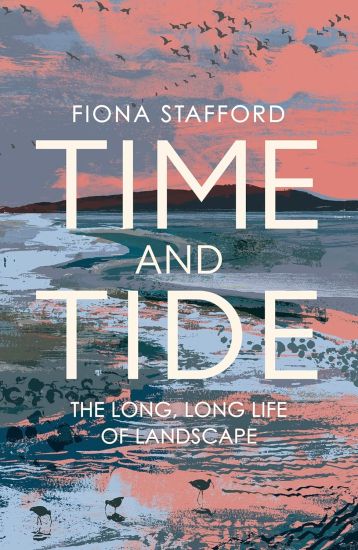
Time and Tide

Time and Tide

Fiona Stafford

John Murray Press
2025
pokkari
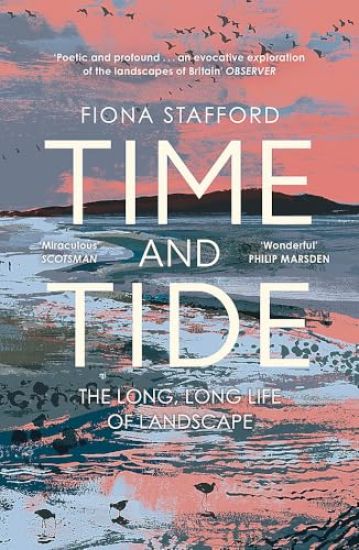
A unique and luminous exploration of the changing landscapes of the UK, the long-awaited new book from the author of the hugely acclaimed The Long, Long Life of Trees
Time and Tide

Time and Tide

Fiona Stafford

John Murray Press
2024
sidottu
A unique and luminous exploration of the changing landscapes of the UK, the long-awaited new book from the author of the hugely acclaimed The Long, Long Life of Trees
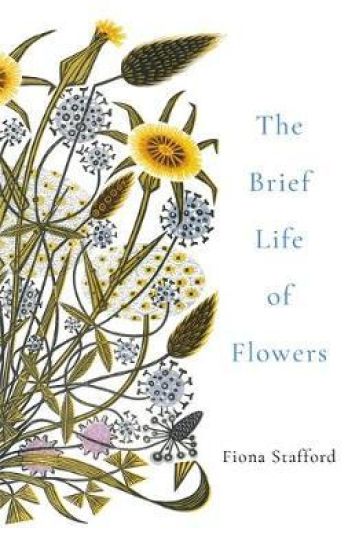
The Brief Life of Flowers

The Brief Life of Flowers

Fiona Stafford

John Murray Publishers Ltd
2019
pokkari
The beauty of flowers is well known, inspiring creative minds from Botticelli to Beatrix Potter. But they've also played a key part in forming the past, and may shape our future.Roses and thistles have served as symbols of monarchs, dynasties and nations. We wear poppies to remember the First World War, but it was the elderflower that treated its wounded soldiers. A rose might mend a broken heart, and sunflowers may just save our planet. At once enchanting and intriguing, The Brief Life of Flowers reveals how even the most ordinary of flowers have extraordinary stories to tell.
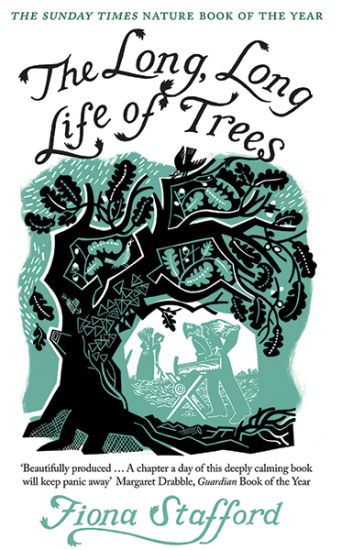
The Long, Long Life of Trees

The Long, Long Life of Trees

Fiona Stafford

Yale University Press
2017
pokkari
A lyrical tribute to the diversity of trees, their physical beauty, their special characteristics and uses, and their ever-evolving meanings Since the beginnings of history trees have served humankind in countless useful ways, but our relationship with trees has many dimensions beyond mere practicality. Trees are so entwined with human experience that diverse species have inspired their own stories, myths, songs, poems, paintings, and spiritual meanings. Some have achieved status as religious, cultural, or national symbols. In this beautifully illustrated volume Fiona Stafford offers intimate, detailed explorations of seventeen common trees, from ash and apple to pine, oak, cypress, and willow. The author also pays homage to particular trees, such as the fabled Ankerwyke Yew, under which Henry VIII courted Anne Boleyn, and the spectacular cherry trees of Washington, D.C. Stafford discusses practical uses of wood past and present, tree diseases and environmental threats, and trees’ potential contributions toward slowing global climate change. Brimming with unusual topics and intriguing facts, this book celebrates trees and their long, long lives as our inspiring and beloved natural companions.
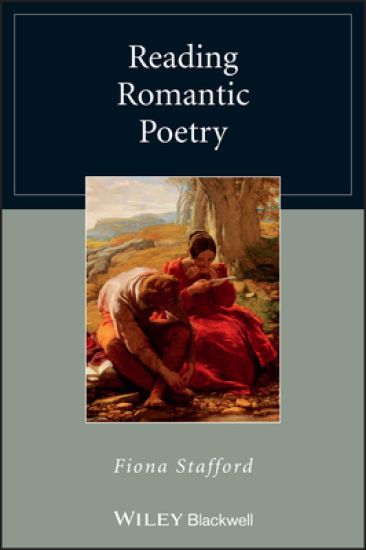
Reading Romantic Poetry

Reading Romantic Poetry

Fiona Stafford

John Wiley Sons Inc
2014
nidottu
Reading Romantic Poetry introduces the major themes and preoccupations, and the key poems and players of a period convulsed by revolution, prolonged warfare and political crisis. Provides a clear, lively introduction to Romantic Poetry, backed by academic research and marked by its accessibility to students with little prior experience of poetryIntroduces many of the major topics of the age, from politics to publishing, from slavery to sociability, from Milton to the mind of manEncourages direct responses to poems by opening up different aspects of the literature and fresh approaches to readingDiscusses the poets' own reading and experience of being read, as well as analysis of the sounds of key poems and the look of the poem on the pageDeepens understanding of poems through awareness of their literary, historical, political and personal contextsIncludes the major poets of the period, Blake, Wordsworth, Coleridge, Byron, Shelley, Keats, Burns and Clare —as well as a host of less familiar writers, including women
Local Attachments

Local Attachments

Fiona Stafford

Oxford University Press
2010
sidottu
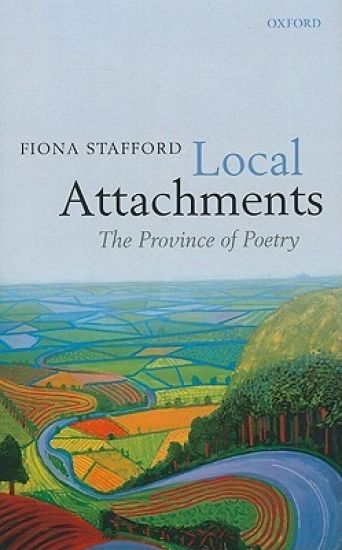
How can poems so firmly attached to particular regions speak to readers far away, who might have no knowledge of the places featuring in the work? Why do writers turn to their own communities for materials? In this thought-provoking and beautifully written book, Fiona Stafford explores the relationship between the local, the national, and the global through the consideration of works by writers whose feeling for place is especially evident. Heaney, Burns, Wordsworth, Scott, Lamb, and Dickens are key figures in the development of a new kind of literature that discovered universal meaning in local truth. Local Attachments begins with Seamus Heaney's Nobel Lecture, 'Crediting Poetry', which is at once a celebration of local work in a global context and a passionate defence of the place of lyric poetry in modern society. The focus then shifts to the Romantic period, when local detail ceased to be regarded as a sign of limitation and the idea that it is essential to art with any aspiration to permanence became established in British and Irish culture. Stafford explores both the presence of the local in literary texts by a wide range of writers and the cultural, philosophical and political contexts that might have contributed to this phenomenon. Wordsworth's creative recovery in the Lake District is an exemplary case, illuminating both Heaney's work and that of his immediate contemporaries and heirs. Since Wordsworth is a foundational figure, the book traces his efforts to achieve a poetry adequate to very difficult contemporary circumstances by returning to his native hills to create work that might live. His own project drew vital inspiration from the poetry of Burns and also found corroboration in the work Scott, so the book examines their independent explorations of the creative benefits - and problems attending - local attachment. It also considers the meaning of Burns and Wordsworth's local poems for those in very different circumstances - London writers such as Keats, Lamb and Dickens, whose works are considered in some detail in their own right and as representative of the implications of the great Romantic discovery of the local. The book concludes by addressing the continuing appeal of the local in modern, urban society and reaffirms the vital importance of poetry as a response to social crises.
Starting Lines in Scottish, Irish, and English Poetry

Starting Lines in Scottish, Irish, and English Poetry

Fiona Stafford

Oxford University Press
2000
sidottu
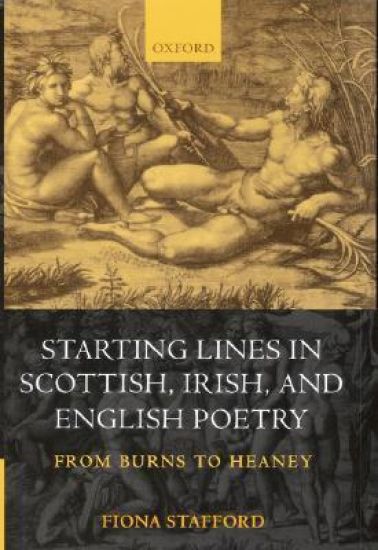
Why should a poem begin with a line from another poem? Is an eighteenth-century epigraph working in the same way as a post-modern quotation? And how are the dynamics of the new text and the source affected by issues of nationhood, language, history, and cultural tradition? Are literary ideas of originality and imitation, allusion and influence inherently political if the poems emerge from different sides of a border or of a colonial relationship? Taking as a framework the history of relations between Ireland, England, and Scotland since the 1707 Union, the book explores such questions through a series of close readings. Textual encounters singled out for detailed discussion include Burns's use of Shakespeare, Coleridge's reference to 'Sir Patrick Spens', James Clarence Mangan's adaptation of Percy Bysshe Shelley, Ciaran Carson's quotation from John Keats, Seamus Heaney's meditation on Henry Vaughan, and the evolution of 'The Homes of England' from Felicia Hemans to Noel Coward.