Kirjojen hintavertailu. Mukana 12 390 323 kirjaa ja 12 kauppaa.

Kirjailija

Fiona Whelan

Kirjat ja teokset yhdessä paikassa: 3 kirjaa, julkaisuja vuosilta 2017-2019, suosituimpien joukossa Freedom?. Vertaile teosten hintoja ja tarkista saatavuus suomalaisista kirjakaupoista.

3 kirjaa

Kirjojen julkaisuhaarukka 2017-2019.

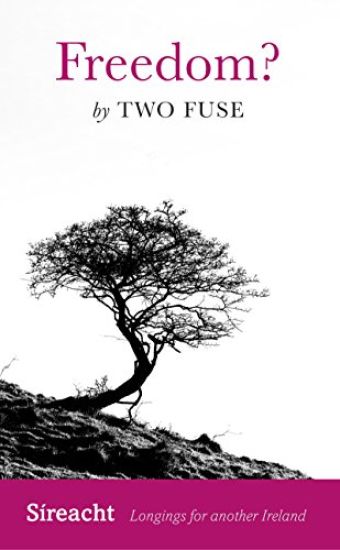
Freedom?

Freedom?

Kevin Ryan; Fiona Whelan

Cork University Press
2018
nidottu
As a figure of thought, the concept of freedom tends to shuttle between abstraction and ideal - the first exemplified by Isaiah Berlin's contrast between negative and positive liberty, and the second by Philip Pettit's neo-republican conception of freedom as non-domination. Located within the realm of lived experience however, freedom is invariably forged from context-specific constraints and takes the form of cultural practices. In this contribution to the Sireacht series, the collaborative platform Two Fuse examine the practice of freedom in the context of neo-liberal enterprise culture, focusing specifically on how this is shaped by power relations that sustain social suffering by generating an equality of inequality. Responding to this situation, Two Fuse look to socially-engaged art with a view to exploring possibilities to reimagine the practice of freedom, paying particular attention to the 2016 performance Natural History of Hope by Fiona Whelan, Rialto Youth Project and Brokentalkers.
The Making of Manners and Morals in Twelfth-Century England
How different are we from those in the past? Or, how different do we think we are from those in the past? Medieval people were more dirty and unhygienic than us – as novels, TV, and film would have us believe – but how much truth is there in this notion? This book seeks to challenge some of these preconceptions by examining medieval society through rules of conduct, and specifically through the lens of a medieval Latin text entitled The Book of the Civilised Man – or Urbanus magnus – which is attributed to Daniel of Beccles.Urbanus magnus is a twelfth-century poem of almost 3,000 lines which comprehensively surveys the day-to-day life of medieval society, including issues such as moral behaviour, friendship, marriage, hospitality, table manners, and diet. Currently, it is a neglected source for the social and cultural history of daily life in medieval England, but by incorporating modern ideas of disgust and taboo, and merging anthropology, sociology, and archaeology with history, this book aims to bring it to the fore, and to show that medieval people did have standards of behaviour. Although they may seem remote to modern ‘civilised’ people, there is both continuity and change in human behaviour throughout the centuries.
The Making of Manners and Morals in Twelfth-Century England
How different are we from those in the past? Or, how different do we think we are from those in the past? Medieval people were more dirty and unhygienic than us – as novels, TV, and film would have us believe – but how much truth is there in this notion? This book seeks to challenge some of these preconceptions by examining medieval society through rules of conduct, and specifically through the lens of a medieval Latin text entitled The Book of the Civilised Man – or Urbanus magnus – which is attributed to Daniel of Beccles.Urbanus magnus is a twelfth-century poem of almost 3,000 lines which comprehensively surveys the day-to-day life of medieval society, including issues such as moral behaviour, friendship, marriage, hospitality, table manners, and diet. Currently, it is a neglected source for the social and cultural history of daily life in medieval England, but by incorporating modern ideas of disgust and taboo, and merging anthropology, sociology, and archaeology with history, this book aims to bring it to the fore, and to show that medieval people did have standards of behaviour. Although they may seem remote to modern ‘civilised’ people, there is both continuity and change in human behaviour throughout the centuries.