Kirjojen hintavertailu. Mukana 12 393 429 kirjaa ja 12 kauppaa.

Kirjailija

Flann O'Brien

Kirjat ja teokset yhdessä paikassa: 27 kirjaa, julkaisuja vuosilta 1993-2026, suosituimpien joukossa Dalkey Archive. Vertaile teosten hintoja ja tarkista saatavuus suomalaisista kirjakaupoista.

Mukana myös kirjoitusasut: Flann O’Brien

27 kirjaa

Kirjojen julkaisuhaarukka 1993-2026.

At Swim-two-birds

At Swim-two-birds

Flann O'Brien

Penguin Classics
2000
pokkari
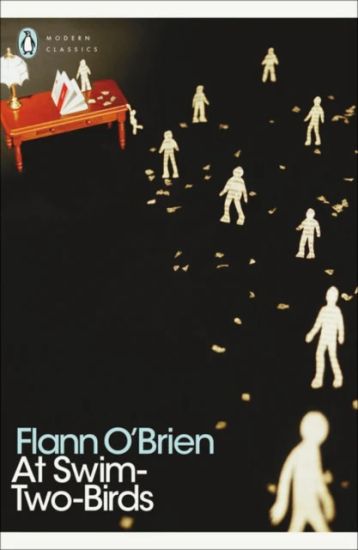
Flann O'Brien's innovative metafictional work, whose unruly characters strike out their own paths in life to the frustration of their author, At Swim-Two-Birds is a brilliant impressionistic jumble of ideas, mythology and nonsense published in Penguin Modern Classics.Flann O'Brien's first novel tells the story of a young, indolent undergraduate, who lives with his curmudgeonly uncle in Dubin and spends far too much time drinking with his friends. When not drunk or in bed he likes to invent wild stories peoples with hilarious and unlikely characters - but somehow his creations won't do what he wants them to. A dazzling work of farce, satire, folklore and absurdity that gives full rein to its author's dancing intellect and Celtic wit, At Swim-Two-Birds is both a brilliant comic send-up of Irish literature and culture, and a portrayal of Dublin to compare with Joyce's Ulysses.Brian Ó Nualláin, (1911-1966), better known by his pseudonym Flann O'Brien, was born in Strabane, County Tyrone, and studied at University College Dublin before joining the Irish Civil Service. Ifyou enjoyed At Swim-Two-Birds, you might like Vladimir Nabokov's Pale Fire, also available in Penguin Modern Classics.'This is just the book to give your sister if she's a loud, dirty, boozy girl'Dylan Thomas'That's a real writer, with the true comic spirit'James Joyce, author of Ulysses'A brilliant, beer-soaked miniature masterpiece'Time
The Best of Myles

The Best of Myles

Flann O'Brien

Dalkey Archive Press
1999
nidottu
The Best of Myles brings together the best of Flann O'Brien's newspaper column "Cruiskeen Lawn," written over a nearly thirty-year period. Covering such subjects as plumbers, the justice system, and improbable inventions, O'Brien (whose real name was Brian O'Nolan, though his newspaper pseudonym was Myles na Gopaleen) is replete with zany humor and biting satire directed at the Irish and their preoccupations. Most of all, however, The Best of Myles displays O'Brien's unique mastery of language and style.
Third Policeman

Third Policeman

Flann O'Brien

Dalkey Archive Press
1999
nidottu
The Third Policeman is Flann O'Brien's brilliantly dark comic novel about the nature of time, death, and existence. Told by a narrator who has committed a botched robbery and brutal murder, the novel follows him and his adventures in a two-dimensional police station where, through the theories of the scientist/philosopher de Selby, he is introduced to "Atomic Theory" and its relation to bicycles, the existence of eternity (which turns out to be just down the road), and de Selby's view that the earth is not round but "sausage-shaped." With the help of his newly found soul named "Joe, " he grapples with the riddles and contradictions that three eccentric policeman present to him.The last of O'Brien's novels to be published, The Third Policeman joins O'Brien's other fiction (At Swim-Two-Birds, The Poor Mouth, The Hard Life, The Best of Myles, and The Dalkey Archive) to ensure his place, along with James Joyce and Samuel Beckett, as one of Ireland's great comic geniuses.
Hard Life

Hard Life

Flann O'Brien

Dalkey Archive Press
1996
nidottu
Subtitled "An Exegesis of Squalor," The Hard Life is a sober farce from a master of Irish comic fiction. Set in Dublin at the turn of the century, the novel does involve squalor-illness, alcoholism, unemployment, bodily functions, crime, illicit sex-but also investigates such diverse topics as Church history, tightrope walking, and the pressing need for public toilets for ladies. The Hard Life is straight-faced entertainment that conceals in laughter its own devious and wicked satire by one of the best known Irish writers of the 20th century.
Hard Life

Hard Life

Flann O'Brien

Dalkey Archive Press
1995
nidottu
Subtitled “An Exegesis of Squalor,” The Hard Life is a sober farce from a master of Irish comic fiction. Set in Dublin at the turn of the century, the novel does involve squalor—illness, alcoholism, unemployment, bodily functions, crime, illicit sex—but also investigates such diverse topics as Church history, tightrope walking, and the pressing need for public toilets for ladies. The Hard Life is straight-faced entertainment that conceals in laughter its own devious and wicked satire by one of the best known Irish writers of the 20th century.
Rhapsody In Stephens Green

Rhapsody In Stephens Green

Flann O'Brien

The Lilliput Press Ltd
1994
nidottu
Using a play by Karl and Josef Capek as source, Flann O’Brien locates his insect drama in Dublin, his most familiar stalking- territory. His adaptation is a vehicle for ridicule and invective, targeting race, religion, greed, identity and purpose. With his extraordinary ear for dialogue, O’Brien creates his own fantastical world, and the outcome is a hilarious satire of Irish stereotypes – as Orangemen, Dubliners, Corkagians and culchies become warring ants, bees, crickets, dung-beetles, and other small-minded invertebrae. The lost text of this play, Hilton Edwards’ prompt copy from the 1943 Gate Theatre performance, was discovered in the archives at Northwestern University, Illinois.
The Poor Mouth

The Poor Mouth

Flann O’Brien

HARPERCOLLINS PUBLISHERS
1993
nidottu
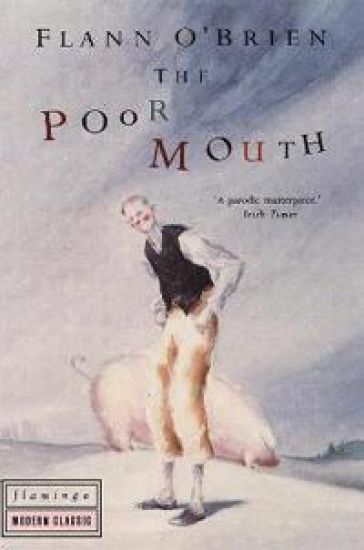
The classic satire from the renowned comic and acclaimed author of ‘At Swim-Two-Birds’ – Flann O’Brien. Flann O’Brien’s gloriously wicked satire of the traditional Irish peasant novel, The Poor Mouth tells the shamelessly ironic story of Bonaparte O’Coonassa, born in the West of Ireland ‘on a terrible winter’s night’. A hymn to the world of potatoes, rain and ‘excellent poverty’, this cruelly funny assault on the fashionable Gaelic Revival of the day brought the wrath of the custodians of national sentiment upon O’Brien’s head for many years thereafter.