Kirjojen hintavertailu. Mukana 12 390 323 kirjaa ja 12 kauppaa.

Kirjailija

Florian Urban

Kirjat ja teokset yhdessä paikassa: 12 kirjaa, julkaisuja vuosilta 2007-2025, suosituimpien joukossa Berlin /Ddr, Neohistorisch: Geschichte Aus Fertigteilen. Vertaile teosten hintoja ja tarkista saatavuus suomalaisista kirjakaupoista.

12 kirjaa

Kirjojen julkaisuhaarukka 2007-2025.

Form Follows Fuel

Form Follows Fuel

Florian Urban; Barnabas Calder

TAYLOR FRANCIS LTD
2025
nidottu
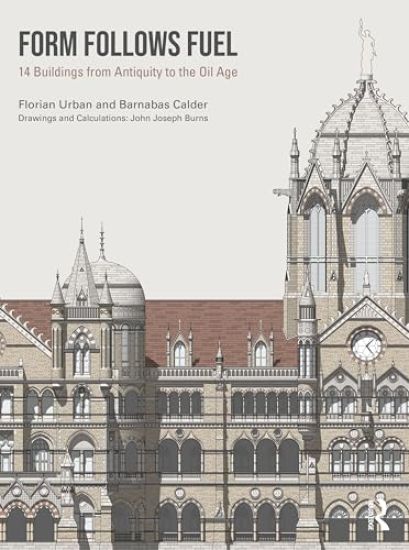
Modernists believed that “form follows function”. Form Follows Fuel shows that in fact energy has been the biggest influence on the world’s architecture throughout the history of our species. The availability of energy under different fuel regimes — including human labour, firewood, coal, oil, gas and renewables shapes architecture at all scales, from what gets built to how its doors hinge.The book is the first to quantify energy inputs for a range of buildings worldwide and across the historical record. In the process it throws up both detailed challenges and practical solutions to today’s ecological crises, highlighting the aspects of today’s buildings that make architecture responsible for 37% of human climate-changing emissions, and revealing the enormously lower impacts of historical alternatives to today’s default building practices.The book shows that the shift to fossil fuel, which started in the seventeenth century, came to be the most consequential move in the history of architecture as well as in human history in general. This brought about remarkable wealth for the built environment and at the same time unprecedented dangers for our planet, as evidenced by the exacerbating climate emergency.The book consists of 14 accessibly-written case studies, illustrated with beautiful and revealing new measured drawings of each project by John Joseph Burns. Each chapter focuses on a single structure in a particular historical context, sometimes contrasted to similar buildings, from subsistence farming to advanced global capitalism. The chapters analyse the consumption of embodied and operational energy in these buildings, and also discuss questions of recycling and adaptive reuse. They complement precise descriptions with hard numbers on materials and construction, using robustly-sourced approximations where exact figures are not available. The case studies rely on both published research and the authors’ own calculations and allow systematic comparison across different global regions and historical periods.Cases include architectural icons such as the Great Pyramid of Giza, the Baths of Caracalla, the Mausoleum of Qin Shi Huang, the Seagram Building, and Terminal 1 of Kuala Lumpur International Airport, as well as common types such as a pre-modern stone house, a late-nineteenth-century tenement, and a modernist panel block. Examples are taken from different regions of the world, including ancient China, pre-Columbine Mexico, and modern Europe. The book is an important contribution to architectural historical research, written for academics and building professionals as well as for a general audience.
Form Follows Fuel

Form Follows Fuel

Florian Urban; Barnabas Calder

TAYLOR FRANCIS LTD
2025
sidottu
Modernists believed that “form follows function”. Form Follows Fuel shows that in fact energy has been the biggest influence on the world’s architecture throughout the history of our species. The availability of energy under different fuel regimes — including human labour, firewood, coal, oil, gas and renewables shapes architecture at all scales, from what gets built to how its doors hinge.The book is the first to quantify energy inputs for a range of buildings worldwide and across the historical record. In the process it throws up both detailed challenges and practical solutions to today’s ecological crises, highlighting the aspects of today’s buildings that make architecture responsible for 37% of human climate-changing emissions, and revealing the enormously lower impacts of historical alternatives to today’s default building practices.The book shows that the shift to fossil fuel, which started in the seventeenth century, came to be the most consequential move in the history of architecture as well as in human history in general. This brought about remarkable wealth for the built environment and at the same time unprecedented dangers for our planet, as evidenced by the exacerbating climate emergency.The book consists of 14 accessibly-written case studies, illustrated with beautiful and revealing new measured drawings of each project by John Joseph Burns. Each chapter focuses on a single structure in a particular historical context, sometimes contrasted to similar buildings, from subsistence farming to advanced global capitalism. The chapters analyse the consumption of embodied and operational energy in these buildings, and also discuss questions of recycling and adaptive reuse. They complement precise descriptions with hard numbers on materials and construction, using robustly-sourced approximations where exact figures are not available. The case studies rely on both published research and the authors’ own calculations and allow systematic comparison across different global regions and historical periods.Cases include architectural icons such as the Great Pyramid of Giza, the Baths of Caracalla, the Mausoleum of Qin Shi Huang, the Seagram Building, and Terminal 1 of Kuala Lumpur International Airport, as well as common types such as a pre-modern stone house, a late-nineteenth-century tenement, and a modernist panel block. Examples are taken from different regions of the world, including ancient China, pre-Columbine Mexico, and modern Europe. The book is an important contribution to architectural historical research, written for academics and building professionals as well as for a general audience.
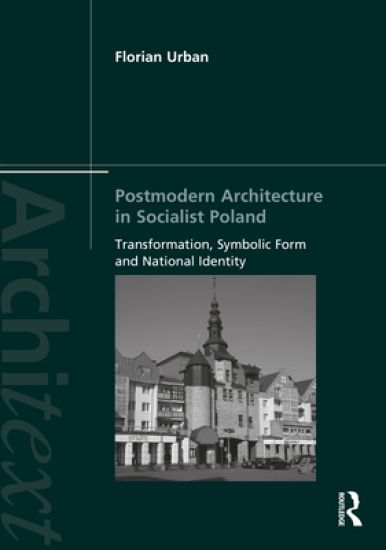
Postmodern Architecture in Socialist Poland
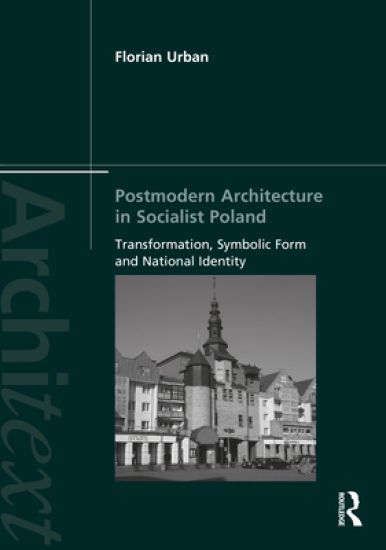
Garish churches, gabled panel blocks, neo-historical tenements—this book is about these and other architectural oddities that emerged in Poland between 1975 and 1989, a period characterised by the decline of the authoritarian socialist regime and waves of political protest. During that period, committed architects defied repressive politics and persistent shortages, and designed houses and churches which adapted eclectic historical forms and geometric volumes, and were based on traditional typologies.These buildings show a very different background of postmodernism, far removed from the debates over Robert Venturi, Philip Johnson, or Prince Charles in Western Europe and North America—a context in which postmodern architecture stood not for world-weary irony in an economically saturated society, but for individualised counter-propositions to a collectivist ideology, for a yearning for truth and spiritual values, and for a discourse on distinctiveness and national identity.Postmodern Architecture in Socialist Poland argues that this new architecture marked the beginning of socio-political transformation and at the same time showed postmodernism's reconciliatory potential. In light of massive historical ruptures and wartime destruction, these buildings successfully responded to the contradictory desires for historical continuity and acknowledgment of rupture and loss. Next to international ideas, the architects took up domestic traditions, such as the ideas of the Polish school of historic conservation and long-standing national-patriotic narratives. They thus contributed to the creation of a built environment and intellectual climate that have been influential to date.This book will be of great interest to students and scholars interested in postmodern architecture and urban design, as well as in the socio-cultural background and transformative potential of architecture under socialism.
Postmodern Architecture in Socialist Poland
Garish churches, gabled panel blocks, neo-historical tenements—this book is about these and other architectural oddities that emerged in Poland between 1975 and 1989, a period characterised by the decline of the authoritarian socialist regime and waves of political protest. During that period, committed architects defied repressive politics and persistent shortages, and designed houses and churches which adapted eclectic historical forms and geometric volumes, and were based on traditional typologies.These buildings show a very different background of postmodernism, far removed from the debates over Robert Venturi, Philip Johnson, or Prince Charles in Western Europe and North America—a context in which postmodern architecture stood not for world-weary irony in an economically saturated society, but for individualised counter-propositions to a collectivist ideology, for a yearning for truth and spiritual values, and for a discourse on distinctiveness and national identity.Postmodern Architecture in Socialist Poland argues that this new architecture marked the beginning of socio-political transformation and at the same time showed postmodernism's reconciliatory potential. In light of massive historical ruptures and wartime destruction, these buildings successfully responded to the contradictory desires for historical continuity and acknowledgment of rupture and loss. Next to international ideas, the architects took up domestic traditions, such as the ideas of the Polish school of historic conservation and long-standing national-patriotic narratives. They thus contributed to the creation of a built environment and intellectual climate that have been influential to date.This book will be of great interest to students and scholars interested in postmodern architecture and urban design, as well as in the socio-cultural background and transformative potential of architecture under socialism.
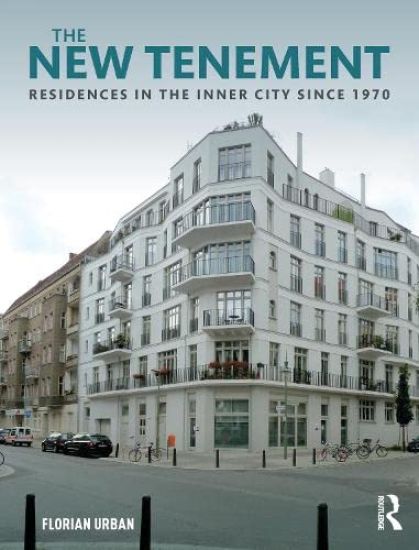
The New Tenement

The New Tenement

Florian Urban

Routledge
2017
nidottu
This book examines "new tenements"—dense, medium-rise, multi-storey residences that have been the backbone of European inner-city regeneration since the 1970s and came with a new positive view on urban living. Focusing principally on Berlin, Copenhagen, Glasgow, Rotterdam, and Vienna, it relates architectural design to an evolving intellectual framework that mixed anti-modernist criticism with nostalgic images and strategic goals, and absorbed ideas about the city as a generator of creativity, locale of democratic debate, and object of personal identification.This book analyses new tenements in the context of the post-functionalist city and its mixed-use neighbourhoods, redeveloped industrial sites and regenerated waterfronts. It demonstrates that these buildings are both generators and outcome of an urban environment characterised by information exchange rather than industrial production, individual expression rather than mass culture, visible history rather than comprehensive renewal, and conspicuous difference rather than egalitarianism. It also shows that new tenements evolved under a welfare state that all over Europe has come under pressure, but still to a certain degree balances and controls heterogeneity and economic disparities.
The New Tenement

The New Tenement

Florian Urban

Routledge
2017
sidottu
This book examines "new tenements"—dense, medium-rise, multi-storey residences that have been the backbone of European inner-city regeneration since the 1970s and came with a new positive view on urban living. Focusing principally on Berlin, Copenhagen, Glasgow, Rotterdam, and Vienna, it relates architectural design to an evolving intellectual framework that mixed anti-modernist criticism with nostalgic images and strategic goals, and absorbed ideas about the city as a generator of creativity, locale of democratic debate, and object of personal identification.This book analyses new tenements in the context of the post-functionalist city and its mixed-use neighbourhoods, redeveloped industrial sites and regenerated waterfronts. It demonstrates that these buildings are both generators and outcome of an urban environment characterised by information exchange rather than industrial production, individual expression rather than mass culture, visible history rather than comprehensive renewal, and conspicuous difference rather than egalitarianism. It also shows that new tenements evolved under a welfare state that all over Europe has come under pressure, but still to a certain degree balances and controls heterogeneity and economic disparities.
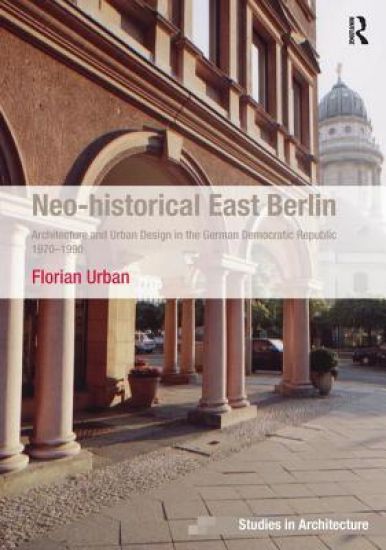
Neo-historical East Berlin

Neo-historical East Berlin

Florian Urban

Routledge
2016
nidottu
In the years prior to the fall of the Berlin Wall, the leaders of the German Democratic Republic planned to construct a city center that was simultaneously modern and historical, consisting of both redesign of old buildings and new architectural developments. Drawing from recently released archival sources and interviews with former key government officials, decision-makers and architects, this book sheds light not only on this unique programme in postmodern design, but also on the debates which were taking place with the Socialist government.
Tower and Slab

Tower and Slab

Florian Urban

Routledge
2011
sidottu
Tower and Slab looks at the contradictory history of the modernist mass housing block - home to millions of city dwellers around the world. Few urban forms have roused as much controversy. While in the United States decades-long criticism caused the demolition of most mass housing projects for the poor, in the booming metropolises of Shanghai and Mumbai remarkably similar developments are being built for the wealthy middle class. While on the surface the modernist apartment block appears universal, it is in fact diverse in its significance and connotations as its many different cultural contexts. Florian Urban studies the history of mass housing in seven narratives: Chicago, Paris, Berlin, Brasilia, Mumbai, Moscow, and Shanghai. Investigating the complex interactions between city planning and social history, Tower and Slab shows how the modernist vision to house the masses in serial blocks succeeded in certain contexts and failed in others. Success and failure, in this respect, refers not only to the original goals – to solve the housing crisis and provide modern standards for the entire society – but equally to changing significance of the housing blocks within the respective societies and their perception by architects, politicians, and inhabitants. These differences show that design is not to blame for mass housing’s mixed record of success. The comparison of the apparently similar projects suggests that triumph or disaster does not depend on a single variable but rather on a complex formula that includes not only form, but also social composition, location within the city, effective maintenance, and a variety of cultural, social, and political factors.
Tower and Slab

Tower and Slab

Florian Urban

Routledge
2011
nidottu
Tower and Slab looks at the contradictory history of the modernist mass housing block - home to millions of city dwellers around the world. Few urban forms have roused as much controversy. While in the United States decades-long criticism caused the demolition of most mass housing projects for the poor, in the booming metropolises of Shanghai and Mumbai remarkably similar developments are being built for the wealthy middle class. While on the surface the modernist apartment block appears universal, it is in fact diverse in its significance and connotations as its many different cultural contexts. Florian Urban studies the history of mass housing in seven narratives: Chicago, Paris, Berlin, Brasilia, Mumbai, Moscow, and Shanghai. Investigating the complex interactions between city planning and social history, Tower and Slab shows how the modernist vision to house the masses in serial blocks succeeded in certain contexts and failed in others. Success and failure, in this respect, refers not only to the original goals – to solve the housing crisis and provide modern standards for the entire society – but equally to changing significance of the housing blocks within the respective societies and their perception by architects, politicians, and inhabitants. These differences show that design is not to blame for mass housing’s mixed record of success. The comparison of the apparently similar projects suggests that triumph or disaster does not depend on a single variable but rather on a complex formula that includes not only form, but also social composition, location within the city, effective maintenance, and a variety of cultural, social, and political factors.
Neo-historical East Berlin

Neo-historical East Berlin

Florian Urban

Ashgate Publishing Limited
2009
sidottu
In the years prior to the fall of the Berlin Wall, the leaders of the German Democratic Republic planned to construct a city center that was simultaneously modern and historical, consisting of both redesign of old buildings and new architectural developments. Drawing from recently released archival sources and interviews with former key government officials, decision-makers and architects, this book sheds light not only on this unique programme in postmodern design, but also on the debates which were taking place with the Socialist government.
Berlin /Ddr, Neohistorisch: Geschichte Aus Fertigteilen
Die Vorstellung einer ?historischen Stadt?, die ihren Bewohnern und Besuchern den Eindruck von Geschichtlichkeit vermitteln soll, setzte sich in den 1970er und 80er Jahren auch in Ost-Berlin durch. Damit nahmen DDR-Architekten und Stadtplaner eine internationale städtebauliche Entwicklung auf und formten sie auf eigene Weise. In der Folge wurden einige der jahrzehntelang vernachlässigten Gründerzeitviertel in den heute so beliebten Bezirken Mitte und Prenzlauer Berg renoviert und mit Insignien realer und imaginärer Stadtgeschichte ausgeschmückt. Gleichzeitig errichtete man im Nikolaiviertel, am Platz der Akademie (Gendarmenmarkt) und in der Friedrichstraße repräsentative Bauten, die sich stark an historische Bauformen anlehnten, oftmals jedoch Fertigbauteile aus Beton verwendeten. Das Buch, für das der Autor in einer Vielzahl von Interviews Material und Hintergrundinformationen aus erster Hand sammelte, schärft den Blick von Berlin-Kennern wie von Besuchern der Stadt für die noch heute sichtbaren und oft gar nicht als DDR-Bauten erkannten Spuren dieser Projekte. Auf ebenso solide recherchierte wie gut lesbare Weise verdeutlicht es, dass Städtebau in der Hauptstadt der DDR weit vielfältiger war als die vielzitierten Plattenbausiedlungen.